

University Changes Heart over Christmas Trees and Candy Canes

The University of Maine is reportedly reversing its decision to keep Christmas trees and candy canes out of public areas on campus because they were could be interpreted as “religious items”.

The university called the prohibition a “misunderstanding” in an emailed letter after students complained about the ban, the Daily Mail reports.

Allegedly, it was also a student’s complaint that led to the ban in the first place.

One student allegedly complained about Christmas decorations in common areas on campus, when the school did not put up decorations for other religions’ holidays.

Auxiliary Services Executive Director Daniel Stirrup responded by sending an email to campus employees banning any “decoration that could be perceived as religious,” including “xmas trees, wreaths, xmas presents, candy canes, etc.”

Stirrup encouraged employees to have a more stripped-down approach to decorating.

“What is allowed are winter themes, plain trees without presents underneath, decorative lights, but not on trees, snow flakes [sic], etc.,” he continued. “If you are unsure, best to not use or ask me for clarification.”

When word spread on campus about the ban, students were outraged. A Facebook community group, “Bring Back the Cheer to Maine,” was formed to protest the university’s stance, and has received over 1,100 likes.

“How can we celebrate diversity if we can’t even see it? #‎bringbackthecheer,” one post read.

After local news media picked up the story, Dean of Students Robert Dana retracted the decorations ban.

“We are not the Grinches of Maine,” he told Fox News. “It was a big misunderstanding. The e-mail was in response to an issue a student had raised. His intent was to be inclusive,” he added, referring to Stirrup. “It doesn’t feel good, it doesn’t look good, and it doesn’t reflect us.

“The University of Maine is a place where we welcome every faith tradition, and we welcome displays of those faith traditions.”

Dana insisted that no Christmas decorations were removed from campus.

“We welcome displays of religious symbols in public spaces and residence hall rooms,” he continued. “We don’t advocate one religion over another.”

Source and Original Content by CT

Google Marks Russian Painter’s 148th Birthday with Google Doodle

Wassily Kandinsky, full name Wassily Wassilyevich Kandinsky, was a Russian painter born on December 16, 1866. Tuesday marks his 148th birthday and Google has commemorated the day with a doodle. Kandinsky was one of the most influential painters and art theorists of the previous century.

Although Wassily Kandinsky was born in Russia, much of his best work had its foundation in Germany – where he studied – and France, where he moved as Nazi influence grew in Germany before World War II.

The son of a tea merchant, Wassily Kandinsky’s early work was influenced by the Russian architecture and his study of folk art in Moscow’s Vologda region.

Wassily Kandinsky’s work featured colour symbolism. He often recalled how he felt like he felt like he was moving into a painting when he saw many of Russia’s houses and churches.

Kandinsky was a teacher of law and economics in Russia. At the age of 30, he gave up teaching to join art school in Munich, Germany. Before joining art school, Wassily Kandinsky was influenced by the works of Monet.

His move to Munich began his artistic career, which spanned almost 50 years until his death in 1944. Wassily Kandinsky lived in Munich and studied art. Around this time, he began to emerge as an art theorist as well. He travelled across Europe from 1906 to 1908 and during this time he painted The Blue Mountain – one of his most famous works.

Wassily Kandinsky returned to Russia when World War I broke out. Kandinsky did not agree with the views of some of the members of Moscow’s Institute of Artistic Culture, who termed Kandinsky’s work too individualistic and bourgeoisie. During his time in Russia, Kandinsky painted little and spent most of his time teaching art theory. He returned to Germany in 1921.

He continued to paint and teach in Germany until 1931, when the Nazis confiscated 57 of his paintings and shut down the art school. That forced Wassily Kandinsky to move to France. Much of his work in Germany included geometrical elements. Google’s doodle pays tribute to this aspect of Kandinsky’s works.

Tuesday’s Google doodle features several geometrical elements in various colours on a yellow background. This is a tribute to Wassily Kandinsky’s famous painting On White II.

Wassily Kandinsky painted from his apartment in Paris. His work included non-geometric forms and he also mixed sand with paint to give a rustic texture to his paintings. Kandinsky became a French citizen in 1939. He died in France on December 13, 1944.

Source and Original Content by Ndtv

“Hell has Touched Us”, Archbishop of Sydney

The recently appointed Archbishop of Sydney Anthony Fisher has told a memorial service for the victims of Monday’s siege that “hell has touched us”.

During the service on Tuesday at Sydney’s St Mary’s Cathedral, the archbishop paid tribute to Tori Johnson, 34, and Katrina Dawson, 38, who died along with Man Haron Monis, the Iranian gunman who took over the Lindt Chocolate Cafe in the Australian city’s central business district.

Mr Johnson was reportedly killed after trying to snatch Monis’s gun. It has also been reported that it was the shooting of Mr Johnson that led to armed police entering the shop and ending the siege.

Speaking to more than 2,000 people at the memorial service, Archbishop Fisher described Mr Johnson as a hero, saying that while his bravery resulted in his own death, his actions led to “freedom for most of the hostages”.

Archbishop Fisher added: “There is an alternative to violence and its recriminations.”

According to ABC News, the archbishop also referred to reports that Ms Dawson, a successful barrister and mother of three, died while protecting a pregnant friend from gunfire.

He said: “These heroes were willing to lay down their lives so others might live, imitating the sacrifice of Christ, who said there is no greater love than to lay down your life for another.”

During the siege a number of the hostages were forced to to hold up a black Islamic banner at the cafe’s window. It has also been reported that during the siege the gunman Monis demanded delivery of an ISIS flag and a meeting with Australian Prime Minister Tony Abbott.

Monis was granted political asylum by Australia in 1996 and was on bail facing a number of charges, including being an accessory to the murder of his former wife. He was also facing more than 40 sexual and indecent assault charges.

Source and Original Content by Catholic Herald

Phone App; WhatsApp Coming to Desktop?

The world’s most popular social mobile messaging app is rumored to be developing a PC version of its service.

Dutch blog AndroidWorld.nl has uncovered references to a web client version of WhatsApp while sifting through code connected to the current Android smartphone app.

The code in question also suggests that rather than coming as a desktop app, those of us that want the app on our computers as well as our mobile devices will be able to access it via the web — it looks as if the web app will be compatible with Google’s Chrome browser whether running on a Mac or a PC.

It might seem strange at first to take a mobile service and make it immobile, but WhatsApp wants to compete with Google Hangouts and Apple’s iMessage, both of which work seamlessly across devices.

If you’re working on your computer when a message arrives, isn’t it better that it appears on the desktop rather than on a phone which could be buried at the bottom of a bag?

Continuity of services across devices is set to be one of the standout trends of the coming year. Microsoft has confirmed that Windows 10 will have features baked in that will let users shuffle documents and content from desktop to handset and even game consoles.

Samsung is also developing its own system for its ever growing product line that will let its smartphone users get notifications on their smart TVs and push computer files and video content between video players, tablets and smartphones too.

Source and Original Content by Yahoo

Israeli PM Applauds Christian IDF Soldiers

Prime Minister Benjamin Netanyahu on Sunday told a pre-Christmas gathering of Christians in Nazareth that they and the Jews are brothers, and that Israel will never cease to defend Christians against the forces that seek to harm and destroy them.

The gathering was organized by the Israeli Christian Recruitment Forum, whose spiritual leader, Father Gabriel Naddaf, was singled out repeatedly by Netanyahu for his untiring efforts to encourage young Christians to join the Israeli army and fully integrate with Israeli society.

“On the first of December, I took my own son, Avner, to the recruitment center in Jerusalem. He volunteered to become a combat soldier in the Israel Defense Forces. The next day…Father Naddaf took his son, Jubran, to the recruitment enter in Tiberias. He volunteered to become a combat soldier in the Israel Defense Forces,” Netanyahu recounted to strong applause.

“We are brothers!” the prime minister exclaimed. “We are partners! Christians and Jews and Druze and Muslims who together defend the State of Israel.”

Turning to a group of Christian soldiers attending the event, Netanyahu stated, “We are brothers in arms. I commend you on the will to be full partners in contributing to and defending this nation.”

Netanyahu noted that it was not always easy for Arabic-speaking Christians to so fully join themselves to Israel, but vowed that “we will firmly support you against all that would harass you.”

Echoing what Father Naddaf has been busy instilling both in local Christians and Western leaders, Netanyahu pointed out that Israel is the only place in the region where Christians find safe haven.

“Christians are suffering in the Middle East,” said the Israeli leader, recalling the recent “shrinkage and disappearance of entire Christian communities, communities that were there thousands of years, since the birth of Christianity, entire communities that are erased in one fell swoop, brutally, savagely.”

Netanyahu insisted that all who would criticize Israel and work toward the birth of a Palestinian state that would most likely fall to Hamas must “compare this [regional situation] to Israel, the only nation in the region where the Christian population is growing.”

Source and Original Content by IsraelToday

Town Fights Atheists to Keep Nativity Display in Court Square

A small Indiana town is fighting to keep displaying their annual Nativity display at the county courthouse. The Freedom From Religion Foundation says the display in Brookville is a violation of church and state and has asked that the scene be removed.

The Nativity scene is annually displayed on the Franklin County Courthouse square.

“If people don’t like the look of it I think they can look the other way, or don’t look at all,” said Brookville resident Wayne Monroe. “It’s been a tradition here for many, many years and I hope it’s for many more years. I think we deserve the right to put up what the community wants and I don’t think anybody else should tell us what to do.

“I think it’s going to take a lot more that some outfit from Wisconsin to have it removed,” he continued.
Commissioner Scot McDonough said he disagrees with the FFRF.

“They use the misconceptions about the separation of church and state to make everyone afraid of getting into the middle of a lawsuit, when the Constitution does protect you,” he told FOX & Friends.

Brookville has about 3,000 residents.

Source and Original Content by Christain Headlines

Christian Converts Fleeing Persecution Find Safe Houses in England

As a 17-year-old convert to Christianity living in Pakistan, Ali (not his real name) was stabbed in the chest and left for dead by Muslims upset he had rejected their faith.

When he fled to England, his assailants tracked him down and threatened him.

A chance meeting with an Anglican priest led to temporary lodgings with a Christian family interested in offering refuge to Christian converts from Islam.

“I can’t tell you where I live — not the town, not even which part of the country,” Ali said. “I want friends but am nervous about forming friendships in case, at a moment’s notice, I have to move house again.”

Ali, 23, works part-time at a supermarket. He is among dozens of ex-Muslims living in safe houses, most of them created by the nonprofit Christian Concern, a London-based organization that wants to infuse British society with a biblical worldview.

There are over 2.8 million Muslims in England and conversions are few. But Christian Concern hopes British families will open their homes as well as their hearts to ex-Muslims whose lives may be at risk.

“Today, we face the same sort of problem that gay men and women faced some time ago,” said Mohammad Fiaz, a convert to Christianity.

Recalling how his family and friends ostracized him after his conversion, Fiaz said: ”They’d rather see me dead,” adding that women are at particular risk of violence from members of the community if they attempt to leave Islam.

He said Muslims who want to convert often face the terrible problem of finding somewhere to live: “That is why we welcome the initiative of Christian Concern, which is helping converts rebuild their lives in ‘safe’ homes owned or rented by members of the Christian community.”

Christian Concern believes thousands of Muslims are anxious to convert and in need of housing so they can get back onto their feet after suffering verbal — and sometimes physical — attacks from families, friends and co-workers.

“We are motivated by a deep sense of love and compassion for those that feel trapped in a situation from which they cannot escape,” said Andrea Williams, the group’s chief executive.

“The penalty for converts at best is to be cut off from their family; at worst they face death,” she added. “This is happening not just in Sudan and Nigeria but in East London. The government has failed to deal with the rise in anti-Christian sentiment…Read More

Source and Original Content by Christian Headlines

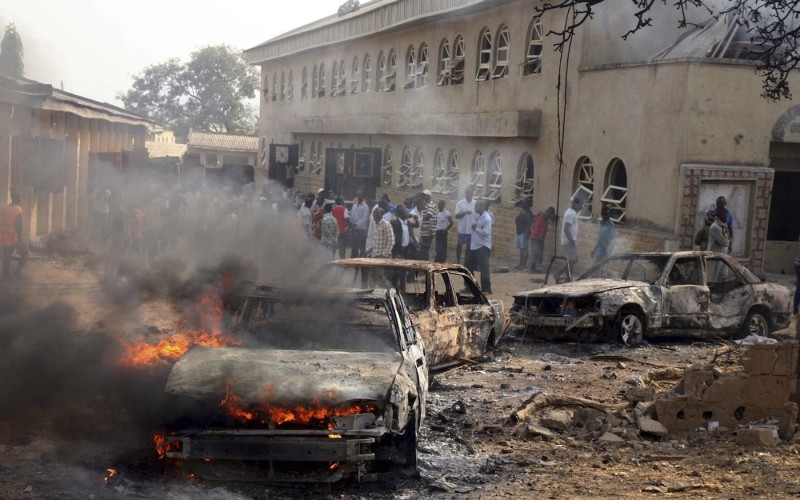
Insurgency: Humanitarian Crisis Heightens in Northeast Nigeria ,as Residents Flee affected States

As the strife caused by the Boko Haram Islamic fundamentalists in the northeast heightens, the number of internally displaced residents has also risen; as there are thousands of people of the northeast comprising mainly: Chibok, Askira Uba and Mubi who are reportedly scattered across the federation with hundreds of them currently in Lagos, a state 900 km away from the northeast desperately seeking refuge with the state government.

Investigation has shown that the group of these persons comprises mainly teens who were students before they were sacked from their ancestral home by the insurgents, children who have loss either of the parents and women turned widows at the peak of their lives. While the fortunate ones are at the moment taking refuge with relatives in slums areas and with empathizing pastors.

The “Bring Back Our Girls” campaign has in no small way overshadowed weightier damages done in the northeast by the Islamic sect who have recently taken their brutal killings to unprecedented heights following what many Nigerians call “false” declaration of cease fire by the Nigerian Military authority. As the various concern groups, political parties and politicians alike, united with the now famous ‘bring back our girls’ slogan, aimed at ‘pressurizing’ the Federal Government to urgently secure the release of the girls, the insurgents have not just continue to kill, but beheads Christian husbands and hand their heads over to grieving and terrified wives in the presence of their children and coerced them to denial their faith.

The international community also seems to have turned deaf ear to the plight of Nigerians in the northeast that have lost all to the dreaded Boko Haram and are now wanderers in their own country; seeking help from churches that had also been plagued with series of scandal; with leading pastors in divorce court and arm deal allegation.

U.S Secretary of State John Kerry announced on September 12th, 2014 that the United States was providing nearly $500 million in additional humanitarian aid to help those affected by the war in Syria. On November 22nd in Istanbul, Turkey, U.S. Vice President Joe Biden announced nearly $135 million in new U.S. government funding to help respond to the ongoing emergency food needs inside Syria and in neighboring countries hosting Syrian refugees, bringing total U. S humanitarian funding to the Syria crisis to more than $3 billion.

The same measure has not been so replicated by the international community to Nigeria’s northeast communities who are facing fierce onslaught in the hands of the dreaded Boko Haram sect that have beheaded many of its victims like its counterpart in Syria ISIS. Some of the malnourished children their widowed mothers brought to Lagos were still in the womb when their fathers were killed; going days without food even in Lagos; with a bleak and uncertain future.

Source and Original Content by Nathaniel Akhigbe Businessdayonline.com

Army and Rebels in the Philippines Agree on Truce for Pope’s Visit

Philippine President Benigno Aquino has suspended army operations against Maoist guerrillas for a month to mark Christmas and a visit by Pope Francis, the head of the military said on Monday.

The unilateral ceasefire will start at midnight on December 18 and end at midnight on January 19, the day the Pope, the head of the more than 1.2 billion Roman Catholic worldwide, is scheduled to leave the Philippines, General Gregorio Catapang said.

“The declaration of the suspension of military offensive against the New People’s Army will highlight the government’s sincerity to pursue peace,” Catapang said in a statement.

It will be the longest Christmas truce in three decades.

The communist rebels have been fighting to overthrow the government for 45 years. The conflict has killed more than 40,000 people and stunted growth in resource-rich rural areas.

The 4,000-member guerrilla force, largely based in mining areas on the southern island of Mindanao, is expected to declare a shorter truce over Christmas and the New Year.

Law enforcement operations and humanitarian work in typhoon-ravaged areas in the central Philippines, particularly on Samar island where the rebels are active, will, however, go on to ensure safety, Catapang said.

Military spokesman Colonel Restituto Padilla said the truce did not cover the Abu Sayyaf Islamist militant group on the remote southern islands of Basilan and Jolo. The militants are known for kidnapping, bombing and beheading hostages.

Pope Francis is due to arrive in the mostly Catholic Philippines on January 15.

Source and Original Content by CT
Pope Francis Urges Middle East Churches to Address Crisis Together

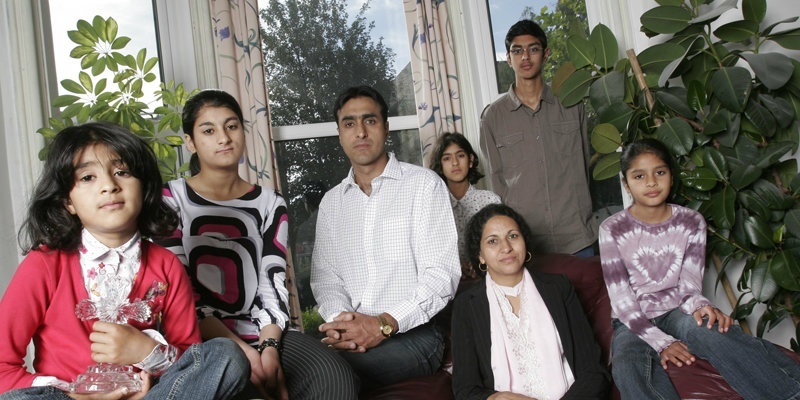
Pope Francis addressed the increasing challenges caused by violence in the Middle East with members of the Syriac Catholic Church, urging them to work alongside other churches to find solutions.

“Many have fled to seek shelter from an inhumanity that throws entire populations out into the streets, leaving them without any means of survival,” the Pope observed in his Dec. 12 address.

Together with other churches, he said, “seek to coordinate your efforts to respond to the humanitarian needs, whether of those who remain in their homelands or of those who have sought refuge in other countries.”

Pope Francis gave his speech to His Beatitude Ignace Youssif III Younan, Patriarch of the Syro-Catholic Church, as well as the other syro-catholic bishops gathered in Rome for their Dec. 8-10 annual synod.

In the meeting, which took place in the Clementine Hall of the Vatican’s Apostolic Palace, the Pope greeted the entire Syro-Catholic community, and offered his particular support for those coming from Syria and Iraq.

These communities, the Pope noted, “are living moments of great suffering and fear in the face of violence. And I accompany these sentiments of solidarity and compassion with remembrance and prayer.”

He commended the bishops and patriarch for their ongoing efforts to reform their Divine Liturgy, which he said requires an “intense appreciation” for tradition, as well as a great amount of thoughtful discernment.

“The difficult situation in the Middle East provoked and continues to provoke in your Church the displacement of faithful to eparchies in the diaspora, and places you before new pastoral demands,” Pope Francis observed.

It is a challenge, he said, to on the one hand remain faithful to their origins, and at the same time insert themselves into different cultural contexts in order to save souls and work for the common good.

By moving to other countries considered to be safer, the Christian presence in the Middle East is “impoverished,” the pontiff noted, explaining that it has always been a “land of the prophets, of the first preachers of the Gospel, of the martyrs and of many saints, cradle of the hermits and of monasticism.”

This history requires each of them to reflect on their own eparchies, the Pope observed, “which need zealous pastors, as well as courageous faithful, capable of witnessing to the Gospel when in discussions – sometimes not easy – with people of different religions and ethnicities.”

He encouraged them work together with other churches of the Middle East in addressing and finding solutions to the current humanitarian crisis, and urged them make a pastoral commitment to serving in “the ministry of hope.”

“I invite you to bring to all the expression of my closeness and of my prayer to the Lord,” Pope Francis said, and entrusted the Syro-Catholic Church to the protection of Mary, the Mother of God, St. Ignatius of Antioch and St. Ephrem.

Source and Original Content by Catholic News Agency