In New Book “Saving Christianity,” Michael Youssef Wonders If Christian Leaders’ Watering Down the Gospel and Acceptance of Sin May be Sign of the ‘Great Apostasy Before the Return of Christ’

Georgia megachurch pastor and televangelist Michael Youssef fears that the tendency today among some Christian leaders to water down the Gospel to make it “palatable” for today’s culture could be a sign of the “great apostasy before the return of Christ.”

Youssef, the 71-year-old founder of Leading The Way television ministry and pastor of the 3,000-member Church of The Apostles in Atlanta, issued sharp words of warning in his new book released Tuesday.

Not only does Youssef question what he considers to be heresies spewed by prominent left-leaning Christian thinkers who are trying to make the Bible more relevant in today’s political environment, but he also pulled from his own experiences growing up under the Arab Socialist Union in Egypt to warn about the dangers of socialism as he sees more young people embrace socialist ideals through their support of 2020 Democrat presidential candidate Bernie Sanders.

“I feel and sense in my spirit, as well as experientially, I am seeing more and more evangelical pastors who are turning their back on the faith,” Youssef told The Christian Post in an interview about his new book, Saving Christianity?: The Danger in Undermining our Faith and What You Can Do About It

“And while sometimes when the news comes out and shocks everybody, in reality, those little baby steps have been taken for many years. I want to warn the young pastors and the people in the pews to be aware of these little foxes that can destroy the vine. Be aware of the little things that water down the Gospel, modify the Gospel, and make it palatable to our culture [or else they are] going to end up like our friend, Rob Bell, in Michigan.”

Youssef, who has authored over 40 books and whose programs are broadcast in 26 languages worldwide, explained to CP that he felt inspired to write Saving Christianity? after seeing too many evangelical pastors — such as Bell — renounce their evangelical beliefs and compromise biblical truths related to sinful behavior over the years.

In the last year, headlines were made as other influential figures such as Maryland megachurch pastor and author of the 1997 book, I Kissed Dating Goodbye, Joshua Harris, announced he was falling away from his faith. Harris has also openly embraced LGBT advocacy.

While the debate over the issue of sexual sin has been had in many mainline denominations, Youssef believes that a similar debate is coming for evangelical churches and leaders.

Saving Christianity? highlights a number of former evangelicals who have gained prominence by criticizing conservative evangelical theology. Among many mentioned in the book are the late Rachel Held Evans and Brian McLaren.

Among those who have given up on conservative evangelical beliefs, Youssef said there seems to be a common theme of wanting to be loving and accepting of everybody no matter what their sins might be.

“[Y]ou have to go and change the Bible in order to make that acceptance of sin possible,” Youssef said. “And so they basically bring down on the authenticity and the infallibility of the Word of God.”

Youssef recalled his own time serving as an Episcopal priest in the 1980s. The Episcopal Church had for years debated the affirmation of homosexuality and in 2015 voted to formally approve same-sex marriages in the denomination.

“I fought those battles in the mainline denominations. And so, it’s almost like ‘Groundhog Day’ for me,” Youssef explained, referencing the 1993 Bill Murray movie. “You know, this is deja vu all over again. I’m seeing it now in the evangelical church. And that makes me wonder: Are we really experiencing what the Bible talks about as the Great Apostasy before the return of Christ?”

SOURCE: Christianity Today, Samuel Smith

All Content & Images are provided by the acknowledged source

Trans World Radio Men’s Ministry Talks Tough Issues with ‘Every Man A Warrior’ Podcast

It took a crisis of faith for Lonnie Berger to really understand what helping men meant.

Berger always had a vision for evangelism, mentorship, and discipleship. He went the traditional route of training in Bible school, serving as a Gospel worker in Communist Romania and finally getting involved in his home church. 

However, he soon noticed that the men he wanted to help at home were bored. His dream of mentoring men in his church crashed hard on the rocks of reality.  

Lectures on theology weren’t cutting it. Men’s breakfasts and camping trips were fun but shallow. He knew the men in his church longed for something more authentic and practical. His friends desperately needed something to help them succeed in life. 

Finally, Berger did the obvious thing. He was giving them what they needed, but he decided to ask them what they wanted. “One time I stopped the Bible study and said, ‘Men, tell me what’s going on in your life.’ ” It was like taking a drink from a fire hose. The needs came in a torrent. “They told me how their marriages were hurting. Their children weren’t doing well. Money was tight. Work was awful, and some admitted that they use pornography as a way of escape.”

SOURCE: Mission Network News, R.B. Klama

All Content & Images are provided by the acknowledged source

Trans World Radio Men’s Ministry Talks Tough Issues with ‘Every Man A Warrior’ Podcast

It took a crisis of faith for Lonnie Berger to really understand what helping men meant.

Berger always had a vision for evangelism, mentorship, and discipleship. He went the traditional route of training in Bible school, serving as a Gospel worker in Communist Romania and finally getting involved in his home church. 

However, he soon noticed that the men he wanted to help at home were bored. His dream of mentoring men in his church crashed hard on the rocks of reality.  

Lectures on theology weren’t cutting it. Men’s breakfasts and camping trips were fun but shallow. He knew the men in his church longed for something more authentic and practical. His friends desperately needed something to help them succeed in life. 

Finally, Berger did the obvious thing. He was giving them what they needed, but he decided to ask them what they wanted. “One time I stopped the Bible study and said, ‘Men, tell me what’s going on in your life.’ ” It was like taking a drink from a fire hose. The needs came in a torrent. “They told me how their marriages were hurting. Their children weren’t doing well. Money was tight. Work was awful, and some admitted that they use pornography as a way of escape.”

SOURCE: Mission Network News, R.B. Klama

All Content & Images are provided by the acknowledged source
Olympic Wrestler J’den Cox Shares How his Relationship with God Has Grown After Nearly Ending his Life in College

If you are in crisis, please call 800-273-8255 or visit suicidepreventionlifeline.org. You are not alone.

J’den Cox has won wrestling matches at the highest levels, including a bronze medal at the 2016 Olympic Games—but he believes the battles he wrestles with himself often usher in the greatest victories.

Cox, 24, is a three-time NCAA Division 1 wrestling champion, and an Olympic bronze medalist who also won four state titles while in high school, amassing only three losses in that time frame.

He also won gold medals at the 2018 and 2019 World Championships, and a bronze medal at the 2017 World Championships. These are just a few of his accolades.

Still, it is Cox’s internal matches that have truly ushered in his most transformative victories.

In his freshman year at the University of Missouri, he found himself struggling to the point where he wondered if he should just throw the towel in all together—and not on a wrestling match, but on his very life.

Listen to Cox reveal his incredible faith journey:

The climax came one day when Cox was in the midst of battling the demons from his past; he found himself on the edge of a highway, considering ending it all. A chance phone call from his coaches at that very moment helped save his life.

Years later, he’s better and has no problem opening up about his past struggles.

“For a long time, I was ashamed to talk about it because people struggle to show empathy for things they can’t see and understand,” Cox said of his past emotional struggles. “I was afraid to ask for help, and I think that’s something I try to preach now.”

Cox began to go to therapy and changed his mindset, as he worked on bettering his mental health—all while not missing a step on the wrestling mat.

SOURCE: Charisma News

All Content & Images are provided by the acknowledged source

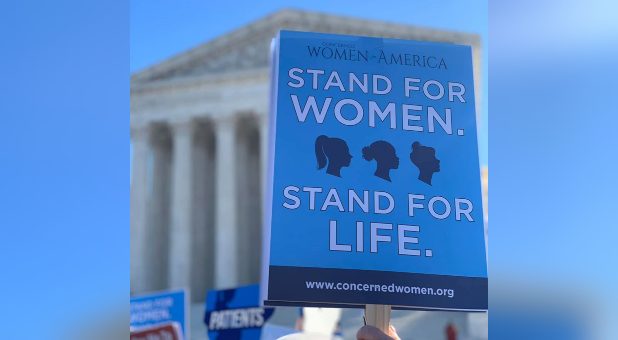
‘Concerned Women for America’ Advocates for Women Rights and the Unborn on Supreme Court Steps

Concerned Women for America (CWA) rallied at the steps of the U.S. Supreme Court Wednesday, March 4, to advocate for the rights of women and the unborn.

Pro-life advocates gathered for the “Protect Women—Protect Life” event in support of June Medical Services v. Russo, a law in Louisiana that requires abortionists to have admitting privileges at hospitals in case a woman has a medical emergency during an abortion. The law has drawn criticism from those in the abortion industry and pro-abortion advocates.

“We cannot say all life is important and ignore the threat posed to women by an abortion procedure,” says Sancha Smith, a member of CWA of Louisiana. “I do not understand how the pro-choice lobby can claim to stand for women’s health while working for this bill to be overturned.”

CWA posted on Facebook during the rally, saying:

“We are currently at the steps of the @TheSupremeCourtoftheUnitedStates. We need to listen to women—not abortion providers. Abortion doctors are asking for a special exemption from the standard that applies to doctors at ambulatory surgical centers. Women deserve better than that.”

SOURCE: Charisma News

All Content & Images are provided by the acknowledged source
Online Evangelism Group to Present Gospel to 2 Billionth Person by June 2020

Global Media Outreach—the leader in online evangelism—is on pace to top 2 billion gospel presentations worldwide by June 2020.

Founded in 2004, the internet ministry pioneer has touched lives in every country on earth, presenting the Gospel an average of 350,000 times a day and seeing 223 million decisions for Christ to date.

“In the early days of the worldwide web, these questions came to me, ‘What if we could put God’s Word on the internet?’” said Global Media Outreach Founder and Chairman Walt Wilson, who was on Apple’s MacIntosh development team. “What if we could meet people at their point of need? What if we could bring them to Calvary’s cross and then disciple them?’ Clearly, as we surpass 2 billion people hearing the Gospel, the answer is, with God making it possible, this is what can happen!”

Global Media Outreach employs emerging technology created for business to reach people through social media; email; online advertisements; voice technology and a proprietary, secure messaging system. As individuals respond to the Gospel online, they receive support to grow in their faith and are connected to the Christian community.

SOURCE: Charisma News

All Content & Images are provided by the acknowledged source
Jerry Wiles on The Storms of Life

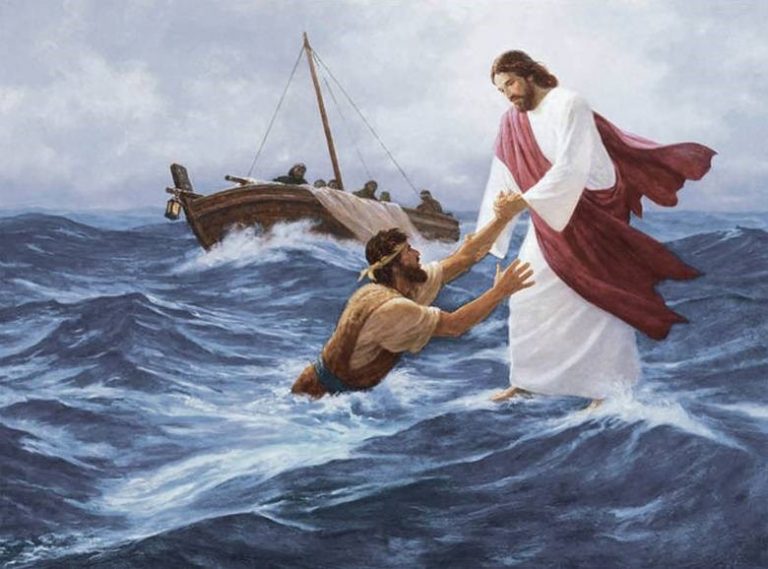
We all encounter the storms of life;  difficulties, problems and crisis situations.  Who do you go to during those storms of life?  How do you respond in the bad times?  These are important questions and reveal a lot about our relationship with and walk with God.  One of the main stories we use in our Orality Training is the story of Jesus Calming the Storm, recorded in Mark Chapter 4.  During that storm, the disciples went to Jesus and asked, “Rabbi / Master,  don’t you care that we are about to die?”  There are many people today asking similar questions, i.e. “Does God care about us and the troubles we face?”  Well, the good news is that He not only cares, but has the ability to intervene and change our lives and circumstances.

Every Negative has a Positive

It is often in the most difficult times and in the darkest places that God intervenes in the most amazing ways.  One of my mentors use to emphasize that every negative has a positive.  Furthermore, the more negative the negative, the more positive the positive.  It is a phenomenal way to live our lives with that perspective.  A friend of mine use to have a saying, “When it’s good, it’s good, and when it’s bad, it’s good” because God is involved in our lives all the time.  A life of victory is seeing God in all circumstances, and giving thanks in all things.

Character Building Experiences

It’s one thing to know these truths factually and biblically.  However, when we experience those tragedies, crisis or dark times, God often does a deeper work in building real character in our lives. The storms of life are a time to reflect and meditate on the character of God.  Years ago I heard a Bible teachers on the radio talk about these topics in the context of the purpose of suffering.  He said that difficulties, suffering and hard times can be used to 1. Focus our faith, 2.  Fashion our character, and, 3.  Fit us for service.

Growth Happens in the Valleys, not the Mountain Tops

A professional counselor friend uses a picture of a mountain scene to illustrate a lesson about our walk with the Lord.  He points to the picture and asks, “Where do you see the growth, on the mountain top, or in the valley?”  It’s obvious that the growth takes place in the valley, not on the mountain.

SOURCE: Assist News

All Content & Images are provided by the acknowledged source

Michael Brown on It Was Drag Queens Dancing for Little Children That Got My Attention in 2004

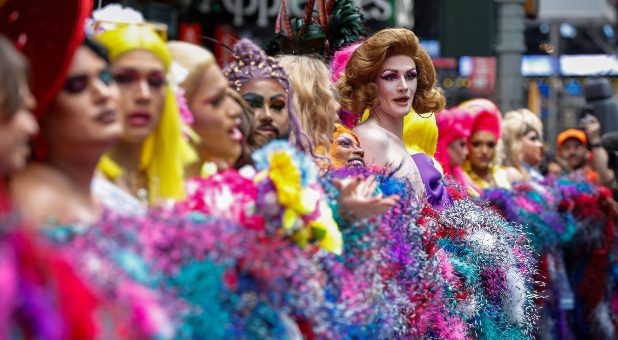
It’s tragic and perverse enough that drag queens reading to toddlers is now a national and international craze. But a new video takes thing even further, as a scantily-clad drag queen dances suggestively in front of a little girl seated in a chair. Even worse, the adults in the room seem delighted with this act of public child abuse. Yet it is this identical scenario that helped motivate me to take a stand back in 2004.

Prior to 2004, gay activism was not a major focus of my ministry. Not in preaching. Or teaching. Or writing.

Check out every one of my books written prior to that year, and you will find a few references to homosexual activism scattered between them. Add all those references up together, and I doubt it would even amount to a full page.

Or listen to the thousands of messages I preached prior to that year, dating all the way to back to 1973. LGB activism (there was very little “T” activism back then) was hardly on my radar.

But things changed in 2004.

While I was speaking in England in the spring of that year, some of my ministry colleagues were invited to share the gospel in the midst of a gay pride event in Charlotte, North Carolina. (Our ministry relocated there in the late summer of 2003.)

They were shocked by what they encountered. It was as if the world was turned upside down.

Lesbian cops held hands as they walked through the park, which was located right in the heart of the city. And if you were wearing a Jesus T-shirt or carrying a Bible, you were asked to leave.

We’re not talking about being asked to leave for intimidating the pride participants. We’re not talking about several people surrounding an individual and harassing that person. We’re not even talking about allegations of rudeness.

Simply sharing the Gospel was forbidden. Or carrying a Bible. Or wearing a gospel-based T-shirt.

But there was something even more disturbing.

SOURCE: Charisma News

All Content & Images are provided by the acknowledged source
Life.Church Pastor Craig Groeschel Quarantined at Home for Possible Coronavirus Exposure After Attending Leadership Training Conference in Germany

Two pastors of one of the nation’s largest churches are being quarantined by local health authorities at home after being exposed to the new coronavirus at a leadership training conference in Germany.

Craig Groeschel, senior pastor of Oklahoma-based Life.Church, which claims nearly 90,000 attenders at its 34 campuses spread over 10 states, was a featured speaker at Willow Creek Deutschland Leitungskongress 2020, which took place Feb. 27-29 in Karlsruhe, in southwest Germany. He attended the meeting with Bobby Gruenewald, another of the church’s leaders.

The conference, which had about 7,400 attenders, was cut short after one presenter became ill with COVID-19, according to organizers. COVID-19 is the disease caused by the new coronavirus. As of Wednesday (March 4), more than 87,000 cases of the illness had been reported globally, according to the World Health Organization.

Groeschel and Gruenewald learned of their need to be quarantined while traveling back to the U.S. The two went into quarantine for 14 days after returning to their homes in the Oklahoma City suburbs, where they have had no direct contact with church members or their families.

Neither has shown any symptoms of COVID-19.

“Pastor Craig and I are at home and healthy,” Gruenewald, innovation leader for Life.Church, told Religion News Service in a statement. “While en route home from Germany, we were made aware of the situation at the conference. We immediately notified health authorities and have followed every recommendation. Out of an abundance of caution, we have been isolated in our homes the entire time, even limited from interaction with our families. We have no symptoms, and someone is checking on us regularly.”

The church said it already has protocols in place to keep attendees healthy during flu season and is evaluating whether additional precautions are necessary, though Groeschel and Gruenewald themselves seemed determined to downplay their situation: The terms “coronavirus” and “COVID-19” were notably absent from the pastors’ statements.

Gruenewald said he and Groeschel remain in good spirits despite their isolation. “We’re making the most of this time to focus on ministry work and even doing some extra situps and pushups.”

Groeschel, whose book Fight made the New York Times’ bestseller list in 2013, serves as “champion” for the Global Leadership Summit, hosted each summer by Willow Creek Community Church, the influential Chicago-area megachurch. He became the public face of the training conference after the retirement of Bill Hybels, Willow Creek’s founder.

According to a statement from the German conference organizers, anyone who had direct contact with the ill speaker has been quarantined. The speaker is “already on the mend,” said the statement. However, a couple who had contact with the speaker before the conference has tested positive for the virus.

“The significant point is the German Leadership Summit was prematurely ended as a precaution and currently it is proving to be the right decision,” said Tom De Vries, president and CEO of the Global Leadership Network, which organizes the summer event held at Willow Creek and other similar events in other countries.

“While disappointing, the participants at the Summit were appreciative of the time we experienced together, the protective steps taken to ensure the safety of the more than 7,400 people attending live in Karlsruhe, and were prayerful for those affected by contact with the speaker as well as the speaker himself.”

Scott Thumma, professor of the sociology of religion at Hartford Seminary, said megachurches like Life.Church are well prepared to deal with the absence of their pastor from worship.

Since the church has more than one site, the preacher often appears by video during services. And if he wanted, Groeschel could preach from quarantine, said Thumma, who studies megachurches.

Life.Church and similar megachurches also have extensive small group networks, where congregation members meet during the week, he noted. If there were a health crisis, they could keep doing church without the large group gatherings.

Many megachurches already stream their services online and have online giving and ways to share prayer requests online, said Thumma. And unlike liturgical churches, where congregants need to be present to partake of sacraments such as Communion, megachurch congregations can still worship without being in a church building.

So they could deal with health concerns and still do church.

“They could worship online for a month and not miss a beat,” he said.

Megachurches also have sophisticated security and safety practices and could easily take steps to reduce the risks of spreading the coronavirus, he said.

Because Life.Church’s congregation is split into many smaller campuses—rather than one large auditorium—there’s likely less risk of a virus spreading to large numbers of people.

A megachurch in South Korea is suspected of contributing to the spread of the virus in that country. Government officials have linked a number of cases in South Korea to the Shincheonji Church of Jesus, according to The Wall Street Journal.

SOURCE: Religion News Service

All Content & Images are provided by the acknowledged source

Frances J. Roberts said…

All Content & Images are provided by the acknowledged source