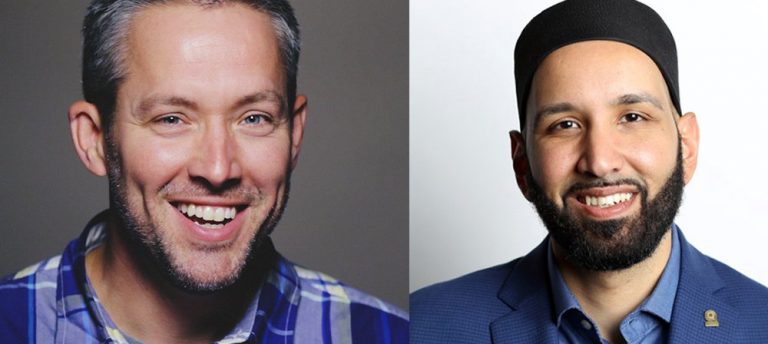
SBC President J.D. Greear and Imam Omar Suleiman to Discuss Christian-Muslim Relations at North Carolina State University

This week more than 500 evangelical students will hear Southern Baptist Convention President J.D. Greear and Yaqeen Institute founder Imam Omar Suleiman discuss how evangelicals and Muslims can find a way forward “in a time of unprecedented division and distrust.”

The conversation, hosted by the Veritas Forum, will be held Thursday (March 5) at North Carolina State University and is co-sponsored by the school’s Muslim Students Association, its Cru and InterVarsity clubs, and Neighborly Faith, an organization focused on transforming evangelicals’ attitudes toward Muslims.

“We’re trying to host what some might see as an unlikely conversation to be had in such a public forum, when we think about how isolated these communities have historically been from one another in our country, particularly since 9/11,” said Neighborly Faith director Kevin Singer, who is a doctoral student at the school and will moderate the discussion.

Most of the attendees will be deeply conservative evangelical students who likely have never held a conversation with a Muslim before and do not have Muslim friends, Singer noted.

“They probably don’t know how to have a mutually beneficial conversation with a Muslim in a way that feels faithful, so we’re hoping to show a model of charitable discourse that maintains conviction,” he said.

Being on a Southern campus, Singer said, the event may end up addressing some “cultural notions about Islam within the Christian faith and in this particular region.”

Imam Omar Suleiman, left, with Rev. Andy Stoker at
First Methodist Church in Dallas. Photo courtesy of Omar
Suleiman

Suleiman told RNS he feels well-equipped to address such misconceptions: Having grown up in New Orleans and now living in Dallas, where he teaches Islamic studies at Southern Methodist University and often meets with evangelical leaders both in public and in private, Suleiman says he is intimately acquainted with Southern church life.

A prominent activist for civil rights and interfaith issues who is known for denouncing extremism, Suleiman has faced hostility from multiple sides, including threats from the Islamic State group. Commentators from the Christian right such as pastor Robert Jeffress have criticized him, as well.

So far, the imam said, the response to the event has been positive, with the exception of a stray social media comment.

Suleiman said he hopes the minority of Muslim students in the audience will glean something from the conversation, too.

“A lot of times we shy away from spaces where we think we won’t be welcomed in the fullness of ourselves as Muslims, but if we speak to the beautiful themes in our religion then that will resonate with people,” he said. “If we want to be bridge builders, we need to be consistent in our call for bridge building. We can’t only build bridges with people we’re comfortable with. We have to get over this apprehension that if we talk to people that we don’t agree with on everything, then we’ll lose what makes us unique as Muslims.”

Suleiman said such a public event, with a Muslim leader on stage beside a significant evangelical figure like Greear, sends a critical message of hope to both communities about the “possibility for dialogue.”

Source: Religion News Service

All Content & Images are provided by the acknowledged source

Pastor Eugene Cho Releases New Book ‘Thou Shalt Not Be a Jerk’ for Christians Engaging in Politics in a Contentious Election Year

The last thing Eugene Cho wanted to write a book about was politics.

In fact, Cho said he quit writing his latest book, “Thou Shalt Not Be A Jerk: A Christian’s Guide to Engaging Politics,” four times.

The pastor, author and founder of the nonprofit One Day’s Wages kept imagining the criticism he would receive. Nowadays, he noted, it seems like there is no “middle ground” in politics or anything else, “no nuance in how we’re navigating certain conversations.”

But he also kept feeling compelled — by the Holy Spirit, he said — to finish the book.

“There’s a lot of folks in the middle that are trying to bumble and stumble our way through,” he said. “We take our faith seriously, we know politics matters because it informs policy and that impacts people, and we’re just trying to figure that out as best as we can as followers of Jesus.”

“Thou Shalt Not Be A Jerk” released this weekend ahead of Super Tuesday (March 3), when the largest number of states vote in primary elections and caucuses on one day.

In the run-up to November’s general election, Cho said, “I would say obviously this is an important election.”

He’s not naïve, he said. He believes God is sovereign. But he also believes that doesn’t preclude him from caring about what happens.

“God is sovereign and I choose to care and I believe that it matters,” he said.

“Politics and foreign policies impact real human people, and so, yes, it does matter. But, you know, I won’t go as far as to say it’s the most important and everything for all eternity is going to hinge upon this election.”

He also would never encourage Christians to vote reflexively with a single political party — either Republican or Democrat.

Cho talked to Religion News Service about the 10 commandments of engaging in politics in his book “Thou Shalt Not Be A Jerk” and about a better way for Christians to take on the subject in a contentious election year. This interview has been edited for length and clarity.

I wrote the book for three groups of people: There’s a group of folks that have altogether disengaged from politics for whatever reason, including some folks that believe politics isn’t really part of the responsibility of Christians in any form or fashion. I’m also writing this book for a group of folks that I feel like have made politics our idolatry of our time — that we’re so obsessed by it, it justifies everything we do because of our ideology. And then I think there’s another group of people that are kind of enamored by the power of politics, and rather than our theology informing our politics, it feels as if our politics informs our theology.

I think this is part of the reason why there are a lot of folks just wondering why and how are Christians acting in the way they are or choosing to say certain things during this political climate and season.

“Thou Shalt Not Be A Jerk: A
Christian’s Guide to Engaging
Politics” by Eugene Cho. Courtesy
image

I think it’s actually OK to identify with a political party. I think it’s OK to support a politician. I think it’s OK to donate to a campaign. I don’t think those things are bad. But I think there is a distinction when we’re so immersed in a particular party and its power that we’re unwilling to think objectively and to discern and realize that it’s just crazy to think a political party can monopolize or encapsulate the kingdom of God.

It’s a question I often get from folks that are just trying to navigate these waters: Are you a Republican or Democrat? That’s the question we often ask people. We want to box them in and identify them in this way. And my response to people is, “Well, what are we talking about? What is the topic we’re talking about?” Because it’s impossible, at least for me, to identify exclusively with only one political party.

And I think that’s what I mean: When we go to bed with a particular political party, if we’re not careful, we end up being more tribal, and we’re unwilling to challenge our own party or sentiments or views. One of the things I write about in the book is my concern that our politics is shaping our theology rather than our theology shaping our politics.

The word politics has kind of a negative connotation for some, and I think what we have to understand is that politics is just a natural process of governance of any healthy society. And, as Christians, we’re called to love God and love people. When we read the Sermon on the Mount, when we read the Beatitudes, it gives us an ethic of how we’re to live our lives, including how we interact with other people, as well.

So the reason why politics matters is because it informs policies which ultimately impact people. And the last time you and I checked out the Bible, God cares about people, including those who are forgotten or marginalized or vulnerable. So, yes, I think it really matters.

I hear a lot of pastors also push back at me and say, “Christians — and pastors especially — shouldn’t discuss politics at all.” But if we’re not discipling our church folks, if we’re not having these conversations, the reality is they’re being discipled by other things, other people, other sources, other cable news, other pundits. And that’s, I think, part of the reason why we’re in this conundrum.

Source: Religion News Service

All Content & Images are provided by the acknowledged source

Tithe-Paying Born-Again Believers Are Protected from Coronavirus Says New Zealand Pastor

Tithe-Paying Born-Again Believers Are Protected from Coronavirus Says New Zealand Pastor


A New Zealand senior pastor says Christians who tithe, believe the Bible and are filled with the Holy Spirit are protected from coronavirus.

Destiny Church leader Brian Tamaki was speaking this week in Auckland when he said that Bible-believing Christians who tithe have a Psalm 91 “protection policy” against coronavirus.

“You will not fear the terror of night, nor the arrow that flies by day, nor the pestilence that stalks in the darkness, nor the plague that destroys at midday,” he said, reading from Psalm 91. “We needn’t fear it. There is a lot of hysteria that has been engendered by certain elements about this pandemic,” he said.

Tamaki said that “satanic spirits” control how viruses travel in the air, but Christians are safe from the virus.

“The prince of the power of the air, Satan, has control of atmospheres, unless you’re a blood-bought born-again, Jesus-loving, Bible-believing, Holy Ghost-filled, tithe-paying believer. You are the only one that can walk through atmospheres and has a, literally a protection — the Psalm 91 protection policy around you,” Tamaki said. “I don’t care if you don’t believe it. It’s all right.”

Tamaki’s advice, however, is drawing some criticism from other church leaders. Rev. Helen Jacobi, vicar at central Auckland’s St. Matthew-in-the-City, said Tamaki’s comments are “incredibly unsafe.”

“People…

… Read More

Click here to read the rest of the story from our content source/partners – Christian Headlines.

قالب وردپرس

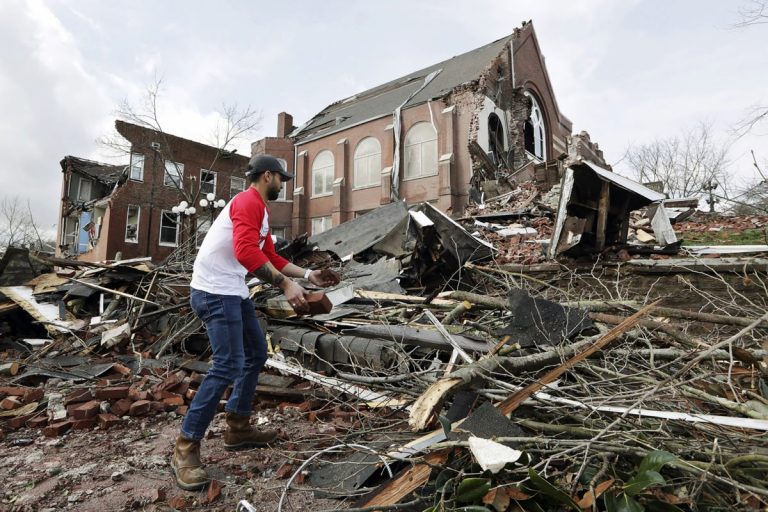
Faith Groups Gear Up Disaster Relief After Deadly Tornadoes in Tennessee

NASHVILLE, Tenn. (RNS) — Faith-based disaster groups are gearing up to provide assistance after overnight tornadoes killed at least 21 people across four counties in Tennessee.

A state of emergency was declared Tuesday morning (March 3), according to the Tennessee Emergency Management Agency.

“Please keep the great people of Tennessee in your hearts, thoughts and prayers,” the agency posted on its Facebook page. “Strong storms and tornadoes have caused severe damage, injuries and death. Our state is strong, because our people are strong.”

Faith groups will assist with the cleanup from the storm.

Tennessee Baptist Disaster Relief teams will be mobilized soon, according to Wes Jones of the Tennessee Baptist Mission Board.

“We have local teams that have already gotten out and are trying to help people in Nashville and the surrounding area,” Jones told the Tennessee Baptist and Reflector, the state Baptist paper. “Meanwhile we are working with emergency management services to better understand where we can deploy resources.”

Chris Turner, spokesman for the mission board, said some volunteers were already at work in their local areas.

Source: Religion News Service

All Content & Images are provided by the acknowledged source

Missionaries Bring Faith and Hope to Puerto Rico Rebuilding

GUAYNABO, Puerto Rico (BP) — Puerto Rico garnered headline after headline when Hurricane Maria struck in 2017. The major storm devastated the island, and as happens after such a catastrophe, news media scrambled to cover the story.

A little over two years later, thousands of families remain in need. Yet, few outsiders consider their plight now.

“No one talks about Puerto Rico in the news anymore,” said Jonathan Santiago, a 2020 Annie Armstrong Easter Offering Week of Prayer missionary. “September 2017 is ancient history, but I wish people could see what I see. Sometimes, it’s like Hurricane Maria happened yesterday.”

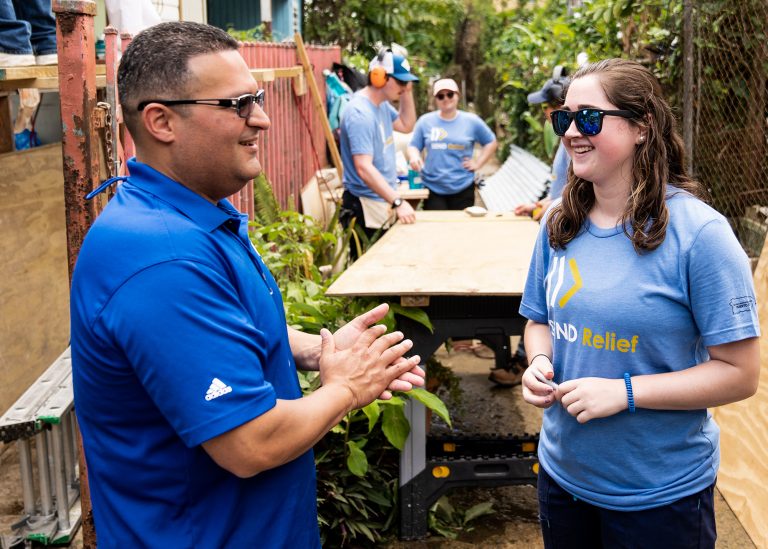
For Santiago, the passion that fueled his multiple trips to Puerto Rico in the immediate aftermath of Maria persists. In fact, his heart stirred, and God led him and his family to move from New York to serve full time through Send Relief, Southern Baptists’ compassion ministry arm.

“The North American Mission Board (NAMB) asked us to consider coming back to Puerto Rico to serve in my current role as director of Send Relief for Puerto Rico,” Santiago said.

The job is a big one. He coordinates crisis response ministry across the island where an estimated 30,000 homes still have only blue tarps serving as their roofs.

“Hurricane Maria was the worst disaster in Puerto Rican history, but what really gets to me is not what Maria did to our property but what it’s done to our people,” Santiago said. “When you look at different communities, you see the hopelessness. You see so many families still struggling.”

The physical toll the storm took is only surpassed by the emotional and spiritual hit the people have endured. While Send Relief helps with the physical rebuild, the aim is also to meet spiritual needs through the power of the Gospel.

“They say it’ll take 8 to 10 years to get things back to where they were before Maria,” Santiago said. “But Puerto Rico’s mental, emotional and spiritual brokenness is no match for the hope that we find in Jesus Christ.”

As it stands, there is only one Southern Baptist church for every 44,522 people in Puerto Rico. The vast majority of Puerto Ricans — 85 percent — identify with Roman Catholicism.

Source: Baptist Press

All Content & Images are provided by the acknowledged source

As Death Rate From Coronavirus Rises, Global Ministries Aid Those Affected by Outbreak: 'My Hope Rests in God'

As the number of deaths related to the coronavirus rises, ministries are stepping up and offering assistance to those affected by the outbreak around the globe.

The World Health Organization (WHO) just revised the global death rate of the coronavirus, saying it’s fatal for up to 3.4 percent of people who get the infection, The New York Times reports.

A WHO spokesperson, Dr. Margaret Harris said the increase was a “crudely calculated” image of the disease’s death rate globally, and was anticipated to “change over time, and vary from place to place.”

In the US, there are at least 120 cases in more than a dozen states and nine deaths that have occurred in the Seattle, Washington area.

Ministries have been delivering personal protection supplies to prevent the disease from spreading.

In February, The Billy Graham Evangelistic Association (BGEA) and Samaritan’s Purse (SP) sent over 70 pallets of medical supplies and protective clothing to Wuhan, China. 

Also, BGEA and SP’s China Ministry shipped 10,000 protective masks to the city of Huai’an.

“Thank God our friends from the USA sent the masks to us at the right time—when we were in desperate need. Praise the Lord!” said the chief director of Huai’an No. 4 People’s Hospital in China.

 
The China Ministry team is also trying to calm the public’s fears by talking with ministry contacts through WeChat, one of China’s largest messaging and social media apps.

BGEA developed a webpage (link) https://peacewithgod.net/worried-about-coronavirus/ in response to concerns with the coronavirus and is offering spiritual relief.

Those who are worried about further development of the outbreak are encouraged to give their doubts and fears to our Father God.

“The world is looking for #Hope”…
“We must choose #Compassion over #Fear”…#Trust #CoronavirusOutbreak > https://t.co/T6cYPd81me

— Rubbie Rose (@JustRubbie) March 3, 2020

The coronavirus has so far infected more than 94,000 people in 60 countries around the world, with more than 3,200 deaths.

“This virus is ruthless, and we don’t know where it is from or where it is going. Yet, Jesus is love, and we do know where He is from and where He is going. We are following Him,” said Daniel Ma, senior ministry representative for BGEA and SP’s China Ministry.

GET YOUR FREE FACTSHEET Coronavirus: What You Need to Know

Franklin Graham, the president and CEO of the BGEA and Samaritan’s Purse said, “We pray for the people of China and other nations where this virus is spreading. Our hearts go out to those who are sick and suffering and to the families who are grieving the loss of loved ones. The world is looking for hope. My hope rests in God. King David said, ‘Yea, though I walk through the valley of the shadow of death, I will fear no evil: for thou art with me…’ (Psalm 23:4).”

“One day we will all stand before Him and give an account of how we have lived our lives. My prayer is that each and every one will put their hope and trust in Jesus Christ,” Graham said.

Source CBN

All Content & Images are provided by the acknowledged source

Definition of Spiritual Abuse Debated by British Christians

Last month, the board of Acts 29 voted to remove Steve Timmis as CEO of the global church planting network, following an investigation into his “abusive leadership.” Timmis then resigned as elder of The Crowded House, Sheffield, where he was also accused of spiritual abuse.

The allegations and subsequent fallout highlight an ongoing debate over the nature and extent of “spiritual abuse” in evangelical churches in the United Kingdom. At issue is how to define the controversial phrase, how to determine its limits and scope, and how to appropriately prevent and address it.

In 2017, more than 1,000 British Christians reported being victims or survivors of spiritual abuse in a study by CCPAS (Churches Child Protection Advisory Service), a UK Christian safeguarding charity now known as ThirtyOne:Eight.

Even so, the co-authors of the report—Lisa Oakley, associate professor at the University of Chester, and Justin Humphreys, CEO at ThirtyOne:Eight—acknowledged “the term ‘spiritual abuse’ is currently contentious.”

“In some areas, the use of this term is generally accepted,” said Humphreys. “In others, it is questioned, and in yet others it has raised anxiety and concerns.”

While there remains no legal definition of spiritual abuse, in 2018 a Church of England vicar was the first to be found guilty of it for his inappropriate actions against a teenage boy in Abingdon. This case, and that of Timmis, have caused consternation over where to draw the line between exhortation and coercion—between a challenging message and a toxic culture of control.

Oakley and Humphreys—who recently publishedEscaping the Maze of Spiritual Abuse: Creating Healthy Christian Cultures—define spiritual abuse as “a form of emotional and psychological abuse … characterized by a systematic pattern of coercive and controlling behavior in a religious context.”

For the authors, spiritual abuse adds an additional layer to an abusive experience “when it is grounded and justified with a level of spirituality,” said Humphreys.

However, critics of the term argue that there is no need to add “subsections” to the already accepted categories of abuse: sexual, physical, emotional, and neglect. Lee Gatiss, director of the Church Society, wrote that the accuracy of the term is “debatable” and that perhaps it can serve as an umbrella term for other forms of abuse, but it is not its own distinct form of abuse.

To be fair, Oakley said that while she initially argued for spiritual abuse to be a separate category, she has now come to a point where she believes “the evidence suggests it is a form of psychological and emotional abuse being evidenced by a systematic pattern of coercive and controlling behavior.”

There is also a fear that such specific terminology “might spiritualize criminal offenses” that are considered inappropriate in every context, not only within the confines of a religious community, said David Hilborn, chair of the Theological Advisory Group of the UK Evangelical Alliance.

In a 2018 report, Hilborn wrote that the term was too ambivalent and that there is nothing “substantively or categorically distinct about ‘spiritual abuse’ when compared to legal understandings of emotional and psychological abuse.”

While emphasizing that the Evangelical Alliance takes all forms of abuse in the church seriously, he said, “we don’t want offenses committed specifically by pastors, or elders to be ghettoized by a language, which can only apply to those who are spiritual, however spiritual is defined.” For Hilborn, this raises the specter of attacks on religious freedom.

Giving spiritual abuse a status as “a criminal offense could specifically target religious people on the basis of their faith,” said Hilborn, “and that is deeply problematic.”

Although Oakley and Humphreys are not wed to the terminology, they both affirmed that “spiritual abuse is an appropriate term” because it identifies the particularities of abuse used “with direct reference to sacred texts or operating on behalf of a divine entity.”

Referencing the specificity of domestic abuse as “a clear example of coercive, controlling, and manipulative behavior in an intimate or family relationship,” Humphreys said that the concept of spiritual abuse “speaks directly to one’s soul and one’s being in a way that we just don’t see in any other context.”

Despite the debate, the term has cultural purchase. On various websites, social media platforms, and online forums, victims and survivors share their stories using the language of “spiritual abuse.”

Individuals like Jodie Stanley, whose father abused multiple members of his church and family, found that the term spoke to her own trauma. She said that the church’s lack of discernment on issues like spiritual abuse, and disdain for acknowledging them, creates a “noxious” environment where suffering like hers can readily occur.

Source: Christianity Today

All Content & Images are provided by the acknowledged source

Jeff Peabody on How the Prophet Daniel’s Prayer Answers Our Modern Outrage

Jeff Peabody is a writer and lead pastor of New Day Church in Northeast Tacoma, Washington. The views expressed in this commentary are solely those of the author(s) and do not necessarily represent those of BCNN1.

Last fall, a friend from church was distraught. She forwarded me a video that has since gone viral and left her confused and alarmed. When I viewed it, I understood why.

In the controversial clip, John MacArthur shares his thoughts about popular speaker and author Beth Moore, declaring she should “go home” and citing the dangers of “women preachers.” His theological differences with her came as no surprise, but the sharp personal disdain—all in the name of sound doctrine—undermined any gospel message that was there.

Perhaps even more unsettling than his tone was the response of his audience, laughing in the background as if they relished his vitriol.

Such unfortunate images of Christian infighting and meanness are all too common, and they cause confusion and hurt. The trope “I love Jesus but hate the church” is contradictory, but the sentiment behind it resonates with many.

It saddened and angered me to see such an unloving attack being made in the name of Christ. At the same time, I confess I felt an unease about the ugliness it stirred up inside me. I found myself judging and assigning all kinds of motives to those people in the video. I had to wonder: Was my reaction to them any better than their reaction to Beth Moore? Of course, I felt my own indignation was warranted and reflected God’s heart. But MacArthur seemed equally confident he was the one on the side of truth.

It’s never been easy for followers of Jesus to embrace that we’re all part of the same big family. And today, Christians who strike us as exhibiting un-Christlike behavior have a constant public platform on social media and elsewhere online. The power of their voices in shaping society’s understanding of the church makes us want to distance ourselves and scream that WE are not THEM.

What do we do when we know we’re called to unity but feel justifiably outraged by our brothers and sisters? How can we keep the peace and our integrity at the same time? And how do we hold the tension of addressing the shortcomings of others while at the same time remembering our own?

The prophet Daniel might seem an unlikely guide in these matters. Yet his famous prayer, in Daniel 9, speaks directly to our times.

Daniel was taken into captivity along with thousands of other Israelites during the Babylonian exile. There he was confronted with the complexities of living out his faith in a foreign culture while working for a pagan king. His prayer comes after decades of service to a foreign nation.

You do not have to read very much of the text to recognize the prayer as a confession. Daniel finds just about every way imaginable to ask for forgiveness. And he fully identifies himself with his people: We have sinned. We have rebelled. We have not listened. We have done wrong. We have been wicked. We have transgressed. We have turned away. We have been unfaithful. We have refused to obey. We have not sought the Lord. We have not turned from our sins. We have not given attention to your truth.

You would be hard-pressed to find a more comprehensive acknowledgment of guilt, which is a little mystifying because, up until this point, Daniel hasn’t exhibited any obvious moral lapses. He’s been the very model of a faithful servant of God.

There’s a disconnect between his exemplary behavior and his humble confession. It makes you want to protest and say, “Daniel, you don’t have to do that. You didn’t do anything wrong. It’s those who were unfaithful who should be apologizing!”

Daniel’s approach is so opposite from my own. When it comes to collective sins—whether those of the church, the clergy, or the nation—I want to distance myself from the offense. I want to point out why “they” are not “me.” And I want to denounce what I see “them” doing.

I’m not alone in this. There’s a long history of line-drawing within the church, going all the way back to Paul and Barnabas parting company over whether John Mark was fit to serve (Acts 15:36–39).

Martin Luther condemned the Anabaptists as heretical for their rejection of infant baptism and called for their execution or banishment. The Puritans went to war with the Church of England over reforms they saw as nonnegotiable. George Whitefield and the Wesley brothers fought bitterly over predestination.

Entire movements and countless church plants trace their origins to a moment when insurmountable differences seemed to call for breaking fellowship. Today, we are at another cultural flashpoint, where divisions within the faith are particularly severe. And God-fearing people of all persuasions are certain they hold the moral high ground.

In her book Disunity in Christ, Christena Cleveland writes, “As much as we’d like to believe that Jesus is the author of our Right Christian and Wrong Christian distinctions, we can’t because it is simply untrue. By pursuing us with great tenacity in spite of our differences with him, he shows us that he doesn’t have need for those distinctions.”

When what we consider sin or error is unashamedly embraced by other Christ followers, what do we do? It’s painful to see people who claim the same Savior showing utter disregard for core tenets of his teaching. How do we maintain the unity of the body of Christ without looking as if we’re endorsing values we find offensive?

I find myself desperately wanting non-Christians to know what I am not. And that seems to be the current trend. We decry the despicable brokenness of other believers and encourage the world to turn away from them and look at us instead for a more palatable, truer depiction of faith.

But adopting a wholesale separatist approach feeds the lie that we are intrinsically different sheep from the rest of the flock. It deludes us into believing that our proper theology, superior morality, or enhanced sense of justice make us the keepers of God’s full perspective. We lean further and further into our own self-righteousness.

We think we need to pull away from others for the sake of holiness, so we adopt the pharisaical approach of building up more and more walls between us and those we deem less acceptable or legitimate. Our circle shrinks ever smaller until we are the only ones remaining within the rigid bounds of correctitude.

This is where Daniel’s prayer is so jarring. Instead of recoiling from the wickedness he sees around him, he places himself squarely in the middle of other people’s sin in addition to his own. There is no daylight between his personal failings and those of the larger community.

It’s a strikingly uncharacteristic posture for a prophet. We’ve come to expect fiery rebuke from those in that role. We sometimes claim to have prophetic insight ourselves when we want to speak a harsh word with authority. Daniel undermines our assumption that pronouncing judgment is the most pressing prophetic responsibility.

Think of his situation: God had warned his people over and over again that if they continued in their relentless rebellion, he would bring terrible judgment on Jerusalem and send the nation into exile for 70 years. Even with that warning, they didn’t listen, so God carried out what he said he would do.

Source: Christianity Today

All Content & Images are provided by the acknowledged source

Angie Ward on Cultivating Your Calling in Each Stage of Life

Angie Ward, author of the recently published I Am a Leader, has 30 years of leadership experience in diverse roles in ministry. Natalie Lederhouse was excited to talk with Angie about how our calling shifts through the various seasons of life.

Sometimes we think as young women that we have one calling, and that’s it. We just have to find it, and we put so much weight on that one thing. But for most people, it changes how it looks and how it’s lived out based on seasons of life and age. Our calling can also change because we change. Who we are, our gifts, our passions. And that’s okay.

For me, I started out in youth ministry, but then God expanded it. It didn’t shift entirely. It was still vocational/occupational ministry, but it went to more broad ministry—leadership and to leadership development. When I was 22, just out of college, I didn’t have the experience or the wisdom to train other leaders. I was just working with students who were sometimes only four years younger than me. The Holy Spirit moves and flows. Working with kids in children’s ministry at your church may make you aware of the needs of foster kids. It opens a door to a whole new thing.

Cultivate an ear for the Holy Spirit—a heart and a mind that’s receptive, that knows the Shepherd’s voice, and a heart that’s obedient and responsive to whatever it is during that season. A lot of times we get focused on the wrong question: What is it? We focus on trying to figure out the it. Instead, the real focus should be on cultivating our relationship with Jesus and walking with him. We want steps to cling to. If I do A, B, and C, we’ll get D. But there is a mysterious piece to discovering our calling; it’s not just a rigid set of steps.

First, embrace the concept of seasons. We live in an age, in an era, where we’ve lost the agrarian ideas of seasons and rhythms. Any time you hit a wall, right around the time change, we become aware that light and darkness—the seasons of the earth—actually do affect us physically and emotionally. There are times when it’s okay that you lie fallow. This illusion that there has to be constant fruit and constant summer and constant peak production is an erroneous way of thinking.

Second, accept that we have limitations, and that’s by God’s design. That’s not a flaw. I’m a high sleep person. I need eight or nine hours a night. I’ve always been envious of people that can do four or five hours a night, or six. I’m like, “I would do so much more for you God if you would just . . . ” But God’s like, I made you this way. This is by design. Seasons and rhythms and the need for rest and limitations—those are safety valves by God’s design. They’re not flaws.

Some people have the belief that a calling to motherhood automatically replaces any other calling. I don’t think that’s automatically true. It is for some people, but it’s not a blanket judgment you can make on everyone.

Before I was married and before I had kids, I felt the calling to vocational ministry, started out in youth ministry and then broader leadership development. I went to seminary, met and married my husband, and I was in ministry in Minnesota. Then I had our boys—and I felt this tension: I knew God had never said my ministry outside the home was done, but my kids were my primary responsibility. I knew I couldn’t do both jobs full-time and do them well.

Source: Christianity Today

All Content & Images are provided by the acknowledged source

Biden Makes Political History with Super Tuesday Wins, Bloomberg Drops Out

Biden Makes Political History with Super Tuesday Wins, Bloomberg Drops Out


Up until the past 72 hours, former Vice President Joe Biden had experienced lackluster results. He had a poor showing in the first three voting states and for many, his campaign seemed to be floundering.

All of that changed on Tuesday, according to CNN. Biden won nine states, including Texas, which many pundits believed would go to Sen. Bernie Sanders.

“Folks, things are looking awful good,” an enthusiastic Biden said to supporters in Los Angeles. “For those that have been knocked down, counted out, left behind, this is your campaign. Just a few days ago the press and the pundits declared the campaign dead! It’s looking good, so I’m here to report we are very much alive. And make no mistake about it, this campaign will send Donald Trump packing.”

African American voters in South Carolina propelled Biden to a commanding victory earlier this week and set off a chain reaction through the South, including Virginia where former President Barack Obama had won twice. Up north, affluent suburban voters in Washington signaled their support for the former Vice President.

Late deciders also brought home the victories for Biden. According to CNN, a quarter of Democratic primary voters decided on their pick in the past few days while half of late-deciding voters in Minnesota opted for Biden.

Sanders ultimately won his home state of Vermont, as well as Colorado and Utah. He also won…

… Read More

Click here to read the rest of the story from our content source/partners – Christian Headlines.

قالب وردپرس