
Unscripted ‘Friends’ reunion special to launch with HBO Max

WarnerMedia’s new streaming service will debut with some extra “Friends.”

The company announced Friday that the entire original “Friends” cast will reunite for an unscripted special that will be available on HBO Max when the service debuts in May.

A reunion has been long-sought by fans of the NBC series, which ended its 236-episode run in 2004. HBO Max will also carry every episode of the sitcom, which has proved enduringly popular, including with young audiences who discovered the show when it was available on Netflix.

The show made Jennifer Aniston, Courteney Cox, Matthew Perry, Lisa Kudrow, Matt LeBlanc and David Schwimmer into household names and won six Emmy Awards.

“Guess you could call this the one where they all got back together — we are reuniting with David, Jennifer, Courteney, Matt, Lisa, and Matthew for an HBO Max special that will be programmed alongside the entire ‘Friends’ library,” said Kevin Reilly, HBO Max’s chief content officer.

The special is being called a “celebration of the beloved show” and will be shot on the same Burbank, California, soundstage where the series filmed.

The stars posted identical Instagram posts of an old publicity photo of all them with the caption, “It’s happening.” LeBlanc’s post kept the same message but went farther back in TV history — he used a “M-A-S-H” cast photo instead.

The show’s stars and its co-creator, Marta Kauffman, have long fielded questions about a possible reunion. Rumblings of an unscripted reunion special picked up after the WarnerMedia announced it would launch its HBO Max service into the crowded streaming landscape.

It was also announced Friday that cable channel TBS will air the show’s entire run weekdays from 10 a.m. to 4 p.m.

___

Source: Associated Press

All Content & Images are provided by the acknowledged source
Portuguese Parliament Votes to Allow Euthanasia and Doctor-Assisted Suicide for Terminally Ill Patients

Despite protests, lawmakers in Portugal have voted to allow euthanasia and doctor-assisted suicide for the terminally ill in the western European nation.

The Portuguese parliament passed five “right-to-die” bills this week, each of which passed easily, according to the Associated Press.

The nation’s president, Marcelo Rebelo de Sousa, who took office in 2016, may yet intervene and block the legislation. The Portuguese leader is reportedly reluctant to embrace euthanasia. Should he veto the bill, the parliament could then override the veto by taking a second vote.

Prior to the vote, protesters outside the parliament building rallied against the measure, some chanting “yes to life” while others held up religious images and crosses.

Because of the serious nature of the bill, each legislator was required to state their vote on the bills, as opposed to electronic voting. Voting in such a way is usually reserved for weighty matters like impeachment or a declaration of war.

The practice of euthanasia is presently legal in Belgium, Canada, Colombia, Luxembourg, the Netherlands and Switzerland and in several U.S. states.

The Catholic Church in Portugal led the efforts against legalizing euthanasia, having unsuccessfully attempted to persuade lawmakers to allow a popular vote in a referendum on the issue.

SOURCE: Christian Post, Brandon Showalter

All Content & Images are provided by the acknowledged source

Daniel Whyte III’s Younger Brother Mark Anthony White Who Was the Baby of the Family Died of Complications From a Stroke Just Before Daniel Whyte III Recorded This Podcast Episode of “Preparing for the Inevitable #59: Grief and Mourning: No Road Map, Part 11”

Welcome to Episode #59 of Preparing for the Inevitable – A Podcast on How to Handle Trouble, Suffering, Pain, and Death.

I am your host, Daniel Whyte III, president of Gospel Light Society International. This podcast will help you get ready to face the inevitable unpleasant things that will happen in your life — things like trouble, suffering, sickness, and death — the death of people you love and your own death. Trouble, suffering, and death are common threads that run throughout all of humanity. They are inescapable. You will never meet a person who has not, is not, or will not experience these terrible things in life. Yet, we attempt to hide from these inevitabilities, to pretend they don’t exist or that they won’t happen to us. Our world is filled with news of people dying, children suffering, entire government systems and organizations enduring trouble and turmoil, but we tend to see these as things that only happen to “other people” and never to us. Trouble, suffering, and death come equally to all people, of all races, from every socio-economic status, of every religion, in every country of the world. It makes us all equal. This podcast will show you how to accept these realities of life, and not just cope, but face trouble, suffering, and death in your own life and in the world with confidence, courage, class, and most of all, with faith, hope, and charity.

The Bible says in Psalm 23:4: “Yea, though I walk through the valley of the shadow of death, I will fear no evil: for thou art with me; thy rod and thy staff they comfort me.”

The featured quote for this episode is from C.S. Lewis. He said, “I thought I could describe a state; make a map of sorrow. Sorrow, however, turns out to be not a state but a process.”

Our topic for today is titled “Grief and Mourning, Part 11: No Road Map” from the book, “The Art of Dying: Living Fully into the Life to Come” by Rob Moll.

“Grief just is. There aren’t necessarily rights and wrongs,” says Rob Bugh, pastor of Wheaton Bible Church in Wheaton, Illinois. A trim and energetic man, Bugh is still holding back the depth of his pain.

Despite years as a pastor, Rob discovered grief anew when, three months after a close friend died, Rob’s wife, Carol, was diagnosed with cancer. Grief, Rob said nine months after Carol’s death, is an “emotional, visceral response to pain, suffering, tragedy and death.”

Carol’s death came just eleven months after her diagnosis, and that time was filled with doctor’s visits, hospital stays, long- distance travel to specialists, and trips to the emergency room.

Rob says he was unprepared for the turn his life was taking. “One of my closest friends and my wife, they’re both getting horrific news. Their cancers are different, but they’re ravaging their bodies. And they’re brutal. How do you wrap your mind around that?”

“I’m in ministry,” Rob says. “I take care of people going through this, but I really never thought this would happen to us.”

Carol had turned fifty, and on a regular doctor visit she asked about some bleeding in her stool. Doctors performed tests, and the diagnosis was a rare form of rectal cancer. It was aggressive, and the Bughs fought it aggressively. But, as Rob says, they never received good news. Eventually they started running out of options. They continued trying new treatments, visiting doctors, seeking and hoping for a cure.

“Early on,” Rob says, “you’re 100 percent fighting.” But slowly, “There’s a growing awareness that God may be up to something else than bringing about healing.” They didn’t stop treatments, they continued hoping for a cure, yet gradually the realization dawned that there may be none. “There’s this resignation that comes,” Rob says. “Now you know what the gospel describes at Gethsemane when Jesus says, ‘Take this cup from me.’ That was a passage I prayed over and over, ‘God take this from us. Take this cancer from us, but not my will but thy will be done.’ ”

The final three months were hectic and incredibly stressful, and the couple had little time to talk about Carol’s death. And the end came much quicker than they had expected. Two days before Carol died, the family took her home and brought in hospice. And then, “all of a sudden it was all over.”

If the Lord tarries His Coming and we live, we will continue looking at “Grief and Mourning” in our next podcast.

Let’s Pray —

Dear friend, please understand that after you die, you will be ushered into one of two places to spend eternity, Heaven or Hell. Here’s how you can be sure that you will not go to hell and suffer eternal damnation forever and rather have a home in Heaven when you die. The Bible says, ”Believe on the Lord Jesus Christ and thou shalt be saved.” Here’s how you can be saved from sin and hell and have a home in Heaven when you die in more detail.

1. Accept the fact that you are a sinner, and that you have broken God’s law. The Bible says in Ecclesiastes 7:20: “For there is not a just man upon earth that doeth good, and sinneth not.” Romans 3:23 reads: “For all have sinned and come short of the glory of God.” In fact, I am the chief of sinners, so don’t think that you’re alone.

2. Accept the fact that there is a penalty for sin. The Bible states in Romans 6:23: “For the wages of sin is death…”

3. Accept the fact that you are on the road to hell. Jesus Christ said in Matthew 10:28: “And fear not them which kill the body, but are not able to kill the soul: but rather fear him which is able to destroy both soul and body in hell.” The Bible says in Revelation 21:8: “But the fearful, and unbelieving, and the abominable, and murderers, and whoremongers and sorcerers, and idolaters, and all liars, shall have their part in the lake which burneth with fire and brimstone: which is the second death.”

4. Accept the fact that you cannot do anything to save yourself! The Bible states in Ephesians 2: 8, 9: “For by grace are ye saved through faith: and that not of yourselves: it is a gift of God. Not of works, lest any man should boast.”

5. Accept the fact that God loves you more than you love yourself, and that He wants to save you from hell. Jesus Christ said in John 3:16, “For God so loved the world, that He gave His only begotten Son, that whosoever believeth in Him should not perish, but have everlasting life.”

6. With these facts in mind, please repent of your sins, believe on the Lord Jesus Christ and pray and ask Him to come into your heart and save you this very moment. The Bible states in the book of Romans 10:9, 13: “That if thou shalt confess with thy mouth the Lord Jesus, and shalt believe in thine heart that God hath raised Him from the dead, thou shalt be saved.”

“For whosoever shall call upon the name of the Lord shall be saved.”

Dear friend, if you are willing to believe on the Lord Jesus Christ for salvation, please pray with me this simple prayer: Heavenly Father, I realize that I am a sinner and that I have done some bad things in my life. For Jesus Christ sake, please forgive me of my sins. I now believe with all of my heart that Jesus Christ died for me, was buried, and rose again. Lord Jesus, please come into my heart and save my soul and change my life today. Amen.

If you believed in your heart that Jesus Christ died on the cross, was buried, and rose again, allow me to say, congratulations on doing the most important thing in life and that is accepting Jesus Christ as your Lord and Saviour! For more information to help you grow in your newfound faith in Christ, go to Gospel Light Society.com and read “What To Do After You Enter Through the Door”. Jesus Christ said in John 10:9, “I am the door: by me if any man enter in, he shall be saved, and shall go in and out, and find pasture.”

All Content & Images are provided by the acknowledged source

Christians Can Better Share the Gospel with Help from Locals

The coronavirus isn’t the only obstacle to North American missionaries, and Global Disciples believes it is time for a new approach.

Everyone is talking about the coronavirus (now named COVID-19), which continues to spread across China and the rest of the world with over 73,000 people infected. Millions of Chinese are still in lockdown, mostly in the area of Wuhan where COVID-19 first emerged.

Missionaries from North America also face trouble getting into certain countries because of totalitarian governments, wars, and language and cultural barriers. But Barbara* of Global Disciples says today’s world provides new opportunities as well.

And Global Disciples finds the best way to spread the Gospel to any given culture is from the inside: partnering with someone who was born in that culture and who understands the language, economics, and customs.

Barbara says, “They also have an understanding of the historic context that we coming in from the outside wouldn’t have, because they’ve been there. They’ve lived through the crisis. They’ve been the refugee. They’ve been through the economic ups and downs, they understand how things work in their country because they’ve lived it their entire life.”

SOURCE: Mission Network News, Kevin Zeller

All Content & Images are provided by the acknowledged source
When a soccer player becomes god: The lure of transactional religion

A coffee bar in Naples, Italy, features an altar dedicated not to the Madonna but to Maradona. As in Diego Maradona, the retired soccer player.

The owner explains: “For us, Maradona is more than a
man. He’s a god. We Neapolitans love soccer and live for soccer. We can never
forget what he did for us.” The altar displays what is claimed to be a
strand of Maradona’s hair inside a rotating, transparent box.

Maradona led Napoli to its only two Italian league titles in
1987 and 1990, plus the 1989 UEFA Cup. Since Napoli had never won anything
significant before his arrival, he was treated as a savior. “We saw with
our own eyes the miracles he created,” the bar owner claims.

Down the street from the bar, you can find a figurine of Maradona for sale alongside figures of Mary, Joseph, and the baby Jesus. The city’s soccer stadium is revered as well. A former player notes, “In Naples, football is like a religion, and the Stadio San Paolo is the church. . . . Sometimes, football feels like it is the only thing that matters.”

The lure of transactional religion

One of Bob Dylan’s songs says, “You’re gonna have to
serve somebody / Well, it may be the devil or it may be the Lord / But you’re
gonna have to serve somebody.”

We were created by God for relationship with him. As a
result, every culture known to history has worshiped something or someone. When
I lead study tours to Israel, we always stop at Megiddo and look out over the
valley of Armageddon. Then we note the nearby Canaanite altar that dates to
2,700 BC.

If we do not worship and serve the one true King, we will
worship and serve pretenders to his throne. It might be a star athlete, a
celebrity musician or actor, a politician, or a wealthy business leader.

But when we worship someone other than God, we’re really
worshiping ourselves.

Soccer fans in Napoli worship Maradona because doing so
causes them to remember when their team was great and…

… Read More


Click Read More to read the rest of the story from our content source/partners – Denison Forum.

قالب وردپرس

Seth & Nirva on Their Upcoming Album “One Voice”, the Meaning Behind Their New Song “Mercy”, and Why America Needs Repentance After ‘Crossing Into the Danger Zone’

Acclaimed husband/wife duo Seth & Nirva released the new single “Mercy” off of their long-awaited album. As well as being a personal prayer, the song is a cry of repentance on behalf of America. 

The duo’s anticipated album, One Voice, will be released on March 13 and features 13 tracks of both music and spoken-word vignettes. Seth & Nirva, who have tackled real-life topics head-on in the past as a biracial couple and ministers of the Gospel, continue to provide content that is vulnerable and personal.

Their new single, “Mercy,” models the book of Psalms from the Bible as the psalmist cries out for God to show up and have mercy on the land. The couple said God continues to remain merciful although we as a people deserve wrath.

The following is The Christian Post’s premiere of their video, “Mercy,” and an edited transcript of CP’s interview with Seth & Nirva, who discuss the concept and reason behind the new single.

Christian Post: “Mercy” is a message so many need to hear right now.  We live in a time where there is not much self-reflection and blessings is what people pray for instead of God’s mercy. Can you talk about that? 

Seth & Nirva: Yeah, you said it. There’s definitely a tendency toward entitlement, and we have also largely lost the concept of the holiness of God. Many are not even aware how far we have fallen short of the glory of God collectively and individually. So one aspect of this song does have to do with repentance. There’s an old prayer called the “Jesus prayer” that many have used through the ages that basically says, “Lord Jesus, Son of God, have mercy on me, a sinner.” This informs the song as well as some of the Psalms where the writer is crying out for God’s mercy for everything from forgiveness, to healing, financial help, perseverance, and justice.

There are a variety of reasons to seek God for His mercy and that’s what we tried to capture in this song and video.

CP: America’s in need of God’s mercy as it’s now actively promoting things the Bible calls evil as good, such as redefining identity, killing the innocent, political corruption, social injustice. What inspired you to pen this song? 

Seth & Nirva: For sure, we have definitely crossed into the danger zone that the prophet Isaiah warned us about long ago of calling “evil good, and good evil.” When you think of the 60 million plus innocent human beings we have legally killed in the womb since Roe vs. Wade, and how we are indoctrinating elementary school kids with the sexual anarchy propagated by radical LGBTQ activists, it’s a wonder God hasn’t blown us off the map.

When we wrote this song, we did get the sense that although the lyric literally refers to an individual person praying, at a deeper level it represents the land itself crying out for mercy. In this sense, we aren’t just asking for forgiveness, but we are asking God to come and bring correction and justice — to draw the leaders responsible for this evil to repentance, or to remove them and bring judgment upon them if they refuse.

CP: The song is God-breathed and is an emotional listening experience. Can you share your personal experience with it? 

SOURCE: Christian Post, Jeannie Law

All Content & Images are provided by the acknowledged source

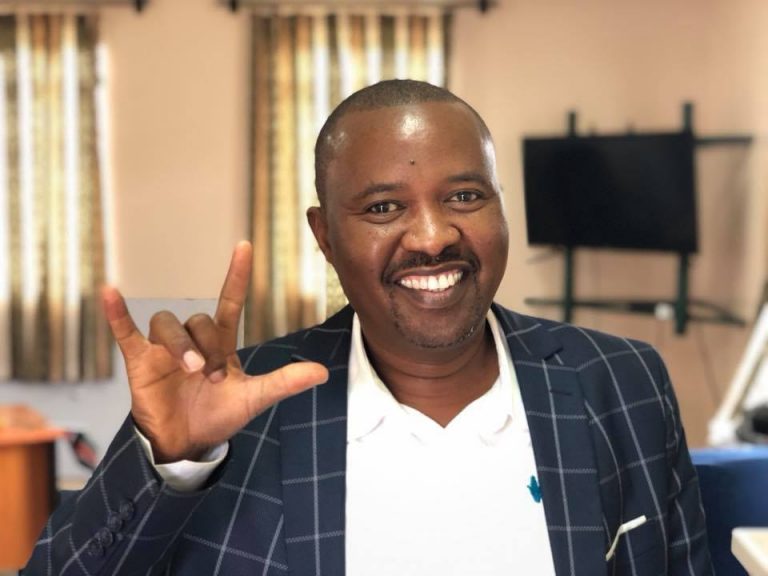
Field Coordinators Lend Critical Support for Sign Language Bible Translation

Tens of millions of Deaf people have no access to God’s Word in sign language. Fewer than 50 of the world’s 400 sign languages have any Scripture portions, and no sign language has a complete Bible.

Thankfully, these numbers are changing as Deaf believers translate God’s Word into their heart sign language.

George*, a Translation Field Coordinator with Deaf Bible Society, supports these Deaf translation teams in critical ways.

George has been in the “Deaf world” for decades, working cross-culturally with Deaf believers in a variety of ways. He began serving in his current role approximately one year ago and is one of Deaf Bible Society’s four Field Coordinators.

“I’m working with teams in Eurasia, and then on larger-scope things, [I work with] maybe another eight to 10 groups that are just getting started or have a fledgling translation project,” George says.

As a Field Coordinator, George makes sure the team has everything it needs to finish the translation on time and under budget.

Through internet-based video calls, George gets to know each Deaf translator and the team’s overall needs. “One of the most important tasks of a Translation Field Coordinator is building and maintaining a close relationship with teams; building confidence, making sure expectations are clear… so that they can accomplish the translation of the Word of God on time and within budget,” he says.

Whether it’s resources or training, George makes sure each team in his charge gets what it needs to succeed. Plus, “I work behind the scenes to help facilitate… discipleship, sometimes just building skills so that they can be effective both in their translation work [and] in their personal lives,” he adds.

SOURCE: Mission Network News, Katey Hearth

All Content & Images are provided by the acknowledged source

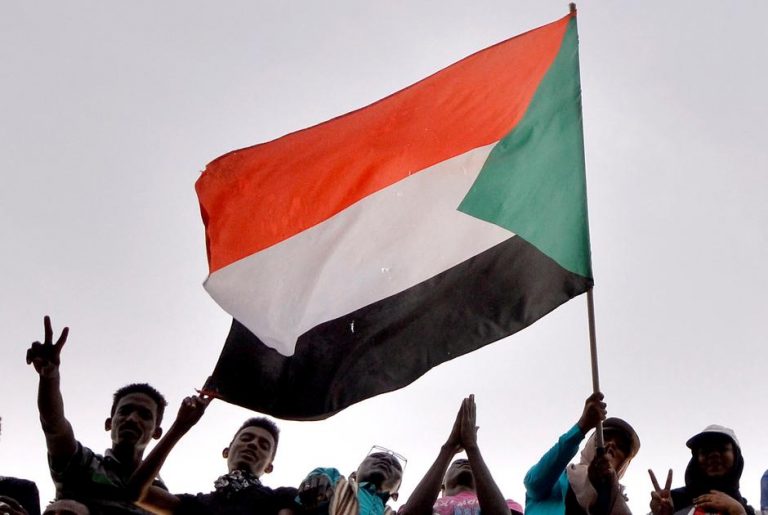
In Sudan, Simplicity is ‘Wishful Thinking’

Sudan’s so-called “solution” seems simple: remove U.S. sanctions so the beleaguered nation can recover from years of economic hardship. The UN Secretary-General said as much last week, claiming it’s time to mobilize international support to help Sudan overcome its challenges.

Recent developments affirm the idea. Leaders are “discussing rapid normalization” of relations between Israel and Sudan, once long-time foes. On Thursday, Sudan’s interim government settled with families of the victims of a 2000 attack on the USS Cole. Sudan was accused of providing support to al-Qaida, which claimed responsibility for the attack.

Steps like these may sound like progress, but Wycliffe Associates President Bruce Smith says tribalism is a tough mindset to change in Sudan.

“The complexity of the cultural and linguistic situation reflects how complex it’s going to be to rally that country in a unified direction anytime in the short term.”

Removing former president Omar al-Bashir is but one piece of a multifaceted puzzle. More than 100 languages reflect Sudan’s diverse people groups and tribes, each carrying its own complexities and challenges. “Within the country, you have lots of different factions that are vying for their own survival and their own place in the nation,” Smith explains.

“The removal of one person who’s at the head makes a significant difference in terms of the direction that everyone is being led,” he continues. “But, once that person is removed, there’s lots of movement going on among power brokers.”

SOURCE: Mission Network News, Katey Hearth

All Content & Images are provided by the acknowledged source

Judge Rules in Favor of Wheaton College Students Who Were Banned from Sharing the Gospel in Chicago Park

A federal judge ruled Thursday that Wheaton College students who were barred from evangelizing in a downtown Chicago park must be allowed to exercise their First Amendment rights until the legal dispute is resolved. 

Judge John Robert Blakey, an Obama appointee, ruled in favor of four students who attend the evangelical higher education institution. Blakey granted a preliminary injunction against a set of rules that govern the city’s 24-acre Millenium Park.

The student plaintiffs are part of the Chicago Evangelism Team sponsored by the Wheaton College Office of Christian Outreach with the mission of proclaiming the Gospel “in the city of Chicago to whomever we find there.” The group often meets on Friday nights to travel downtown to share the Gospel.

In September, the students filed a lawsuit, stating that they were barred by security from evangelizing at Millennium Park, which hosts a range of activities from concerts, dance performances, theater and other shows throughout the year.

The students sought an injunction against the park’s stated rules. Among other things, the park bans “disruptive conduct” and “passing out of written communications.”

In his order, Blakey argued that the city prohibits “reasonable forms of expression in large areas of the park” and that the city’s defense of the park policy “rests upon its misapplication of the government speech doctrine.”

“The City contends that, by curating art and programming, it exercises permissible government speech making its restrictions immune to First Amendment attack because the rules further such government speech,” the judge wrote. “This Court rejects the City’s flawed reading of this important doctrine.”

According to the judge, the government speech doctrine recognizes that “the government may also engage in speech and that the First Amendment does not regulate government speech as it does private speech.”

Blakey explained that courts apply the government speech doctrine in two limited contexts. One context, the judge wrote, is when the government itself speaks. The second, he added, is when the government appropriates public funds to transmit a message through private speakers.

“Neither of those situations are present here,” the judge noted in the order. “This case does not involve the appropriation of public funds to transmit a message through private speakers. Nor do movants challenge the government’s own speech.”

SOURCE: Christian Post, Samuel Smith

All Content & Images are provided by the acknowledged source
New Museum Commemorating 21 Coptic Christian Martyrs Beheaded by ISIS in 2015 Opens in Minya, Egypt

A Coptic martyrs museum has opened in Egypt to commemorate the 21 Christians beheaded by the Islamic State on a Libyan beach in 2015 because they refused to renounce their faith in Christ.

The world was shocked after the Islamic State released an execution video on Feb. 15, 2015, showing the decapitation of nearly two dozen migrant workers, 20 of whom were Christians from Egypt and one who was a Christian from Ghana.

The video was titled: “A Message Signed With Blood to the Nation of the Cross.”

On the fifth anniversary of that horror, Coptic Bishop Bevnotious of Samalout inaugurated a new museum that honors those killed.

According to the online magazine Cairo Scene, the new museum is housed in the Church of the Martyrs of Faith and Homeland.

The church, built in the poor village of Al-Aour in the Minya governate, opened in February 2018 on the third anniversary of the execution video’s release. The church’s construction was funded by the Egyptian government, which is led by President Abdel Fattah el-Sisi.

Al-Aour is the village where 13 of the workers killed in the video were from. The church has become a pilgrimage site for many Christians since it is the final resting place for the 21 martyrs.

The museum will include a documentary panorama that will teach viewers about how the 21 men were kidnapped and executed. The museum also features a shrine with the remains of the martyrs and the coffins that transported them from Libya to Egypt.

A Catholic press agency reports that the museum features exhibits on the victims’ lives.

In addition to the museum, a memorial honoring the martyrs was also inaugurated.

The memorial features a 13-foot tall statue of Jesus Christ with His arms outstretched, open to the statues of the 21 victims kneeling before Him, seen here.

In the widely shared execution video from 2015, the victims were shown kneeling in a line before their captors right before they were beheaded. Their bodies were then thrown into a mass grave. Their bodies were later discovered by Libya’s interior ministry in 2017.

As Egypt ranks as the 16th worst country in the world when it comes to Christian persecution on Open Doors USA’s 2020 World Watch List, Coptic Christians have on many occasions faced discrimination and persecution in the Muslim-majority country.

Several attacks against Coptic Christians over the years have gained international headlines.

In May 2017, 29 Copts were killed while traveling to a desert monastery in Minya when their bus was attacked by Islamic radicals. A similar bus attack occurred near the same monastery in November 2018 in which seven were killed and at least 20 were injured.

SOURCE: Christian Post, Samuel Smith

All Content & Images are provided by the acknowledged source