WATCH: ‘American Idol’ Contestant Prays With Judges After Performing ‘You Say’

Singer “Just Sam” prayed with the American Idol judges after wowing them with her audition. “Heavenly Father, make my life brand new—right here, right now—with my friends and my new fam,” she prayed while the judges repeated after her. She started the audition singing “You Say” by Lauren Daigle but, crying, she wasn’t able to make it through the song.

Her grandma adopted and raised her, because her parents weren’t there for her. She makes a living by singing in the subway and taking donations from listeners. She grew up in the projects of New York. Her grandma says, “God is good. But at times, it’s really hard.”

SOURCE: Charisma News

All Content & Images are provided by the acknowledged source

Adam Groza on The Problem of Evil for Atheists

The views expressed in this commentary do not necessarily reflect those of BCNN1. Opinions expressed are solely those of the author(s).

In his book The Cross of Christ, John Stott said that the “the fact of suffering undoubtedly constitutes the single greatest challenge to the Christian faith.”  What is the problem of evil? It is the apparent conflict or contradiction between the existence of evil, suffering, and the existence an all-powerful, all-knowing, and ever-present God who is also perfectly good. As the problem goes, such a God would stop evil and suffering, if He existed. Another form of the problem of evil focuses on the amount of evil, suggesting that while God may have good reason for some evil, surely the amount of evil we experience makes it unlikely that the God of Scripture exists.

Why is this argument such a challenge to the Christian faith? For many people, the argument is not about the logical inconsistencies, probability, or deductive logic. For most people, the problem of evil is about a sick child, an experience of abuse, personal exposure to horrific and traumatic evil, or perhaps the hurtful actions of Christian leaders. The problem of evil often boils down to our inability to reconcile our belief in a good and loving God with our experience of sin, suffering, and evil.

There are smart people who have offered lengthy defenses of God against the problem of evil. Such a defense is called a theodicy, and you can check out the free will defense by C.S. Lewis or Alvin Plantinga, or Gordon Clark’s view of sovereign decree.

My point here is to help ministers answer this question by turning the question back on the person who is raising the objection. As Christians, we need to give an account of why evil exists. The good news is that the problem itself makes sense because we know who God is, we know what evil is, and we know why it is a problem. An atheist, however, is raising the problem of evil; but if there is no God, why is evil, evil?

SOURCE: Christian Post, Adam Groza

All Content & Images are provided by the acknowledged source

Bloomberg Evicted ‘Black and Brown’ Churches as Mayor, Former Obama Staffer Says

Bloomberg Evicted ‘Black and Brown’ Churches as Mayor, Former Obama Staffer Says


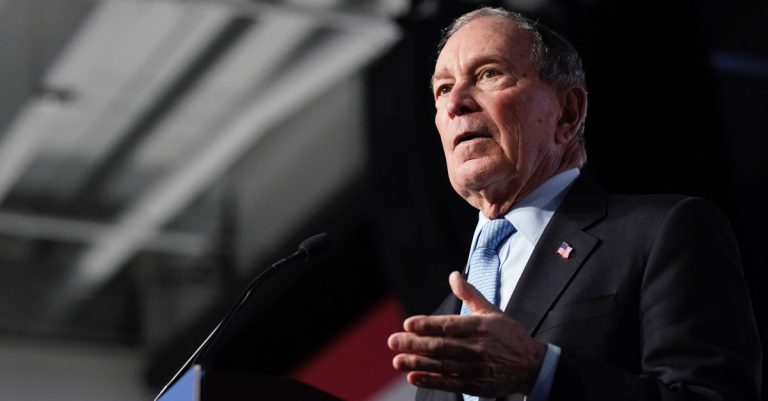
A former staffer in the Obama White House is reminding Democratic voters that presidential candidate Michael Bloomberg helped evict New York churches from meeting in public buildings as mayor.

The controversy involved dozens of congregations in New York City that rented space within unoccupied public school buildings on Sundays. Typically, the congregations either didn’t have the funds to own their own church buildings or had outgrown their own space.

School districts across the U.S. have similar arrangements. But Bloomberg, then the mayor of New York City, said the agreement violated the U.S. Constitution. Backed by court rulings, Bloomberg and his administration ordered congregations to find other space. The policy was in place before he became mayor, but Bloomberg supported it, claiming churches meeting in public facilities gave the appearance of endorsement.

“Separation of church and state is one of the basics of our country,” he said in 2012. “The more religious you are, I think the more you should want to keep the separation because someday the religion that the state picks as the ‘state religion’ might not be yours. The way to solve that is to not have a state religion.”

The policy permitted other community groups to meet within public schools. Churches, though, could not. Mayor Bill de Blasio, who succeeded Bloomberg, ended the policy.

Michael Wear, a…

… Read More

Click here to read the rest of the story from our content source/partners – Christian Headlines.

قالب وردپرس

Daniel Whyte III’s Younger Brother Mark Anthony White Who Was the Baby of the Family Died of Complications From a Stroke Just Before Daniel Whyte III Recorded This Podcast Episode of “Preparing for the Inevitable #59: Grief and Mourning: No Road Map, Part 11”

Welcome to Episode #59 of Preparing for the Inevitable – A Podcast on How to Handle Trouble, Suffering, Pain, and Death.

I am your host, Daniel Whyte III, president of Gospel Light Society International. This podcast will help you get ready to face the inevitable unpleasant things that will happen in your life — things like trouble, suffering, sickness, and death — the death of people you love and your own death. Trouble, suffering, and death are common threads that run throughout all of humanity. They are inescapable. You will never meet a person who has not, is not, or will not experience these terrible things in life. Yet, we attempt to hide from these inevitabilities, to pretend they don’t exist or that they won’t happen to us. Our world is filled with news of people dying, children suffering, entire government systems and organizations enduring trouble and turmoil, but we tend to see these as things that only happen to “other people” and never to us. Trouble, suffering, and death come equally to all people, of all races, from every socio-economic status, of every religion, in every country of the world. It makes us all equal. This podcast will show you how to accept these realities of life, and not just cope, but face trouble, suffering, and death in your own life and in the world with confidence, courage, class, and most of all, with faith, hope, and charity.

The Bible says in Psalm 23:4: “Yea, though I walk through the valley of the shadow of death, I will fear no evil: for thou art with me; thy rod and thy staff they comfort me.”

The featured quote for this episode is from C.S. Lewis. He said, “I thought I could describe a state; make a map of sorrow. Sorrow, however, turns out to be not a state but a process.”

Our topic for today is titled “Grief and Mourning, Part 11: No Road Map” from the book, “The Art of Dying: Living Fully into the Life to Come” by Rob Moll.

“Grief just is. There aren’t necessarily rights and wrongs,” says Rob Bugh, pastor of Wheaton Bible Church in Wheaton, Illinois. A trim and energetic man, Bugh is still holding back the depth of his pain.

Despite years as a pastor, Rob discovered grief anew when, three months after a close friend died, Rob’s wife, Carol, was diagnosed with cancer. Grief, Rob said nine months after Carol’s death, is an “emotional, visceral response to pain, suffering, tragedy and death.”

Carol’s death came just eleven months after her diagnosis, and that time was filled with doctor’s visits, hospital stays, long- distance travel to specialists, and trips to the emergency room.

Rob says he was unprepared for the turn his life was taking. “One of my closest friends and my wife, they’re both getting horrific news. Their cancers are different, but they’re ravaging their bodies. And they’re brutal. How do you wrap your mind around that?”

“I’m in ministry,” Rob says. “I take care of people going through this, but I really never thought this would happen to us.”

Carol had turned fifty, and on a regular doctor visit she asked about some bleeding in her stool. Doctors performed tests, and the diagnosis was a rare form of rectal cancer. It was aggressive, and the Bughs fought it aggressively. But, as Rob says, they never received good news. Eventually they started running out of options. They continued trying new treatments, visiting doctors, seeking and hoping for a cure.

“Early on,” Rob says, “you’re 100 percent fighting.” But slowly, “There’s a growing awareness that God may be up to something else than bringing about healing.” They didn’t stop treatments, they continued hoping for a cure, yet gradually the realization dawned that there may be none. “There’s this resignation that comes,” Rob says. “Now you know what the gospel describes at Gethsemane when Jesus says, ‘Take this cup from me.’ That was a passage I prayed over and over, ‘God take this from us. Take this cancer from us, but not my will but thy will be done.’ ”

The final three months were hectic and incredibly stressful, and the couple had little time to talk about Carol’s death. And the end came much quicker than they had expected. Two days before Carol died, the family took her home and brought in hospice. And then, “all of a sudden it was all over.”

If the Lord tarries His Coming and we live, we will continue looking at “Grief and Mourning” in our next podcast.

Let’s Pray —

Dear friend, please understand that after you die, you will be ushered into one of two places to spend eternity, Heaven or Hell. Here’s how you can be sure that you will not go to hell and suffer eternal damnation forever and rather have a home in Heaven when you die. The Bible says, ”Believe on the Lord Jesus Christ and thou shalt be saved.” Here’s how you can be saved from sin and hell and have a home in Heaven when you die in more detail.

1. Accept the fact that you are a sinner, and that you have broken God’s law. The Bible says in Ecclesiastes 7:20: “For there is not a just man upon earth that doeth good, and sinneth not.” Romans 3:23 reads: “For all have sinned and come short of the glory of God.” In fact, I am the chief of sinners, so don’t think that you’re alone.

2. Accept the fact that there is a penalty for sin. The Bible states in Romans 6:23: “For the wages of sin is death…”

3. Accept the fact that you are on the road to hell. Jesus Christ said in Matthew 10:28: “And fear not them which kill the body, but are not able to kill the soul: but rather fear him which is able to destroy both soul and body in hell.” The Bible says in Revelation 21:8: “But the fearful, and unbelieving, and the abominable, and murderers, and whoremongers and sorcerers, and idolaters, and all liars, shall have their part in the lake which burneth with fire and brimstone: which is the second death.”

4. Accept the fact that you cannot do anything to save yourself! The Bible states in Ephesians 2: 8, 9: “For by grace are ye saved through faith: and that not of yourselves: it is a gift of God. Not of works, lest any man should boast.”

5. Accept the fact that God loves you more than you love yourself, and that He wants to save you from hell. Jesus Christ said in John 3:16, “For God so loved the world, that He gave His only begotten Son, that whosoever believeth in Him should not perish, but have everlasting life.”

6. With these facts in mind, please repent of your sins, believe on the Lord Jesus Christ and pray and ask Him to come into your heart and save you this very moment. The Bible states in the book of Romans 10:9, 13: “That if thou shalt confess with thy mouth the Lord Jesus, and shalt believe in thine heart that God hath raised Him from the dead, thou shalt be saved.”

“For whosoever shall call upon the name of the Lord shall be saved.”

Dear friend, if you are willing to believe on the Lord Jesus Christ for salvation, please pray with me this simple prayer: Heavenly Father, I realize that I am a sinner and that I have done some bad things in my life. For Jesus Christ sake, please forgive me of my sins. I now believe with all of my heart that Jesus Christ died for me, was buried, and rose again. Lord Jesus, please come into my heart and save my soul and change my life today. Amen.

If you believed in your heart that Jesus Christ died on the cross, was buried, and rose again, allow me to say, congratulations on doing the most important thing in life and that is accepting Jesus Christ as your Lord and Saviour! For more information to help you grow in your newfound faith in Christ, go to Gospel Light Society.com and read “What To Do After You Enter Through the Door”. Jesus Christ said in John 10:9, “I am the door: by me if any man enter in, he shall be saved, and shall go in and out, and find pasture.”

All Content & Images are provided by the acknowledged source

Broadway’s ‘To Kill a Mockingbird’ readies for Garden visit

Actor Kyle Scatliffe has gone to Madison Square Garden plenty of times — for a Rangers game, a Muse concert and a WWE event. Next week, he’s going back again, but this time he won’t be in the seats.

Scatliffe on Wednesday will be starring in the hit Broadway play “To Kill a Mockingbird” when it relocates to the Garden for an exclusive, one-time-only performance in front of 18,000 public school children.

It will mark the first time a Broadway play has been performed at the venue nicknamed “The World’s Most Famous Arena,” which is home to the New York Knicks and Rangers and has hosted concerts by members of the Beatles, boxing bouts between Joe Frazier and Muhammad Ali and “The Concert for Bangladesh” benefit show in 1971.

“This building means a lot to me,” said Scatliffe, whose dad is a huge Knicks fan. “It’s really incredible to be the first play to ever do a show here. It’s lights out. I’m very excited.”

The play’s usual Broadway home is the 1,435-seat Shubert Theatre, where it is routinely sold out. But on Wednesday, thousands of middle and high school students from all five boroughs will get to see it for free, courtesy of the Scott Rudin-led production and James L. Dolan, executive chairman and CEO of The Madison Square Garden Company. The tickets are being distributed by the city’s education department.

“To Kill a Mockingbird” by Harper Lee won a Pulitzer Prize in 1961 and has been widely praised as a sensitive portrait of racial tension in 1930s Alabama. At its core is Atticus Finch, a lawyer called upon to defend a black man falsely accused of raping a white woman.

Scatliffe said the story has stood the test of time and hopes it will inspire the students. “I’m hoping they get something out of this that they never thought they would. Theater is a transformative art. You can transform people’s minds, you can transform hearts. You can bring them into a world they’ve never seen before and never thought they would see.”

The entire current Broadway cast will be present, led by Ed Harris as Finch. They’ve been performing the show on Broadway regularly while also practicing for the Garden show in a warehouse in Long Island City. They’ve worked on the special show two days a week for the past five weeks.

Lee’s iconic book has been adapted for the stage by Aaron Sorkin, who cut the undergrowth of minor characters and enhanced others, particularly the maid Calpurnia and Tom Robinson, the man falsely accused of rape, played by Scatliffe.

Sorkin is a New Yorker who has been to Knicks and Rangers games as well as concerts at the Garden. “My first play was done in a 99-seat church basement. And I was thrilled. I’d made it,” he said. “So this is beyond my wildest dreams.”

While Sorkin’s script hasn’t been altered, the staging has had to adapt to the cavernous space. Eight cameras will capture the action and beam it onto the Garden’s curved scoreboard so everyone can see the action.

For many in the audience, “To Kill a Mockingbird” may be their first live play and their first encounter with the story. ”I hope that this is the first of many, many plays that they see,” said Sorkin.

Russell Harvard, a deaf actor who plays two characters in the production, called it a huge milestone. “For the students to be able to witness this and have that experience and leave with maybe aspirations of becoming an actor someday in the future, I really couldn’t ask for anything more.”

___

Source: Associated Press – MARK KENNEDY

All Content & Images are provided by the acknowledged source

Timothy Head on Why Trump’s Appointment of Pastor Tony Lowden Will Bring Real Criminal Justice Reform

The views expressed in this commentary do not necessarily reflect those of BCNN1. Opinions expressed are solely those of the author(s).

One of the most talked about commercials in the days following the Super Bowl this year was an unexpected message, for some, from President Donald Trump. In the ad, an emotional Alice Johnson is surrounded by family members and friends as she emerges from federal prison after 21 years. “I am free to hug my family! I’m free to start over! This is the greatest day of my life. My heart is bursting with gratitude and I want to thank President Donald John Trump.” But Alice Johnson’s story is not unique. This week President Trump pardoned 11 more people who had served prison sentences for high-profile crimes.

These are admirable acts of clemency and commutation that set an example for criminal justice reform in this country. As people of faith, we believe that all human life matters at all stages, from the moment of conception to natural death. And as believers in the transformative power of the gospel of Jesus Christ, we believe that no life – no matter how marred by sin – is beyond redemption and transformation.

That’s why we’re also excited to celebrate recent news that President Trump has appointed Pastor Tony Lowden as executive director of the Federal Interagency Council on Crime Prevention and Improving Reentry. Lowden is the first black pastor at Maranatha Baptist Church in Plains, Georgia – best known as the church where former President Jimmy Carter attends and teaches Sunday School.

Founded in 2018, the council brings together experts from different government agencies to strategize on how to heal our nation’s criminal justice system and empower the formerly incarcerated to start their lives afresh. Despite recent reforms, our nation’s criminal justice system remains one of the most punitive in the world.  The United States incarcerates more people per capita than any other nation in the world, with a total of 2.3 million people locked up in a federal or state prison, local jail or some other kind of facility.

Our justice system also fails to equip those reentering society to return to a stable life upon their release; a 2018 report from the Justice Department revealed that 83% of state prisoners who were released in 2005 were re-arrested at some point in the following nine years. It’s a system that’s not only ineffective, but wasteful: A 2017 study found that it cost taxpayers $182 billion each year.

SOURCE: Christian Post, Timothy Head

All Content & Images are provided by the acknowledged source

Presbyterian House Provides Spiritual Home Away From Home for College Students

MADISON, Wis. (RNS) — Emma Brown didn’t know Pres House was a church when she walked in.

The University of Wisconsin-Madison freshman had seen a sign for free ice cream at the Gothic Revival building at the heart of the university’s campus and decided to check it out.

Inside, she met one of its two pastors and found herself surprisingly emotional when the topic of homesickness came up.

That initial conversation led Brown, who came to Madison from Chicago, first to a Sunday worship service at Pres House, the campus ministry of the Presbyterian Church (U.S.A), and later to Freshman Connection, a weekly opportunity for first-year students to connect and talk about faith.

Now she’s at Pres House five days a week.

“I kept showing up,” she said.

Pres House sits at the heart of the University of Wisconsin-Madison campus between the St. Paul’s Catholic Student Center and a monument dedicated to innovation and tolerance.

Pres House, the campus ministry of the Presbyterian Church (U.S.A.) at the University of Wisconsin-Madison. RNS photo by Emily McFarlan Miller

On a recent unseasonably warm February day, students zipped past on bikes and skateboards and blasted music in front of the library just across the street. They took their chances wandering out on the still-frozen Lake Mendota, visible from the mall in front of the Pres House building.

“Find yourself among friends,” read one sign in the Pres House windows.

The Presbyterian campus ministry started in 1907 and grew leaps and bounds during the “heyday of religion” in the first half of the 20th century, according to the Rev. Erica Liu, who leads Pres House with her husband, the Rev. Mark Elsdon.

The ministry was innovative for its time, holding several services every Sunday and empowering students to lead as its elders and deacons.

The Rev. Erica Liu speaks during worship Feb. 2, 2020,
at Pres House, the campus ministry of the Presbyterian
Church (U.S.A.) at the University of Wisconsin-Madison.
RNS photo by Emily McFarlan Miller

But by 2000, Pres House had fallen on hard times.

The Presbyterian student ministry was shuttered and had been replaced by an ecumenical ministry that met in its building. The Synod of Lakes and Prairies of the Presbyterian Church (U.S.A.) was considering selling off the property.

But the Pres House board wasn’t ready to give up. So the board called Liu and Elsdon to revive the campus ministry.

“As we got to know the opportunity, it was like, wow, you know, this could be really quite an adventure,” Liu said.

They started out by going back to basics and focusing on the core of the ministry — helping people connect with one another.

Source: Religion News Service

All Content & Images are provided by the acknowledged source
Karen Farris on Learn the 2020 ‘Red Flag’ Teen Slang Adults Should be Aware Of

The views expressed in this commentary do not necessarily reflect those of BCNN1. Opinions expressed are solely those of the author(s).

Texting and teens seems to be an inseparable pairing. Working with teens can be fun and also frustrating — especially when slang seems to be their primary language among one another. Their desire for independence has them trying to exclude parents, teachers, and those who are helping shape their lives and encourage them to make wise choices. Their texting slang has a meaning all its own.

We all would agree our teens face enormous challenges and distractions — but working alongside parents, church youth leaders, and those dedicated to youth helps make the journey easier. Axis is an organization helping adults connect better with the kids in their world.

Much of the teen slang is an innocent way to text quickly and impart messages that are quickly understood. But Axis also shares some Red Flag slang that adults need to be more wary:

1. Addy: Which is short for Adderall — the medication used to treat ADHD

2. Catfish: Someone pretending to be someone they’re not on social media, either for dating or sexual purposes.

3. D: Short for d*** She just wants the D

4. DTF: Down to F***

5. FWB: Friends with benefits

SOURCE: Christian Post, Karen Farris

All Content & Images are provided by the acknowledged source

Richard Land on Should Pastors Address Political Issues from the Pulpit?

The views expressed in this commentary do not necessarily reflect those of BCNN1. Opinions expressed are solely those of the author(s).

Question:  I’ve heard congregants complain that while they agree with their pastor on political issues, he talks too much about it and it’s tiring.  While other pastors are criticized by never talking about any political issues from the pulpit, with some saying that’s not their gift.  Should pastors of local churches talk about political issues from the pulpit?  If so, when should they do so and on what issues?

Historically, vast numbers of Americans have looked to their pastors for moral, as well as spiritual, leadership.  This is still true for tens of millions of Americans of religious faith. And, in most cases, questions concerning the sanctity of human life, racism, human rights, sexism, and sexuality, for example, are of an entirely different level of moral significance than the politics of what are the most beneficial tax policies or the most prudent trade agendas. In a government “of the people, by the people, for the people,” such crucially important public policies cannot be entirely separated from the political process. The inevitable tension between the pastoral role as moral and spiritual leader and the ebb and flow of public policy and politics is one that pastors should seek to navigate prayerfully.

As an ordained Baptist minister who has served in a pastoral role in almost a score of churches and has preached approximately 10,000 sermons over the past half century, this is a question I have struggled with, and helped scores of colleagues to wrestle with, over the past decades right up to the present day.

When the issues confronting the congregation involve moral issues directly addressed by significant biblical teaching, then the pastor has a moral and pastoral obligation to share with his people the Bible’s teachings on these issues. That does not necessarily mean that the pastor is obligated to, or should, speak to the specific public policy aspects of these issues in the vast majority of instances. In discussing the significant Scriptures concerning the sanctity of all human life, from conception to natural death and everywhere in between,  one can assert, as I have on many occasions, that God is pro-life while at the same time making it clear that God, while pro-life, is neither a Republican or a Democrat.

Similarly, the pastor can share with his people that racism in any form is anti-Gospel without discussing from the pulpit the particular merits or prudence of specific legislative proposals seeking to address particular injustices. This is also true of such issues as sexism, gender issues, stewardship of the creation, and religious liberty and freedom of conscience.

For instance, it is one thing to say that all human life is sacred and should be revered, and it is another thing entirely to endorse specific legislative remedies addressing abortion and euthanasia from the pulpit. It is one thing to make it clear “that God is no respecter of persons” (Act. 10:34) and quite another to endorse specific legislation seeking to combat racism and sexism.                 

If we are going to follow Dr. Martin Luther King Jr.’s admonition that Christians and their churches should be spiritual thermostats, setting the moral climate of society, rather than being thermometers merely recording society’s moral temperature, then we should focus on the biblical teaching while never completely ignoring the specific public policy alternatives and implications.

SOURCE: Christian Post, Richard Land

All Content & Images are provided by the acknowledged source

'Can These Dead Bones Live?' Margie Zacharias Reports on Ravi Zacharias' Condition After Surgery

Margie Zacharias kept Christian apologist Ravi Zacharias’ promise of keeping everyone updated on his progress after spinal surgery was performed on him Thursday.

Zacharias runs an international apologetics organization, RZIM, and is widely sought after for his eloquent answers to life’s biggest questions. He’s a prolific author, debater and academic. 

Margie posted an update to Instagram early Friday morning, saying the surgery went smoothly and her husband is resting. 

“Hello dear friends, this is Margie Zacharias. On behalf of Ravi and our family and team, we are truly overwhelmed and deeply grateful for your outpouring of concern, encouragement, and especially your prayers for Ravi’s spinal surgery today,” she wrote. 

“The surgery is complete and went smoothly, though it was long. I told the surgeon afterwards that he looked tired and he said, ‘Ravi gave us a lot of work to do!’ Ravi is well and he is resting. The doctor anticipates his pain now will be from the surgery itself, and we are praying for relief and comfort as Ravi begins the recovery process,” she noted.

“Thank you again for your love and your prayers. It all means so much. I know the Lord has been present in the OR today, and I pray that He will give Ravi the ability to handle what is ahead for the next several weeks,” Margie concluded. 

Hello dear friends, this is Margie Zacharias. On behalf of Ravi and our family and team, we are truly overwhelmed and deeply grateful for your outpouring of concern, encouragement, and especially your prayers for Ravi’s spinal surgery today. The surgery is complete and went smoothly, though it was long. I told the surgeon afterwards that he looked tired and he said, “Ravi gave us a lot of work to do!” Ravi is well and he is resting. The doctor anticipates his pain now will be from the surgery itself, and we are praying for relief and comfort as Ravi begins the recovery process. Thank you again for your love and your prayers. It all means so much. I know the Lord has been present in the OR today, and I pray that He will give Ravi the ability to handle what is ahead for the next several weeks. Warmly, Margie.

A post shared by Ravi Zacharias (@ravizacharias) on

As CBN News reported Thursday, Ravi Zacharias had requested prayers for himself, his family and staff in an Instagram post as he prepared for the surgery. He explained he has had serious back issues over the years and has struggled with pain after two previous surgeries.

Thank you for serving our Lord alongside Margie and me. Your prayers mean more than you’ll ever know,” he wrote.

The apologist then revealed, “It’s time to face the pain and the discipline of healing,” and uses Ezekiel as an example. 

“The wear and tear of travel are literal and figurative. I will keep you posted from time to time. I thank God for great medical expertise and look forward to a speedy recovery and being on the road again,” he continued. “But for now it’s time to face the pain and the discipline of healing. Ezekiel asks the question, ‘Can these dead bones live?’ The answer is a resounding ‘Yes’ as God breathes new life into them. The Lord has never forsaken me and He is by my side. I am a blessed man. As I recover, I will pray, read, and write.”

Zacharias added on his blog that the surgery would take him off the road for close to eight weeks and his doctors were confident of its success. He also promised to also post updates on his recovery to his website. 

Source CBN

All Content & Images are provided by the acknowledged source