
Pastor John MacArthur may face fine, arrest for holding indoor services: ‘We will obey God rather than men’

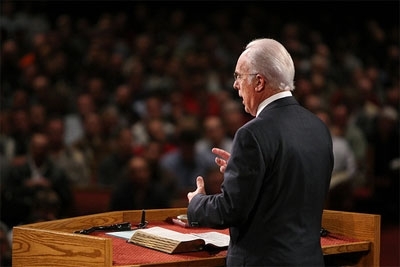
John MacArthur of Grace Community Church in Sun Valley, Calif., addresses thousands of pastors at the March 3-7, 2010, Shepherds’ Conference. | (Photo: Lukas VanDyke)

County officials have allegedly threatened Grace Community Church in California with fines and possible arrest for reopening his church in defiance of lockdown orders from Gov. Gavin Newsom during the pandemic. Still, Pastor John MacArthur has vowed to continue in-person services.

“We will obey God rather than men,” MacArthur said in a video statement Friday. “We’re going to be faithful to the Lord and we’re going to leave the results to Him. Whatever happens is going to be what He allows to happen. But He will be on our side because we will be obedient and faithful to His word.”

“We will not bow to Caesar,” he added. “The Lord Jesus Christ is our king.”

Officials from the Los Angeles County Department of Public Health have threatened MacArthur with “repercussions such as fines and even possible arrest” if his church doesn’t comply with state orders, the Rev. Franklin Graham, president of…

… Read More

—-

Click Read More to read the rest of the story from our content source/partners – The Christian Post.

قالب وردپرس

Burning Bibles in Portland and two sentences every American needs to hear

(Adobe Stock)

Activists burned a stack of Bibles in front of the federal courthouse in Portland Friday night. A statue of Jesus was beheaded recently at a Miami church.

A recent faculty survey at Harvard University found that 79.7 percent consider themselves “very liberal” or “liberal”; 18.9 percent say they are “moderate”; only 1.46 percent call themselves “conservative” or “very conservative.” 

Unsurprisingly, 67 percent of white evangelical Protestants believe Christianity’s influence on American life is decreasing. Two-thirds say their beliefs are in conflict with mainstream American culture. 

“We have no enemies, only opponents” 

And yet, this is a time when the evangelical message that we can have a personal relationship with a personal Savior is more urgently needed than ever. 

Tropical Storm Isaias is on track to impact the Carolinas later today, demonstrating our finitude before the power of nature. Dr. Deborah Birx noted yesterday that the coronavirus pandemic is “extraordinarily widespread” in the US. Governmental leaders are meeting today to continue negotiations over a new coronavirus-relief package, but they cannot end the recession without an end to the pandemic that is causing it. 

How can we make God’s offer of redemption in response to our repentance more available and attractive to those who need it? Consider two sentences I believe every American needs to hear. 

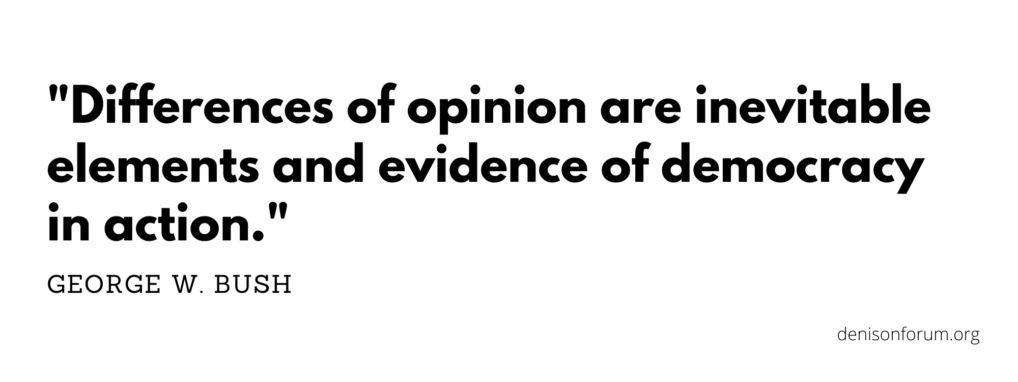
Last Thursday, President George W. Bush spoke at the funeral of Rep. John Lewis. In his brief but emotional eulogy for one of our greatest civil rights heroes, the former president made this statement: “John and I had our disagreements, of course. But in the America John Lewis fought for and in the America I believe in, differences of opinion are inevitable elements and evidence of democracy in action.” 

When we view those with whom we disagree as our enemies, our sentiment usually becomes a self-fulfilling…

… Read More


Click Read More to read the rest of the story from our content source/partners – Denison Forum.

قالب وردپرس

This week in Christian history: Catholic theologian dies; pope martyred; France abolishes tithes

The Storming of the Bastille and arrest of the Governor M. de Launay, July 14, 1789, which began the French Revolution. | Public Domain

Christianity is a faith with a long and detailed history, with numerous events of lasting significance occurring throughout the ages.

Each week brings the anniversaries of great milestones, horrid tragedies, amazing triumphs, and everything in between.

Here are three things that happened this week, Aug. 2-8, in Church history. They include the death of a controversial Catholic theologian, the martyrdom of an early church leader, and France abolishing state-sponsored church tithes.

… Read More

—-

Click Read More to read the rest of the story from our content source/partners – The Christian Post.
قالب وردپرس

Study: Over half of churchgoers find Bible ‘challenging’ when reading on their own

Unsplash/Matt Botsford

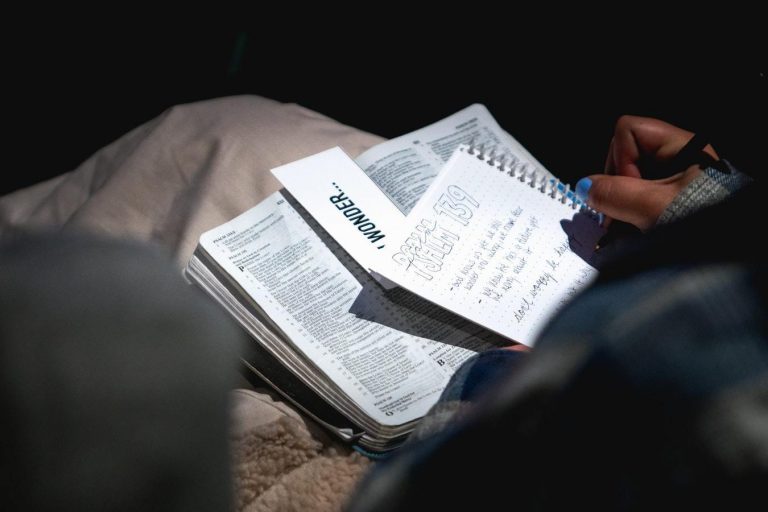
Over half of Protestant churchgoers have difficulty understanding Scripture when they read it on their own, highlighting the need for communal Bible study, a new report revealed. 

A new poll from LifeWay Research, in partnership with Explore the Bible, found that 57% of Protestant churchgoers say the Bible is “challenging” when read alone.

However, nine in 10 churchgoers agree they can usually understand how a passage of Scripture is relevant to them, and four in five express confidence in their ability to help others with doubts about the truthfulness of Scripture.

“Churchgoers are ready to defend the Bible as true and as a faithful moral standard,” said Scott McConnell, executive director of LifeWay Research. “But most admit they stumble on understanding the specific meaning as they read.”

The survey of 1,002 American Protestant churchgoers conducted Sept. 20-27, 2019, also highlighted churchgoers’ attitudes toward Bible study. The poll found that 93% say they enjoy exploring a passage of Scripture to understand its…

… Read More

—-

Click Read More to read the rest of the story from our content source/partners – The Christian Post.

قالب وردپرس

Worship leader: US on ‘cusp of revival,’ time to change narrative of burning cities with worship

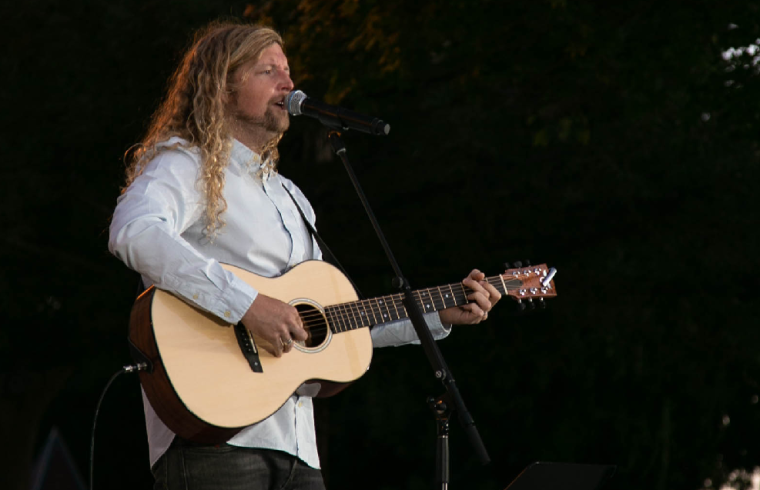
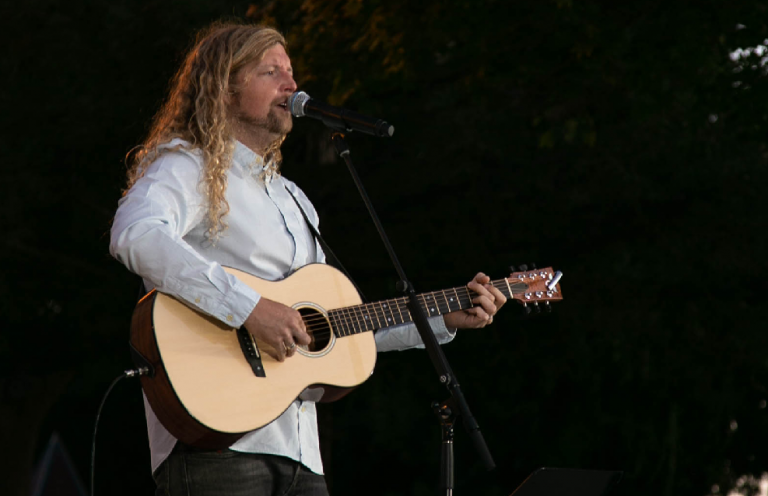
Worship artist Sean Feucht | Courtesy of Sean Feucht

Worship artist Sean Feucht believes that the coronavirus prohibitions on holding church services is a double standard and that the United States is on the brink of a revival.

In an interview with Fox & Friends, Feucht noted that he is participating in and helping lead gathering outside the four walls of the church, in the open air.

“It’s not just beaches,” he said. “We’re going under bridges, we’re meeting in fields, really anywhere we can gather and spread out and worship, we’re finding those places. It’s summer time in California, it’s just such an amazing movement that we’ve seen so much momentum on.”

Feucht, who recently ran for Congress in California but lost in the primary, is a worship leader with an extensive missionary background and is the founder of Hold the Line, an activist movement aimed at engaging the church and millennials, urging them to become more politically active.

He has been taking the power of worship to the streets where tragedies have happened, including the place where George Floyd was killed while…

… Read More

—-

Click Read More to read the rest of the story from our content source/partners – The Christian Post.
قالب وردپرس

WTAL Homecoming

WTAL Homecoming by TD Jakes ministries, for more info, go to – tdjakes.org/conferences/

With churches reopening, here are 3 old churches to visit

To say it has been a difficult six months for houses of worship is an understatement.

Hit harder are congregations with historic edifices, particularly those that rely upon admission charges or goodwill donations to cover the dual expenses of preservation and witness.

While the coronavirus pandemic continues to ebb and flow, many notable old churches and cathedrals are once again open to visitors.

Here are three of this columnist’s favorites.

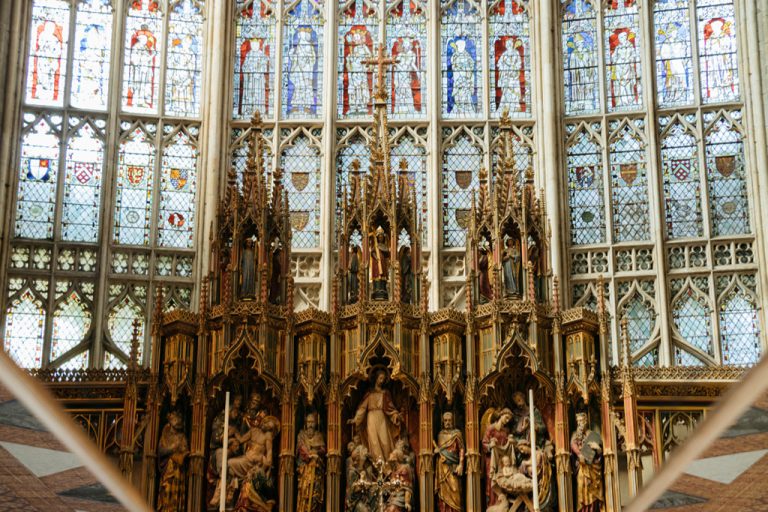
The high altar and great east window of the Gloucester Cathedral reflected into a looking mirror. | Dennis Lennox

Gloucester Cathedral

The Cathedral Church of St. Peter and the Holy and Indivisible Trinity — talk about a splendid name! — in Gloucester, England, is overlooked in a country full of spires and crosses.

Yet, visitors may recognize its 14th century cloisters, which feature the earliest example of fan vaulting, from the “Harry Potter” films. Gloucester Cathedral, as it is generally called, is old, but only became a cathedral during the English Reformation, when Henry VIII dissolved the monasteries and the former abbey became the seat of the first bishop of Gloucester.

In terms of the present building, it dates to the Normans in the late 11th century, although an earlier Anglo-Saxon abbey was here in the 7th century. The architecture, which varies from Norman to Perpendicular Gothic, blends seamlessly. 

Of particular note are several church…

… Read More

Click Read More to read the rest of the story from our content source/partners – The Christian Post.
قالب وردپرس

Epimedium Honey Paste

The No. #1 Natural Aphrodisiac | A Better Alternative to Pharmaceutical ED Drugs | Click on the link to get a free sample!

Epimedium Honey Paste (Horny goat weed) is a 100% natural product based on the natural gifts that offer results similar to those of the chemical drugs without any stress or side effects. The main ingredient of this product is epimedium -(Yin Yang Huo in Chinese), the herb that balances the Yin and Yang.

Safe and Natural ED and Libido Support for Men and Women

100% natural product (Organic Honey Paste) based on the natural gifts that offers support for:
Increased Libido
Reliable Erectile Function
Improved Sexual Health and Performance
Improves premature ejaculation
Trusting an unfamiliar brand and product can be difficult.

Click here to try a free sample and decide for yourself.

2 Robinhood Stocks Poised for a Bull Run – Motley Fool

Robinhood is one of the most popular investment apps for millennials because of its low fees and user-friendly platform. The company publishes a list of its 100 most popular stocks, and two of them seem set for a bull run.

The first pick is DraftKings (NASDAQ:DKNG), a bet on the fast-growing sports betting industry. The second is Beyond Meat (NASDAQ:BYND), a meat-substitute producer with the potential for real returns. Both stocks look ready to beat the market because of their rapid revenue growth and compelling business models. 

$100 bills in a pile.

Image source: Getty Images.

1. DraftKings 

The sports betting industry is expected to expand at a compound annual growth rate of 8.8% until 2024, but DraftKings is growing significantly faster. The mobile betting platform has seen its stock price soar 212% since the start of the year (through Friday’s close), while the S&P 500 just recently broke even.

Investors should keep in mind that the sports betting industry faces some near-term challenges if major sports seasons are canceled or further shortened by the coronavirus pandemic. But DraftKings is poised for continued long-term growth because of its expansion into nontraditional wagers like esports and virtual leagues.

It reported first-quarter earnings on May 15, and the results show that the platform can perform well in this tough economic environment. Total revenue grew 30% to $88.54 million, and the company launched new nontraditional content including esports built around NASCAR and the video games Counter-Strike and Rocket League.

While the full impact of the pandemic will likely be felt in the second quarter (whose results will be reported on Aug. 14), DraftKings looks set to hold up well because of these new betting options.

DraftKings is also making moves on the traditional side of the industry. This month, the company signed a multiyear agreement with the Professional Golfers’ Association Tour to become the organization’s first official betting operator. And it has a deal with Casino Queen in East St. Louis, Illinois, to rebrand the property as DraftKings at Casino Queen.

Both moves boost the profile of the brand and open the door for potential revenue opportunities in golf betting and physical casinos.

2. Beyond Meat

Beyond Meat is a disruptive food company known for the Beyond Burger, a plant-based patty that closely mimics the taste and texture of real beef. The stock has already soared 67% year to date and has plenty of room for continued growth because of its promising international expansion.

On July 15, Beyond Meat entered the Brazilian market with products to be sold at upscale supermarket chain St. Marche in Sao Paulo. This announcement follows an earlier Chinese debut through a restaurant deal with Starbucks in April and a partnership with Alibaba‘s Freshippo grocery store chain in July.

International sales could potentially become a massive growth driver for Beyond Meat, especially in large vegetarian populations like India’s.

Beyond Meat reported first-quarter earnings on May 5, and the results show its international potential. Total revenue grew 141% to $97.1 million, while international sales grew 108% from $12 million to $25 million. Beyond Meat’s products are now available in 74 countries, and the company has opened a factory in the Netherlands, its first location outside the U.S.

Surprise! Heres How Much a Coronavirus Vaccine Will Cost You – Motley Fool

Maybe, just maybe, one or more COVID-19 vaccines could be on the way. Five novel coronavirus vaccines are currently in late-stage testing. If all goes well, Americans could possibly have access to a COVID-19 vaccine that’s safe and effective in the first half of next year.

As you might expect, it costs a lot of money to develop vaccines. Should you brace for a steep price tag for a COVID-19 vaccine? Actually, no. You might be surprised by how much you’ll have to pay for a coronavirus vaccine. 

Man and woman smiling while looking at the screen of a laptop held by the man

Image source: Getty Images.

A good kind of sticker shock 

Flu vaccines typically cost in the ballpark of $40. A new shingles vaccine can cost nearly $300 for two shots. Will a COVID-19 vaccine’s cost be somewhere in the middle? Nope. Guess lower. Much lower.

The U.S. Department of Health and Human Services (HHS) intends to make COVID-19 vaccines available to Americans at no cost. That’s right, the price tag for you will be $0. 

We’re not talking about only Medicare members. The no-cost offer isn’t just for individuals with low incomes. HHS publicly stated that an approved COVID-19 vaccine will be free “to the American people.” That includes everyone, regardless of age, income, or the type of health plan you have.

Granted, there could be some money changing hands. Your healthcare provider will be allowed to charge insurers for the cost of administering the COVID-19 vaccine. That’s normal with vaccines purchased by the government, though. And it will be the insurance company forking over cash instead of you. 

The price you won’t see but will still pay

You’ve probably heard the expression that there’s no such thing as a free lunch. Well, there’s also no such thing as a free vaccine. There’s a price tag for COVID-19 vaccines that you won’t see but will still probably pay.

It’s sometimes easy to forget that when the U.S. government buys something, taxpayers are the ones ultimately footing the bill. If you pay federal taxes, you will indirectly pay for COVID-19 vaccines. 

COVID-19 vaccines on top of $100 bills

Image source: Getty Images.

The U.S. government plans to buy 100 million doses of the COVID-19 vaccine developed by Pfizer (NYSE:PFE) and BioNTech, assuming the two drugmakers’ lead candidate wins FDA approval or Emergency Use Authorization. It’s paying $1.95 billion, which amounts to a price of $19.50 per dose. 

Spreading that $1.95 billion cost across roughly 119.5 million taxpayers comes to a little over $16 per taxpayer. However, you’re really paying more than that.

In March, HHS announced that it would provide $456 million in funding for Johnson & Johnson’s (NYSE:JNJ) COVID-19 vaccine candidate. The department committed up to $483 million in April for Moderna‘s (NASDAQ:MRNA) experimental coronavirus vaccine.

In May, HHS agreed to pay up to $1.2 billion to AstraZeneca (NYSE:AZN) to support the development and manufacturing of its COVID-19 vaccine candidate AZD1222. And in July, the U.S. government signed a deal with Novavax to get 100 million doses of its COVID-19 vaccine candidate in exchange for funding of $1.6 billion. 

Just last week, Sanofi and GlaxoSmithKline won a deal with the U.S. government to supply 100 million doses of their vaccine candidate that’s currently in preclinical testing. The price tag of this agreement totaled up to $2.1 billion, including funding for the clinical development process. 

In addition to these agreements, HHS is paying Emergent BioSolutions $628 million under an existing contract with the Biomedical Advanced Research and Development Authority (BARDA). Some of this amount targets manufacturing a COVID-19 vaccine, but some also will go toward Emergent BioSolutions helping make therapeutics for the novel coronavirus disease.

Even if we exclude the HHS deal with Emergent, the U.S. government is paying more than $6.1 billion in total for COVID-19 vaccines. That means each American taxpayer’s portion of the bill comes to over $51. Clearly, the “no-cost” coronavirus vaccine that hopefully is on the way won’t really be free.

Going higher

The price tag for COVID-19 vaccines is also likely to increase. For example, both AstraZeneca and J&J have said they won’t try to make a profit from their vaccines during the pandemic. But there could still be high demand for COVID-19 vaccines even after the pandemic officially ends. That could set the stage for the big pharma companies to raise their prices.

There will also almost certainly be a limit on how many vaccine doses the U.S. government will purchase and make available at no cost. Once the current healthcare crisis is over, you might have to pay some amount out of pocket for a COVID-19 vaccine.

How much could that amount be? Moderna could provide a hint. The biotech is reportedly considering pricing its COVID-19 vaccine at between $50 and $60 per dose in the U.S. Other drugmakers could eventually set their prices in this general ballpark, too.

Rising prices in the future in the world of healthcare? That’s no surprise at all.