
Bail in Twitter hack: $725,000. Tampa teen’s assets: $3 million in Bitcoin – Tampa Bay Times

TAMPA — The teen accused of masterminding the Twitter hack of the accounts of celebrities and major companies to in an illicit attempt to obtain Bitcoin had his bail set on Saturday:

It is $725,000.

But the defense attorney for 17-year-old Graham Ivan Clark said his client has more than $3 million worth of Bitcoin.

His bail is six times what he’s accused of stealing last month through an elaborate scheme that authorities say unfolded online on July 15. It involved manipulating Twitter employees, taking control of celebrity and company Twitter accounts and reaping $117,000 in the hard-to-track cryptocurrency within a matter of hours.

Authorities say the Tampa teen is the “mastermind” of the plot, in which he used prominent Twitter accounts including former Barack Obama, Bill Gates and Kim Kardashian to solicit for Bitcoin. When he made his first court appearance Saturday, authorities described in greater detail how they say he pulled it off.

Clark was in the county jail, but appeared on a video screen in a small courtroom in front of County Judge Joelle Ann Ober inside the Hillsborough County Courthouse Annex building.

He faces state charges because he is a juvenile, federal authorities say, and was held without bail when he was arrested Friday. Two others involved in the scheme face federal charges in California.

Under Florida law, it would take 10 percent of the bail set Saturday — $72,500 — to free Clark pending trial.

Related: Tampa teen arrested in hack of Twitter accounts of Obama, Bill Gates, Kanye West and others
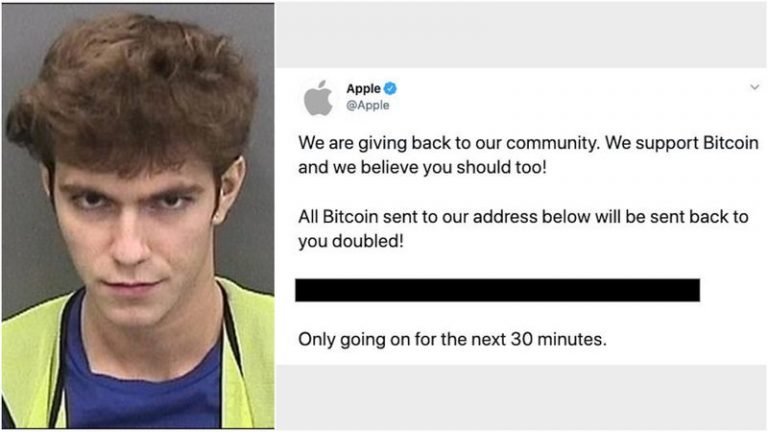
Graham Ivan Clark, 17, of Tampa, made his first appearance in court on Saturday after he was arrested on charges that he hacked famous Twitter accounts. His bail was set at $750,000. [ JOSH SOLOMON | Times ]

Both sides argued over what would be an appropriate amount of bail for a 17-year-old facing 30 criminal charges.

Hillsborough Assistant State Attorney Darrell Dirks called Florida Department of Law Enforcement Special Agent Corey Monaghan to testify.

The agent said Clark hired 22-year-old Nima Fazeli of Orlando and 19-year-old Mason Sheppard of the United Kingdom “as proxies” to “manipulate” Twitter employees into giving up access to the company’s system. He declined to specify how Fazeli and Sheppard, who face federal charges in the Northern District of California, manipulated employees.

Twitter on Thursday updated a blog post it published after the scheme played out, calling the hack of its systems “social engineering” that targeted “a small number of employees through a phone spear phishing attack” to obtain their credentials and access to Twitter’s systems.

“This attack relied on a significant and concerted attempt to mislead certain employees and exploit human vulnerabilities to gain access to our internal systems,” the company wrote.

The New York Times reported in July that the hacker accessed Twitter’s internal Slack messaging system and gained control of special tools that could be used to take over any Twitter account.

Prosecutors sought bail at $1 million per charge for each of Clark’s 30 counts and argued Florida case law says he must prove the money used to post his bail was legitimately obtained.

“Because, based upon the conduct of this defendant, I believe it’s appropriate to assume that every single penny that this defendant has access to is by ill-gotten gains,” the prosecutor said. “And we’re talking about millions of dollars.”

Defense attorney David Weisbrod denied that his client’s assets were illegally obtained. He explained to the judge that Clark was the subject of a criminal investigation last year conducted by prosecutors in Hillsborough and Santa Clara, Calif. They obtained a search warrant and seized about $15,000 in cash from Clark, plus 400 Bitcoin, Weisbrod said.

When prosecutors declined to charge Clark in April, his defense attorney said, they returned to him the cash and 300 Bitcoin, which is worth more than $3 million. Weisbrod argued that legitimizes those assets.

“I can think of no greater indication of legitimacy than law enforcement giving the money back,” said Weisbrod. He asked the judge to set bail at $20,000.

The judge decided to set bail at $25,000 per 29 counts. For the 30th charge, the judge ordered that if Clark posts bail he must wear an electronic monitor and be confined to his home, except for visits to the doctor or his attorney. The judge barred him from accessing the internet on any device and ordered the 17-year-old to surrender his passport if he has one.

Some of the celebrities who authorities say were hacked by Clark included presumptive Democratic presidential nominee Joe Biden, Jeff Bezos, Mike Bloomberg, Warren Buffett, Bill Gates, Wiz Khalifa, Floyd Mayweather, Elon Musk and Kanye West. A handful of companies had their accounts hacked, too, including Apple and Uber. Twitter said the hackers had access to 130 Twitter accounts and tweeted from 45.

Clark faces 17 counts of communications fraud, 11 counts of fraudulent use of personal information and one count each of organized fraud for more than $5,000 and accessing a computer or electronic device without authority.

Marathon Petroleum Won’t Restart Two Idled Oil Refineries – Yahoo Finance

(Bloomberg) — Marathon Petroleum Corp, the largest U.S. independent oil refiner, said it won’t restart two refineries in California and New Mexico amid concerns that demand for fuels is unlikely to return to pre-pandemic levels this year.

Marathon said in a statement it will convert its 166,000 barrel-a-day Martinez, California, refinery near San Francisco into a terminal facility and may add a renewable diesel plant to align with California’s Low Carbon Fuel Standards objectives and Marathon’s greenhouse gas-reduction targets. It will also close the 26,000 barrel-a-day Gallup refinery in New Mexico.

Both refineries were idled in April as Covid-19 decimated demand for refined products like gasoline and jet fuel. Marathon said May 5 during its first-quarter earnings call that Martinez and Gallup were targeted because they are the highest-cost facilities among its 16 refineries. It assumed product demand would improve enough to restart them before the end of the year. Subsequently, gasoline demand briefly improved after a slew of states attempted to reopen their economies around Memorial Day, then stalled as Covid-19 raged anew.

London consultancy Energy Aspects says there is too much global refining capacity and existing refineries will be pressured by new facilities coming online that can operate more efficiently, forcing some shutdowns of older sites. It projects global demand won’t return to pre-coronavirus levels until 2022.

“U.S. gasoline demand may never go back to normal,” Amrita Sen, chief oil analyst and co-founder of Energy Aspects, said in an interview., “Demand is trending low and, if anything, Covid is accelerating that.”

Martinez was also under pressure because California’s environmental regulations add to the cost of operating in its crowded refining market. “The situation in the West Coast market, which was already long refining capacity, has gotten exacerbated by the demand destruction caused by Covid 19,” Andy Lipow, president of Lipow Oil Associates in Houston, said in an interview.

Gasoline demand in California, the state with the most registered vehicles in the country, is about 60 percent of pre-Covid levels, according to California Fuels and Convenience Alliance.

Marathon, which acquired Martinez and Gallup 2018 when it bought rival Andeavor for $23.3 billion, might have been faced with high-cost refineries in its portfolio requiring expensive capital expenditures, Lipow said. “In the face of declining demand, it made more sense to shut them down.”

Gallup’s closure isn’t surprising, said Jon Sudduth, senior North American crude analyst for Energy Aspects in Houston. It is in a very small market and its source of regional crude production has been dwindling as drilling declined, which would have forced Marathon to find another, perhaps more expensive, supply, he said.

The company expects to begin a phased-out reduction of staff at the two refineries in October. Marathon will report second-quarter earnings on Monday.

(Updates with analyst comment in 5th paragraph)

For more articles like this, please visit us at bloomberg.com

Subscribe now to stay ahead with the most trusted business news source.

©2020 Bloomberg L.P.

Can summer survive Americas coronavirus spike? – BBC News

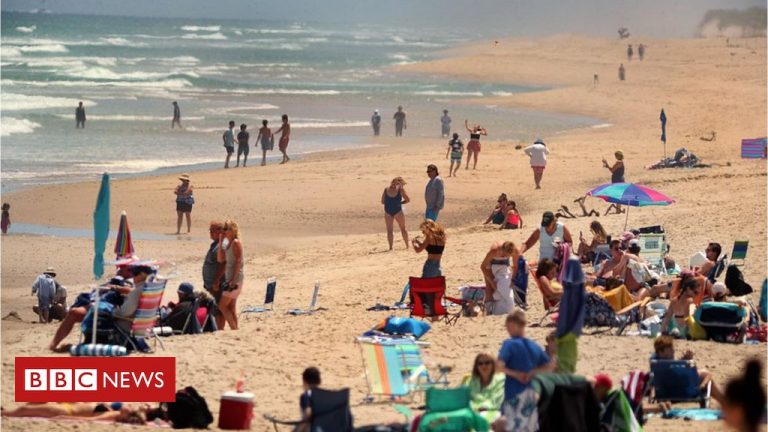
Nauset Beach in Cape CodImage copyright
Getty Images

Image caption

Sarah Sherman says the spiking cases elsewhere risk ruining the summer holiday season

America’s first coronavirus surge nearly wiped out the summer season on Cape Cod, one of the most popular summer destinations in the US. Now there is talk about a second wave – will this imperil the vacation spot’s escape?

When the pandemic hit the US in March, Sarah Sherman, owner of Hopper Real Estate in Eastham – a holiday home rental business on the Cape – saw her summer season erased with cancellations. But by mid-July, her business had revived – despite the number of cases in the country setting records.

At one point, she scored more than 16 bookings in just two days – a number unheard of in a typical year.

“It’s definitely feeling like summer,” she says.

The return of visitors was a major relief to Ms Sherman and business owners like her across Cape Cod, a peninsula that juts off Massachusetts into the Atlantic Ocean that was made famous as the summer playground of the Kennedys.

Cold and grey in the winter, it is dependent economically on the summer months, when its population doubles and families from across the northeast pour in to sunbathe, cycle and gorge on lobster and fried clams.

As the country went into lockdown, reservations “just stopped”, she recalls. “We were like, ‘Oh my god, what is going to happen?'”

“We didn’t know whether there was going to be a summer.”

Image caption

Ron Dee, who opened a new restaurant in June, says sales have exceeded his expectations

That worst case scenario didn’t materialise.

Families with second homes de-camped for extended stays earlier in the year than usual. Renters soon followed, as a long spring in lockdown created pent-up demand, particularly for places like the Cape, to which most visitors travel by car.

By the 4 July holiday weekend – typically one of the busiest in the year – occupancy rates at hotels were above 90%.

But as case counts rise elsewhere in the country, Ms Sherman says it is too early to say if the area’s economy has escaped.

“As we watch the rest of the country spike, we’re like, ‘If that happens here, that could close down the rest of our summer really quickly.'”

Consumer spending stalls

Ms Sherman’s concerns are widely shared.

Economists have warned that consumer spending in the US appears to be stalling, even in places, like Massachusetts, which have so far escaped a sharp rise in cases.

Spending has flattened across the country since the 4 July holiday, and remains down more than 6% since January, according to data from a team of researchers at Harvard University, who found the pullback has been driven by wealthy families and led to significant job loss at businesses in neighbourhoods that cater to such a clientele.

For a place like the Cape, which relies on tourist dollars, the economic impact is likely to be significant, says Karen Dynan, a senior fellow at the Peterson Institute for International Economics.

Wealthy families are more likely to have been spared job and income cuts, which could help spending bounce back when people feel safe again. But it’s not clear how many businesses will be able to survive until then, she says.

“We’re just beginning to see the longer term harm to the economy,” she says.

‘Not as busy’

Many restaurants and other stores are offering off 20% or more, as visitors shop and dine out less.

At Scargo Cafe in Dennis, takeaway and outdoor tables have helped to maintain business, but with a nearby cinema and theatre closed, co-owner David Troutman says it’s nothing like a typical summer, when people pack three deep at the bar and wait for an hour to be seated.

Many of his 73 staff are working part-time and he didn’t hire extra seasonal help.

“Whether it’s a good economy or bad economy or the pandemic, [second-home owners] going to come down here no matter what,” he says. “But people are unquestionably afraid to come into the building …. It’s certainly not as busy.”

The subdued tone is especially evident in Provincetown, a small town on the tip of the Cape whose art galleries and restaurants are typically jammed with visitors.

Image copyright
Getty Images

Image caption

In a normal year, Provincetown streets don’t allow for social distancing

Mike Carroll, owner of the Schoolhouse Gallery, says he has reduced public hours and cut back his staff from three to one, opting to handle most things himself.

“It’s really good to have a to-do list every day because the news is not good,” he says. “Our visitor population will be down, business will definitely be down and the seasonal aspect of it will definitely make it more acute.”

New economy?

That’s what longtime Cape Cod vacationer Zoe Fishman fears.

Image caption

The Fishman family says activities this summer are subdued

Though her family has retreated to its second home on the Cape almost every weekend since March – much earlier than usual – activities have been largely limited to beach-going and pool-time at the grandparents’. And she knows that will take a toll.

“There are definitely major changes to how we spend,” says the paediatrician, who described her economic outlook as “dismal”.

“I hope that next summer will be a summer of a lot of new restaurants. I hope that we’ll see a new sort of economy,” she says. “But I think what we’re probably going to see next summer is a lot of empty places.”

SoftBank to maintain stake in Arm after partial sale: Nikkei – Yahoo Finance

(Reuters) – SoftBank Group Corp <9984.T> will keep a stake in its chip company Arm Holdings Ltd, even if it sells part of it to Nvidia Corp <NVDA.O> or through an initial public offering, the Nikkei Asian Review reported https://asia.nikkei.com/Business/SoftBank2/SoftBank-to-maintain-stake-in-Arm-after-partial-sale.

The Japanese conglomerate is currently negotiating terms with Nvidia after receiving an approach last month, the report said, citing an unidentified source familiar with the matter, adding that it is possible that SoftBank would take stake in Nvidia after it bought Arm.

The report did not mention how much stake the company will retain in Arm.

SoftBank did not respond to a Reuters request for comment.

The Wall Street Journal reported last month that SoftBank was exploring options including a full or partial sale or public offering of Arm.

SoftBank acquired the British chip designer for $32 billion in 2016, its largest-ever purchase, in part to expand into the internet of things, which connects everyday devices from traffic signals to refrigerators to the internet.

In March, it unveiled a 4.5 trillion yen ($42.50 billion) plan to buy back shares and reduce debt.

Under the plan the group has been selling down core assets including stakes in Chinese ecommerce giant Alibaba Group Holding <BABA.N> and U.S. wireless carrier T-Mobile US Inc <TMUS.O>.

A sale would not be part of group’s asset monetization program, Nikkei reported.

($1 = 105.8800 yen)

(Reporting by Maria Ponnezhath in Bengaluru; Editing by Mike Harrison)

Louisiana revokes permit of defiant BBQ restaurant for refusing to require masks – The Advocate

Louisiana has taken its first serious enforcement action on a restaurant for violating Gov. John Bel Edwards’ coronavirus rules regarding masks, revoking the food permit of a defiant Denham Springs BBQ restaurant after its owner refused to require masks for employees or customers. 

Health Department spokeswoman Aly Neel said the agency revoked the food permit for Firehouse BBQ after repeated efforts to get the business to comply with mask and social distancing rules in recent days. 

LDH sent a sanitarian to inspect the restaurant after the state received multiple complaints. After handing the owner a report — which included violations of masking for employees and customers, as well as tables not spaced out properly — the owner refused to make changes. 

A copy of the order delivered by the Health Department shows the restaurant is owned by Eunice and Danielle Bunch through God’s Table, LLC. When reached by phone Saturday, an employee of the restaurant declined to comment or connect a reporter with the owner. 

Louisiana health department accuses some rural parishes of misusing coronavirus lists, violating HIPAA

In a Facebook post pinned to the restaurant’s profile, the owner writes that masks are not required, and claims that they have “caused several medical reactions” to employees.

The U.S. Centers for Disease Control and a wide range of health experts have urged the public to wear masks to limit the spread of viral droplets from the wearer to others. And the White House Coronavirus Task Force has recently said widespread mask usage is one of the few ways to prevent more stay-at-home orders. 

In another Facebook post on Saturday, the business wrote that “despite the attempted enforcement of an illegal mandate, we are conducting business as usual,” with an image of a cartoon character and the words “yes, we’re open.” The post encouraged patrons to “show your support” by patronizing the restaurant to help pay for an attorney “that will be fighting for your rights and ours as citizens.” 

Don’t get your hopes up for looser coronavirus restrictions in the coming weeks, John Bel Edwards says

The move represents the first time the Edwards administration has taken serious action against a restaurant in violation of coronavirus rules, which require businesses to have employees and customers wear masks. 

Edwards’ administration has taken a lax approach to enforcing its restrictions so far, hesitating to penalize businesses.

Instead, the fire marshal and Health Department have given businesses several opportunities to comply, operating on a “three-strike” rule.

Neel said the Health Department would wait to take legal action against the business until Wednesday, when a judge is expected to rule in a separate lawsuit brought by several bars in the Acadiana region against coronavirus rules that effectively shut them down.

The state Fire Marshal and Edwards’ administration ordered four bars to close last week after discovering they were allowing large crowds or on-site consumption. Bars have been closed to in-person consumption since earlier in July, when Edwards modified his Phase 2 executive order and shuttered bars and required masks statewide when people are out in public. 

John Bel Edwards said Louisiana coronavirus cases may be plateauing — but at a ‘really high number’

Firehouse is located in Denham Springs, a Republican stronghold represented in the state House by Rep. Valarie Hodges, who has backed efforts to end coronavirus restrictions. 

Firehouse wrote on Facebook that “customers and employees are given the option to wear a mask or not. It is not mandated in our store. As we have been for a while, we are open to dining in customers.” 

Staff writer Jackie DeRobertis contributed to this story. 


Tesla is willing to help other automakers, but ask nicely – Teslarati

Earlier this week, I wrote an article talking about the German car companies and their obsession with mentioning Tesla. Volkswagen, Audi, and BMW are all gunning for Tesla in terms of electric vehicle technology and manufacturing. While the three German giants admit that Tesla holds a multi-year lead in the EV sector, they all believe they can catch up to Elon Musk and the rest of the crew.

After publishing the article, Elon responded and said that Tesla was willing to help companies transition to sustainable forms of transportation because it would help the world as a whole. However, there is evidence to suggest that Tesla and Elon are going to help those who ask for it, not those who attempt to take information in a manner that could be considered “sneaky.”

Additionally, one of Musk’s followers had asked if Tesla’s Autopilot could be shared with other automakers in an attempt to not only accelerate the charge towards semi and fully-autonomous driving. Musk simply replied, “Sure,” indicating that there did not seem to be any boundaries in terms of what Tesla would be willing to share with its “competitors” as capitalism would refer to them as.

To me, I found that simple “Sure” reply as one of the most interesting Tweets of Musk’s illustrious Twitter career. Not only has the CEO provided many of my friends and me with a fair share of laughs and me because of his great sense of humor, but his digs at other companies, as well as some of the more ironic things that he has said, have always intrigued me.

When he said, “Sure,” all I thought of was the lawsuit that Tesla currently holds against an Xpeng engineer who formerly worked for Tesla.

For those of you that are not familiar, Tesla sued Xpeng engineer Cao Guangzhi earlier this year, who used to work for Tesla.

Guangzhi allegedly stole pieces of Tesla’s Autopilot source code and attempted to sell it to Xpeng for financial gain. Guangzhi had downloaded portions of the code to his personal laptop and then shared it through Apple Airdrop, which is hard to track because of the encryption that Apple uses. However, he ensures that he removed it from his personal laptop before leaving Tesla to join Xpeng.


This is a preview from our weekly newsletter. Each week I go ‘Beyond the News’ and handcraft a special edition that includes my thoughts on the biggest stories, why it matters, and how it could impact the future. 

A big thanks to our long-time supporters and new subscribers! Thank you.

Subscribe for free.


The case is still ongoing.

But what I found most interesting about Musk’s simple one-word answer was the fact that he stated he would be willing to share Autopilot’s developments with other automakers. But it seems it needs to be done in good and harmless fashion, and not in a sneaky way. This is entirely understandable, in my opinion.

If Guangzhi did what Tesla is accusing him of doing, it would be seriously sneaky and flawed. Tesla is the leader in semi-autonomous driving thanks to the developments of its Artificial Intelligence team, led by Andrej Karpathy. What separates Tesla from every other company in self-driving is the fact that it is continuously improving thanks to the company’s Neural Network. As information is communicated to the Neural Network with every Tesla vehicle on the road, the company’s self-driving software becomes more sophisticated and more accurate as it can predict the next movements of the drivers around a car.

If this source code were to be leaked or given to another company, it could be detrimental to Tesla’s lead in the self-driving universe. I’m excited to see how the case plays out.

More recently, Tesla sued Rivian for poaching former employees and stealing trade secrets. Interestingly enough, I had some time to read over several pages of the complaint from Tesla to Rivian, and some employees openly admitted to taking confidential documents when they left Tesla.

I am a big Rivian fan. I think R.J. Scaringe, the company’s CEO, is a brilliant person who has a lot of potential to do amazing things. I have recommended to a couple of my friends that they should invest in an R1T instead of getting a Cybertruck because they don’t like the Tesla pickup’s design. But either way, it seems from my understanding of legal documentation, it is going to be up to Tesla to prove that Rivian asked these employees to take things and that they are openly going after past Tesla employees. I think that is going to be a tough cookie to crack.

But either way, Rivian didn’t go to Tesla for help directly. I feel that if they needed help with electrification or self-driving code, they should have reached out to Elon directly.

Elon has stated for years that the biggest enemy of Tesla is not competitors who are developing sustainable electric vehicles. The companies that are the biggest threat to Tesla are the biggest threat to us all, which are the ones who refuse to adapt to the sustainable transportation revolution. Companies that want to develop and improve internal combustion engine machines are a threat. Not financially, but environmentally, because they’re ignoring the apparent crisis that is going on in the world.

Does it seem like Elon wouldn’t be willing to help other automakers develop their vehicles if they asked for help? I don’t think so. Personally, when I look at Musk’s mission, I see a man who is interested in collaborating with anyone and everyone, as long as they are willing to admit that their push toward sustainability is the focus and not on the backburner.

Please consider Subscribing and joining me next week as I go ‘Beyond the News’

3 Reasons Why Ethereum Price Rallied 75% to Hit a 2-Year High at $395 – Cointelegraph

In the last two weeks, Ether (ETH) price increased by 75% as the price rallied from $222 to $390. Many investors believe Ether’s momentum is buoying the entire market, and possibly even pushing Bitcoin (BTC) upwards.

ETH-USD daily chart. Source: TradingView.com

ETH-USD daily chart. Source: TradingView.com

Three factors that appear to be triggering the strong Ether rally are: DeFi, ETH 2.0, and the current prolonged rally taking place in the altcoin market.

DeFi growth is pumping altcoins but there are bearish signs

Since mid-June, the total value locked in decentralized finance (DeFi) protocols has continuously surged. The launch of protocol-specific tokens, like Compound’s COMP as an example, led to growing demand for DeFi.

Eventually, users discovered a phenomenon called “yield farming”, which involves users searching for higher yields in the DeFi market and switching from one protocol to another to obtain incentives.

The explosive growth of the DeFi market in a short period led many DeFi-connected tokens to surge rapidly. In July, investors seemingly sold off DeFi tokens and other small market cap altcoins, moving back to Ether and Bitcoin.

Today Ether price reached a 2-year high as it surged to $395 on BitMEX but this has traders warning against a potential pullback. In fact, crypto-trader Edward Morra said:

“Yeah, parabola coming out of another parabola is a sight to behold tbh. Also, this isn’t sustainable and will correct. If you are new to this space – buy dips, don’t FOMO at the top.”

ETH 2.0 bolsters Ether’s momentum

A consistent positive factor that supports the upward momentum of Ether is the anticipation for ETH 2.0. In August, Ethereum developers expect to launch the final testnet of ETH 2.0 called Medalla.

When fully launched, ETH 2.0 would gradually eliminate miners from the network and reward users for participating in the network. The incentive system would enable users to earn a yield on their Ether holdings over a long period.

Kelvin Koh, the co-founder of a venture capital Spartan Black, recently suggested that every phase of Ether would strengthen Ethereum. Koh said:

“Every phase of ETH 2.0 over the next 2-3 years brings Ethereum closer to its final state and will be catalysts for ETH.”

Altcoin season continues

The Ether and Bitcoin rally over the last three days coincided with a drop-off in altcoin prices. In the near-term, the cycle of profit taking could continue if altcoins see regular uptrends.

In previous bull markets, major cryptocurrencies and small altcoins showed an inverse correlation, meaning, as the price of Bitcoin surged, altcoin values dropped.

The opposite remains true when Bitcoin price is stable or consolidating. This creates a cycle that causes BTC and ETH to benefit from multiple profit-taking rallies.

Satoshi Flipper, a popular trader on Twitter, suggested that in the longer-term there is a key resistance for Ether at $780.

ETH-USD 1-week chart. Source: Satoshi Flipper

ETH-USD 1-week chart. Source: Satoshi Flipper

It remains to be seen whether the confluence of ETH 2.0, profit-taking rallies, and DeFi growth could push Ether price to higher resistance areas. For now, the sentiment around the altcoin generally remains positive in the medium-term.

Chicago Dunkin Employee Arrested After Saliva Found in State Troopers Drink: Police – NBC Chicago

An employee at a Chicago Dunkin’ location was arrested Friday, one day after an Illinois state trooper discovered saliva inside a cup of coffee, state police said.

Vincent Sessler, 25, was charged with disorderly conduct, reckless conduct and battery to a peace officer.

At approximately 10:20 p.m. on July 30, an Illinois State Police trooper ordered a large black coffee from the Dunkin’ location at 6738 W. Archer Ave. on the city’s Far West Side.

Because the coffee was extremely hot, the trooper removed the lid from the cup in order to cool it down, according to a news release from ISP. At that point, the trooper observed a “large, thick piece of mucus,” which was later confirmed to be saliva, floating inside.

Following an investigation, Sessler was arrested at 12:49 p.m. on Friday, and taken into custody without incident.

“This is outrageous and disgusting. The men and women of the Illinois State Police put their heart and soul into protecting the lives and rights of all people in this state every day,” ISP Director Brendan F. Kelly stated in the news release. “They deserve better than this insulting and dangerous treatment. For their safety, ISP officers and employees will be prohibited from patronizing this location.”

Sessler remained in police custody as of Saturday evening.

Dunkin’ released the following statement to NBC 5 regarding the incident:

We are aware of the matter that took place at the Dunkin’ restaurant located at 6738 W. Archer, Chicago, IL. Dunkin’ and all of our franchisees share the goal of creating a welcoming environment in all Dunkin’ restaurants and treating all guests with dignity and respect. The type of behavior reported to us is inconsistent with the brand’s values. The franchise owner who independently owns and operates this restaurant, informs us that he took immediate action to investigate the matter and terminated the individual responsible for this reprehensible behavior. Dunkin’ has a deep appreciation for police officers who work tirelessly to keep our communities safe, and the franchise owner has reached out directly to the officer to apologize for the experience.