Tarrant County Reports 7 More COVID-19-Related Deaths, 14-Day Average Climbs – NBC 5 Dallas-Fort Worth

Health officials in Tarrant County on Saturday reported seven more deaths in people who contracted COVID-19 as the county’s 14-day average for new cases rose to the highest it’s been in two weeks.

The seven deaths reported Saturday included five Fort Worth residents — a woman in her 50s, a woman in her 60s, a man in his 80s, a man in his 50s and a man in his 60s — and two Bedford residents — a man in his 90s and a man in his 50s. All seven people had underlying health conditions, according to Tarrant County Public Health.

Three hundred eighty-eight people have died due to COVID-19 since the pandemic began in March.

Officials reported 461 new confirmed cases of the coronavirus Saturday, raising the countywide total to 28,871. The 14-day average for new cases rose to 548, the highest it’s been since July 18, while the 7-day average dropped by 17 to 532.

Tarrant County’s 7-day average has held between 502 and 564 since July 20.

The county also reported 785 new recoveries from COVID-19, bringing its total to 15,182.

Texas COVID-19 Case Trends

NBC 5 is tracking the number of COVID-19 related cases in all Texas counties. Choose up to four counties to see

Data: County Health Departments, NBC 5 Staff
Nina Lin/NBC

Why Mercedes & BMW Vehicles Need To Adopt The Tesla Platform – CleanTechnica

By Ben Shulz & Kyle Field

Tesla CEO Elon Musk has always been fairly straightforward about his willingness to open up Tesla tech to other companies. For example, he publicly commented about the possibility of partnering with Mercedes on an electric Mercedes Sprinter in November 2018.

This statement certainly wasn’t a fluke and is really just a natural extension of Tesla’s mission to advance the adoption of sustainable energy generation and electric transportation. With this mission in mind, it’s only logical to pursue ideas that scale Tesla’s superior electric vehicle platform as quickly as possible. In todays world, many electric vehicle manufacturers are pursuing electric vehicles by building a platform that other companies can use to build and grow their own business. Tesla made this promise even more real recently, with a new tweet from CEO Elon Musk confirming the company would be open to licensing its electric motors, batteries, power electronics, and even software out to competing automotive companies.

What is important to understand is that for a platform to be attractive, another company needs to be able to build an attractive commercial product on the platform. What company could build a very attractive product on the Tesla technology platform?

Mercedes & BMW

Both Mercedes and BMW have been structurally weakened in recent years, with each company having lost roughly 50% of their respective market caps since 2015. Even if they teamed up to tackle the electrification challenge, they would not be able to pull together the necessary resources to have any hope of catching up with Tesla’s technology in this decade. The story was different in 2015, and even in 2018, when they still could have bought into Tesla at a reasonable price, but now there is no doubt they have been beaten at their own game: building the best volume car at a premium price. Based on their respective share prices, it’s clear investors are of the same mind. Mercedes and BMW have no existing or future products that can compete with a Tesla.

In many ways, Mercedes and BMW are very similar to French or Italian luxury fashion labels. They still have great brands and have impressive skills in maintaining those luxury brands by continuing to improve on their interior and exterior vehicle designs, via great marketing, and by tuning the ride to their target groups.

Would customers love a Mercedes E-Class or BMW 5-Series built with Tesla technology inside? I’m pretty sure they would, as the interface the customer has with the brand (interior, exterior, status) would be the same. The look and feel of the cars themselves would not change. We saw this exact phenomenon when Mercedes contracted with Tesla to electrify the Mercedes-Benz B-Class for California customers. The vehicle ownership, driving, and maintenance experience is 100% Mercedes, but the electric powertrain, comprising a full 15% of the components in the vehicle, was supplied by Tesla. Some 8,000 of the vehicles were produced before it was shelved, and my wife has thoroughly enjoyed hers since 2014.

Licensing Tesla’s electric vehicle technology, from battery to charging to Autopilot, would mean having best-in-class tech. That is a natural fit with the experience Mercedes-Benz aspires to for all of the vehicles in its lineup. The pricing would be similar to Tesla’s, with a small premium for a higher degree of customization and the scent of old-world luxury.

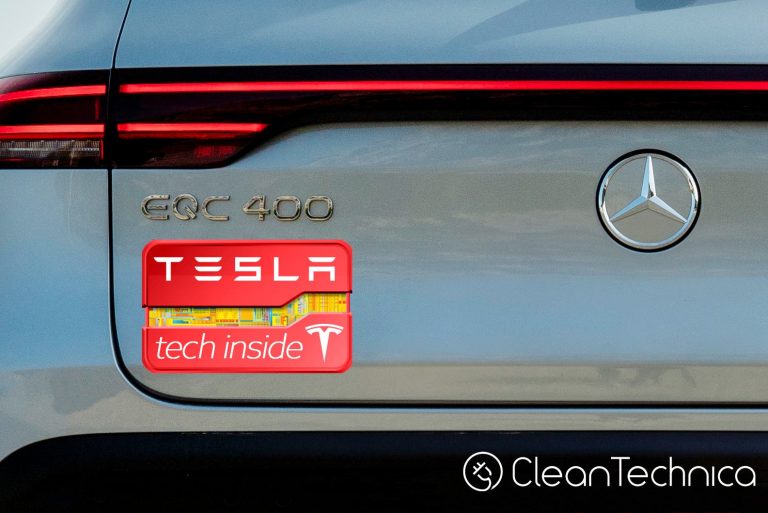
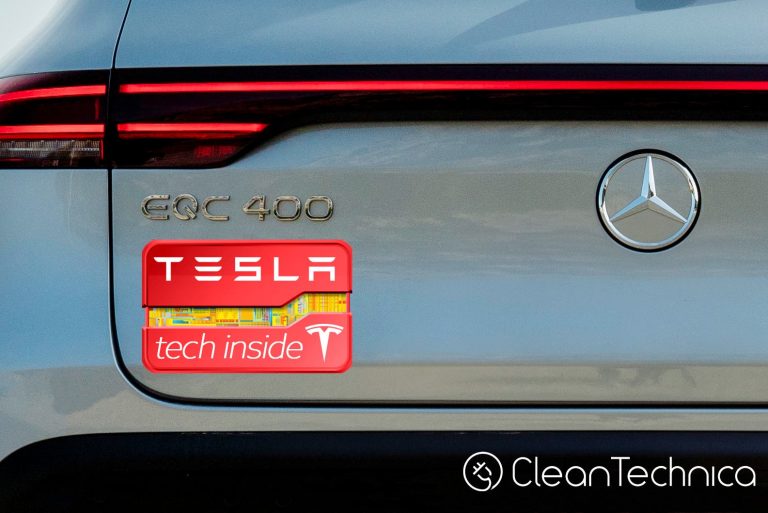
Could a Tesla-powered electric vehicle be in the cards for Mercedes and BMW? Image credit: Chanan Bos, CleanTechnica

It seems like the next call placed by Daimler CEO Ola Källenius should be to Tesla CEO Elon Musk to discuss terms for the deal. Doing this would save Daimler several billion euros that they wouldn’t need to invest in their own software and battery tech (which would ultimately fail), while still allowing them to sell the best product. Tesla has demonstrated time and time again that it can and will continue to innovate at a faster pace than any other automaker is capable of. Why engage in a game of cat and mouse that can’t be won instead of just cutting a deal?

If Daimler and BMW are fast, they can even offer to convert some of their factory infrastructure into gigafactories with a shared equity investment — which Tesla (through it’s high market cap) could likely provide. Musk has also repeatedly called gigafactories “products,” rather than just factories.

Does this have any potential to become reality? As weird as it seems, Mercedes and BMW are running out of options — whether they like it or not. Any rational CEO would strongly consider this. Imagine having the opportunity to rewind the clock and knowing what we all know today about the success of the iPhone. If you were able to license Apple’s technology back in 2010, would you do so? 
 
Have a tip for CleanTechnica? Send us an email: [email protected]


Latest Cleantech Talk Episodes


Latest CleanTechnica.TV Episode


Tags: BMW, daimler, Mercedes, Tesla, Tesla batteries, Tesla licensing, Tesla powertrain deals


About the Author

Kyle Field I’m a tech geek passionately in search of actionable ways to reduce the negative impact my life has on the planet, save money and reduce stress. Live intentionally, make conscious decisions, love more, act responsibly, play. The more you know, the less you need. As an activist investor, Kyle owns long term holdings in BYD, SolarEdge, and Tesla.


Why Mercedes & BMW Vehicles Need To Adopt The Tesla Platform – CleanTechnica

By Ben Shultz & Kyle Field

Tesla CEO Elon Musk has always been fairly straightforward about his willingness to open up Tesla tech to other companies. For example, he publicly commented about the possibility of partnering with Mercedes on an electric Mercedes Sprinter in November 2018.

This statement certainly wasn’t a fluke and is really just a natural extension of Tesla’s mission to advance the adoption of sustainable energy generation and electric transportation. With this mission in mind, it’s only logical to pursue ideas that scale Tesla’s superior electric vehicle platform as quickly as possible. In todays world, many electric vehicle manufacturers are pursuing electric vehicles by building a platform that other companies can use to build and grow their own business. Tesla made this promise even more real recently, with a new tweet from CEO Elon Musk confirming the company would be open to licensing its electric motors, batteries, power electronics, and even software out to competing automotive companies.

What is important to understand is that for a platform to be attractive, another company needs to be able to build an attractive commercial product on the platform. What company could build a very attractive product on the Tesla technology platform?

Mercedes & BMW

Both Mercedes and BMW have been structurally weakened in recent years, with each company having lost roughly 50% of their respective market caps since 2015. Even if they teamed up to tackle the electrification challenge, they would not be able to pull together the necessary resources to have any hope of catching up with Tesla’s technology in this decade. The story was different in 2015, and even in 2018, when they still could have bought into Tesla at a reasonable price, but now there is no doubt they have been beaten at their own game: building the best volume car at a premium price. Based on their respective share prices, it’s clear investors are of the same mind. Mercedes and BMW have no existing or future products that can compete with a Tesla.

In many ways, Mercedes and BMW are very similar to French or Italian luxury fashion labels. They still have great brands and have impressive skills in maintaining those luxury brands by continuing to improve on their interior and exterior vehicle designs, via great marketing, and by tuning the ride to their target groups.

Would customers love a Mercedes E-Class or BMW 5-Series built with Tesla technology inside? I’m pretty sure they would, as the interface the customer has with the brand (interior, exterior, status) would be the same. The look and feel of the cars themselves would not change. We saw this exact phenomenon when Mercedes contracted with Tesla to electrify the Mercedes-Benz B-Class for California customers. The vehicle ownership, driving, and maintenance experience is 100% Mercedes, but the electric powertrain, comprising a full 15% of the components in the vehicle, was supplied by Tesla. Some 8,000 of the vehicles were produced before it was shelved, and my wife has thoroughly enjoyed hers since 2014.

Licensing Tesla’s electric vehicle technology, from battery to charging to Autopilot, would mean having best-in-class tech. That is a natural fit with the experience Mercedes-Benz aspires to for all of the vehicles in its lineup. The pricing would be similar to Tesla’s, with a small premium for a higher degree of customization and the scent of old-world luxury.

Could a Tesla-powered electric vehicle be in the cards for Mercedes and BMW? Image credit: Chanan Bos, CleanTechnica

It seems like the next call placed by Daimler CEO Ola Källenius should be to Tesla CEO Elon Musk to discuss terms for the deal. Doing this would save Daimler several billion euros that they wouldn’t need to invest in their own software and battery tech (which would ultimately fail), while still allowing them to sell the best product. Tesla has demonstrated time and time again that it can and will continue to innovate at a faster pace than any other automaker is capable of. Why engage in a game of cat and mouse that can’t be won instead of just cutting a deal?

If Daimler and BMW are fast, they can even offer to convert some of their factory infrastructure into gigafactories with a shared equity investment — which Tesla (through it’s high market cap) could likely provide. Musk has also repeatedly called gigafactories “products,” rather than just factories.

Does this have any potential to become reality? As weird as it seems, Mercedes and BMW are running out of options — whether they like it or not. Any rational CEO would strongly consider this. Imagine having the opportunity to rewind the clock and knowing what we all know today about the success of the iPhone. If you were able to license Apple’s technology back in 2010, would you do so? 
 
Have a tip for CleanTechnica? Send us an email: [email protected]


Latest Cleantech Talk Episodes


Latest CleanTechnica.TV Episode


Tags: BMW, daimler, Mercedes, Tesla, Tesla batteries, Tesla licensing, Tesla powertrain deals


About the Author

Kyle Field I’m a tech geek passionately in search of actionable ways to reduce the negative impact my life has on the planet, save money and reduce stress. Live intentionally, make conscious decisions, love more, act responsibly, play. The more you know, the less you need. As an activist investor, Kyle owns long term holdings in BYD, SolarEdge, and Tesla.


The Sweat you drink: Inside the meteoric rise of Asias answer to Gatorade – CNN

But if you look very closely at a different scene showing future McFly as he video-conferences a co-worker in 2015, another brand makes a cameo appearance.

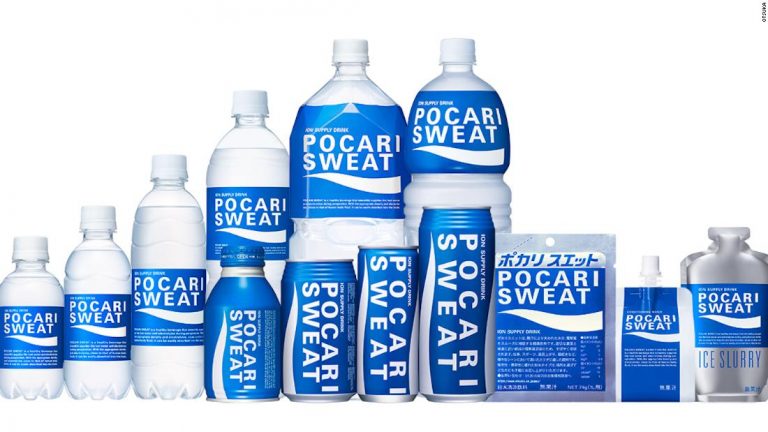
That drink was called Pocari Sweat. And despite its name — unappetizing to native English speakers — it’s a well-known Japanese sports drink across Asia and the Middle East.

Though the film’s creators didn’t have a product placement deal with Pocari Sweat, they had given their art department a general directive to include Japanese elements in the scenes depicting 2015, says Bob Gale, the producer and writer of “Back to the Future II.”

The Japanese powerhouse of the ’80s didn’t last, but Pocari went on to become a force in the sports beverage market.

Last year, 270 million bottles were distributed across more than 20 countries and regions. Around the same number were distributed in Japan, according to Otsuka Pharmaceutical, the Japanese company that makes it. Amid the pandemic, the company donated more than 1.2 million bottles to hospitals and governments across its markets.

Launched in 1980, Pocari Sweat was inspired by the rehydrating effects of an IV solution. The ingredients include water, sugar, citric acid, magnesium, calcium and sodium. Pocari replenishes water and electrolytes — a set of minerals your body needs to function — lost through sweat.

The beverage is to many Asians what Gatorade is to Americans, and Lucozade is to the British.

But, the brand, which turns 40 this year, is virtually unheard of in the West.

A drink that mimics sweat

Pocari’s story starts with Rokuro Harima, an Otsuka employee who got food poisoning during a business trip to Mexico in the 1970s.

At hospital, doctors told Harima to replenish his energy with fizzy soda drinks. But when Harima spotted a doctor drinking from a pouch of IV solution to rehydrate himself after performing surgery, he had an idea.

  • Four Pocari Sweat facts

  • 1980

    Pocari Sweat is launched in Japan.

  • 1982

    Otsuka starts exporting Pocari Sweat to its first overseas markets in Hong Kong and Taiwan.

  • 1990s

    Pocari Sweat becomes the first non-alcoholic drink in Japan to hit a cumulative shipment value of over $1 billion.

  • 2020

    Otsuka establishes a health beverage subsidiary in Mexico, the country that sparked the idea for Pocari Sweat.

Source: Otsuka Pharmaceutical

Otsuka had also been producing
IV solutions for
hospitals
since 1946. Harima put two and two together:
He
wanted to create a tasty, drinkable IV.

In the 1960s, he had helped fine-tune the flavor of Otsuka’s “Oronamin C,” a carbonated nutritional drink targeted at weary businessmen needing a midday pick-me-up. Now the “king of taste,” as his peers called him, had set his sights on creating a new market in Japan.

Gatorade had been sold in the US since the 1960s. But in Japan in the 1970s, sports drinks were uncharted territory.

Non-alcoholic
carbonated beverages, such as Coca-Cola and Mitsuya Cider, and orange and apple juices dominated the domestic market,
according to the Japan Soft Drink Association (JSDA).
But as Japanese white-collar workers powered Japan’s economic boom, households gained spending power. People became more health-conscious and Coke sales waned,
according to Mark Pendergrast, the author of “God, Country and Coca-Cola.” Harima got to work.

Back in the laboratory, he and a team of researchers had discovered that the concentration of sweat was different for people doing sport compared to those just going about their day. They wanted a drink — with properties similar to sweat — that could hydrate people whatever they were doing.

Researchers developed dozens of prototypes, but they all tasted too bitter. The breakthrough came when they added a dash of citrus powder juice to their translucent solution, eventually refining the formula to two samples with differing sugar levels.

Researchers put those solutions to the test by climbing a mountain in Tokushima prefecture in southern Japan, says Jeffrey Gilbert, a spokesman at Otsuka. They concluded that the less sugary version went better with exercise.

The formula for Pocari Sweat was born. All they needed was a name and a logo.

What’s in a name?

With its literal nod to perspiration, Pocari Sweat’s name has bemused many native English speakers. The first part of its name was chosen for its sound. “Pocari” comes off as vaguely European and is easy to pronounce but has no meaning, Gilbert says.

As Japan absorbed Western influences in the post-World War II years, European languages were seen as chic and exotic. English slogans adorned everything from billboards to T-shirts, lunch boxes and pencil cases.

The word “sweat,” on the other hand, conveys the drink’s practical purpose.

Back in the 1980s, most carbonated and soft drinks were sold in bold red, orange and white containers, according to the JSDA. Yet given the high turnover rate in the Japanese beverage market, Akihiko Otsuka — then president of Otsuka Pharmaceutical — knew he had to make a statement. Reminiscent of breaking ocean waves, Pocari’s cool blue and white cover was an outlier in terms of design.

It was a risk engineered to catch the eye of curious consumers.

Creating a new market

Pocari Sweat was not a smash hit when it landed in Japanese stores in 1980. “Because this drink category didn’t exist in Japan, people didn’t know what to make of it,” says Gilbert.

It didn’t have Coke’s dark coloring and signature sweet fizz. Nor was it like Suntory’s energy drink Regain, which appealed to businessmen prepared to work 24-hour shifts. Instead, Pocari Sweat promised to keep people hydrated.

Early marketing campaigns focused on the dangers of dehydration. Television commercials and posters targeted everyone from people with hangovers to sports enthusiasts.

For several years, the company handed out free samples at
saunas and sporting events. Salespeople went door-to-door to promote it.

“Back then, Japan didn’t have as many supermarkets or vending machines as it does today. Shoppers bought drinks at mom and pop stores, so Otsuka made an effort to reach out to people and familiarize them with Pocari’s taste and function,” says Kiyomi Kai, a spokeswoman at the JSDA.

When Pocari Sweat first launched in Japan, it struggled to win over consumers. When Pocari Sweat first launched in Japan, it struggled to win over consumers.

Despite the struggle to launch, Gilbert says giving up wasn’t an option. “Otsuka is very, very sticky and persistent in what it does on both the drug and consumer side — it goes in deep and stays there,” he says.

Eventually, its efforts paid off. In the mid-1990s, Pocari Sweat became Japan’s first domestically produced non-alcoholic drink to hit a cumulative shipment value of over $1 billion.

Sold primarily in hot countries across Asia and the Middle East, Gilbert says the hydrating message behind Pocari products — which now include powder and jelly — speak to those markets. Private vendors are selling the drink in Western nations, too.

But Otsuka never dreamed of dominating the West.

Looking to Asia

By 1983, Gatorade held
86.5% of the sports beverage market in the United States. In Otsuka’s eyes, Western markets were saturated, says Gilbert.
Otsuka had exported its IV solutions to Japan’s neighbors since the
1960s, so it made sense to ship them to locations near
Japan rather than to send them via air freight to America. Besides, the company didn’t want to pay for expensive supermarket shelf space in the US.

Pocari Sweat was launched in Japan as the economy boomed. Otsuka predicted that the level of economic growth would spread across Asia.

By the 1980s, anti-WWII sentiments toward Japan, which had colonized many parts of Asia, had gradually waned in the region. Japan was now seen as a
viable business partner.

The drink hit shelves in Hong Kong and Taiwan in 1982 and in Singapore, Bahrain, Oman and Saudi Arabia the following year, along with a slew of other markets over the next decades.

The strategy of investing in Asian and Gulf markets for the long haul bore dividends.

Before the coronavirus pandemic hit, the Asian economic zone — spanning the Arabian Peninsula to Australia — represented 50% of global GDP and two-thirds of global economic growth,
according to Parag Khanna, the author of “The future is Asian.”

The region’s spending power was growing, and Pocari Sweat was well-placed to ride the wave.

Overcoming cultural hurdles

Otsuka saw huge potential in Indonesia, a country of
273 million people, which is now the company’s biggest market outside Japan. But Otsuka knew it had to rethink its marketing strategy for the predominantly Muslim nation.

For example, it didn’t make sense to advertise Pocari Sweat to Indonesians as a means to rehydrate after a bath or when they had a hangover, as they did in Japan and the Philippines.

In Indonesia, people take showers instead of baths. And, as Islam forbids alcohol, there’s no Indonesian word for “hangover,” says Yutaro Bando, the president director of Otsuka’s Indonesian branch, in a 2015 YouTube video.

Otsuka focused on carving out a niche in the healthcare and
sporting community. But even then, the drink only took off after medics started using it as an emergency tonic.
In 2010, a dengue outbreak swept Indonesia. That year, the
incidence rate spiked to over 80 people per 100,000 compared to 60 the year before.
Symptoms for dengue include vomiting, high fever and
internal bleeding, in severe cases. Patients need to stay hydrated, as that allows
platelets — tiny blood cells that help your body form clots to stop bleeding — to mature.
Spotting an opportunity in the market, Otsuka partnered with healthcare experts and government officials to promote Pocari Sweat’s hydrating powers. Healthcare workers
started recommending it to their patients to prevent dehydration,
according to researchers from Telkom University in Indonesia.
As a vital hydration booster, Pocari became known as a ”
form of first aid” — deployed in the fight against everything from dengue fever to diarrhea.

But it didn’t take long for Pocari’s image to shapeshift.

Pop culture meets ion supply

From 2016, running became a popular activity among Indonesians, according to Jakarta-based advertising agency Olrange. It partnered with Otsuka between 2015 and 2018 to produce a series of campaigns to expand Pocari Sweat’s appeal.

Along with sports campaigns dubbed #SafeRunning and Born to Sweat, Olrange leveraged Japan’s pop culture to attract younger consumers.

In 2018, Olrange launched a series of online videos — dubbed “the most kawaii (cute) web series in Indonesia” — featuring Haruka Nakagawa and Yukari Sasou, two Japanese Pocari Sweat ambassadors and celebrities popular in Indonesia.

It “captivated” Indonesian youngsters, says Stephanie Putri Fajar, an account director at Olrange.

“We gave them
(Nakagawa and Sasou) a platform to portray the active life of the youth who lose ions
(sweat) through a lighthearted six-part friendship and adventure series on YouTube called ‘
Onigiri The Series,'” says Putri Fajar.

The videos shows the young friends sharing rice balls, going to school, hanging out and experiencing teenage life as peppy tunes play in the background.

That call to youngsters is driving Otsuka’s strategy as it fosters markets at home and abroad, according to Tomomi Fujikawa, an analyst at Euromonitor International.

Moonshot drink

Four decades ago, there were only
five types of soft drinks — a category that JSDA says includes carbonated beverages as well as teas and mineral water — competing for space in Japan’s beverage market. But the category has expanded a lot since then.
In 2019 alone, there were 6,491
types of soft drinks on sale in Japan, and companies introduced 1,074 new products, according to the JSDA. All of them vie for coveted space in the nation’s convenience stores and roughly
5 million vending machines, says Kai, the JSDA spokeswoman.

In Japan, Pocari Sweat is stocked in convenience stores, vending machines, supermarkets and drug stores. While ubiquity helps, Otsuka has worked hard to make the brand relevant, say Roy Larke, a marketing professor at the Waikato University in New Zealand.

For instance, in 2020, Otsuka recruited virtual pop star Hatsune Miku as a brand ambassador ahead of the now-postponed Summer Olympics, to appeal to a new generation of young people.

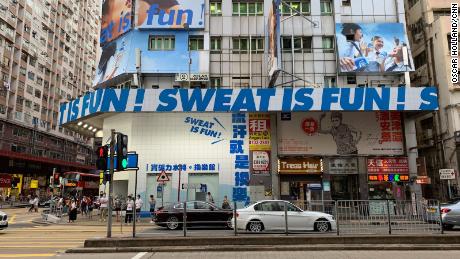
A Pocari Sweat store in Hong Kong. A Pocari Sweat store in Hong Kong.

That cycle of refreshing Pocari Sweat but sticking by its signature blue-and-white look and message of hydration, has allowed the brand to outlast its competitors and thrive.

“Some brands are designed specifically for the convenience store market, so they have a three-to-six month lifespan for a particular recipe, but Pocari Sweat isn’t like that,” says Larke, who is also the editor of intelligence website JapanConsuming.

“It’s an enduring long-term brand that Otsuka has really developed over the last 50 years, and today it’s that endurance and long history in Japan that has kept it going.”

CNN’s Yoko Wakatsuki contributed to this report from Tokyo.

Oldest original café in Texas shuts down due to COVID-19 – KTRK-TV

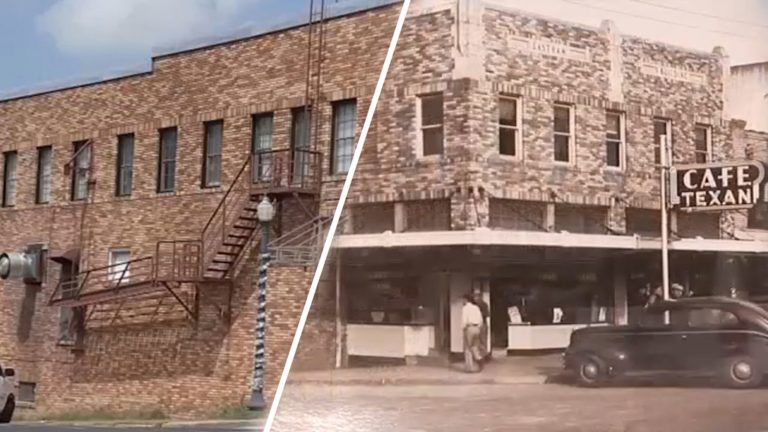
HUNSTVILLE, Texas (KTRK) — The oldest cafe in Texas, still in its original location, is closing its doors for good due to COVID-19.

Cafe Texan was a staple in Huntsville for 83 years. Owner John Strickland tells ABC13 he closed when the pandemic started and couldn’t afford to make the repairs needed to reopen.

ABC13 featured the restaurant in the “cool spaces” series in 2018, and ABC13 Anchor Emeritus Dave Ward remembers the restaurant well.

He grew up in Huntsville as a child in the 1940s. He said he remembers it like was yesterday.

“Many Sundays we would go to the Cafe Texan after he had preached the gospel for lunch,” Dave said. “My favorite lunch item was fried tenderloin of trout with tartar sauce, English peas and mashed potatoes for 75 cents.”

Dave said he also had his first job in journalism outside the cafe. He sold the Houston Chronicle newspaper to the restaurant’s patrons for a nickel a piece.

The owner has now sold the building and the buyer plans to turn the space into a museum and sandwich shop.

Follow Tom Abrahams on Facebook, Twitter and Instagram.

Copyright © 2020 KTRK-TV. All Rights Reserved.

New 2020 Bitcoin Price High at $12,000 Proves Bulls Remain in Control – Cointelegraph

After securing a strong daily close, Bitcoin (BTC) price continued to press higher by cruising to $12,000 within the last hour.

Crypto market daily price chart. Source: Coin360

Crypto market daily price chart. Source: Coin360

Breaking through the $11,500-$11,800 range was the bulls most significant achievement of the last week and a number of analysts have noted that above the $12,000 level there is little overhead resistance.

This has led some traders to forecast a swift move to the $14,000-$15,000 level.

In a previous analysis, Cointelegraph contributor Micheal van de Poppe said that:

“The $11,500-11,800 resistance area is an ancient and substantial area on the charts. Not only did this level serve as resistance throughout the summer of 2019, but it also acted as resistance during the peak mania of December 2017.”

Bitcoin daily price chart. Source: Coin360

Bitcoin daily price chart. Source: Coin360

This most recent move to $12,000 broke through this ‘ancient’ range and according to van de Poppe once “the price of Bitcoin breaks through this zone, then there is a lot of open range above and a new bull market will be upon us.”

Ethereum price hits a 2-year high

As Bitcoin price moved to a new 2020 high, Ether (ETH) price rallied to a 2-year high at $399 on Binance exchange.

Since July 18 the Ether has rallied more than 70% and analysts believe the altcoin could see further upside as the DeFi sector continues to grow, Bitcoin rallies higher, and the ETH 2.0 upgrade is expected to occur soon.

Ethereum daily price chart. Source: Coin360

Ethereum daily price chart. Source: Coin360

Many of the top-20 altcoins also posted impressive gains as Bitcoin and Ether moved to new 2020 highs. XRP rallied 19.7%, Stellar Lumens (XLM) gained 13.25% and Dogecoin (DOGE) added 12.93%.

According to CoinMarketCap, the overall cryptocurrency market cap now stands at $357.3 billion. Bitcoin’s dominance index currently at 61.3%. 

Keep track of top crypto markets in real time
here

Dunkin worker arrested for allegedly spitting in state troopers coffee – NBC News

A Chicago Dunkin’ employee was arrested Saturday after an Illinois state trooper accused him of spitting into his coffee.

The incident at a Dunkin’ location near Chicago Midway International Airport allegedly occurred Thursday night when the unidentified trooper ordered a large black coffee and looked inside, according to a statement from Illinois State Police.

“Due to the coffee being extremely hot, the Trooper removed the lid from the top of the cup of coffee in order to cool it down,” state police said. “The Trooper observed a large, thick piece of mucus which was later confirmed to be saliva, floating inside it.”

State troopers investigated and arrested Vincent J. Sessler the next day, Illinois State Police said. He was in Chicago Police Department custody Saturday, state police said.

Sessler was booked on suspicion of battery on a peace officer, disorderly conduct and reckless conduct, the state department said. It was unclear Saturday night whether he has an attorney.

Illinois State Police Director Brendan F. Kelly said officers and employees were prohibited from patronizing that Dunkin’ location “for their safety.”

“This is outrageous and disgusting,” he said in a statement. “The men and women of the Illinois State Police put their heart and soul into protecting the lives and rights of all people in this state every day. They deserve better than this.”

The allegation was among a number of high-profile claims by police across the country being served adulterated beverages since the in-custody death of George Floyd in May sparked national outcries for police reform.

In June, a New York Police Department union, the Police Benevolent Association, said three officers were sickened by adulterated shakes served to them at a Lower Manhattan Shake Shack. But the NYPD looked into the matter and concluded there was “no criminality” by Shake Shack employees.

Later in June, after an off-duty Los Angeles Police Department officer claimed he found a tampon in a Frappuccino he bought at a Target Starbucks, Target said it reviewed security video and did not find anything suspicious.

In this case, it appears Dunkin’ is siding with authorities: The company, formerly known as Dunkin’ Donuts until shortening its name last year, said in a statement to NBC Chicago that the franchise owner fired Sessler.

“Dunkin’ has a deep appreciation for police officers who work tirelessly to keep our communities safe, and the franchise owner has reached out directly to the officer to apologize for the experience,” the company said.

58 Minnesota firms with political connections received large PPP loans – Minneapolis Star Tribune

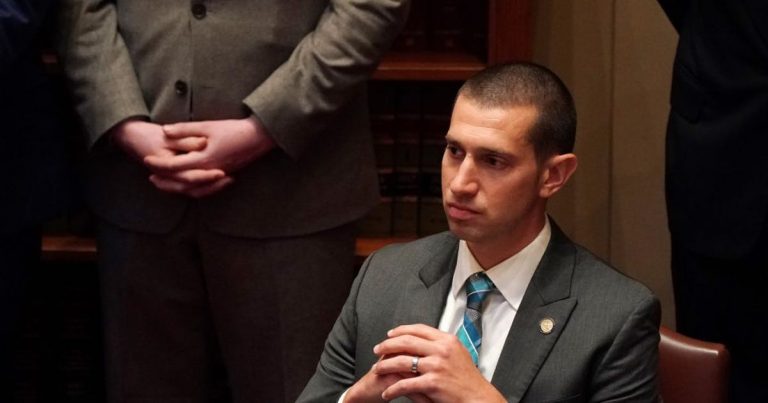
While thousands of other business owners in Minnesota were scrambling to find a bank willing to take their application for the popular Paycheck Protection Program, Minnesota Senate President Jeremy Miller found himself at the front of the line.

His family’s application for a forgivable loan was approved April 3, the same day the U.S. Small Business Administration began taking applications for the program, according to recently released records from the federal agency. Miller’s company, Wm. Miller Scrap Iron & Metal Co., received $200,000, assistance that helped the Winona recycling operation retain 19 jobs, SBA records show.

“I don’t think [my political connections] had any impact on the loan process for Miller Scrap, and I’m confident the bank would say the same thing,” said Miller, noting that his company’s sales were down 60% at the time he sought federal help. “Miller Scrap being a longstanding customer of the bank, that may have made a difference.”

Altogether, 58 politically connected companies in Minnesota received between $64.9 million and $144 million in PPP money, according to the SBA, which released information for all firms that collected at least $150,000. However, the SBA limited the data to certain size categories, such as loans worth $5 million to $10 million, and did not provide exact dollar amounts.

Those 58 companies received a disproportionate share of the largest PPP loans, which were capped at $10 million. At a minimum, the companies received an average of $1.1 million, while the typical small business in Minnesota got $114,209 through the program, federal records show. Most of the officials have made political contributions to congressional or presidential candidates, or political action committees that support those candidates.

The recipients included a technology company owned partly by U.S. Rep. Dean Phillips, a construction firm that owns most of state Sen. John Jasinski’s real estate agency and six board members of Enterprise Minnesota, a consulting firm that helps manufacturing companies on the state’s behalf.

State officials defended their participation in the program, noting they followed all of the rules and used the money as it was intended by maintaining their payrolls at a time of great economic uncertainty. Most officials said the money allowed them to avoid laying off a significant number of employees.

Steven Chies, a member of the Board of Examiners for Nursing Home Administrators whose nursing home company, North Cities Health Care, received $1.9 million in PPP aid, said he even handed out bonuses during a “critical” phase of COVID.

“We didn’t buy a Lamborghini like the guy in Florida did,” said Chies, referring to a Florida businessman who was recently charged with fraud for making false statements on his PPP application and using some of the proceeds to buy a $318,000 sports car.

Officials also denied that their politically appointed positions made it easier to connect with a lending institution. Though other companies had to wait as long as a month or two to complete the PPP process, most of the politically connected firms received approval for their loans in the first week of the program, federal records show.

Mary Ives, who was first appointed to the Higher Education Facilities Authority in 2016, acknowledged that several banks competed for the chance to handle two applications for her hotel companies. She obtained a total of $550,000, with the first loan approved on April 9.

“We had very good treatment by our local banks, and it had absolutely nothing to do with education,” said Ives, whose family owns four hotels in northern Minnesota, including Timberlake lodges in Grand Rapids and Staples. “I doubt the banks even know I was involved in the commission.”

The Star Tribune reviewed the financial disclosure statements of more than 3,000 state officials in Minnesota for this story, ranging from people who serve on local watershed districts to state regulatory boards, as well as state legislators and other statewide officials. The Star Tribune also reviewed the financial disclosure statements of the 10 members of Minnesota’s congressional delegation. To have been included on the politically connected list, the public official either has an ownership interest or serves as a high-ranking executive or director of the PPP recipient.

Minnesota received a total of $11.2 billion, with about 1% flowing to the 58 firms, records show.

Only one Minnesota member of Congress made the list: Phillips, who co-authored legislation that tripled the amount of time small business owners have to spend their PPP money and still have the loan forgiven by the government. Earlier this year, Phillips told the Star Tribune he thought it was wrong for members of the U.S. House and Senate to take PPP money.

However, Phillips acknowledged last week that he invested about $100,000 for a 1% stake in a Minneapolis company, MyMeds Inc., that received $150,000 to $350,000 through the PPP. The loan was approved on the program’s first day. Phillips said he made the investment several years ago. He said he is not involved in the company’s management and was unaware of the loan.

“There’s a big difference between being an investor and an owner or operator,” said Phillips, adding that he stopped discussing his extensive financial holdings with his advisers when he first ran for Congress to avoid any possible conflicts of interest.

Rajni Shah, head of client engagement and business development at MyMeds, said neither Phillips nor his staff provided help on the loan. MyMeds is a technology company that provides medication support.

“His name was not used in any way,” Shah said.

The Star Tribune also found that the wife of U.S. Rep. Jim Hagedorn, state Republican chairwoman Jennifer Carnahan, received a PPP loan of $1,800. Carnahan used the money to help her small boutique in Nisswa. Carnahan said her husband played no role in helping her get the PPP loan or her business, which she said she founded with her own savings before she married him.

“I’m not an elected official,” Carnahan said. “I’m a small-business owner. It shouldn’t matter who my husband is.”

Most officials at the politically connected companies said they pursued PPP money because of concerns over plunging revenue related to a downturn that has swamped the American economy. At Ives’ hotels, which were closed for three months, the companies lost more than $1 million in event bookings and room occupancies are still hovering at the anemic level of 50%.

Board of Electricity member Duane Hendricks said sales at his Minneapolis construction company, Egan Co., will probably finish the year down 20% from the original forecast. Egan received $5 million to $10 million in PPP money; Hendricks declined to be more specific. The company qualified with exactly 500 employees, the maximum allowed under PPP rules.

“Our business is doing OK,” Hendricks said. “A lot of projects got put on hold and others that were started got put on delay. … We didn’t have the financial capacity to carry us through the downturn with the people we employ.”

However, officials at the Animal Emergency & Referral Center of Minnesota, which received $2.3 million in PPP money, acknowledged they don’t really need the money.

“It’s been crazy busy, which has taken us all by surprise,” said chief marketing officer Heidi Brenegan.

Brenegan said the company sought federal relief shortly after it closed its St. Paul hospital, figuring revenue would plunge. Instead, she said, the caseload for emergency services is up 25% this year over the same period in 2019.

Hospital co-owner Steven Shadwick, who was appointed to the Board of Veterinary Medicine in 2018, said the company will not be seeking forgiveness of the loan. “We don’t think it is the right thing to do,” he said.

The Star Tribune called all of the officials who received PPP money and received responses from most of them. When asked if their public positions helped them obtain public money, some officials laughed. Others became angry. A few said they were glad the Star Tribune was asking such questions.

“If federal money is being used, it is good you guys are checking up on that,” said Katy Graves, whose law firm, Henson Efron, obtained $1 million to $2 million in PPP money. Graves is a member of the Board of Marriage and Family Therapy.

Several board members of Enterprise Minnesota said they didn’t discuss the program before they applied for a PPP loan.

“Any discussion as a board came after the fact,” said Steve Palmer, whose North Central Door Company received $1 million in federal relief. “There was nothing about, ‘How can we do this?’ ”

Several officials distanced themselves from the process, saying other people at their company handled the PPP application and dealt with the bankers.

“I am 71 years old, and I am not active in the business,” said Racing Commission member Alan Gingold, whose company, Lorenz Bus Service, received $1 million to $2 million in PPP money. “I have no connections at the state level that would be useful for my business.”

Sen. Jasinski acknowledged that his real estate company shares ownership and offices with Met-Con Companies, but he said he had nothing to do with the construction company’s PPP application. The Faribault firm received $150,000 to $350,000.

“I don’t even know how much they got,” said Jasinski, who serves as the Senate’s Assistant Majority Leader.

None of the officials acknowledged having any influence over the process or receiving inside information that was not available to the general public.

“Maybe the banks were making decisions on priority customers and maybe they weren’t,” said Minnesota Ballpark Authority member Paul D. Williams, the former deputy mayor of St. Paul who is now president and CEO of affordable housing provider Project for Pride in Living, which received $2.4 million in PPP money. “The whole thing was so fast moving. … It doesn’t strike me as something that I would worry a whole lot about.”

USDA issues health alert for frozen taquitos and chimichangas that may contain plastic, posing choking hazard – USA TODAY

Several kinds of frozen beef and chicken taquitos and chimicangas are included in a new public health alert because they may contain plastic.

The Department of Agriculture’s Food Safety and Inspection Service issued the alert Saturday for ready-to-eat products that contain “diced green chilies that have been recalled by the producer, Sun Valley Foods, due to concerns that the products may be contaminated with extraneous materials, specifically hard plastic.”

According to the alert, the “plastic may pose a choking hazard or cause damage to teeth or gums.” 

Select products under José Olé, Casa Mamita and Walmart’s Great Value brand are listed in the USDA notice.

Save better, spend better:  Money tips and advice delivered right to your inbox. Sign up here

The USDA is urging consumers not to consume these products and says they should be thrown out or returned. There have been “no confirmed reports of adverse reactions due to consumption of these products.”

Hand sanitizer warning: FDA’s list of hand sanitizers to avoid grows again with more than 100 identified that may contain methanol

Ground beef recall 2020: JBS Food Canada recalls more than 38,000 pounds of meat

The products were produced by Ajinomoto Foods North America Inc. in Lampasas, Texas, and San Diego and shipped to retail locations nationwide. The products have the establishment number “EST 5590,” “P5590” or “EST. 17417” printed on the packaging above the expiration date. 

“FSIS is issuing this public health alert out of the utmost of caution to ensure that consumers are aware that these products, which bear the USDA mark of inspection, should not be consumed,” the alert said.

The affected products are:

  • 19.2-ounce carton containing 16 pieces labeled as “Great Value Flour Chicken Taquitos Tortillas Stuffed with All White Chicken Meat & Monterey Jack Cheese” with a best if used by date of “11 JUL 2021” and “P5590” printed on the side panel.
  • 20-ounce carton containing 20 pieces labeled as “Casa Mamita Beef Taquitos Rolled in Corn Tortillas” with a best by date of “26 JUN 2021” and “EST 5590” printed on the side panel.
  • 22.5-ounce carton containing 15 pieces labeled as “Casa Mamita Chicken and Cheese Taquitos Rolled in Flour Tortillas” with a best by date of “26 JUN 2021” and “P5590” printed on the side panel.
  • 15-ounce carton containing 15 taquitos labeled as “José Olé Taquitos Chicken and Cheese Pollo Y Queso in Flour Tortillas” with a best by date of “08 JUL 2021” or “18 JUL 2021,” and “P5590” printed on the side panel.
  • 20-oz. carton containing 20 taquitos labeled as “José Olé Taquitos Beef Carne De Res in Corn Tortillas” with a best by date of “08 JUL 2021” and “EST 5590” printed on the side panel.
  • 22.5-ounce carton containing 15 taquitos labeled as “José Olé Taquitos Chicken and Cheese Pollo Y Queso in Flour Tortillas” with a best by date of “09 JUL 2021,” “14 JUL 2021” or “17 JUL 2021” and “P5590” printed on the side panel.
  • 55.5-ounce carton containing 37 taquitos labeled as “José Olé Value Pack Taquitos Chicken and Cheese Pollo Y Queso in Flour Tortillas” with a best if used by date of “15 JUL 2021” and “P5590” printed on the side panel.
  • 60-ounce carton containing 60 taquitos labeled as “José Olé Taquitos Beef Carne De Res in Corn Tortillas” with a best if used by date of “9 JUL 2021” or “10 JUL 2021,” and “EST 5590” printed on the side panel.
  • 5-ounce individual plastic bag containing “José Olé Chimichangas Loaded Beef Nacho” with a best by date of “15 JUL 2021” and “EST. 17417” printed on the label.

According to the USDA, Ajinomoto Foods North America, Inc. discovered the problem “when they identified pieces of hard plastic in their production process and in a barrel of diced green chilies that was received from their ingredients supplier, Sun Valley Foods.”

Consumers with questions can contact Ajinomoto Foods at 855-742-5011

Follow USA TODAY reporter Kelly Tyko on Twitter: @KellyTyko