
$1 Billion Liquidated as Bitcoin Price Crashes by $1.4K in Minutes – Cointelegraph

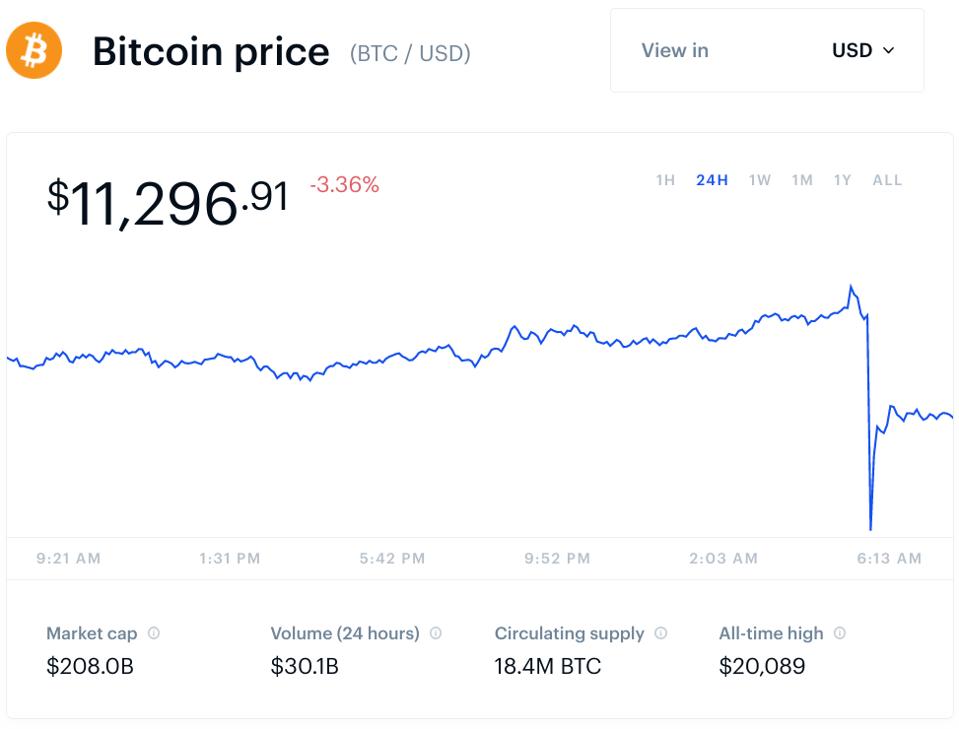
The price of Bitcoin (BTC) and Ethereum’s Ether (ETH) plunged by 13% and 21%, respectively, within minutes on Aug. 2. The move liquidated more than $1 billion worth of futures contracts as BTC/USD dropped from around $12,000 to as low as $10,550.

BTC/USD 1-hour chart

BTC/USD 1-hour chart. Source: Tradingview

There appear to be two main reasons behind the sudden cascade of liquidations. First, the volume in the cryptocurrency market tends to drop during weekends. Second, the market was heavily swayed to longs or buyers.

Cryptocurrency market snapshot, Aug. 2

Cryptocurrency market snapshot, Aug. 2. Source: Coin360

Surprise weekend move hits the crypto market once again

The cryptocurrency market tends to see large liquidations during the weekend. The liquidity often drops as there are fewer active traders in the market. Lower volume leads to massive price movements, as cryptocurrencies become more vulnerable.

Mass liquidations become more likely during the weekend because one large liquidation could trigger a cascade of liquidations. When a long contract gets liquidated, as an example, it forces the buyer to market sell, causing selling pressure.

As hundreds of millions of dollars worth of long contracts began to get liquidated, Bitcoin and Ether dropped rapidly. Bitcoin declined from $12,000 to $10,600 within 15 minutes, while ether declined from $417 to $300.

But mass liquidations happened several times in the past five months. Most notably, on the so-called “Black Thursday” on March 13, $1 billion worth of liquidations occurred. Similarly, right before the halving on May 11, the price of Bitcoin dropped to $8,100 resulting in mass liquidations.

Bitcoin and Ethereum were heavily swayed to buyers

In the last several days, especially after Bitcoin’s upsurge above $11,000, the cryptocurrency market was heavily swayed to the side of the buyers. The funding rates of Bitcoin and Ether were nearing levels that are not sustainable over a prolonged period.

Futures exchanges, like BitMEX and Binance Futures, utilize a mechanism called “funding” to implement balance in the market. When the overwhelming majority of market participants are holding long contracts, then short holders are incentivized with a fee and vice versa.

Prior to the drop, the funding rate of Bitcoin was hovering at around 0.0721%. Since the average funding rate of BTC is at around 0.01%, the market was dominated by long contracts.

The market imbalance was even worse for Ether. The ETH funding rate was at 0.21%, which indicates significant bullish bias. But after the liquidations, the predicted funding rate of ETH is at 0.19%. It suggests that ETH longs were not flushed out, unlike Bitcoin.

Ether funding rate across major futures exchanges

Ether funding rate across major futures exchanges. Source: Skew

Michael van de Poppe, a trader at the Amsterdam Stock Exchange, previously anticipated Ether to drop to $300 as a result. He said:

“Let’s see $ETH at $300-320.”

For now, some traders anticipate sideways action for the days ahead as Bitcoin has rebounded to a key support level at $11,300 and a CME futures gap will likely emerge on Monday given Friday’s close price of $11,630.

“The bullish scenario depends on the crucial threshold of $11,300-11,400 as the pivot to hold for the price of Bitcoin,” Van de Poppe explained in his latest BTC technical analysis. 

In the medium-term, meanwhile, there is increasing optimism about the price trend for Bitcoin. When asked whether BTC will hit a new all-time high, Spartan Black’s Kelvin Koh said:

“Without a doubt. BTC hit a new ATH in each of the last 3 cycles and this one will be no exception. The scarcity effect, the halving and more capital coming into crypto will ensure that.”

Keep track of top crypto markets in real time
here

A Massive Bitcoin Flash Crash Just Created $1 Billion Of Crypto Chaos – Forbes

Bitcoin, after surging higher this week, has suffered a flash crash, losing around $1,500 from its price in matter of minutes.

The bitcoin price broke $12,000 per bitcoin on the Luxembourg-based Bitstamp exchange early Sunday morning only to plummet 12% to $10,500 within the hour.

The bitcoin price has now bounced back, somewhat pulling the wider cryptocurrency market with it, to trade at around $11,300—but not before more than $1 billion of bitcoin and crypto positions were liquidated across various exchanges.

MORE FROM FORBESAs The Bitcoin Price Soars, Bitcoin’s ‘Real’ Crypto Market Dominance Is Revealed

“In the past 24 hours, 72,422 people were liquidated,” bitcoin and crypto market data provider Bybt said via Twitter, adding the largest single liquidation order, worth $10 million, occurred on the Seychelles-based exchange Bitmex, known for its high leveraged trading volume.

Leveraged trading allows traders to take larger positions with smaller amounts of capital, with the number of bitcoin and cryptocurrency exchanges offering high leveraged trading exploding over recent years. Traders take positions, effectively bets, on where they expect prices to be when their position “closes”—losing their capital if the market goes against them.

This week’s bitcoin price rally has attracted a surge of retail traders to the crypto market, with many bitcoin exchanges reporting year-to-date trading highs as eager investors attempted to catch the upswing.

The cause of the bitcoin flash crash was not immediately clear, however some speculated it could have been caused by so-called “whales” who control large amounts of bitcoin and other cryptocurrencies moving the market. The market is more easily pushed around by whales when trading volumes are lower, such as early on Sunday morning.

“Whales playing,” finance writer and commentator Frances Coppola asked via Twitter.

The sudden move in the bitcoin price, which caused over $20 billion worth of value to be wiped from the combined market capitalization of the world’s cryptocurrencies according to CoinMarketCap data, was watched with combination of shock and awe by the bitcoin and cryptocurrency community.

“Bitcoin is the most ruthless asset in the world,” bitcoin and crypto investor Anthony Pompliano said via Twitter.

“[Bitcoin] hits $12,000 and then drops $1,500 in minutes. Not for the faint of heart.”

MORE FROM FORBESFormer Hedge Fund Billionaire Makes The Case For $20,000 Bitcoin Price By The End Of 2020

Bitcoin’s rally this week, breaking its near three-month trading malaise, has been attributed global investors seeking low risk so-called safe-haven assets, such as gold—which came within striking distance of hitting $2,000 for the first time this week.

“Bitcoin’s push has been fueled by the drive towards safe-haven assets,” Micah Erstling, trader at bitcoin and crypto market maker GSR, said via email.

“Markets are being driven by ongoing coronavirus concerns, as well as U.S.-China trade tensions, which also helps to explain gold’s meteoric rise. Even then, gold is still up 28% for the year, compared to bitcoin’s 50%. Perhaps bitcoin is fulfilling the narrative of becoming an all-encompassing, risk-on, safe-haven, deflationary asset.”

How departure of James laid bare the Murdoch family rifts – The Guardian

Sorry, Readability was unable to parse this page for content.

Siemens Healthineers to acquire Varian for $16.4 billion – Reuters

BERLIN (Reuters) – German health group Siemens Healthineers (SHLG.DE) said on Sunday it would acquire Varian Medical Systems Inc (VAR.N) in a deal that values the U.S. maker of devices and software for cancer treatments at $16.4 billion.

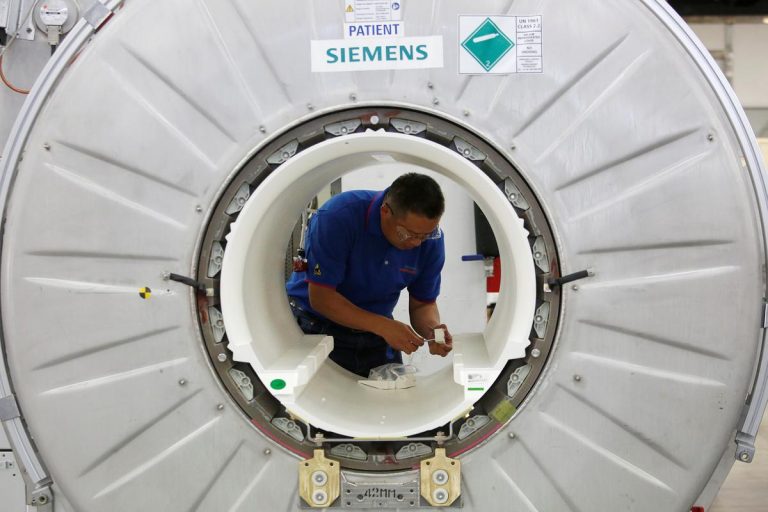
FILE PHOTO: A staffer works on a magnetic resonance imaging machine at a production line of Siemens Healthineers in Shenzhen, China May 25, 2018. REUTERS/Bobby Yip

Under the agreed transaction, Siemens Healthineers will acquire all shares in Varian for $177.50 each in cash, representing a 24% premium to the U.S. company’s closing price on Friday.

Industrial conglomerate Siemens (SIEGn.DE), which spun off Healthineers in 2018 but retains a controlling stake, will provide bridge financing for the deal, which seeks to create a global leader in cancer care solutions by 2025.

“With this combination of two leading companies we make two leaps in one step: A leap in the fight against cancer and a leap in our overall impact on healthcare,” said Bernd Montag, CEO of Siemens Healthineers.

Varian President and Chief Executive Officer Dow Wilson said: “With Siemens Healthineers, we will transform care for a greater number of patients worldwide, as well as broaden opportunities for our employees as part of a larger and more global organization.”

The deal, first reported by Bloomberg, is subject to approval by Varian shareholders and regulators. It is expected to close in the first half of 2021 and be accretive to Siemens Healthineers’ adjusted basic earnings per share within 12 months of that.

BALANCE SHEET SUPPORT

Siemens is effectively putting its balance sheet to work to fund the deal, providing a bridging loan of 15.2 billion euros ($17.9 billion) to Healthineers.

The medical technology unit aims to replace 50% of that through a rights issue this year, subject to market conditions.

Siemens said in a separate statement that it expressly welcomed the deal and would raise the money for the bridging loan by issuing bonds. As a result, its stake in Healthineers would be diluted to about 72% from 85%.

Separately, Healthineers fiscal third quarter results, pre-released instead of Monday due to the acquisition announcement, showed revenue declined 6.9% year-on-year on a comparable basis to 3.3 billion euros, due to the impact of the coronavirus pandemic.

Its adjusted operating margin was 13.9%, down 1.2 percentage points from the same period a year earlier, while adjusted basic earnings per share fell 21% to 30 euro cents.

Revenue is forecast to be flat in fiscal 2020 while adjusted basic earnings per share are seen at between 1.54 and 1.62 euros, compared to 1.70 euros last year, assuming the business environment does not deteriorate further. ($1 = 0.8493 euros)

Additional reporting by Joern Poltz; Editing by Gareth Jones and Susan Fenton

Siemens Healthineers in advanced talks to buy Varian for $15 billion: Bloomberg News – Reuters

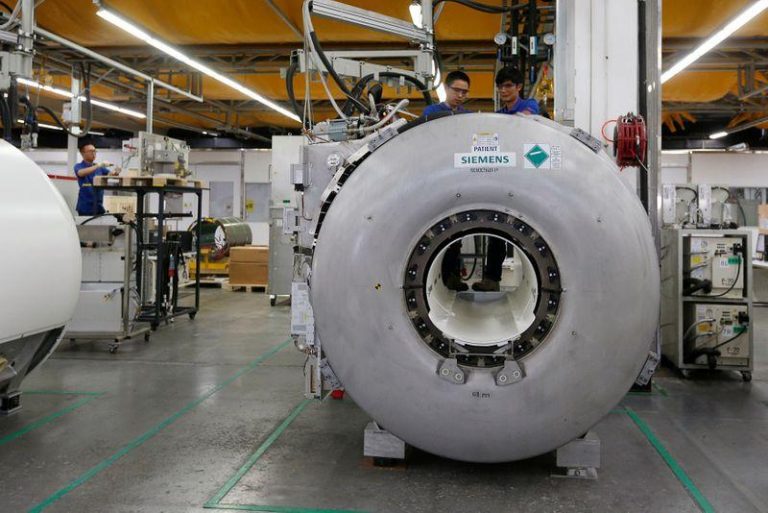
FILE PHOTO: Staff work on magnetic resonance imaging machines at a production line of Siemens Healthineers in Shenzhen, China May 25, 2018. REUTERS/Bobby Yip

(Reuters) – German group Siemens Healthineers AG (SHLG.DE) is in advanced talks to purchase Varian Medical Systems Inc (VAR.N), a maker of devices and software for treating cancer, in a deal that will value the medical device maker at about $15 billion, Bloomberg News reported late on Saturday.

The deal could be announced in the coming days, the report added, citing sources.

The talks could still fall apart, according to Bloomberg.

Both companies did not immediately respond to a request for comment.

Varian, based in Palo Alto, California, is focused on developing and delivering innovative cancer treatments and has 10,000 employees. In 2019, it reported total revenue of $3.2 billion.

Siemens Healthineers, a spinoff from Siemens AG (SIEGn.DE) in 2018, makes X-ray, ultrasound and MRI equipment.

Reporting by Kanishka Singh in Bengaluru; Editing by Cynthia Osterman

Tesla starts trial production of Model Y Long Range Rear-Wheel-Drive – Electrek.co

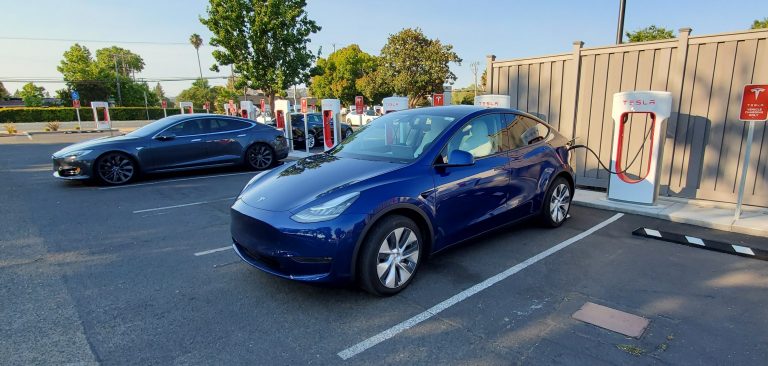
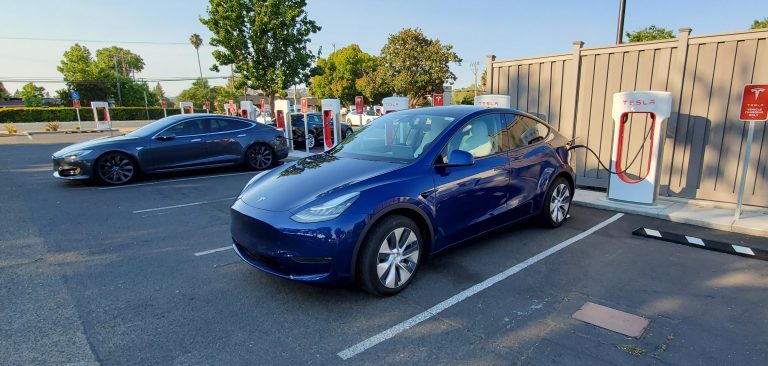
Tesla has started trial production of the Model Y Long Range Rear-Wheel-Drive ahead of an imminent launch, according to sources familiar with the matter.

When Tesla launched the Model Y in March 2019, the company listed four different versions of the electric SUV: Standard Range, Long Range, Dual Motor AWD (with a Long Range battery), and Performance (also with a Long Range battery).

However, earlier this month, CEO Elon Musk announced that Tesla was canceling the Standard Range version of the Model Y and instead, it will only add a Long Range Rear-Wheel-Drive version to the lineup.

Musk said that the new version of the electric SUV would be coming in the next few months.

Now Electrek has learned Tesla has started a trial production run of the Model Y Long Range Rear-Wheel-Drive, according to sources familiar with the matter.

Production trial is one of the last steps toward bringing a new version of a vehicle to market.

Tesla put a few Model Y LR RWD vehicles through a trial run on its GA4 assembly line before temporarily shutting it down for upgrades.

The automaker has yet to open orders for the new version of the vehicle.

Tesla didn’t confirm the price yet, but Musk hinted at $45,000 when first announcing the new version and earlier this week, we reported that Tesla surprisingly lists Model Y Long Range RWD for $48,000 on its loan calculator.

However, the automaker removed the listing after we reported on the update.

Electrek’s Take

To be fair, Tesla producing the Model Y Long Range Rear-Wheel-Drive is not a big leap from producing the Model Y Long Range Dual Motor AWD.

They are basically just removing the front motor, which they are already doing for the Model 3.

But you still have to produce the car and test it to make sure it’s up to the standards and obtain the green light from the EPA.

I think the production is not too far away.

I wouldn’t be surprised if Tesla opens orders for the Model Y LR RWD by the end of the month and start deliveries next month.

What do you think? Let us know in the comment section below.

FTC: We use income earning auto affiliate links. More.


Subscribe to Electrek on YouTube for exclusive videos and subscribe to the podcast.

Exclusive: Eastman Kodak top executive got Trump deal windfall on an understanding – Yahoo Finance

By Jessica DiNapoli and Tom Bergin

NEW YORK/LONDON (Reuters) – Eastman Kodak Co on Monday granted its executive chairman options for 1.75 million shares as the result of what a person familiar with the arrangement described as an “understanding” with its board that had previously neither been listed in his employment contract nor made public.

One day later, the administration of President Donald Trump announced a $765 million financing deal with Eastman Kodak, and in the days that followed the stock soared, making those additional options now held by executive chairman Jim Continenza worth tens of millions.

The decision to grant Continenza options was never formalized or made into a binding agreement, which is why it was not disclosed previously, according to the person familiar with the arrangement. The options were granted to shield Continenza’s overall stake in the company from being diluted by a $100 million convertible bond deal clinched in May 2019 to help Eastman Kodak stay afloat, according to the person’s account.

While Kodak’s approach is permissible, it is unusual because executives are paid to grow a company’s long-term value and are not usually given extra compensation personally to cover events that may hurt share prices, several experts said.

Kodak disclosed the stock options award to Continenza in a filing to the U.S. Securities and Exchange Commission, which was previously reported. But the person familiar with the arrangement told Reuters that the transaction occurred because of the understanding with the board.

That arrangement reported by Reuters for the first time sheds new light on Eastman Kodak’s handling of the unexpected windfall for its top executives.

An Eastman Kodak spokeswoman said that Continenza had no comment. The spokeswoman said the gains reflected by the rise in the share price are only on paper: Continenza, she said, “is a strong believer in the future of the company, and has never sold a single share of stock.”

Prior to this week’s financing deal, the company warned investors it was at risk of not continuing as a going concern, but it was boosted by the agreement with the Trump administration on Tuesday to supply drug ingredients.

As a result, Continenza’s gains at the end of this week amounted to about $83 million following a roughly 10-fold increase in Eastman Kodak’s stock, compared to the approximately $53 million in gains he would have seen were it not for the additional options, according to a Reuters analysis of company filings.

Roughly 29% of the options Continenza received on Monday vested immediately, giving him the right to cash them out as soon as possible.

WIDE LATITUDE

While most corporate boards and their committees have wide latitude in awarding options, three corporate governance experts interviewed by Reuters said the move to mitigate the impact of dilution on Continenza’s stake in the company without a prior contractual obligation was unusual.

“The compensation committee’s job is not to protect the CEO from every adverse effect on the stock price,” said Sanjai Bhagat, a finance professor at the University of Colorado. “It’s to get the CEO to think about long-term value.”

A fourth expert, Robin Ferracone, chief executive of compensation consultant Farient Advisors, said the company may have offered the prospect of additional options to executives as they worked toward the convertible bond offering — to avoid them being “disincentivized” to seal a deal that would help the firm but potentially water down their holdings.

The additional options awarded to Continenza, a former telecommunications executive, were approved by the board’s compensation committee on Monday, the spokeswoman said. Shareholders had voted in May of this year to increase the shares available for executive compensation.

“The issue is the board wanted to make sure the CEO had the same economic alignment as was contemplated when he took the job,” said a person close to the company.

The company’s market capitalization jumped from a little over $100 million at the start of the week to almost $1 billion by Friday following the deal.

Eastman Kodak also granted options on Monday to three other executives, worth $712,000 each, according to regulatory filings. Kodak declined to comment on the reason for these awards.

The company has struggled to reinvent itself from a flagging camera company after emerging from bankruptcy in 2013. Its selection by the U.S. government for the production of key pharmaceutical ingredients surprised many industry analysts who expected such a deal to go to a major generic drug maker.

The government’s U.S. International Development Finance Corporation released a July 28 statement quoting Continenza as saying: “Kodak will play a critical role in the return of a reliable American pharmaceutical supply chain.”

President Trump, too, hailed the development. “I want to congratulate the people in Kodak,” he said at a press briefing. “They’ve been working very hard.”

(Reporting by Jessica DiNapoli and Tom Bergin; Editing by Greg Roumeliotis, Tom Lasseter and Daniel Wallis)