(Target, Waterbury, CT 8/2014 by Mike Mozart of TheToyChannel and JeepersMedia on YouTube.)
Join us on the new C-Pop podcast where Taylor and Jessilyn discuss, debate and sometimes deride pop culture with a strong sense of humor and a focus on Christ. Listen at charismapodcastnetwork.com.
The spooky scenes of October are upon us, but some of the scariest places in America might be Target stores, as the retailer continues to refuse to protect women and children by rolling back its dangerous and misguided restroom and fitting policy, which opens the door to voyeurs and predators with evil intentions.
Eighteen months after the American Family Association (AFA, www.afa.net) began its highly successful and 1.5 million-signature strong #BoycottTarget initiative, the retailer still hasn’t budged on its stance to allow men in women’s facilities.
“Target can be a very scary place,” said AFA President Tim Wildmon. “Incident after incident proves that, and yet Target refuses to make a change that would keep women and children safe, even after frightening experiences for shoppers, falling stock prices, declining foot traffic and exiting executives. It’s not too late to sign AFA’s #BoycottTarget pledge and vow not to shop at Target—neither in store nor online.”
Last month, when Target announced it was lowering prices on thousands of items, its stock took a tumble too, according to Fortune. As of Monday, Target stock stood at just under 61, a far cry from the mid-80s of April 2016, when the AFA boycott began.
As frightening incidents at Target stores continue, AFA is asking shoppers to take action in several ways this month:
Sign the #BoycottTarget pledge. Encourage family and friends to sign the pledge, too.
Call Target to politely let its executives know you’ve signed the #BoycottTarget pledge—Guest Relations, (800) 440-0680, option 1, then 1 again.
Share the boycott information on social media and be sure to use #BoycottTarget.
Visit afa.net/target for more tools and information on the #BoycottTarget initiative.
“As AFA has stated many times, our worries do not stem from fear of the transgender community,” Wildmon added, “but rather, from both the real and potential threat that predators and voyeurs, or anyone with evil intentions, would take advantage of the Target bathroom policy to harm women and children—and we have plenty of incidents to show that they have.”
Readers are Leaders! Subscribe now and get 3 magazines for the price of 1. Get Charisma, Ministry Today and SpiritLed Woman all for $24. YES – Sign me up!
3 Reasons Why you should read Life in the Spirit. 1) Get to know the Holy Spirit. 2) Learn to enter God’s presence 3) Hear God’s voice clearly! Click here to draw closer to God!
Are Coptic Christians Celebrating the Martyrdom of Their People Too Much?
As a little boy in Sunday school, Bassem Al-Janoubie was fascinated by the illustrated stories about the martyrs of Egypt’s Coptic Church.
“Even more than cartoon comic books, the dramatic events and details of the ordeal of each saint held my attention,” remembers the now-40-year-old graphic designer. “They were like superheroes – not accepting attempts to change their beliefs or efforts to get them to deny their Christianity despite torture and even death.”
The 2,000-year-old Coptic Church of Egypt has a long tradition of hallowing those who died affirming their faith in the face of violence.
But the group that calls itself the Islamic State has launched waves of attacks on the Coptic community in recent years – claiming at least 70 lives and wounding scores of others – an unrelenting assault that has opened a debate in the community about martyrdom.
The issue has been most recently punctuated by the deadly knifing of a Coptic priest in a poor Cairo neighborhood Thursday (Oct. 12). A suspect was arrested but his motive is still unknown.
Recently, another Coptic priest — the well-known Rev. Boules George from the well-heeled Cairo suburb of Heliopolis — took to the television airwaves to “thank” the Islamic State terrorists who launched the Palm Sunday church bombings that claimed 45 lives, saying they provided “a rocket” that delivered victims straight to heaven.
“Thank you very, very, very much,” George told the viewers of his program on Egypt’s Coptic TV channel just hours after the terror attacks. “You have given us the death of Christ himself, and this is the greatest honor that of any of us can attain.”
Many Copts rejected that assertion. “This death doctrine is terrifying,” said Jacqueline Ezzat, 21. “Jesus died for a cause and a purpose. Those who die in violence are lost to us for no reason. Father Boules’ doctrine is insidious. It’s like he wants us Christians to be zombies.”
The Islamic State intensified its insurgency in the Sinai Peninsula and targeted Copts, Coptic churches, police and military facilities in Egypt after the 2013 ousting of ex-President Mohammed Morsi, a member of the Muslim Brotherhood.
Glorifying a particularly bloody December attack on a Cairo church, the militants in February released a video declaring that Christians in Egypt were their new “favorite prey” and pledging to wage a “jihad” similar to that in Iraq and Syria, where tens of thousands of Christians have become refugees after fleeing the militants.
Comprising an estimated 10 percent of Egypt’s 90 million people, the Coptic Church is the largest Christian denomination in the Middle East and North Africa.
“We are Egyptian citizens as well as Christians,” said Al-Janoubie. “We need to stop viewing this harassment toward us with pride and saying terrorism gives us a chance to play the same role our ancestors did like in those Sunday school stories about the torture of martyrs.”
Coptic leader Pope Tawadros II, however, has publicly supported the idea that the church derives strength from these deaths of the faithful.
“The blood of our martyrs, the tearful prayers of our monks, and the sweat of all those who serve the church is the source of our spiritual power,” said Tawadros in a Sept. 13 message to the faithful.
Some in the hierarchy of the Coptic Church say martyrdom is widely misunderstood.
“It is true that we love martyrdom, but we also love life,” said Bishop Raphael, the No. 2 man in the Coptic curia. “We do not hate life on earth, because our Lord created us to live in it, not to die.”
This summer, Raphael implemented an Egyptian Interior Ministry directive to suspend church events in difficult-to-secure locations in order to minimize exposure to new attacks. “The fact that we receive death with a spiritual philosophy does not mean that our blood is cheap,” said the bishop.
Still, Raphael is calling for erecting a new church dedicated to the 28 martyrs of a jihadist attack in May that occurred on a desert road between the Egyptian city of Minya and the monastery of Samuel the Confessor — a sixth-century saint tortured at the hands of a rival Byzantine Christian sect.
It’s hard to argue against martyrdom for the 28 people who died in the attack, some community members say. Survivors said their assailants ordered them to fast because it was the Islamic holy month of Ramadan, killed their husbands and brothers, and ordered them to convert to Islam.
“After spraying us with gunfire and taking our jewelry, they ordered the women and children who were still alive to recite a testimony to convert to Islam,” said Hanan Adel, a 28-year-old survivor.
Those horror stories don’t inspire all Copts to embrace martyrdom.
In the Nile Delta city of Mansoura, where youth unemployment remains stuck at slightly more than 30 percent, young Copts want better living standards and civil rights today, not hope in the afterlife, said Wael Gally, a Coptic attorney.
“Coptic suffering as a minority has been compounded by the increasing pressure of economic problems facing all Egyptians,” said Gally, 40. “People are doubting the purpose of losing life to no avail and the promises of eternal life.”
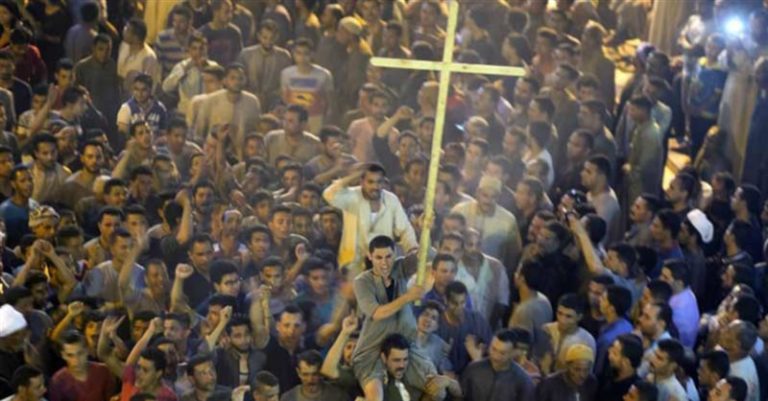
Photo: In this May 26, 2017 file photo, Coptic Christians shout slogans after the funeral service of some of the victims of a bus attack, at Abu Garnous Cathedral in Minya, Egypt.
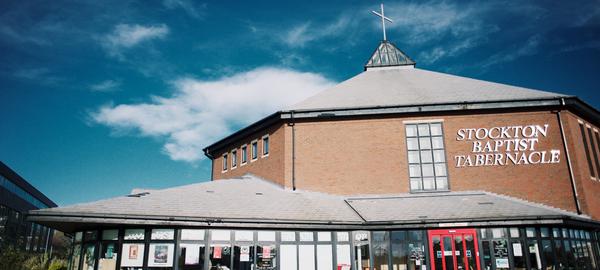
The Baptist Tabernacle will now be called Stockton Baptist Church.
Senior minister Andrew Waugh from the church told Premier that despite the cross on the building, people routinely asked “what is this place”?
The County Durham church, which started to be built in 1902, moved in August 2001 into a new, purpose built building next to the riverside in Stockton.
Waugh told Premier that this move prompted the need to change the church’s name.
Speaking during News Hour he said: “I’ve been pastoring this church for six years and began to recognise pretty early on that you just keep needing to explain to people what a tabernacle is and spelling it.
“We’ve overheard people giving directions in the street and referring to our building as a mosque and a synagogue. It’s a modern building – it’s not kind of traditionally church-shaped and it doesn’t really identify us a Christian community.”
A compulsory purchase order forced the church to move from the high street in August 2001into its current, purpose built building next to the riverside in Stockton.
Waugh said this move prompted the name-change.
He said: “When we moved away from the high-street – several blocks away, I think we kind of vanished from public view and lost a lot of our public image at that point.”
Members of the church voted in favour of the church changing its name in a formal vote in April, before the Charity Commission was informed.
Waugh commended members and said they gave up a “much loved name for the sake of the people that don’t know Jesus yet”.
Although 114 years have passed since the laying of the original foundation stone, the church’s website states that “the message is still the same”.
It goes on to say: “Our Church wants people to connect with Jesus and come to a real and living faith in Him.
“This is still the home of the church today.”
There was another change needed to help people find the church more easily.
Waugh explained: “We’ve changed our website along with the name. The previous generation of our website didn’t actually include the word ‘church’ anywhere on its front cover.
“So if you used to do a google search, just asking ‘can I find a church in Stockton, you wouldn’t find us.”
Waugh said that while changing the name of the church was a good decision, it doesn’t necessarily mean other churches with tabernacle in its name should do the same.
Listen to Andrew Waugh speaking with Premier’s Alex Williams:
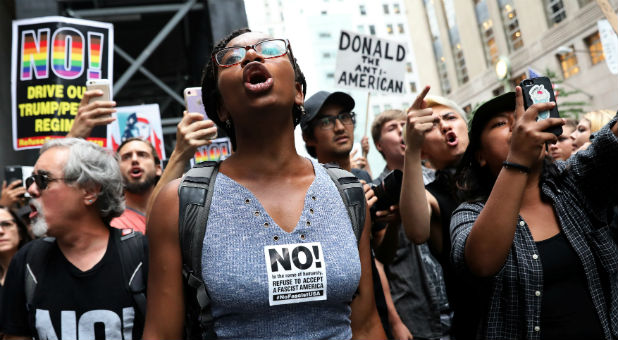
Anti-racism protesters shout during protests in front of Trump Tower. ( REUTERS/Shannon Stapleton)
Please help me to understand something. I’m not a Muslim, but I can speak about Islam. I’m not gay, but I can address LGBT issues. I’m not an atheist, but I can address atheism. Yet when I weigh in constructively on racial issues in America, I’m told I have no right to speak or, worse still, I’m accused of racism. Why is that?
Why do I get comments like this on YouTube after taking issue with Trevor Noah’s TV commentary about the NFL protests? “Disrespect the flag please!!! Dr Brown police disrespect Black Lives Everyday. So please hand in your doctrate [sic].” Seriously?
Lest you misjudge the purpose of this column, I’m not whining and complaining, and I’m not portraying myself as the victim. (Yes, I can feel the hostile comments coming already!) Rather, I’m calling out a dangerous blind spot, challenging my critics to look in the mirror before they throw out charges of racism.
A dear black friend of mine sent me the Noah video, saying it expressed the frustrations of many black Americans who feel that white Americans tell them when it’s OK to protest. So, I watched it ready to learn and be informed, but I was shocked by the gaping holes in Noah’s presentation and decided to do a video response. In that response, I also suggested that there was a better way to draw attention to grievances than protesting during the anthem.
What’s so ugly about doing that? And what in my response to Noah merited a response like this, from a black American? “Dr Brown is a CINO…..christian in name only…” (on Facebook, also in response to the same video). What, sir, were you watching?
Or what provokes comments like this? “Once again white Christians supporting racism just the same way their ancestors did during slavery and how their fathers did during the civil rights era.” Supporting racism? Are you kidding?
And what about this? “I have noticed a pattern of Brown getting frothy and slobbery over almost all issues that pertain to systemic racism against blacks, including the disproportionate incarceration rates and instances of police brutality. Interesting indeed.”
Did this viewer forget that just a few days before posting the Noah video, I had drawn attention to these inequities in our criminal justice system? Has he forgotten my other articles raising similar issues?
It is because I want the concerns of African-Americans to be heard that I have stated that protests during the anthem create more hostility than sympathy. What is racist and unchristian about this?
I’m not claiming to be the voice of black America (obviously), nor am I claiming to be the spokesman for victims of social injustice, whatever their race or ethnicity may be. But I’m an ally and a friend. I’m a fellow American. And, within the faith, I’m a fellow believer. Why must I be silent when it comes to African-American issues?
As someone who appreciates positive revolutionary movements, I often quote the words of Dr. Martin Luther King Jr., and I have learned much from the strategies of the Civil Rights movement. I also have dear friends and coworkers in the African-American church with whom I share great solidarity. Why, then, am I not allowed to give constructive input into issues concerning black Americans?
For years I have denounced the black genocide (speaking of the high percentage of abortions in the African-American community, which many trace back to Margaret Sanger’s philosophy of eugenics). When there have been accusations of police brutality or unfair treatment of blacks, I have used my radio show as a platform for discussion, with many African- American callers providing valuable commentary. Why, then, must I withhold my own viewpoint? Why am I not allowed to speak?
A black friend of mine with direct involvement in the NFL anthem controversy has come to me for counsel, wanting my input on the best strategies for players to adapt. Yet when I share my thoughts in public—the same thoughts I have shared with him in private—I’m blasted as anti-black or racist or speaking out of turn. Is not this a form of racism—the criticism of another’s viewpoint based on the color of their skin?Claudette Colvin, who previously refused to give up her seat on a bus.
We know that the Civil Rights movement was calculated and tactical. That’s why Rosa Parks was chosen as the face of the fight against segregation rather than 15-year-old Claudette Colvin, who previously refused to give up her seat on a bus.
That’s why college-aged blacks protesting the segregation of Nashville lunch counters were given instructions on how to dress and behave. All negative stereotypes had to be crushed. Why, then, should these lessons be discarded with today’s protests?
I’m not saying the protests should stop, and I’m not saying that there are no reasons for concern. I’m simply suggesting that there’s a better way to get the message across.
In response, comments like this are posted: “Wow, you come off like a stereotypical right-wing echo chamber.”
Really? Read my recent articles on the protests, watch the Noah video again, and tell me if there’s a shred of truth to this claim.
How about this? “Stick to Christian issues or at least political issues that have a more direct Christian implication. You spend far too much time acting on behalf of the Republican party and not what you’re actually good at.”
What? Concerns about social injustice are not “Christian issues”? And I’m acting on behalf of the party that I frequently criticize and fault for compromise and inaction?
A black pastor wrote, “Videos like this is the reason I don’t listen to or support this show anymore. He is always anti-black in almost all his videos. He more identifies with being a white American than being a believer. (I know he’s Jewish.)”
My dear brother, I challenge you to take the time to watch my relevant videos again, which are posted as an ally and friend, and then ask yourself if there’s not bias in your own heart.
But this pastor is not alone. Consider these comments:
“I’m bigoted against white racists, especially the cowardly ones who hide behind statements like ‘they should find another way to protest.’ I’m OK with that.” (So, I’m a ” cowardly white racist” if I offer constructive advice to make a protest more effective?)
“If you take a collection of all his videos on the matter, he never takes a non-bias approach. Just one that supports a republican or conservative view point.” (In other words, I’m biased if I take issue with extremists in Black Lives Matter and say, “Separate the value of black lives from the extremes of the Black Lives Matter movement.”)
“Don’t talk to me about disrespecting the flag when you support a president who is cool with people protesting while holding the American flag next to the Nazi and Confederate flag chanting Jews will not replace us.” (You actually think that, as a Jew myself, born and raised in New York, not Virginia, that I would tolerate for a split second the president approving of something like this?)
“I bet if players were taking a knee in protest of how bad Jewish people are treated by the Muslim world ‘Dr’. Brown would have a different take. He is becoming a joke.” (Actually, I’d give the same advice: Find a better way to protest, one that creates solidarity rather than anger and hostility.)
And on and on it goes.
So, here’s my challenge to all those accusing me of racism because of my constructive input on the NFL protests: Check to see if you’re judging me through racially tinted glasses. I assure you I’ve done the same thing many times over, and I’ll continue to do so as long as I’m in this world.
Readers are Leaders! Subscribe now and get 3 magazines for the price of 1. Get Charisma, Ministry Today and SpiritLed Woman all for $24. YES – Sign me up!
3 Reasons Why you should read Life in the Spirit. 1) Get to know the Holy Spirit. 2) Learn to enter God’s presence 3) Hear God’s voice clearly! Click here to draw closer to God!
Christian Printer Refuses to Print Pro-Transgender Business Cards
A Christian printer reportedly refused to print business cards promoting the business of a transgender woman who works as a “diversity consultant” and seeks to offer companies advice on diversity, equality, and inclusion for LGBT individuals.
According to ChristianToday.com, Christian printer Nigel Williams received a request to print business cards from transgender woman Joanne Lockwood. Lockwood has reportedly been living as a woman since January.
Williams declined to fulfill Lockwood’s request, explaining: “The new model of diversity is used (or misused) to marginalise (or indeed discriminate against) Christians in their workplaces and other parts of society if they do not subscribe to it. Although I’m quite sure you have no intention of marginalising Christians, it would weigh heavily upon me if through my own work I was to make pressure worse for fellow Christians.”
Lockwood was upset over Williams’ response, and stated, “I was not expecting a lecture. I disbelieved this could happen in 2017. I have been distraught and cried and my wife consoled me. I think a point of principle is at stake. He wanted to make a point to me deliberately for his own motives. I have been the victim of some discrimination.”
The Christian Institute, however, is standing behind Williams. A spokesperson from the Institute stated, “It is a fundamental tenet of free speech and freedom of belief that people should not be forced to help promote causes flatly contrary to their own deeply held views.”
The week celebrates the vital contribution clergy make to their communities, and gives parishes the opportunity to say a big thank you to their vicar and/or curate.
Rt Rev Philip North, the Bishop of Burnley, told Premier why the position can be quite challenging.
He said: “We’re basically now giving clergy two jobs.
“On one hand, they’ve got keeping the show on the road; they’ve got regular stuff of weekly services, teaching, school assemblies, worrying about buildings and worrying about money.
“But then we also say we’ve got to grow this parish, we’ve got to make new Christians; we’ve got to reach out and serve the community in new an imaginative ways.
“It’s an area of work which many clergy have not been trained when they were in college some years ago.
“It means many of our clergy are working tremendous hours. It can put a great deal of stress on family life. People very often appreciate their priest but forget to say thank you.”
The week has been promoted by St Luke’s Healthcare for the Clergy, a charity which cares for the health and wellbeing of Anglican clergy and their families.
Schools are invited to hold a special Thank Your Vicar assembly, using free downloadable resources from the St Luke’s website. The resources have also been designed to enhance the primary RE curriculum.
Rev North told Premier there are several ways to show appreciation to a church leader.
He said: “Someone standing up in the service saying ‘can we this week say thank you to our priest?’, or baking a cake, or keeping an extra eye on the family. I think simple gestures can be very powerful ones.”
Jennifer LeClaire is now sharing her reflections and revelations through Walking in the Spirit. Listen at charismapodcastnetwork.com.
“Days after devastating truck bomb in Somali capital, death toll still climbing.” “Passengers describe terror abroad Indonesia AirAsia flight.” “China’s Tiangong-1 Space Station will crash to the earth in the next few months.”
These are among the headlines in today’s news. Tomorrow’s news will offer more of the same.
In this short video, I share how angels are intervening in current events around the world. Have you seen angelic intervention in your life’s events?
Readers are Leaders! Subscribe now and get 3 magazines for the price of 1. Get Charisma, Ministry Today and SpiritLed Woman all for $24. YES – Sign me up!
3 Reasons Why you should read Life in the Spirit. 1) Get to know the Holy Spirit. 2) Learn to enter God’s presence 3) Hear God’s voice clearly! Click here to draw closer to God!
Home of Beloved Cartoonist Charles M. Schulz is Destroyed in California Wildfires
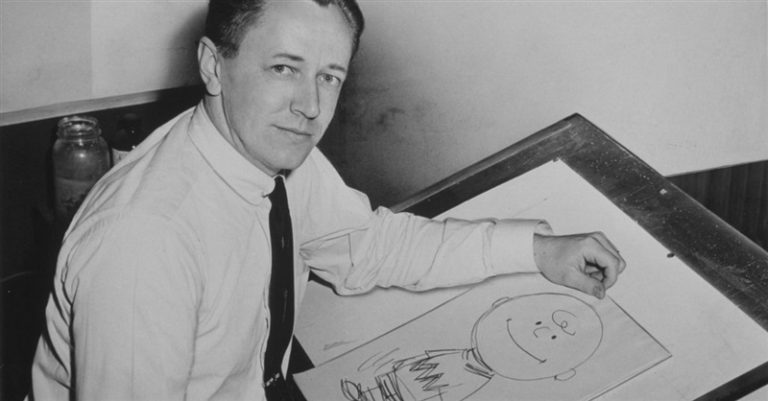
Destructive wildfires continue to burn in northern California, with the death toll now reaching 40 people. Thousands of homes have also been damaged or destroyed, including the home of Peanuts creator Charles M. Schulz.
According to Entertainment Weekly, the Santa Rosa home of the late cartoonist was completely destroyed by the flames. Schulz’s son Monte Schulz reported that his stepmother, Jean Schulz, was able to evacuate safely, however.
The beloved cartoonist and creator of the Peanuts comic strip which ran in 2,600 newspapers while Schulz was alive, lived in the Santa Rosa house from the 1970s until his death in 2000.
“It’s the house he died in,” said Monte. “All of their memorabilia and everything is all gone.”
Thankfully for Peanuts fans, however, the Charles M. Schulz Museum and Research Center, which is also located in Santa Rosa, has not been damaged in the wildfires.
Entertainment Weekly reports that Schulz is revered as an influential figure in the community. The Santa Rosa airport has been named the Charles M. Schulz Sonoma County Airport. The airport even has a recreation of his beloved character Snoopy, flying on his doghouse as he often did in the comic strip or in Peanuts TV specials.
Lidia Dragescu dropped 100ft (30m) from the Whispering Gallery to the floor of the building in central London.
The 23-year-old, from Romford, east London, was pronounced dead at the scene on 11th October.
Her family described her as “beautiful, kind and selfless” in a tribute statement.
They said: “Our daughter and sister was the most beautiful person in the world. Her heart was pure and kind, a soul from another world.
“She was an outstanding student and a talented figure skater. Beautiful, intelligent and kind.
“Her love for us was beyond measure, she was selfless and kind. Everything that she had she shared with us, always putting us first. We love her and will always love her.
“For Lidia, the world has been a bad place to live in.”
Her death is not being treated as suspicious, and officers will compile a report for the coroner, City of London Police said.
St Paul’s Cathedral said the community was in shock and added in a statement: “We think and pray especially at this time for the woman who died, and for all those who were close to her and who loved and cared for her.”
Join us on our podcast each weekday for an interesting story, well told, from Charisma News. Listen at charismapodcastnetwork.com.
In his latest book, The Paradigm, New York Times best-selling author Jonathan Cahn reveals the warning signs occurring in America to indicate the coming of judgment. Similar to The Harbinger, which catapulted Cahn to national and international prominence, The Paradigm emphasizes our nation’s increasing abandonment of biblical values and godly morality.
“The context of The Paradigm is the accelerating fall of a nation that had once known God, a process that reaches a critical juncture where apart from some form of intervention the nation is in danger of being irrevocably sealed in a course of apostasy,” Cahn says.
He identifies patterns in the Bible that concern a nation’s progression to judgement, addressing abortion, idolatry and sexual immorality. The Paradigm reveals parallels between the apostasy of ancient Israel and the metamorphosis of values of today’s society. Cahn compares biblical leaders who sacrificed children for idols to present-day politicians who advocate for abortion. He draws on language used by feminist figures such as author Ginette Paris, who writes in her book titled The Sacrament of Abortion: “It is not immoral to choose abortion; it is simply another kind of morality, a pagan one.”
Cahn writes, “That any culture could permit the sacrificing of children is hard to fathom. But that such a thing could be considered a sacred act stretches the limits of comprehension.”
While The Paradigm expounds on the apostasy of both the present day and 3,000 years ago, it also pinpoints times when a nation is given a reprieve. Cahn points to instances when the judgment that had already been decreed was held back. He refers to the southern kingdom of Judah when Josiah sought to lead his nation back to God, or when the rise of Jehu provided a reprieve for Israel.
“Such reprieves may come, as they did in ancient times, shortly before a nation’s judgement,” Cahn says.
However, the reprieve that came about with Jehu’s reign did not amount to a revival. Although the apostasy slowed in its velocity, the people never turned back to God. Through this, The Paradigm challenges readers to consider the present state: Will America turn back to God?
Cahn sounds the alarm, writing, “A nation that has especially known God but now stands in defiance of His ways stands also in danger of His judgment. And a nation that has been given a reprieve for the purpose of turning back but spurns that chance will have nothing left but the prospect of judgment.”
Both The Paradigm and The Harbinger expose ominous prophecies for our nation—prophecies that have already begun to manifest.
For Christians, this means there is no time to waste. If the nation’s culture is restored, its youngest generation will be changed for the better, and its progression of sin and defiance will be broken. Because of this, Cahn calls for a time of revival.
“If there were no hope, what would be the point of such prophetic warnings?” he says.
The Paradigm‘s final revelation gives us the blueprint to not only standing strong in such a time as this, but also to living in the will of God and fulfilling the purpose for which they were placed on earth.
Cahn writes, “One might even say it is the paradigm of you.”
The Paradigm was released on Sept. 19, 2017, and is published by Frontline, an imprint of Charisma House. Learn more at TheParadigmMystery.com.
Readers are Leaders! Subscribe now and get 3 magazines for the price of 1. Get Charisma, Ministry Today and SpiritLed Woman all for $24. YES – Sign me up!
3 Reasons Why you should read Life in the Spirit. 1) Get to know the Holy Spirit. 2) Learn to enter God’s presence 3) Hear God’s voice clearly! Click here to draw closer to God!
We use cookies to ensure that we give you the best experience on our website. If you continue to use this site we will assume that you are happy with it.