Dan Britton on Tough Times Don’t Last, But Tough People Do

When I first met Peter through the Fellowship of Christian Athletes, I realized there was something special about him. He had a fire in his eyes that burned brighter than others. When he spoke, you could hear commitment and conviction in his voice. His vision had clarity and urgency that stirred passion in the hearts of others. As he spoke about his desire to reach coaches and athletes in his country, I realized his zeal was forged from the trials, tragedies, and tests that he faced over many years.

Peter was imprisoned seven times in his country as a result of sharing his faith. Because he endured beatings and interrogation as a result of doing ministry, his fire burns bright! He has sacrificed greatly for the Gospel of Jesus Christ. He still keeps serving — and smiling! He’s on a mission to reach the coaches and athletes in his country.

As one of our key leaders in Southeast Asia, he has taught me what it means to be all in to fulfill the calling that God has put on our hearts. I am humbled and honored when I am with Peter, because he is a modern-day Apostle Paul that radiates Jesus Christ! He motivates me to be a stronger and more courageous spiritual leader.

When I think about what our world is facing today, I think of Peter. And I think of Joshua 1:9: “For this is my command — be strong and courageous. Don’t be afraid or discouraged. For the Lord Your God is with you wherever you go.”

Peter is a walking, talking, living example of someone who has taken Joshua 1:9 and burned it on his heart. He is all tough and no fluff. I have learned these three principles from Peter:

SOURCE: Christian Post, Dan Britton

All Content & Images are provided by the acknowledged source

Chuck Bentley on Everything You Need to Know About the Principle of Liquidity

Dear Chuck,

Help me understand the principle of liquidity. What do I need to do to be more “liquid” right now?

Preparing for the Worst

Dear Preparing for the Worst,

Liquidity is the measure of your ability to exchange an asset for cash. It is a tool that gives the ability to stay afloat in a crisis situation, provides margin and protection for individuals, families, churches, not-for-profits, and businesses.

Liquid assets include things like certificates of deposit, public stocks and funds in your bank account. Non-liquid assets include real estate, jewelry, collectibles and retirement accounts (if they have not matured beyond the early withdrawal penalty phase). For a small business this may mean equipment, receivables, or accounts.

How Much Liquidity Do I Need?

It varies. A good rule of thumb for individuals is to have one month of income in actual cash that you keep in a safe place at home, and 3-6 months in an emergency account. Of course, this is under normal economic circumstances.

Since you are preparing for a worst case, I would increase my total figure based on Joseph’s saving plan for Pharaoh in Genesis in which he set aside 20% of the grain for 7 years. That means we should have the ability to access 140% of our income in a worst case economic crisis (20% x 7 = 140%). So to revise my numbers above, have one month of cash needs on hand at home, and 15-16 months of your normal income or enough to cover necessary expenses in cash accounts.

I believe this scenario is a safe level of liquidity. Of course, you can always be 100% liquid if you choose or need to. That would mean selling all non-liquid assets and converting everything to cash. Doing so during a crisis is normally a bad idea unless you are in distress.

SOURCE: Christian Post, Chuck Bentley

All Content & Images are provided by the acknowledged source

Knifeman in Southern France Kills 2 in Attack on Passersby

PARIS (AP) – A man wielding a knife attacked residents of a French town while they ventured out to shop amid a coronavirus lockdown Saturday, killing two people and wounding eight others, authorities said.

Police later arrested the assailant nearby, French Interior Minister Christophe Castaner said, thanking shopkeepers for their help. Castaner said authorities were studying whether to qualify the attack in the town of Romans-sur-Isere as an act of terrorism.

While more investigating is needed, “it seems that all the risks have been neutralized” because of a quick police intervention, Castaner told reporters at the scene south of the city of Lyon.

Two people were killed and eight injured, he said. French media reported that three were in critical condition.

France’s anti-terrorism prosecutor’s office told The Associated Press the attack took place at 11 a.m. on a commercial street. 

Prosecutors did not identify the suspect. They said he had no identifying documents but claimed to be Sudanese and to have been born in 1987. 

The prosecutor’s office did not confirm reports that the man had shouted “Allahu akbar” (God is great) as he carried out the attack.

The office said it was evaluating whether the attack was motivated by terrorism, but that it has not launched any formal proceedings to treat it as such.

Some 100 police and 45 firefighters were involved in the operation and securing the area, Castaner said.

Like the rest of France, the town’s residents are on coronavirus-linked lockdown. The victims were carrying out their weekend food shopping on the street that has bakeries and grocers, the office said. Two-meter distancing is being encouraged as in the rest of the country.

Media reported that the knifeman first attacked a Romanian resident who had just left his home for his daily walk – slitting his throat in front of his girlfriend and son. 

Following that, they reported, the assailant entered a tobacco shop, stabbed the tobacconist and two customers, and then went into the local butcher’s shop. He grabbed another knife and attacked a client with the blunt end before entering a supermarket. 

Some shoppers took refuge in a nearby bakery.

There have been a number of knife attacks in France in recent months. In January, French police shot and injured a man in Metz who was waving a knife and shouting “Allahu akbar.”

Two days earlier, another man was shot dead by police after he stabbed one person fatally and wounded two others in a Paris suburb.

It is unclear whether the suspect in Saturday’s attack had psychological problems or any links to extremism. Analysts say some extremist groups see the upheaval from the virus pandemic as an opportunity to win over more supporters.

Copyright 2020. The Associated Press. All rights reserved. 

Source CBN

All Content & Images are provided by the acknowledged source

John Piper Gives Advice on How to Talk to Your Children About God and the Coronavirus

Theologian John Piper has shared what he believes children should understand about God and the novel coronavirus and identified how parents can address difficult questions pertaining to the outbreak. 

In a recent episode of his “Ask Pastor John” podcast, the 74-year-old pastor and grandfather-of-14 first stressed that “God is stronger than the coronavirus,” citing Matthew 4:24: “They brought [Jesus] all the sick, those afflicted with various diseases and pains . . . and he healed them.”

“Jesus is more powerful than diseases — every one of them,” he said. “In fact, over and over again, the Bible tells us that God commands the wind, rain, snow, lightning, plants, grass, grasshoppers, flies, frogs, gnats, worms, whales, birds, and everything else. He commands them where to go, what to do, and they do what He says. They have to; He’s God.”

Piper then addressed the question, “Why is there a coronavirus, then? Why don’t you, God, Jesus, please take it away, since you could?”

While God could take away the coronavirus “by snapping His finger,” He doesn’t do so because “He has a wise purpose for it,” the pastor explained.

“God is perfectly wise. That means He knows exactly what needs to be done to bring about what’s best for all time,” he said. “That’s called wisdom. When you know what is best to do all the time, you’re a wise person. And God is perfect in wisdom. He knows what needs to be done: He knows how it needs to be done, and He knows when it needs to be done.”’

Tragedies like the coronavirus happen “so that people in the world who don’t believe in Jesus would wake up. So that people would stop trusting in themselves and trust God.  [And] to show us that we might be loving things more than we love God,” Piper said.

“God is in charge of the coronavirus,” he said, adding that because Jesus came to the world and died for our sins, “we never have to be afraid of God’s punishment.”

“This is wonderful. That means we don’t ever have to be afraid to die — not from the coronavirus or anything else — because when Jesus died and rose from the dead, He changed death from punishment into a doorway to everlasting happiness with Him,” he said.

Stressing that “God is stronger than the coronavirus,” Piper encouraged children to “be brave … because you have a great Savior.”

SOURCE: Christian Post, Leah MarieAnn Klett

All Content & Images are provided by the acknowledged source

Jeremy Camp Says the ‘Most Important Thing’ to Learn from Coronavirus is That ‘Jesus is In It All Right Here With Us’

Award-winning contemporary Christian singer Jeremy Camp and his wife, Adrienne, are encouraging Christians to stay focused of Jesus amid the coronavirus pandemic because He is “in it all, right here with us.”

In an interview with The Christian Post, Camp said he’s “learned a lot” about himself and the faithfulness of God as COVID-19 continues to sweep across the United States, causing thousands of deaths and prompting a record 6.6 million Americans to apply for unemployment in the last two weeks.

“In these times, I’ve loved John 16:33, where Jesus says we shouldn’t be surprised when we go through trials and says, ‘I tell you these things so you will have peace,’” Camp told CP. “He’s essentially telling us, ‘Guys, you’ll have trials in this life, whatever they may be. That’s a guarantee. But take heart: I’ve overcome the world.’”

“The reason we have trials,” the “I Still Believe” singer said, “is because we live in a fallen world. There will be sickness and death. There will be financial issues, unknowns, and confusion. But Jesus reminds us that even in all of that, He’s defeated death and the sting of death.”

Jesus’ promises are “key” to hold onto amid the uncertainty, fear, and anxiety surrounding the coronavirus, Camp said.

“We shouldn’t be surprised, but instead say to Jesus, ‘You will always be my source of everything,” he stressed. “If you look at God’s Word from Genesis through Revelation, Jesus is all through the Bible with various names: the Alpha and Omega, Shield of Comfort, Prince of Peace, the Way, the Truth, and the Life — He’s saying, ‘Whatever you need, that’s what I am.”

“That is the most important thing we need to learn from this virus. Whatever we need, Jesus is there. He’s in it all right here with us,” he added.

Camp’s wife of 16 years, Adrienne, offered said that in John 6, Jesus tells the Apostles, “unless you eat the flesh of the Son of Man and drink His blood, you have no life in you.”

“The disciples go, ‘This is too weird,’ and many of Jesus’ followers bail in response,” she told CP, referencing verse 66. “So Jesus is sitting around with the other disciples and Peter says, ‘Lord, to whom shall we go? You have the words of eternal life.’”

“Essentially what Peter is saying is, ‘God, why are you allowing these things to happen?’” Adrienne contended. “In these times, we have a choice to make: We can run to the source of our problems — which is the enemy, Satan — and give up, or we can run to Jesus and say, ‘I don’t understand, but you have the words of eternal life.’”

SOURCE: Christian Post, Leah MarieAnn Klett

All Content & Images are provided by the acknowledged source

Robin Schumacher on The World’s Future from God’s Perspective in Four Verses

Despite the best effort of critics to challenge the authorship and re-date the Old Testament book of Daniel to something written after the events that were prophesied in the book, the conclusion of one of the most careful and educated theologians I’ve ever known – Dr. Thomas Howe – says in his 700+ page commentary on Daniel: “There has not been an argument that has offered a reasonable alternative to the traditional view that Daniel, of the 6th century BC, is the author of this book.”[1]

It’s no wonder that skeptics want to challenge the book of Daniel. Its astonishingly accurate prophesies about the rise of various empires and political leaders such as Alexander the Great and Antiochus Epiphanes are enough to give a heart attack to anyone who attempts to rest comfortably in their anti-supernatural worldview. If there is a book in the Bible that more than stands up to the poorly thought out atheistic challenge of, ‘Extraordinary claims require extraordinary evidence’, it’s Daniel.

In my opinion, the most noteworthy section of Daniel is a set of four verses in chapter nine. The prophecy Daniel received at that point summed up the most important headlining events for the world that were yet to come. At the time, the predictions were hundreds of years in the future.

Today, we can look back and see how the first three were precisely fulfilled down to the letter, which leads to the reasonable conclusion that the last verse will be as well. Let’s take a quick jet tour through these four verses that sum up the world’s future from God’s perspective.

“Seventy ‘sevens’ are decreed for your people and your holy city to finish transgression, to put an end to sin, to atone for wickedness, to bring in everlasting righteousness, to seal up vision and prophecy and to anoint the most holy” (Daniel 9:24).

The first verse lays out the general landscape of the prophecy and timetable. There are three things to notice in this verse.

First, the timetable is “Seventy sevens” or 490 years. While some translations use “weeks” as the word for “sevens”, the literal Hebrew word is ‘sevens’[2], and nearly all Biblical commentators – whether conservative or liberal – agree that 490 years is the amount of time being discussed.

Second, the prophecy specifically targets the Jewish people and their city, Jerusalem (“for your people and your holy city”). However, don’t misunderstand – these predictions also greatly impact the entire human race.

Third, there are six things that will be accomplished in this 490-year timeframe, three of which are bad in character and the other three good:

Bad
-to finish transgression
-to put an end to sin
-to atone for wickedness

Good
-to bring in everlasting righteousness
-to seal up vision and prophecy
-anoint the most holy

The next three verses offer more detail about what is to come.

“Know and understand this: From the issuing of the decree to restore and rebuild Jerusalem until the Anointed One, the ruler, comes, there will be seven ‘sevens,’ and sixty-two ‘sevens.’ It will be rebuilt with streets and a trench, but in times of trouble” (Daniel 9:25).

The second verse provides insight into what starts the 490-year clock ticking and breaks that same 490-year period up into distinct segments of time. The initiation of everything begins with “the issuing of the decree to restore and rebuild Jerusalem”.

While historians cite four decrees made by various rulers in reference to the Jews / Jerusalem, only one fits with the verse’s description to totally rebuild the city and its accompanying infrastructure – the one made by Artaxerxes Longimanus on March 5, 444 BC, and described by Nehemiah (Neh. 2:1-8).

There are two divisions of timing referenced in the verse: seven ‘sevens’ and sixty-two ‘sevens’ that equate to 49 and 434 years, and total 483 years. The first 49 years may very well reference the total time to restore Jerusalem while the subsequent 434 years run up “until the Anointed One, the ruler, comes”.

Who is the “Anointed One”? In his commentary on Daniel, Dwight Pentecost does the math between the issuing of Artaxerxes’ decree and the ending of the total 483 years and convincingly shows that the end point is March AD 33.[3]

Not coincidentally, at that time a Jewish carpenter named Jesus was entering Jerusalem on a donkey and allowing Himself to be publicly proclaimed for the first time as the Messiah (Zech. 9:9; Mark 11).

SOURCE: Christian Post, Robin Schumacher

All Content & Images are provided by the acknowledged source

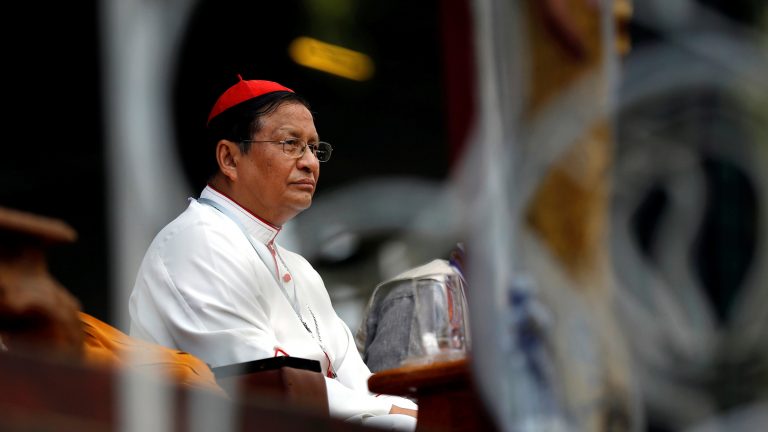
Catholic Cardinal Charles Bo of Myanmar Says China’s Communist Party Owes the World an Apology for Lying About Coronavirus Pandemic

Amid numerous reports pointing to the responsibility of the Chinese Communist Party in putting millions of lives and the global economy at huge risk due to its lies about the coronavirus outbreak, Cardinal Charles Bo of Myanmar has called on China to apologize to the world and pay compensation for the damage caused.

“There is one government that has primary responsibility for what it has done and what it has failed to do, and that is the CCP regime in Beijing,” the Archbishop of the Roman Catholic Archdiocese of Yangon wrote in an op-ed published in UCA News.

The cardinal clarified that “it is the CCP that has been responsible, not the people of China, and no one should respond to this crisis with racial hatred toward the Chinese.”

He stressed that when the virus first emerged, “the authorities in China suppressed the news.”

“Instead of protecting the public and supporting doctors, the CCP silenced the whistleblowers. Worse than that, doctors who tried to raise the alarm — such as Dr. Li Wenliang in Wuhan Central Hospital who issued a warning to fellow medics Dec. 30 — were ordered by police to “stop making false comments,” he wrote.

Anonymously speaking to Bloomberg, three officials said the U.S. intelligence community noted in a classified report to the White House last week that China lied about the extent of the COVID-19 outbreak, under-reporting the number of infections and deaths.

“The reality is that we could have been better off if China had been more forthcoming,” Vice President Mike Pence said on CNN earlier this week. “What appears evident now is that long before the world learned in December that China was dealing with this, and maybe as much as a month earlier than that, that the outbreak was real in China.”

SOURCE: Christian Post, Anugrah Kumar

All Content & Images are provided by the acknowledged source

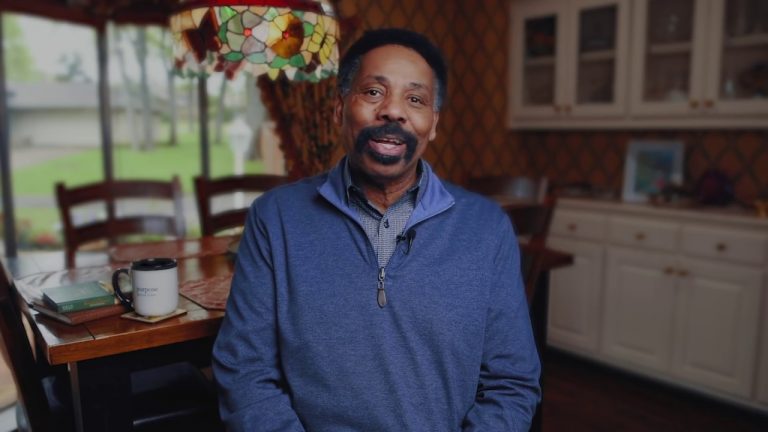
From Tony Evans’ Kitchen Table to Yours: Don’t Let Fear Control You During the Coronavirus Plague

As we face the COVID-19 crisis together, we should trade our fears for trust as we are going through this trial. Now is the time to draw near to God and to draw near to one another, even as we remain physically distant. We hope this message from Tony’s Table will encourage you today.

All Content & Images are provided by the acknowledged source
How Families Can Stay Physically Active While Social Distancing

COMMENTARY

The coronavirus outbreak is disrupting the social status quo. To help combat the virus, we all have a responsibility to stay home, restrict travel and practice social distancing. As we adapt to this new reality, organizations and activities from sports to education have been radically altered almost overnight. Businesses and schools are shaking things up by going remote, while healthcare professionals and patients are turning to new medical tools like telemedicine. Confronted with the coronavirus, it’s necessary for all of us to explore new ways of adjusting to our ever-changing and uncertain environment.

But what could that look like for your family or the families in your church trying to stay active while cooped up at home?

During this time, it’s all too easy for us and our children to lose touch with the outdoor activities, gym routines, and sports leagues that have been such a significant part of our lives for so long. With parents working from home and kids taking their classes online from the sofa or bedroom, homes have been quickly transformed into bustling workplaces and classrooms. As the boundaries between work, school, and personal life are being redefined, we may be too stressed or too preoccupied with managing household affairs to think about physical fitness.

But physical health is a crucial part of our overall well-being. If we neglect our physical health, we run the risk of worsening our mental, emotional and spiritual condition too. And during this pandemic, where there is increased stress from anxiety, uncertainty, and social isolation, no one can afford to neglect the things that matter most. That’s why there’s such a great need for homebound families to find simple ways to stay active and maximize their time together for the betterment of all.

Before the virus outbreak, many families relied on their church communities and sports leagues for order, support and guidance while trying to stay healthy. But now that our church communities aren’t gathering together in buildings and our sports leagues are on pause, we all need to innovate and think outside the box if we’re going to stay active and engaged while at home.

One great way to start is for families to build virtual communities with each other, their churches and their friends from their sports leagues. These online groups can be vital in sharing fitness resources, activity plans, and much-needed encouragement.

Many people simply don’t know what they can do to exercise and play while confined to the limited space of their homes. But fortunately for us, we live in a connected world with access to technology that allows us to keep in touch and maintain relationships with important individuals in our lives. The internet offers endless opportunities for families to pool their knowledge, brainstorm and come up with fitness ideas together. These options might include core basics like those listed below, or something off the wall that your family will remember forever — like inventing a new sport with items you have on hand or competing to see who can win the flexibility challenge.

Whole church communities can enjoy taking part in exercise and helping to hold each other accountable. At Upward Sports, we encourage our church partners and participating families to stay connected with their teams, even after the season is over. Pastors, church leaders, and volunteers can all play a vital role in keeping in touch and promoting creative ways to maintain ongoing physical fitness.

But whatever ideas you or others generate, the key is building a simple and workable routine that’s fun, safe and easy to follow.

There are lots of tools in our fitness toolbox to use in developing these plans. Here are just a few practical ideas:
 
1) Family Exercise Schedule – Anyone can incorporate 5, 10 or 20 minutes of daily stretching and exercise into their day to increase their total flexibility. While we may not be able to share the sports field with friends as we would prefer, we can still make time in the day for regular outdoor activities like walking, biking, running or hiking. And even though the gyms may be closed, some simple resistance training at home is more than enough to help us stay fit.

The key to success is making exercise a part of our everyday schedule. You may start with 10 pushups and sit-ups, or a short morning run, and incrementally build up to strength conditioning and cardio exercises over time. One of the benefits of being at home is that we can structure our time however we think is best, scheduling our fitness activities at our convenience and discretion.

2) Continue Drills at Home – Despite not being able to practice with your team, families, and kids can continue to engage in practicing skills and drills at home. As an example, for basketball, dribbling, passing and defense drills can still be done in the driveway, whether you have a basketball hoop or not. Additionally, soccer drills are very easy to continue in our own back yard, as it takes less equipment to practice this particular sport.

3) Continue Team Meetings Via Phone or Video – If your child’s team cannot meet in person, they can still meet digitally. Think about setting up conference calls or video chats to check in with the team and set exercise goals for each player. We would encourage setting very doable, attainable goals so that kids can actually achieve the desired ends.

We can view our pursuit of physical fitness at home as an element of spiritual exercise as well. Working hard together to keep up an exercise or sports routine while stuck at home is a great way for us to exhibit discipline and contribute to the spiritual growth of our family and community. Part of spiritual maturity is about taking ownership of our actions, and, regardless of the situation, prioritizing relationships, encouraging those around us and turning challenges into opportunities.  Investing in the well-being of others provides a very tangible way for us as Christians to display the love of Christ to the world and influence people with the life-changing Gospel that can transform their lives.

On a practical note, many young kids may not yet have a lot of experience exercising on their own without a coach or a team to keep them going. Parents and whole families can step in to use exercise and routine-building as opportunities to impart and apply valuable spiritual lessons even while kept at a distance from the brick-and-mortar church. It’s true that parents are their kids’ first coaches in life – and right now it’s vital for parents to include teaching their children healthy exercise habits as part of their game plan!

There are a lot of different and interesting options for individual families to explore. But perhaps the most important thing is refusing to let the fear and anxiety surrounding the coronavirus dictate how we live out our faith and conduct our everyday lives. For families and for the church, the coronavirus outbreak doesn’t have to just be a crisis; it can also be an opportunity to think outside the box and grow into new and impactful activities that promote overall mental, physical, social, and spiritual health.

Mark Steinert is the partner experience director at Upward Sports.

Source CBN

All Content & Images are provided by the acknowledged source

16-Year-Old Actor Logan Williams Dies Suddenly

Logan Williams, a 16-year-old actor who appeared on the CW superhero series “The Flash” as a young Barry Allen, has died, according to his family.

The actor’s mother, Marlyse Williams, confirmed the news of her son’s death to the Tri-City News. No cause of death was provided, though Williams was said to have died suddenly on Thursday.

Williams appeared in eight episodes of “The Flash” during its first two seasons — including the series pilot — as a younger version of Grant Gustin’s titular DC Comics hero. His other acting credits include the Hallmark series “When Calls the Heart,” as well as guest spots on “The Whispers” and “Supernatural.”

Gustin remembered his former co-star in an Instagram post on Thursday, praising the young actor’s ability and professionalism.

“Just hearing the devastating news that Logan Williams has passed away suddenly,” he wrote. “This picture was early in the filming of The Flash pilot episode back in 2014. I was so impressed by not only Logan’s talent but his professionalism on set. My thoughts and prayers will be with him and his family during what is I’m sure an unimaginably difficult time for them.”

He continued, “Please keep Logan and his family in your thoughts and prayers during what has been a strange and trying time for us all. Sending love to everyone.”

Just hearing the devastating news that Logan Williams has passed away suddenly. This picture was early in the filming of The Flash pilot episode back in 2014. I was so impressed by not only Logan’s talent but his professionalism on set. My thoughts and prayers will be with him and his family during what is I’m sure an unimaginably difficult time for them. Please keep Logan and his family in your thoughts and prayers during what has been a strange and trying time for us all. Sending love to everyone. ❤️

A post shared by Grant Gustin (@grantgust) on

SOURCE: The Wrap – Reid Nakamura

All Content & Images are provided by the acknowledged source