


Chuck Bentley Gives Practical Advice During the Coronavirus Crisis

Dear Chuck,

Many of the young people in my Bible Study are frightened of the coronavirus and the threat to their families. I understand their fear. But, as an older American, I’m also concerned about their economic well-being in the aftermath of this crisis. What kind of financial advice can I offer them?

Sheltered in The Storm

Dear Sheltered in the Storm,

We have two crises happening now and you have properly identified a third one. First, the virus has created a very real health crisis. Second, the shutdown of the economy has created a very present economic crisis and third, the government bailout will put us at risk of a future debt crisis and threat to the global economy.

As Thomas Sewell said about our current challenges, “We do not have good choices, we simply have trade offs.”

Living on the Edge

The Coronavirus has revealed the financial unpreparedness of millions of citizens. Aaron Zitner, at the Wall Street Journal reports: “Some 15% of Americans have used, or plan to use, either short-term loans or credit cards that they don’t know they can repay in order to buy emergency goods to deal with the outbreak, a survey by NORC at the University of Chicago found.” He says others rely on savings or plan to divert money set aside for other things.

It is my hope that many Americans have been better prepared for this event after making financial adjustments following the Great Recession, which started in 2008, by paying off debt, increasing savings and living within their means. Either way, here are some practical and spiritual insights for the young people in your Bible study.

Establish Essentials as Priority

Everyone’s situation is different. Let’s help the young people understand how to deal with the current economic crisis, and we will deal with the long-term consequences of the bailout later. Here’s how I would attempt to help those in your Bible study when meeting one-on-one.

Regardless of what’s happening in the world, everyone needs food and shelter. Pay the bills that provide food, home, and necessary utilities. This is a time to sacrifice wants to provide for needs.

SOURCE: Christian Post, Chuck Bentley

All Content & Images are provided by the acknowledged source
Construction Companies Lobby to Keep Working Even as Coronavirus Spreads

Click here to read.

Source: Wall Street Journal

All Content & Images are provided by the acknowledged source
Oklahoma Governor Takes Part in Prayer Event Broadcast Statewide

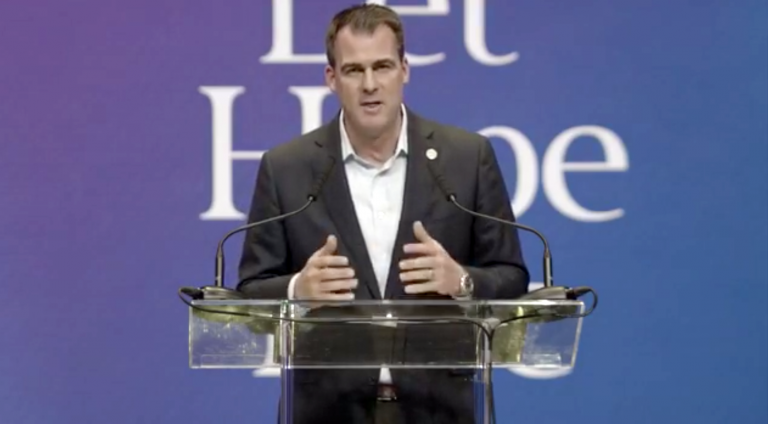
OKLAHOMA CITY (BP) — Two Southern Baptist pastors who participated Thursday (March 26) in a prayer service, broadcast throughout the state of Oklahoma and featuring Oklahoma Gov. Kevin Stitt, marveled at the event’s timeliness as well as the boldness of the Gospel message shared.

The hour-long event, titled “Let Hope Rise,” came in conjunction with Stitt’s proclamation of Thursday as a “Statewide Day of Prayer” amid the COVID-19 pandemic.

It was carried by TV and radio stations across the state — including four TV stations in Oklahoma City and three in Tulsa, which preempted regular primetime programming — and featured several evangelical pastors, including Alex Himaya of BattleCreek Church in Tulsa and Doug Melton of Southern Hills Baptist Church in Oklahoma City.

“The biggest thing is just, people are praying God will use it and bless it,” Himaya said. “I’ve never heard of all the news stations in the state being commandeered by faith for an hour in primetime — and for free.”

The service grew out of a call Still held last week with faith leaders around Oklahoma. It included video portions of pastors offering prayers and messages and was broadcast from Transformation Church, a nondenominational church in Tulsa.

Charlie Hannema, chief of communications for Stitt, said Stitt and his wife Sarah were honored to participate (the first-term governor is a professed evangelical Christian, though not Southern Baptist).

Himaya read and shared a brief message from Psalm 34. After reading the fourth verse — “I sought the LORD, and He answered me and delivered me from all my fears” — Himaya expounded: “Notice, He didn’t deliver (David) from all of his enemies. He does that from time to time. But He delivered him from all of his fears.”

Melton followed with a prayer specifically for healthcare professionals. After praying the first three verses of Psalm 103, he asked for God’s protection for healthcare professionals and their families, and asked “for unity in mind and thought” for researchers around the world who are battling to develop treatments and a vaccine for the coronavirus.

Source: Baptist Press

All Content & Images are provided by the acknowledged source

North Carolina Sees Hispanic Church Planting Boom

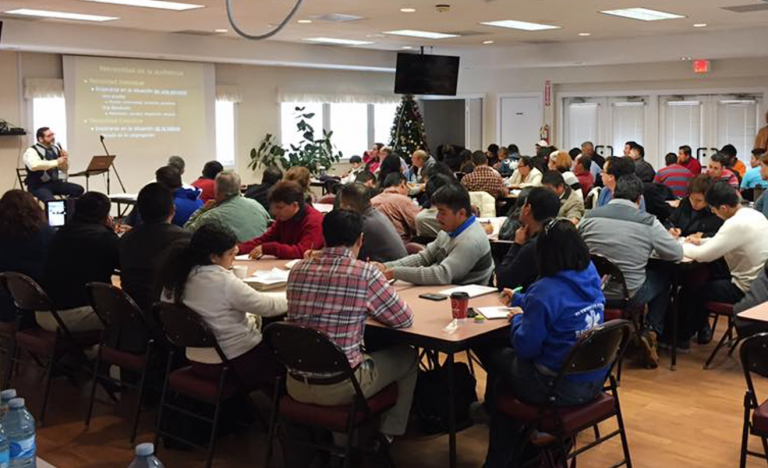
CHARLOTTE, N.C. (BP) — In the last seven years North Carolina has been experiencing a Hispanic church plant boom, with 150 new Hispanic churches. And the growth shows no signs of stopping, even amid the COVID-19 pandemic.

“There has been a spiritual awakening that has led to planting of Hispanics churches across the state,” said William Ortega, consultant of Hispanic church planting for the Baptist State Convention of North Carolina.

Julio Arriola, executive director of Hispanic Relations and Mobilization for the Southern Baptist Convention Executive Committee, commends North Carolina as a model for other states.

“We applaud the hard work and vision of William and his team,” Arriola said. “The rapid growth of Hispanic population in North Carolina and over all the United States tells us the need for leaders like him, willing to not only pray like it matters but also act like it matters.”

Following governmental social distancing guidelines, Ortega has canceled all in-person training and moved to online meetings through the online meeting platform Zoom.

“There will be changes, but not when it comes to mobilizing Hispanic church planters,” Ortega said.

Ortega, a native of Costa Rica, was a missionary with the International Mission Board in Mexico City before taking on the role at the North Carolina Convention. As part of his job, Ortega created a six-element Hispanic church planting strategy: working in teams, vision-casting, mobilization, spiritual formation/mentoring, church planter trainings and strategic prayer.

The first element creates teams of leaders at the state, regional and local levels who will coordinate and collaborate with pastors, local churches and associations.

“Working with teams will help us to measure the process we are doing in the area of church planting in each region and zone,” he said.

Through an annual church-planting conference, regional church-planting retreats and one-on-one meetings with pastors (which are now held online), Ortega and other leaders are casting the Hispanic church-planting vision. The responsibility of coaching and mentoring also falls to the state, regional and local leaders.

“[We want to] infuse and share the church-planting vision aggressively to local churches within the state,” he said, “… [to] cast God’s vision in a way that motivates, inspires, and encourages others to accomplish God’s purpose in the state for Hispanic work.”

There are currently 25 Hispanic church-planting centers spread across North Carolina. The courses offered are useful for church planters as well as those who are called to be part of a church plant team.

Source: Baptist Press

All Content & Images are provided by the acknowledged source
Demand for Online Ordering Due to Coronavirus Crisis Leaves Grocery Stores Scrambling, Customers Waiting

Click here to read.

Source: Houston Chronicle

All Content & Images are provided by the acknowledged source
Allen Jackson on Prayer is Not to be Used in Times of Crisis Only

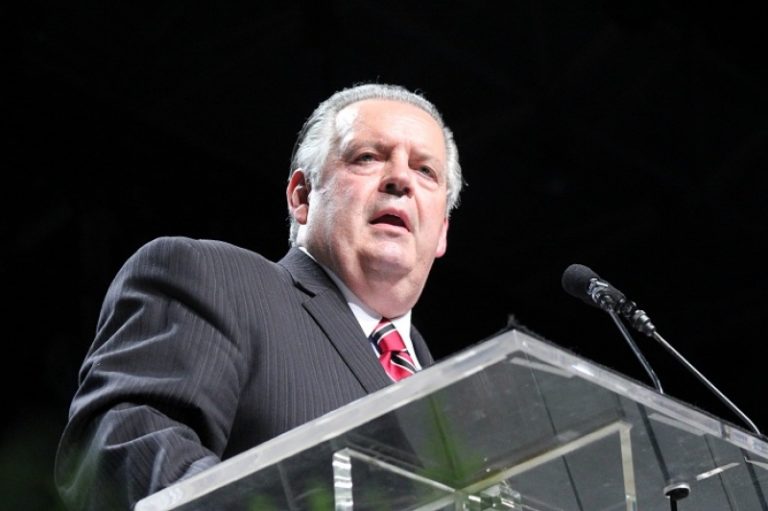
Alexander Graham Bell won the first patent for a telephone in 1876, a device that fundamentally changed the way we communicate. And for more than 125 years, the telephone was used for one reason: to make phone calls. In June of 2007, though, that paradigm shifted when Apple released the first iPhone. The phone introduce us to the possibility of a multi-faceted personal communication device. From phone calls to text messaging to social media to the way we consume entertainment, smartphones have become an integral part of how we manage our lives, our businesses, and consume entertainment.

Similarly, many of us still use prayer for a particular purpose: to make our requests known to God in times of crisis. This reason for communicating with God isn’t bad. But I want to invite you to imagine prayer in a new way: more as a way to process life with God, than as a way to talk to God in times of crisis.

Imagine prayer as less of an old rotary-dial landline phone and more of an iPhone – a personal communications tool. Prayer can become an expression of awareness that God is alive and at work in the world around us. It’s the conduit for messaging and receiving messages from God, a way to connect with him and receive all manner of information from the Creator of the universe. And if you’ve never experienced prayer this way, it’s not hard to learn. You have a God who wants nothing more than to teach you.

If I’m certain of anything it’s this: God wants to teach us how to pray. He is a personal God; a God of love, who wants to connect and communicate with us. This kind of connection and communion, though, won’t happen overnight. It takes daily commitment.

Far too often prayer exists primarily in the realm of dutiful religious obligation – dry, powerless and inert, expressed in boredom or fear more than anticipation. Do you pray only when the chips are down? When there’s a mild life crisis? Is prayer relegated to the family meal, or to that nervous space just before the big test at school, or as you walk into the conference room for your annual review at work? These are all good times to communicate with the Creator of the universe, of course, but God doesn’t want to just hear from us before dinner or a test, or during the scarier times of our lives; he also wants to hear from us throughout the day. He wants to connect with us in all the moments of life, big and small. How do I know? Because Jesus modeled this truth.

SOURCE: Christian Post, Allen Jackson

All Content & Images are provided by the acknowledged source
Paul Kuzma on Pastoring in a Pandemic, Part 1

A historic number of pastors flood today’s Internet bandwidth in the midst of the global coronavirus pandemic. It’s a new way to pastor, and that means a new kind of pastoral stress.

Whether we’re in an area limiting public gatherings or in one sheltering in place to slow the spread of COVID-19, U.S. pastors have been working hard the last two weeks to figure out how to speak effectively to our flock when we can’t speak in person to our flock. Many now wear new hats – Virtual/Online Tech Expert and Media Presenter Specialist, for starters – piled on top of the dozens of our congregations’ existing expectations.

Was this on your resume before now? It sure wasn’t on mine, and I’m a Bible college graduate with more than 30 years’ experience of local church pastoral ministry who now counsels pastors. Coronavirus is changing the game; no single Bible college class or lesson could come close to preparing American pastors to shepherd in such a time.

This includes media classes, mind you. And this includes you, whether you’re leery of Facebook or can stream live to YouTube in your sleep.

Much of today’s stress is indeed technical in nature (how can I livestream my sermon
effectively?). We shelter against an outbreak that for most is still theoretical in nature (will anyone in my congregation get COVID-19?). So far, it’s the economic fallout that is anything but theoretical; giving is down 40 percent in some churches, and that’s enough to make many pastors wonder how long they’ll be in a job. However, ultimately, pastoring in pandemic is not a technical skill to be mastered.

From what I’ve seen so far, pastoring in pandemic has meant an explosion of creativity
beyond several years’ worth of combined Christmas and Easter worthiness. The spiritual, mental, emotional and physical energy expended over the last two weeks by the pastors I counsel far exceeds any mere holiday season – and so does their new stress level.

It’s not all bad stress. The creative juices can be a good stress, as long as the level and
prolonged nature of it is well-monitored. With healthy coping mechanisms in place, stress can actually help pastors grow and mature in their own Christ-likeness.

SOURCE: Christian Post, Paul Kuzma

All Content & Images are provided by the acknowledged source

Dr. Richard Land Answers: Should Churches Obey Government Orders to Close During Coronavirus?

Question: Should churches comply with government mandates to not hold worship services during the coronavirus pandemic?

In the last few weeks, social media and the internet in general have been replete with debates about whether or not churches should comply with government mandates to suspend worship services and related church group activities as the country seeks to stem the spread of the incredibly contagious coronavirus.

Many have said, “Yes, we have an obligation to obey the civil magistrate for conscience sake” (Rom 13:7). Others have responded, “No, we have special freedoms and protections under the First Amendment, and our ultimate loyalty must be to Jesus, not the state!”

Are Christians being good citizens by complying with the government’s attempts to protect the public welfare of the citizenry, or do we exercise our freedom of conscience and trust that God will protect us from the potential health consequences? Which option is a more winsome and appealing Gospel witness to a watching world?

Such discussions and debates concerning the interplay and interaction between Christians and civil government have been ongoing since the early days of the Christian church. After all, the Apostle Paul addressed this very issue in his letter to the church in Rome as early as approximately AD 58. Almost certainly addressing a question perplexing the Christ-followers in the capital of the Roman Empire, Paul informed them that the civil magistrate was “ordained of God” and that their divinely mandated purpose (Paul even calls them “God’s ministers”) was to punish those who “doeth evil” and to reward those who “do that which is good” (Rom. 13:1-7). The Apostle exhorts his Roman Christian brothers and sisters to obey the civil authorities “for conscience sake,” concluding, “Render therefore to all their due: tribute to whom tribute is due; custom to whom custom; fear to whom fear; honour to whom honour” (Rom13:7).

At the same time, Jesus teaches that our ultimate loyalty must be to God, not Caesar (Mark 12:17). In the book of Acts, the Apostles Peter and John illustrate the limits of divinely mandated civil authority when they were commanded to be silent and cease witnessing to Jesus crucified and resurrected for the sins of the world. When threatened in order to “cease and desist for preaching the gospel, the apostle replied, “For we cannot but speak the things which we have seen and heard” (Acts 4:20) and said, “We ought to obey God rather than men” (Acts 5:29).

Herein lies the biblical roots of Christian civil disobedience from Anabaptists, Roger Williams, Dietrich Bonheoffer, and Martin Luther King Jr. In living with the tension between fealty to the government and fealty to Christ, Christians are living out the inevitable reality of St.  Augustine’s “City of God “and the “City of Man,” and the “now, but not yet” reality of the fact that God has established his Church, “the colony of heaven” (Phil. 3:20) with His “peculiar people,” the church (1 Peter 2:9). While the church is the vanguard of His Kingdom here on earth, that Kingdom is “not yet” and will not be fully realized until the Second Coming of the Lord Jesus.

So, how is the now Holy Spirit inspired Christian church supposed to interact with the government concerning public policies and ultimate loyalties? A helpful summary of this issue for discussion purposes is provided by my own Baptist faith tradition, which historically has wrestled mightily with this question ever since emerging in the 16th century Reformation, first in Switzerland (the Anabaptists) and then in England (John Smyth, Thomas Helwys, Thomas Collier), and early New England (Roger Williams, Obadiah Holmes, John Leland).

SOURCE: Christian Post, Richard Land

All Content & Images are provided by the acknowledged source

Illinois Baptist State Association to Help Churches During Pandemic

SPRINGFIELD, Ill. (BP) — The Board of Directors of the Illinois Baptist State Association (IBSA) has affirmed a plan to assist churches that could be forced to stop ministry because of the coronavirus (COVID-19) pandemic. While pastors and church leaders are dealing with questions about worship services and how to continue ministry under the current shelter-at-home order, the next question for many leaders involves finances. And for a small percentage of churches, the health crisis could threaten their existence.

Meeting via video conference from their homes during a statewide order to shelter in place, the board heard reports from its three committees and IBSA Executive Director Nate Adams. “We’re trying to think of everything that we could be and should be doing at this time,” Adams said of IBSA’s efforts to assist churches during the pandemic.

IBSA is already offering webinars and other online resources for church leaders, including information about online giving options. Adams reported to the board his plan to establish an emergency fund for local churches, and a process for churches to apply for assistance. “We think this is another way we can seek to help churches that maybe have the most disastrous consequences they could face as a result of the pandemic,” Adams said.

Adams said the funds will be used to help churches that are unable to pay bills or might be forced to close their doors. The board agreed with his plan to set aside up to $100,000 for the emergency fund. While it’s not intended to cover salaries, the funds could help address a sudden, catastrophic need, such as utility bills or an overdue mortgage payment.

An application process for the emergency fund is expected to be ready by March 31.

The pandemic has had sweeping financial implications across the country and caused a record-high number of unemployment claims. Churches are bracing for decreases in giving as contributors experience financial hardship, and in-person worship services are indefinitely on hold.

Releasing funds from the IBSA Emergency Net Asset Account requires approval only from Adams and board chair Bob Dickerson, but Adams told the board he and Dickerson value the board’s affirmation of the plan and the amount. Board members expressed no opposition to the plan.

Administrative Committee chair Bob Dyer said the committee had looked at the plan from both sides — from the perspective of churches who will need assistance, and the impact that the pandemic will have on IBSA’s overall budget.

Source: Baptist Press

All Content & Images are provided by the acknowledged source

Georgia Church Commits $1,000 a Week for Struggling Churches

GAINESVILLE, Ga. (BP) — Zach Williams knows what it’s like to be a pastor when the finances are tight. He’s had those restless nights of trying to figure out how to meet church expenses. He’s heard a treasurer ask him to hold off on cashing his paycheck for a few more days.

“There have been many times that I’ve had to pray, ‘God, if you don’t do something, we won’t make it,’” Williams told The Christian Index. “And, of course, every single time He’s proven Himself faithful.”

At a mid-February deacons meeting, the subject turned to church finances. Flat Creek Baptist Church, the group acknowledged, was in good financial shape. In fact, it was better than good. At that point, Williams says he witnessed the most generous statement he’s ever heard.

“Our chairman of deacons, Royce Millwood, looked at everyone and said, ‘God has been so good to our church. We need to find ways to use this money for His glory and not hoard it for ourselves.’

“He said it, and we moved on,” Williams remembers. “But, the memory of it stayed with me.”

At that time, news of the coronavirus remained largely in China, although cases had begun appearing in the U.S. Still, it was hard to believe that the illness would squirm into every state of the country and halt day-to-day life as we know it.

And while churches have quickly adapted to online services and ministry while doing their best to adhere to recommendations on social distancing, everyone braces for a pronounced effect on giving.

Williams remembers the impact a hurricane, flood or blizzard could have on church tithes. “It would cripple us,” he says. “But you just had to figure out what you were going to do.

“When I heard churches could have their doors closed for eight weeks, I knew there would be some in danger of shutting down. My mind went to Acts 2:44-45 and how the early church gave to all those in need.”

Source: Baptist Press

All Content & Images are provided by the acknowledged source