

Jerry Wiles On Prayer-Care-Share and Divine Connections

“Have you noticed any signs of spiritual awakening in this part of the country?” That was a question I asked a road worker who was directing traffic at a construction site. He responded by saying, “What do you mean?” I replied, “Have you noticed how many people these days are coming to an awareness of their need for the Lord?” The road worker said, “I don’t know about anybody else, but I know I need the Lord.”  Well, that brief exchange opened up an opportunity for me to share the Gospel with the man and discover his eagerness to hear more about Jesus and what it means to know and follow Him. God had obviously prepared the man’s heart. I explained more about what it means to believe, confess and call on the Lord, from Romans 10. I sensed that the Holy Spirit was dealing with his heart, so I suggested that we include the Lord in our conversation and encouraged him to call on the Lord and confess his faith in Him, which he did.

Being Alert to Fertile Soil

That experience, years ago, impressed upon me how the Holy Spirit can work in people’s lives in those short encounters. We seldom know the condition of people’s hearts, or if they are fertile soil, until we connect and engage with them in conversation. Simple greetings, comments, questions or stories can open opportunities to connect with people and connect with God’s redemptive activities. Some may think of spiritual awakenings, revivals or movements of God as sweeping, sensational or spectacular transformational movements. In reality, seemingly small and insignificant conversations or acts of kindness can have a major long-term impact.

God Directs our Paths

The Pray-Care-Share lifestyle is an excellent and simple way of connecting with people in everyday situations that can change lives and have a strategic impact. As we pray for God to prepare our own hearts and give us a sensitivity to the needs of others — that He would direct our paths and bring us in contact with the right people — we can expect the Lord to answer those prayers. Another important part of the prayer aspect is simply asking people we connect with how we can pray for them. That question often leads to significant witness and ministry encounters.

SOURCE: Assist News

All Content & Images are provided by the acknowledged source

Jerry Wiles On Times of Crises can Foster Unity and Mobilize the Body of Christ

(Visit the website www.coronavirusandthechurch.com for more information.)

From reports, we are hearing from around the world, God’s people are putting aside minor or secondary differences for the greater purposes of God. They are finding common ground for more unity and unified efforts to solve problems.  This is nothing new, and hopefully can be used for greater impact in advancing the Kingdom of God.  There seem to be more questions than answers these days.  There is a tendency to ask “Why” questions, when it might be more productive to ask “How, and What” questions. When crises come, maybe we should ask “How should I respond, and what can I do?”

Lessons from the Life, Spirit, and Teaching of Jesus

Thankfully, we don’t have to wait for some crisis to experience more unity in the Body of Christ.  From what we learn about the life, Spirit and teachings of Jesus, we know that oneness and unity in the Body of Christ is very important. The 17th chapter of the Gospel of John makes that abundantly clear. However, in a practical way, how do we achieve unity? How can the Church (the Body of Christ) be unified when there is so much diversity and division among the various streams and traditions of the Church? How can there be unity and cooperation among an association of churches? Or, how can local congregations (house churches, small fellowships, church plants) achieve unity?

The Spirit of Reconciliation

Perhaps an even more important question would be “How can any group, community, organization, or even a family have unity?” Well, it seems that effective communication and trusting relationships would be the most basic building blocks to oneness and unity, anywhere with any group of people. Obviously, from a biblical perspective, the Spirit of reconciliation (which is the Spirit of Jesus) is the basis of resolving conflict and division, leading to genuine unity.

The Power of Stories, Questions, and Listening

Pastors in East Africa discovered that they had more in common than the things that divided them. What was the key to this important discovery? It was their participation in an Orality Training Workshop sponsored by Living Water International. Pastors and church leaders are discovering how telling stories, asking questions, listening and engaging in heart level conversations can help resolve conflict, remove barriers and build bridges. Individual members of local congregations and communities are experiencing greater unity and connectivity by participating in Orality Training events.

SOURCE: Assist News, Jerry Wiles

All Content & Images are provided by the acknowledged source

Surgeon General and Disaster Experts Advise Church Leaders About Coronavirus in Online Summit

The nation’s top doctor urged faith leaders to follow federal guidelines and partner with local health officials as they learn new ways to lead congregants coping with the coronavirus pandemic.

“What can you do as faith and community leaders?” asked U.S. Surgeon General Jerome M. Adams in a videotaped address for the COVID-19 Church Online Summit that opened Thursday (March 26). “Well, first, follow the guidance from your local health department and find ways to partner with them. Second, develop your plan to protect your employees and the people you serve.”

Evangelical and humanitarian assistance leaders offered pointers and encouragement to church leaders in the first day of a two-day summit by releasing videos on topics ranging from advocacy for the vulnerable to crisis communications.

“We are certainly in a crisis,” said the Rev. Walter Kim, president of the National Association of Evangelicals, speaking through a headset. “This pandemic has gripped the world. And we’re all groping for opportunities to have some perspective.”

The evangelical association partnered with Wheaton College’s Humanitarian Disaster Institute to present the summit. It was sponsored by more than a dozen other groups and is offering free information to registrants through Easter.

In an interview with Marcus Coleman, a former official of the Department of Homeland Security’s center that worked with faith-based groups, Jamie Aten, a psychologist and founder of the institute, asked what local churches should know about available assistance in the midst of the pandemic.

“I think the best resource that’s available that churches should be seeking is accurate and validated information, at this point,” Coleman said, pointing to elected officials, and local and state governments. “They are providing some of the immediate sources of information on different relief packages, not just for people within your congregation but for the communities that you serve.”

The summit pointed registrants — close to 4,000, with 3,600 video views as of 1 p.m. Central on Thursday — to other resources for use after watching the videos.

Adams noted online suggestions for religious and community leaders from the Health and Human Services Partnership Center. He said it is offering advice such as using phone trees to reach congregants, keeping well-stocked pantries and “engaging with stigmatized groups and speaking out against the negative behaviors to help counter stigma and discrimination.”

The Humanitarian Disaster Institute has produced church preparedness manuals for English-, Spanish- and French-speaking congregations, as well as churches in Canada.

Other topics covered in separate videos released on Thursday included tips from an infectious disease expert, insights from global church leaders and advice on addressing needs of the elderly, refugees and immigrants.

Theon Hill, a professor of communication at Wheaton College, cautioned that faith leaders need to speak about the crisis in ways that inform all, and not just a subset, of people affected by the crisis.

“Make sure you’re communicating about the virus, and what your church’s response to the virus will be, in ways that aren’t limiting — many things we’re asking people to do assume middle-class sensibilities,” reads a featured quote from Hill on the summit’s website.

Topics expected to be covered in additional videos that are scheduled to be released on Friday include pastoring fledgling churches, caring for students and addressing giving and financial health during the pandemic.

Despite its socially distant manner of convening, the summit featured traditional aspects of a religious conference such as worship music and devotional time to focus on scriptural lessons.

Michael Tait, formerly of the Christian group dcTalk and now lead vocalist with Newsboys, spoke from a couch after his March tour dates with the Newboys had been postponed. Accompanied by guitarist Adam Agee, he sang the Newsboys’ song, “We Believe.” It started with the words: “In this time of desperation/When all we know is doubt and fear/There is only one foundation/We believe, we believe.”

Philip Yancey holds up the first edition of his book “Where Is God When It Hurts” while giving a Day One opening devotional for the COVID-19 Church Online Summit. Video screengrab

Philip Yancey, author of the 1977 book “Where Is God When It Hurts” and others about suffering, spoke from his Colorado basement office for Thursday’s “opening devotional” video.

After noting that he could look outside his window at a foot of new springtime snow, Yancey read from a chapter of the New Testament book 2 Corinthians that described God as “Father of compassion and the God of all comfort.”

Yancey urged faith leaders not to forget to be compassionate during the pandemic, even as it presents dilemmas for how they seek to care for others.

“This particular pestilence is tricky because, on the one hand, we want to be cautious,” Yancey said. “We have the rightful fear of not going out, not banding together socially and, on the other hand, we don’t want to feed any kind of hysteria and fear and anxiety. People are going to be looking to you as leaders in knowing how to find that balance.”

Source: Religion News Service

All Content & Images are provided by the acknowledged source

Several States Are Offering Religious Exemptions to Restrictions Around Public Gatherings

As multiple governors issue orders to curb large gatherings and implore residents to stay home in a bid to slow the spread of the coronavirus, at least a half-dozen states have exempted some level of religious activity.

The divergent treatment of faith in some states’ pandemic-fighting orders comes as a few houses of worship across the nation continue to greet people in person, despite federal public health guidance to avoid gatherings larger than 10 people and decisions by most religious leaders to shift services online. While the pandemic has heightened political tensions, the states including religious exceptions in their orders designed to combat the pandemic are led by governors in both parties.

In Michigan, for instance, Democratic Gov. Gretchen Whitmer announced a stay-at-home order on Monday that banned all gatherings outside of individual households. Guidance on the order noted that “a place of religious worship, when used for religious worship, is not subject to penalty” for violating it, a standard that the state had applied to its previous order curbing gatherings.

In Tennessee, where Republican Gov. Bill Lee issued a Sunday order limiting gatherings to 10 people, Pastor Greg Locke said he plans to keep having service at Global Vision Bible Church in Mt. Juliet. Locke said that he plans to be in touch with attorneys about remaining open, and that he is providing essential services to locals still recovering from tornadoes that slammed the state earlier this month.

“I don’t think a church staying open in days of chaos, when people need hope—I don’t think that should be controversial,” said Locke, describing himself as “shocked” by the degree of public pushback he received for continuing to hold services.

Religious gatherings were exempted from Ohio’s stay-at-home order, issued Sunday by Republican Gov. Mike DeWine. Solid Rock, an Ohio megachurch whose Cincinnati location hosted an event for evangelical supporters of President Donald Trump last month, held an in-person service on Sunday and said on its website that it would exert a constitutional right to continue meeting.

“We do believe that it is important for our doors to remain open for whomever to come to worship and pray during this time of great challenge in our country,” the church stated, noting that it wants to “help keep people safe.”

DeWine posted a Sunday warning on his Twitter account, asking “religious leaders to think about their congregations” as they weigh state guidelines crafted for public health reasons.

“We did not order religious organizations to close, but my message to EVERYONE is that this is serious. When you are coming together, whether in a church or wherever – this is dangerous,” DeWine tweeted.

Another pastor who took heat for holding in-person service on Sunday, Tom Walters of Pennsylvania’s Word of Life Church, posted an apology on the church’s Facebook page and said he would move to online-only worship amid the virus.

“Please believe me when I say that it was not out of arrogance or defiance” that the church met, Walters wrote, “but solely for the purpose of praying for our churches, communities, and nation.”

Other states declining to force closures of places of worship include Pennsylvania, where the list of essential businesses permitted to keep operating includes “religious organizations,” and New York, where all nonessential businesses across the state were ordered closed as of Sunday night. Guidance accompanying that order said that “houses of worship are not ordered closed,” but “it is strongly recommended no congregate services be held and social distance maintained.”

Tony Suarez, executive vice president of the National Hispanic Christian Leadership Conference and a member of President Donald Trump’s evangelical advisory board during the 2016 campaign, tweeted on Tuesday that he was “thankful” to see the number of states “listing churches as ‘essential services’.”

States that did not exempt religious activity in their pandemic-related shutdown orders include Oregon, whose Democratic governor moved to prohibit nonessential gatherings on Monday, and Maryland, whose Republican governor’s list of activities limited to 10 people on Monday included the “spiritual (and) religious.”

California’s stay-at-home order, by contrast, classified ”faith based services that are provided through streaming or other technology” as an essential function.

All Content & Images are provided by the acknowledged source
For King and Country to Live-Stream Concert Supporting Convoy of Hope’s 10 Million Meals Initiative

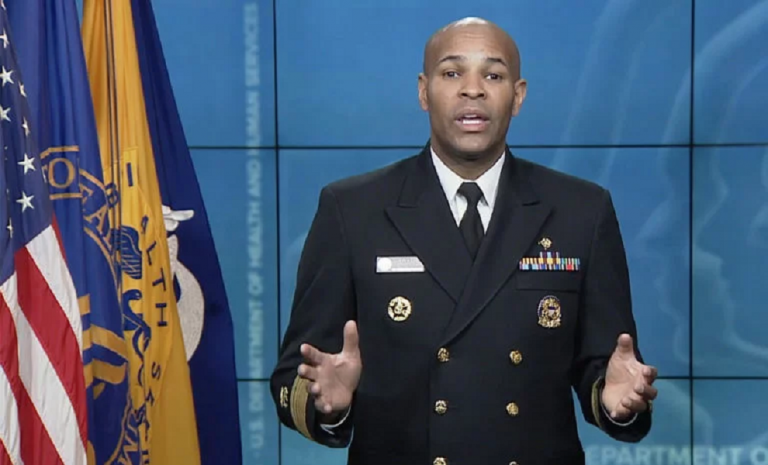
To support its response to the COVID-19 crisis, including the 10 Million Meals campaign, relief ministry Convoy of Hope has enlisted Australian Christian music duo For KING & COUNTRY and other well-known Christian performers for a live-stream benefit concert tonight at 8 p.m. Eastern/7 p.m. Central.

According to MusicRow, The TOGETHER: A Night of Hope event will include split-screen performances from the respective homes of For King and Country’s Joel and Luke Smallbone and their six band members. MusicRow also reported that the concert will include the premiere of a new song by for the Grammy-Award-winning duo.

The show will also include appearances by Christian music artist Kirk Franklin and actor and television personality Kathie Lee Gifford, MusicRow reported.

Visit bandsintown.com for information on where to watch the concert. Convoy of Hope’s Facebook page will live-stream tonight’s concert.

Convoy of Hope launched the 10 Million Meals campaign on March 25 as a response to the COVID-19 pandemic, a news release from the Springfield, Mo., non-profit said.

Hal Donaldson, president of Convoy of Hope, announced the initiative in a video on the agency’s website.

“We have already been meeting needs in big ways across the country,” the news release said. The agency said it is already “delivering dozens of loads and serving tens of thousands of people in need” as a result of widespread disruptions caused by the coronavirus pandemic.

Source: Christian Headlines

All Content & Images are provided by the acknowledged source
Poor Prison Conditions Put Iranian Pastor at Risk of COVID-19, Petition Demands for His Release

A new petition has been launched calling for the release of an Iranian pastor who is at risk of catching COVID-19 while in prison.

House church leader Youcef Nadarkhani has served two years of a 10-year sentence for allegedly seeking to evangelize Muslims. Now, with Iran battling a severe outbreak of the disease amongst the incarcerated, Nadarkhani finds himself at grave risk.

Earlier this month, the Iranian government announced that it would be releasing 85,000 prisoners early as a “precautionary measure to confront the outbreak.” The inmates that were furloughed had all been serving sentences of five years or less and tested negative for the illness. As a result of his lengthy prison term, Pastor Nadarkhani did not qualify for the early release and will remain behind bars indefinitely.

He is currently housed in the disease-ridden Evin prison, which is notorious for maltreatment of detainees. In a recorded phone call obtained by The Guardian, one British-Iranian prisoner described the horrific conditions in the prison’s hospital, as COVID-19 continues to run riot among the inmate population.

“As we entered [the new prison ward] the soldiers were wearing worn-out masks, and no gloves. Nobody checked anybody for high temperature. All our stuff they touched when we entered,” said prisoner Anoosheh Ashoori, who is accused of being an Israeli spy.

Source: Christian Headlines

All Content & Images are provided by the acknowledged source

Southern Baptists Donate 200,000+ Masks & Protective Equipment Items to Medical Workers

ALPHARETTA, Ga. (BP) — As COVID-19 cases continue to increase in the United States, many medical facilities have faced shortages of masks and other protective gear. In response, Southern Baptists have donated more than 228,000 sets of protective equipment to hospitals and healthcare workers in different states.

On Thursday (March 26), the U.S. surpassed China as the nation with the most confirmed cases of the virus.

Southern Baptist donations include more than 172,000 N95 masks and more than 56,000 sets of personal protective equipment (PPEs) given to help protect medical workers serving on the front lines of the coronavirus crisis.

Send Relief donated 30,100 masks and 45,520 PPEs to hospitals. Southern Baptist Disaster Relief (SBDR) teams from across the nation are donating about 142,000 masks and 11,100 suits to local hospitals and medical facilities.

“Medical personnel need the masks greatly right now,” said Richard Brunson, who leads North Carolina Baptists On Mission. “Besides, they didn’t belong to us anyway, they belonged to God! God just let us hold on to them for a little while until He could use them to bless others.”

Baptists On Mission, of which the state’s SBDR team is a part, donated 30,000 masks to various hospitals in their state. The masks are typically used in disaster responses, such as in flood recovery when harmful mold can build up in submerged homes, and in rebuilds.

“Southern Baptists have been so generous in donating during this time,” said Bryant Wright, president of Send Relief. “Really, it’s not that we’re unusual as a people. It’s just that we are extremely grateful that Jesus Christ gave His life for us, and we want to be giving to our fellow man in a time of need.”

The Centers for Disease Control and Prevention (CDC) has recommended SBDR, as one of the nation’s largest providers of disaster relief, to several different state emergency management agencies as an organization that can provide wrap-around services, such as food preparation and delivery and spiritual and emotional care.

As Southern Baptists respond to the current crisis, they are doing so on a more localized, community-based level for the time being.

Tennessee and Arkansas disaster relief teams have been supporting food delivery and distribution in several cities in their states.

Source: Baptist Press

All Content & Images are provided by the acknowledged source
Thom S. Rainer on Here is One Church’s Response to the Coronavirus Crisis

I have the opportunity to work with 1,600 church leaders at Church Answers on an ongoing basis. They are an incredible blessing to me. I mentor 30 of those leaders in one-on-one meetings.

Justin Gatlin is the pastor of Alvin Missionary Baptist Church in Alvin, Texas. He is one of the 30 men I mentor personally. He sent me an update on his church’s proactive work to address the pandemic. It is a great example of one leader tackling these challenging times with both faith and works.

His church has an average attendance of 200. They only had 115 the week before they canceled worship services. With one exception, I am including the totality of his email with his permission. The only area I did not include was the church’s financial contingency plans.

Hey Dr. Rainer,

I just wanted to touch base on the coronavirus response I am working through and looking for your feedback. We have currently canceled the next two weeks of services (we have two confirmed cases in our town of 27,000, and the county has only performed 15 tests, 8 of which are pending, so we are anticipating a lot more).

Our mayor has declared a state of emergency and banned gatherings of over 50, with a $2,000 fine. Our city secretary told me that we could meet as long as we stayed below 50% capacity (what they are recommending for restaurants), but I think for the time being it is a bad witness and unwise. We will reevaluate in April.

For worship: I am obviously doing live streams. A member of our church secured watchambc.com for me, which gives us something simple to run on our signs. We are simulcasting to Youtube and Facebook Live. For Sunday evening and Wednesday night, I am streaming it from my office.

I am trying to be creative and take advantage of the format. Next Sunday night, I will be interviewing a couple that just got back from a mission trip in Belize, and tonight I am doing an “Ask Me Anything” discussion.

SOURCE: Christian Post, Thom S. Rainer

All Content & Images are provided by the acknowledged source

Chuck Bentley Gives Practical Advice During the Coronavirus Crisis

Dear Chuck,

Many of the young people in my Bible Study are frightened of the coronavirus and the threat to their families. I understand their fear. But, as an older American, I’m also concerned about their economic well-being in the aftermath of this crisis. What kind of financial advice can I offer them?

Sheltered in The Storm

Dear Sheltered in the Storm,

We have two crises happening now and you have properly identified a third one. First, the virus has created a very real health crisis. Second, the shutdown of the economy has created a very present economic crisis and third, the government bailout will put us at risk of a future debt crisis and threat to the global economy.

As Thomas Sewell said about our current challenges, “We do not have good choices, we simply have trade offs.”

Living on the Edge

The Coronavirus has revealed the financial unpreparedness of millions of citizens. Aaron Zitner, at the Wall Street Journal reports: “Some 15% of Americans have used, or plan to use, either short-term loans or credit cards that they don’t know they can repay in order to buy emergency goods to deal with the outbreak, a survey by NORC at the University of Chicago found.” He says others rely on savings or plan to divert money set aside for other things.

It is my hope that many Americans have been better prepared for this event after making financial adjustments following the Great Recession, which started in 2008, by paying off debt, increasing savings and living within their means. Either way, here are some practical and spiritual insights for the young people in your Bible study.

Establish Essentials as Priority

Everyone’s situation is different. Let’s help the young people understand how to deal with the current economic crisis, and we will deal with the long-term consequences of the bailout later. Here’s how I would attempt to help those in your Bible study when meeting one-on-one.

Regardless of what’s happening in the world, everyone needs food and shelter. Pay the bills that provide food, home, and necessary utilities. This is a time to sacrifice wants to provide for needs.

SOURCE: Christian Post, Chuck Bentley

All Content & Images are provided by the acknowledged source

Construction Companies Lobby to Keep Working Even as Coronavirus Spreads

Click here to read.

Source: Wall Street Journal

All Content & Images are provided by the acknowledged source