T.D. Jakes happy with the outcome of Racial Reconciliation Summit

When Bishop Harry Jackson, chairman of the High Impact Leadership Coalition and senior pastor of Hope Christian Church in Washington, D.C., first called up Bishop T.D. Jakes, one of America’s favorite and most influential preachers and asked him to be a part of a summit to heal America’s racial divide, one of the first emotions Jakes felt was fear.

The senior pastor of The Potter’s House megachurch in Dallas, Texas, and New York Times best-selling author says he was afraid because his faith in people at that particular moment on matters of race had grown fragile. America was tense. Protests over controversial police actions in Ferguson, Missouri, and Staten Island, New York, were sweeping the country. Jakes just didn’t know. What if everything just went wrong?

“My faith in people was so fragile that when Bishop Jackson called me I said, ‘Man, I’m scared. If this doesn’t go right, I just don’t know,'” he confessed during an evening service at his church hours after a diverse coalition of influential pastors and Christian faith leaders had met for the summit called “Healing the Racial Divide” on Thursday night — the birthday of civil rights icon Dr. Martin Luther King Jr.

“I stood on the edge of struggling with losing my faith. Not my faith in God, but my faith in people,” Jakes confessed. “I wondered to myself, how long will we cry out and be told we’re whining? How long will we offer simple Christian clichés to complicated, complex sociological situations? How long will we major on the minor and be pitted against each other to the demise of a society that desperately needs somebody to speak for them?”

All that wondering stopped for Jakes on Thursday.

“My faith in God never shook but I’m so happy tonight,” said Jakes after a powerful and poignant meeting that many who attended saw as progress among faith leaders.

R.A. Vernon, founder and senior pastor of The Word Church in Cleveland, declared: “I almost teared up as I thought to myself, Bishop Jakes mentioned the fact that he had no idea, neither did Harry Jackson that they were planning this on Dr. King’s birthday. But might I suggest Bishop Jakes, that was not happenstance or chance, God maneuvered this moment because what other birthday present to give Dr. King than to bring truth to his vision.”

“It was Dr. King who said that ‘the most segregated hour of the week is the 11 o’clock hour on Sunday morning, and today I sat there and saw not only Bishop Jakes, but Bishop Paul Morton, pastor Tony Evans, John Hagee … and one of our Hispanic homiletic heroes, pastor (Samuel) Rodriguez. I said to myself, this is what heaven is going to look like — all these pastors, beautiful white, black and Hispanic brothers,” he added.

An earlier release from the event’s organizers had anticipated a crowd of about 75 leaders but Tony Perkins, president of the conservative Family Research Council, who also participated in the meeting, said it was at least twice that figure.

“About 150 to 200 (people),” he estimated. “It was a large crowd.”

In that crowd were people like Leith Anderson, president of the National Association of Evangelicals; Bernice King, CEO of The King Center in Atlanta and daughter of Martin Luther King Jr.; Alveda King, minister, civil rights activist and niece of Dr. Martin Luther King Jr.; Samuel Rodriguez, president of the National Hispanic Christian Leadership Conference, and Andrew Young, former congressman and U.N. ambassador.

For Perkins, racial reconciliation had long been a major concern. In 2008, the year Barack Obama was elected as the first African-American President of the United States, Perkins co-authored a book with Bishop Jackson called Personal Faith, Public Policy.

“And one of the issues we talked about was racial reconciliation and how the church has to be at the center of that. Nothing else is going to unify our country and culture,” said Perkins.

Racial reconciliation, however, was not a priority for faith leaders at the time, he said. But from what he saw at the gathering on Thursday, faith leaders appear to be thinking about it now.

“Back then there was no sense of urgency. But after Ferguson and after New York, there’s a sense of urgency that our nation is coming apart racially and ethnically. And so, that was the genesis behind this gathering and, quite frankly, it was encouraging to see the diversity and the breadth of leaders that came together to discuss this issue, which tells me it is very much at the forefront of concern across racial, denominational and ethnic lines,” said Perkins.

The meeting focused on seven “Bridges to Peace” community initiatives namely: reconciliation and prayer forums; education policy reform; community engagement forums; community service and compassion outreaches; personal, marriage and family development; engagement with the criminal justice system; and economic development strategies.

“Underserved communities and minorities needed to see that when our blood runs down the street that the church, not the Latino church, not the black church, I hate those terms anyway, but the blood-washed church … gathering strength together and come and sit down and hear and listen and talk,” said Jakes.

“The media for too long has pitted us against each other, divided us for the ratings it could create by the conflict. Appealing to our deepest fears and our greatest woes, and I hated that people I knew casually would learn about my people through the news rather than to walk across the street and have a sandwich,” said Jakes.

“But I serve notice on all the forces of hell. Today we walked across the street and we sat down together and we had a conversation that I have never heard before. And every blood-washed born-again spirit-filled child of the King ought to be happy in Jesus tonight. They ought to be shouting for victory tonight,” said Jakes.

“You see, I believe that the church could not answer the call to reconcile the world until the church reconciled itself but there is hope in the city tonight, there is joy in the city tonight, there is peace in the city tonight. I want the church to at least be as good as the paramedics are. When the paramedics come, they come without regard to color or culture or language or ethnicity,” he said.

Jim Garlow, of Skyline Church in San Diego, California, testified that when he got the invitation to attend the summit the Lord told him to be “silent.”

“You don’t have any knowledge about what you’re about to hear,” he said God told him. “Don’t you talk, you listen. All of us had microphones in front of us. In the meeting all day today, I never touched it because the Holy Spirit said: ‘You be silent. You’ve come to learn. You don’t know about what you’re hearing, you listen and you learn from them. That’s why I came, I didn’t know I was going to be on a microphone tonight at that point. I had no idea, especially standing in front of Bishop T.D. Jakes, the fourth member of the Trinity,” he quipped as the audience erupted with laughter.

But it was what he said and did shortly after making that statement that became somewhat of a highlight of the night.

“Bishop Jakes made a statement today. When he said it, I can’t describe how it shook me. He said all these years, I’ve gone, every time pastors call — he was referring to white pastors, when they call I go, when they say come let’s gather, I go. I always go. We go, we go, we go. But he said, not ’til this day.’ He said, ‘I’m 57 years of age,’ and he said, ‘not ’til this day, have I seen a gathering of white pastors coming to us on this day,'” Garlow recalled.

“And I want to say … Bishop, I want to say to you, we repent of that. I was shocked by that. That’s a scandal that should not be permitted to go on, and I want to publicly ask your forgiveness on behalf of people like me — that we did not come to you, you had to wait until this day, this is too long to wait, but we are here, thank you sir,” he ended. He then went over to Bishop Jakes and both men embraced in forgiveness.

Source: Christian Post

Gospel Music Icons to Honor Andraé Crouch with a Tribute Performance at Movieguide Faith & Values Awards

Gospel music icons including Donnie McClurkin are set to perform a tribute to the late gospel music legend Andraé Crouch at the 23rd Annual Movieguide Faith & Values Awards next month.

Crouch, who died at age 72 on Jan. 8, was originally supposed to perform during the awards gala. Instead, the singer/songwriter’s life and achievements will be celebrated with a special performance by gospel music greats Cece and Marvin Winans, Take 6, Tata Vaga, and as aforementioned, McClurkin. The Annual Movieguide Faith & Values Awards Gala will be televised on Saturday, Feb. 21 at 7 p.m. ET on the Reelz TV Channel: Hollywood Happens Here.

“Andraé was one of the greats,” said Dr. Ted Baehr, founder and publisher of Movieguide. “When my wife, Lili, and I, started our ministry in New York City, he came to our apartment to discuss his career. From that moment onward, he was our very dear friend, and it was exciting to see how God blessed his talent and his life throughout the year. He will be missed.”

The seven-time Grammy Award-winner is famous for bridging “Jesus music” with mainstream music. Crouch’s songs such as “The Blood Will Never Lose Its Power, “My Tribute (To God Be the Glory)” and “I’ll Be Thinking of You” have played in churches around the world and have been recorded by artists that include Elvis Presley and Paul Simon. Also a choir director, Crouch worked on Michael Jackson’s “Man in the Mirror” as well as Madonna’s “Like A Prayer.”

Memorial services for Crouch will take place next week at New Christ Memorial Church in San Fernando, California, where he served as co-pastor. The “celebration of Andrae Crouch’s life” includes a viewing on Tuesday, Jan. 20, as well as a tribute that evening, and another viewing on Wednesday, Jan. 21, as well as a four-hour celebration, according to the church’s website.

The musician is being mourned around the world by high-profile people including T.D. Jakes, Tyler Perry, and even President Barack Obama, among many others.

“Michelle and I were saddened to learn of the passing of music legend Pastor Andraé Crouch,” the Commander in Chief said before citing the singer as “a leading pioneer of contemporary gospel music.”

“We are grateful that his music and spirit will continue to live on for years to come and our thoughts and prayers are with his family, friends and fans during this time,” Obama added.

Source: Christian Post

Obama and Cameron vows to take down Islamic extremists

US President Barack Obama and British Prime Minister David Cameron vowed on Friday to take on “the poisonous ideology” of Islamic extremists and said intelligence agencies must be allowed to track militants online despite privacy concerns.

Obama and Cameron held two days of White House talks amid increasing concern inEurope about the threat posed by extremists after 17 people were killed in Paris attacks and Belgian authorities engaged in a firefight with terror suspects.

“We face a poisonous and fanatical ideology that wants to pervert one of the world’s major religions, Islam, and create conflict, terror and death. With our allies, we will confront it wherever it appears,” Cameron told a joint White House news conference with Obama after their talks.

Obama said he and Cameron accepted that intelligence and military force alone would not solve the problem, and they would work together on “strategies to counter violent extremism that radicalizes recruits and mobilizes people, especially young people, to engage in terrorism.”

The extremists’ ability to communicate online and spread recruitment propaganda on the Internet have presented a challenge to authorities.

Obama and Cameron expressed concerns about new encryption products that could prevent governments from tracking extremists poised to attack.

Technology companies became alarmed with surveillance techniques after former US intelligence contractor Edward Snowden leaked classified details about how the government harvests data from companies like Google, Yahoo, Microsoft, AT&T and Verizon.

“We’re not asking for back doors” to access electronic communications, Cameron said. “We believe in very clear front doors through legal processes that should help to keep our country safe.”

Obama said debate from civil libertarians and privacy groups has been “useful” in the debate, but said legal safeguards are in place to prevent government from “Big Brother” scenarios.

Obama said the US government has been working with technology companies to deal with privacy concerns without preventing investigations.

“Social media and the Internet is the primary way in which these terrorist organizations are communicating,” Obama said.

“We’re still going to have to find ways to make sure that if an Al Qaeda affiliate is operating in Great Britain or in the United States, that we can try to prevent real tragedy,” he said.

Obama and Cameron also agreed to conduct cybersecurity war games and establish a joint “cyber cell” to prepare for and share intelligence on malicious hacking, weeks after Sony Entertainment was hacked in an incident the FBI has blamed on North Korea.

Source: Christian Today

Pope Francis expected to be welcomed by more than a million catholicsduring his US visit

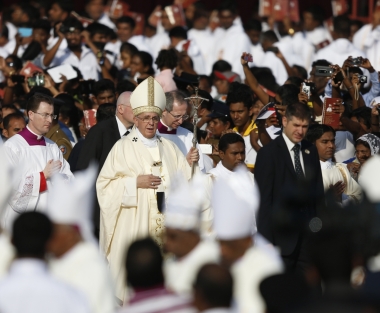
Pope Francis has electrified Roman Catholics in the United States with the open, accepting tone he has brought to the role, and his first visit later this year is expected to draw more than a million followers eager to set eyes on him.

The leader of the 1.2 billion-member church will also face a challenge in improving relations with conservative US Catholics, who have expressed dismay at his shift in focus away from issues like abortion and same-sex marriage, which the church has long opposed but Francis contends need not obsess about.

The city of Philadelphia began preparations more than a year ago for the pontiff’s visit in September, at the end of the weeklong World Meeting of Families. Some 1.5 million faithful are expected to turn out for an open-air Mass on the steps of the city’s main art museum, a crowd that could fill a 1.5 mile (2.4 km) stretch of parkway along the Schuylkill River, said Donna Farrell, executive director of meeting.

“What fascinates me is the degree to which he has captured the attention of Catholics and non-Catholics. I find myself in social meetings with non-Catholics talking about the Pope, and he’s the subject of great hope,” said Mark Mullaney, chairman of Voice of the Faithful, a lay Catholic organisation founded in Boston in 2002 in response to the clergy sex abuse scandal. “He’s opened doors and windows that have not been open in a long time, and encouraged discussion.”

Some 74 per cent of non-Catholics in America view Francis favorably, with some 93 percent of Catholics reporting a favourable view, according to a 2014 poll by the Pew Research Center. Both findings were well above his 60 per cent favourability rating worldwide.

Francis is also more popular with the roughly 76 million US Catholics than his predecessor, Benedict XVI, according to Pew, though not so beloved as John Paul II, who held the papacy for more than a quarter-century until his death in 2005. He was elevated to sainthood in 2014.

A vocal advocate of human rights, John Paul II drew crowds of over a million at outdoor events during his five formal US visits, while Benedict’s 2008 trip was less grand in scale.

Francis has won praise for his decision to live in a simple Vatican guesthouse and not the palace his predecessors have called home for centuries. He has also captured Americans’ attention by showing a more tolerant side of the church, famously answering a question on homosexuality: “If a person is gay and seeks God and has good will, who am I to judge him?”

Like his predecessors, Francis has used his influence to improve diplomatic relations between countries and played a key role in last month’s restoration of US-Cuba ties. Francis wrote personal letters urging rapprochement to US President Barack Obama and his Cuban counterpart, Raul Castro, and allowed the Vatican to host secret talks.

Before his visit to Asia this week, Francis urged a similar thaw between North Korea and South Korea.

FRICTION WITH CONSERVATIVES

While Francis has not broken on church teachings on homosexuality, with Catholic doctrine condemning homosexual acts, his willingness to discuss that and other issues has upset some conservative US Catholics.

His Philadelphia host, Archbishop Charles Chaput, stirred a debate last year when he told an audience that the meetings on family issues convened by the Vatican had confused some people about church teachings, adding that “confusion is of the devil and the public image that came across was confusion.”

Some saw the comment as a criticism of Francis, although Chaput has since said those words were taken out of context and that he was “overjoyed” about the Pope’s visit.

Other conservative Catholics that have expressed concerns about Francis’ approach include Providence, Rhode Island, Bishop Thomas Tobin.

“Pope Francis is fond of ‘creating a mess.’ Mission accomplished,” Tobin wrote of the family meetings.

“There is definitely a tension,” that Francis will likely want to soothe, said Fr. James Bretzke, a professor of moral theology at Boston College and, like Francis, a member of the Jesuit order.

“What Pope Francis can do is solidify his base among the more centrist and center-left (bishops) and make it clear that he doesn’t want to punish or exclude anyone, but also make it clear that he is going to continue with this basic approach, which is pastoral outreach,” Bretzke said.

Some conservative Catholics denied that Francis had changed the church all that much, saying that more progressive Catholics were too quick to conclude that his willingness to discuss controversial topics signaled looming changes in church dogma.

“It’s despicable that so many left-wing Catholics would jump on this bandwagon. I’m disgusted by the way Catholics who know better have sliced and diced his words,” said William Donohue, president of the Catholic League. “If you take a look at his positions on, let’s say marriage and abortion, there is nothing that is in any way different from his predecessors.”

Source: Christian Today

Attorneys for Kelvin Cochran says Fire Chief sack was unconstitutional

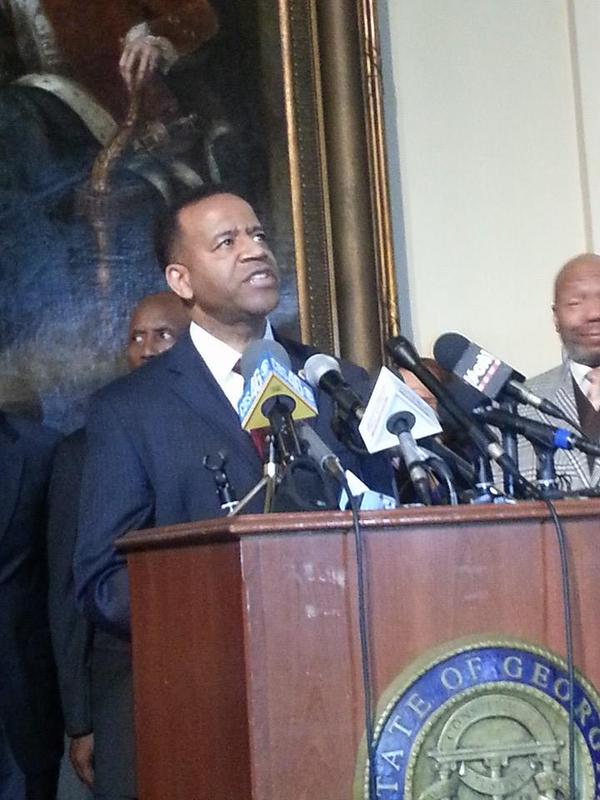
Atlanta Mayor Kasim Reed’s decision to terminate Kelvin Cochran last week was unconstitutional, according to attorneys working with the ousted fire chief as he explores legal options to sue the City.

In a recent press release, Alliance Defending Freedom Senior Counsel Kevin Theriot sternly criticized Reed’s controversial firing of Cochran on Jan. 6, one month after he was suspended without pay and forced to undergo sensitivity training for espousing his Christian beliefs in a book and handing out copies to employees.

The case has sparked nationwide debates about free speech and religious freedom and whether Cochran’s First Amendment rights were violated.

“Tolerance is a two-way street,” said ADF Senior Counsel Kevin Theriot. “That’s what a federal appeals court said not long ago about public officials who claim to love diversity while only tolerating views they themselves favor. Chief Cochran served the city of Atlanta with distinction, both before and after his post with the Obama administration. The city fired him for nothing other than his faith, and that’s not constitutional. We are currently assessing the legal options available to vindicate his rights to free speech and freedom of religion.”

In his 2013 book, Who Told You That You Are Naked?, Cochran calls homosexuality “sexual perversion” and “vulgar” and also likens it to “bestiality” among other things. He faced disciplinary action late last year after an AFRD member complained that he had shared the book with employees.

Reed insisted that Cochran was not fired for his religious beliefs but rather “because he displayed bad judgment.” He added that Cochran did not follow the correct protocol prior to writing the self-published book even though the former fire chief has said otherwise.

The City’s ethics code requires a Commissioner to get approval from the board of ethics prior to engaging in private activity for pay.

“I had legal permission to write the book from the city’s ethics officer [Nina Hickson],” Cochran recently told The Christian Post in an exclusive interview. “[It] was through a verbal conversation, there was no documentation … she said it was legal and I was authorized to write it and that she wanted a copy when I finish, after I told her what the book was going to be about.”

Cochran claimed he was authorized to write the book during a five-minute phone conversation with Hickson.

“I had legal authority to write the book, however; she cannot remember that conversation,” he said.

In a statement to CP, Hickson refuted these claims and cited the Atlanta City Code of Ordinances, Section 2-820 (d).

“The Atlanta’s Ethics Code establishes the required approval process for City Commissioners who wish to engage in outside activities for pay,” Hickson wrote in an email. “Consequently, I did not authorize Chief Cochran to write and publish the book, nor did I have the authority to do so.”

A city investigation determined Cochran had not discriminated against LGBT employees but he was fired anyway.

“The truth is that I am a man of deep faith myself, and we are a city of laws. Chief Cochran’s book, “Who Told You You Were Naked,” was published in violation of the city’s Standards of Conduct, which required prior approval from the Board of Ethics,” Reed wrote via Facebook on Tuesday.

Cochran argues however that seeking secondary approval is simply not common practice. He may use his alleged verbal authorization from Hickson as part of his claim, should he decide to sue.

“The mayor also says that I should’ve gotten permission from him which, when you operate as an executive for a city, whenever something is legal or governed by the law – there’s not a practice of getting permission from your boss if its within the scope of the law,” Cochran explained. “However, he still used that as the basis of my termination.”

Cochran, who first served as fire chief in 2008, believes that his dismissal is symbolic of a growing threat on religious freedoms facing Christians and other people of faith, which is just another reason that he is considering a lawsuit.

Since his termination, Cochran has been overwhelmed by an outpouring of public support. On Tuesday, hundreds of religious freedom advocates gathered for the “Standing for our Faith Rally” in the Georgia State Capitol rotunda and they hand-delivered a petition with 50,000 signatures to Reed’s office.

Faith Driven Consumers, an advocacy group representing 41 million Christians, has called on the mayor to reinstate Cochran as fire chief and also to apologize for his termination via its extinguish intolerance campaign which has more than 9,500 signatures.

“My spiritual convictions regarding sexuality do not equate to anger, hatred, or malice toward LGBT members,” Cochran said previously, also telling CP, “Unless [Christians] come together … we’re not going to actually have the strength politically like members of the LGBT community do.”

In 2009, Obama appointed Cochran as the fire administrator for the U.S. Fire Administration. He returned to his job as Atlanta’s fire chief the following year.

Source: Christian Post

Philippines: Pope Francis praises faith of survivors of Typhoon Haiyan and people’s solidarity

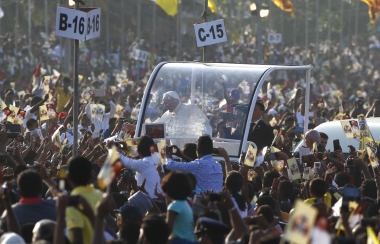
Storms greeted Pope Francis when he arrived in the central Philippines city of Tacloban on Saturday to pray for the dead and comfort survivors of Typhoon Haiyan, the country’s worst natural disaster that killed 6,300 people barely a year ago.

Tens of thousands of people wearing yellow raincoats cheered when Francis emerged from his plane in the coastal city of Tacloban 650 km (400 miles) southeast of Manila in steady rain and strong winds.

Francis began a Mass near Tacloban airport wearing a transparent yellow poncho over his vestments as heavy rain and strong winds lashed a large crowd of worshippers, who stood amid puddles in a mud-soaked field.

The storm was an eerie reminder of Haiyan, which hit the same area with 250 kph (155 mph) winds and created a seven-metre high storm surge, wiping out almost everything in its path when it swept ashore on Nov. 8, 2013.

Francis’s day trip to Leyte province gives him another opportunity to speak about climate change ahead of a major document on the environment he is due to issue in June.

The Pope will celebrate Mass at the airport and then see for himself the devastation wrought by Haiyan, the strongest storm to make landfall on record, when he goes to the nearby town of Palo to have lunch with survivors.

Speaking at the presidential palace on Friday, the Pope admired the “heroic strength, faith and resilience” shown by the Philippines as well as the solidarity people demonstrated after the typhoon.

The storm destroyed around 90 percent of the city of Tacloban in Leyte province. More than 14.5 million people were affected in six regions and 44 provinces. About one million people remain homeless.

The government estimates it needs almost 170 billion pesos ($3.8 billion) to rebuild the affected communities, including the construction of a four-metre high dike along the 27-km (17 miles) coastline to prevent a repeat of the disaster.

Nearly 3,000 victims are buried in the city’s almost half-hectare mass grave site. Hundreds are still unaccounted for.

Germanwatch, a think tank partly funded by the German government, said in a report last year the Philippines was the country hardest hit by extreme weather in 2013.

Francis waded into the climate change debate on Thursday, telling reporters that he believed that man was primarily responsible for climate change and that he hoped this year’s U.N. climate meeting in Paris would take a courageous stand to protect the environment.

The Pope said his long-awaited encyclical on the environment was almost finished and that he hoped it would be published in June, ahead of the U.N. conference in November.

“I don’t know if it is all (man’s fault) but the majority is. For the most part, it is man who continuously slaps down nature,” he told reporters on the way to Manila.

Those words were his clearest to date on climate change, which has sparked worldwide debate and even divided conservative and liberal Catholics, particularly in theUnited States.

“I think man has gone too far,” he said. “Thank God that today there are voices that are speaking out about this,” he said.

Source: Christian Today

who deserves to be a Saint?

Pope Francis announced that on his visit to the US he was going to make Junipero Serra a saint. He had previously ‘done’ Joseph Vaz on his visit to Sri Lanka. Saints are in the news, but what’s it all about?

It sounds like fun. How do I apply?

It doesn’t work like that, and it’s not fun at all. For a start, you can’t still be alive since it’s only after you’ve died that the Church can be sure you aren’t going to do something unsaintly. Also, lots of saints have also been martyred in pretty revolting ways – St Sebastian being shot full of arrows, for instance – and even the ones who died in their beds have often lived rather uncomfortably. Think Simon the Stylite, who spent 37 years living on a platform on top of a pillar.

So who does get to be a saint, then?

A saint is someone who has lived a life of extraordinary or heroic virtue. Catholics don’t believe that they were sinless, just that they were special. Nowadays there are quite strict rules about who can be a saint, instituted by Pope John Paul II in 1982: a diocese decides on a likely candidate and an intensive survey of his or her life and works begins. The candidate passes through the stages of being recognised as a Servant of God, Venerable, Blessed and finally Saint.

Is there any flexibility?

Popes have quite a wide latitude in this respect. For instance, for non-martyrs to be sainted, two certified miracles have to have been performed through their intercession (we said the rules were strict). But Francis is to waive this rule for Junipero Serra on the grounds that he has been considered a holy man for centuries.

I got a woodwork badge in Cubs. Is it like that?

It is considerably more rigorous, but if you mean that it is a recognition that someone has achieved something special, then yes. All Christians are saints, but many Churches teach that some are worthy of particular respect and can be reliably used as an example and inspiration to us.

Let me just play devil’s advocate for a moment –

I’ll stop you there. The Devil’s Advocate was originally the person appointed to argue the case against sainthood for a candidate (officially the Promoter of the Faith), whose office was discontinued in the 1983 reforms.

Does that mean it’s become easier to be a saint?

Arguably yes; the pace has picked up quite a bit. But the process is still quite strict, and some of the oddballs of previous generations would never make it now.

Oddballs? That seems a little disrespectful.

None intended, but in earlier days the process was a lot more informal. Local people would decide for themselves, or a figure from pagan legend would become Christianised and sainted, or a bishop would decide that a local saint was just what was needed to boost the tourist trade. The Vatican got increasingly edgy about this and by 1200 the practice was banned. In 1969 the Church took a hard look at its saints list and discovered that many of them might never have existed at all. One of these casualties was St Valentine, the patron saint of cheesy greetings cards.

Not really!

Well, no. But there plenty of other patron saints with rather odd responsibilities. St Clotilde is the patron saint of disappointed children, St Drogo is the patron saint of ugly people, St Bibiana is the patron saint of hangovers, and St Hubert of Liege – a rather niche interest, this – is the patron saint of the fear of werewolves.

How do saints get to patronise particular people?

It usually relates to an interest they had in their lifetimes. Hubert, for instance, werewolves aside, is the saint of hunters. He is said to have taught that hunters ought to only shoot when a humane quick kill is assured, that sick animals should be euthanised and that females with young should not be harmed. Others have more creative associations between their lives and saintly responsibilities: St Barbara, for instance, was tortured to death by her husband when she converted to Christianity. On the way home from her execution he was struck by lightning. She is the patron saint of gunpowder and fireworks.

But does the patron saint thing really make sense?

Yes, given certain assumptions. The Roman Catholic and Orthodox Churches have a much more developed idea of the Communion of Saints than do evangelical Protestants, who tend to assume that once a Christian dies they’re in heaven and that’s that. But there is nothing intrinsically odd about asking those who have predeceased us to pray for us. James (5:13) says that the prayer of a righteous person is powerful, and saints are particularly righteous; and picking someone with a particular expertise in your field is arguably sensible.

Can’t I just, you know, pray? To God?

Of course, but many would say that you can ask other people – living and even-more-living – to pray for you as well. Every little helps.

So, why is Pope Francis making saints now?

He is bringing already-existing ’causes’, which long pre-dated his papacy, to a conclusion. But there are political and pastoral considerations, too. North America is light on saints as the Church hasn’t been there very long, and giving Latin American Catholics one of their own with whom to identify is smart, evangelistically. Sri Lanka’s Catholics are a minority under a pressure; reminding the rest of the country about Joseph Vaz and his willingness to work with other faiths is also a good move.

Out of interest, are there any Protestant saints? 

The Church of England has one official saint, Charles I, whose dictatorial policies, untrustworthiness and treachery plunged Britain into a civil war that cost hundreds of thousands of lives.

Source: Christian Today

Niger: French Cultural Center and Churches attacked in Charlie Hebdo protests

Demonstrators in Niger attacked the French cultural center, set fire to churches and raided Christian shops on Friday, as protests erupted against Charlie Hebdo’s cartoons in several Muslim West African countries.

Staff of the satirical French weekly, which had angered Muslims by publishing images of the Prophet Mohammad, were shot dead by Islamist gunmen in Paris last week.

Police in Niger’s southern city of Zinder, the second largest in Niger, fired tear gas at a crowd of hundreds of people who burned French flags and tires in the streets on Friday.

“The protesters are crying out in local Hausa language: Charlie is Satan – let hell engulf those supporting Charlie,” said Aboubacar Mamane, a shopkeeper, by telephone.

Witnesses said the demonstrators ransacked the French cultural center and the homes of police officers.

Peaceful marches took place after Friday prayers in the capital cities of former French colonies Mali,Senegal and Mauritania.

Demonstrators said they were angered by the latest front cover of Charlie Hebdo this week, which despite the Paris killings again featured a cartoon of Mohammad.

“Charlie Hebdo in the toilets,” said one placard held by a protestor in Nouakchott.

The presidents of Niger, Mali and Senegal last week marched alongside more than a million French citizens to show solidarity with the victims of the Paris bloodshed, which began with a shooting attack on Charlie Hebdo’s Paris office.

But in an indication of the shifting mood, Macky Sall, president of one of Africa’s most stable democracies Senegal, said late on Thursday: “Freedom of the press should not, in our view, head in the direction of a totally pointless provocation.”

Source: Christian Today

Dozens of IS suspects are held across Europe

Belgian, French and German police interrogated dozens of Islamist suspects on Friday as much of Europe remained on heightened security alert after last week’s killings in Paris and raids in Belgium in which two gunmen were killed.

In Paris there was a fresh scare when a gunman took several people hostage at a post office in a northwestern suburb. A siege ended when he gave himself up to police. No one was hurt. Authorities said they could not confirm whether the incident was related to terrorism.

Belgian police questioned 13 suspects and France held two people on Belgium’s request, a day after two gunmen were killed during raids against an Islamist group that authorities said were planning to attack police.

French police said they had arrested 12 people suspected of helping the Islamist gunmen behind attacks last week on a satirical magazine and kosher supermarket in Paris.

Officials said there was no clear link between the suspected Belgian plot and the Paris attacks a week earlier, but described them as part of a common threat.

“There is a terrorist offensive,” French Prime Minister Manuel Valls told reporters. “We face the same threat.”

In Germany, police arrested two people following a raid on 12 homes and a mosque. A police spokesman said the suspects were probably part of an extremist cell that recruited fighters for Syria.

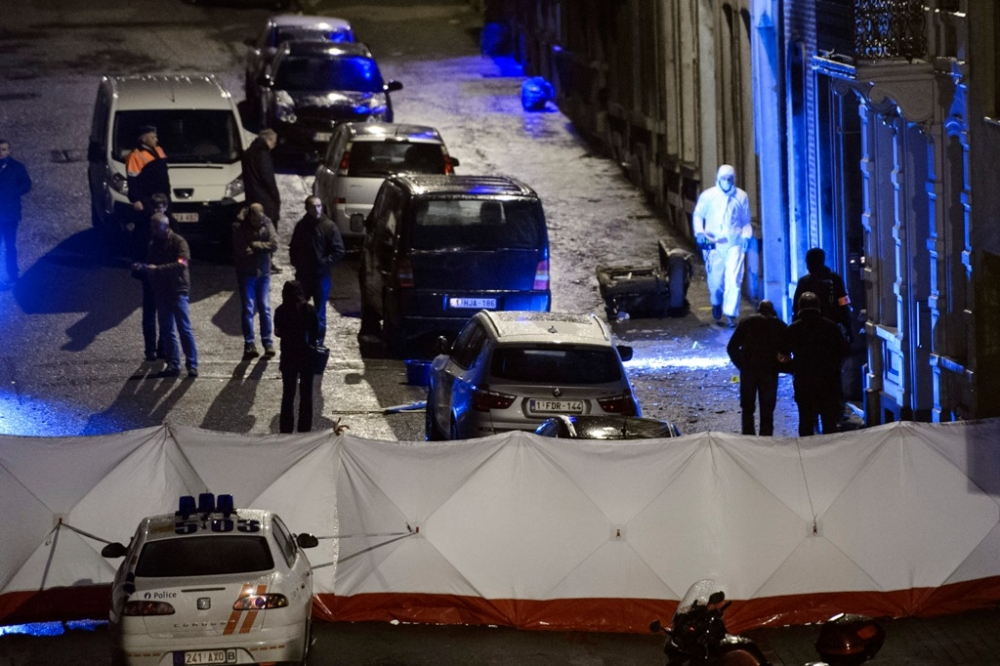
In Belgium, police uniforms, explosives and guns including four AK-47 assault rifles were found in the apartment where the two gunmen were killed on Thursday in the raid in the eastern town of Verviers. Their identities have not been released.

“This group was on the point of carrying out terrorist attacks aiming to kill police officers in the streets and in police stations,” prosecutors’ spokesman Eric Van Der Sypt said.

He declined to comment on media reports that the plotters planned to behead a policeman.

NERVES ON EDGE

In France, demand for the first post-attack edition of the weekly Charlie Hebdo remained high for the third day in a row. One kiosk in central Paris reported a thief broke in overnight and stole all its copies.

However there were violent protests in some Muslim countries against the weekly for putting a caricature of a weeping Prophet Mohammad on the cover of the new edition.

About 200 Pakistani protesters clashed with police outside the French consulate in Karachi after a demonstration against the magazine. In Niger, a protest turned violent as demonstrators set fire to churches and raided shops run by Christians. Police fired tear gas on a crowd of hundreds of people and tyres burned in the streets.

French Interior Minister Bernard Cazeneuve said a total 12 suspects had been detained so far in connection with last week’s Paris attacks, most of them known to police for common crimes. Judicial sources said the eight men and four women were detained in the greater Paris area.

Nerves remained on edge. Paris’s Gare de l’Est train station was evacuated for about an hour during the morning rush.

Belgian security forces were on high alert, with extra armed security in evidence at some public buildings, notably police stations. Public broadcaster RTBF said officers were told not to be on the streets alone while in uniform. Some Jewish schools in Belgiumand the Netherlands were closed.

US Secretary of State John Kerry was in Paris to convey US condolences to the nation and to lay wreaths to the victims at the two main sites of the attacks.

Kerry greeted President Francois Hollande with a firm embrace at the Elysee presidential palace. Washington has said it regretted a decision not to send senior US officials to a commemoration march in Paris on Sunday attended by dozens of world leaders.

“Today, I wanted to be here, at home with you, among you,” Kerry, speaking fluent, American-accented French, told an event. “I wanted to tell you personally of the horror and revulsion that all Americans felt at these cowardly and despicable attacks against innocent victims and fundamental values.”

Hollande earlier called the shootings France’s 9/11, referring to the Sept. 11, 2001 attacks in New York.

“France has come out of this ordeal with its determination intact to act on the international scene,” Hollande told an annual gathering of about 200 foreign and French ambassadors.

Belgian investigators were also examining if a man detained in the city of Charleroi on suspicion of arms trafficking had any links with Amedy Coulibaly, the gunman who killed four Jews at a kosher supermarket in Paris last week. The detained man’s lawyer told French media he had merely sold Coulibaly a car.

Source: Christian Today

Could this be true? Britain to get its first LGBT school

Britain’s first specialist state school for lesbian, gay, bisexual and transgender young people could open in central Manchester within the next three years, according to major news sources.

This comes after LGBT Youth North West, a charity seeking to support LGBT young people in the North West of England, received £63,000 funding from Manchester City Council. The concept of an alternative education provision for LGBT students was featured on the funding application, after young people had expressed a desire for it, but the idea is still very much in consultation stages, Sally Carr, founder and operational director of LGBT Youth NW, told Christian Today.

“We’ve been working with LGBT youth for ten years, and many young people over many years have told us the same story,” said Carr.

“We worked with over 10,000 students last year across a variety of schools to try and address homophobia, biphobia and transphobia. But we know that these students face prejudice every day.”

The concept of Britain’s first ‘gay school’ has already caused controversy, but the charity maintains more needs to be done to help LGBT students who are struggling and unsupported in mainstream schools.

Speaking to The Guardian, Amelia Lee, strategic director for LGBT Youth NW, said: “Despite the laws that claim to protect gay people from homophobic bullying, the truth is that in schools especially, bullying is still incredibly common and causes young people to feel isolated and alienated, which often leads to truanting and, in the worst-case scenarios, to suicide.”

Christian teenager Lizzie Lowe hanged herself in Manchester last year because she feared telling her parents that she was gay. She was only 14. It is tragic deaths like Lizzie’s that LGBT Youth NW is hoping to prevent, through their current work training thousands of pupils and teachers in mainstream schools, and potentially through a specialist school in the future.

Rev Sally Hitchiner, founder of Diverse Church, a support network for LGBT people which has a confidential Facebook group enabling young LGBT Christians to connect, feels that an exclusive school might help those struggling in mainstream education.

“I think it’s a tragedy that it’s needed,” she said, “but for students involved it might be a lifeline. Far too many LGBT students face misunderstanding and isolation to the point that some of take their own lives.

“However, I think the highest priority has to be enabling every school in the country to be a supportive and safe place for all of its people.”

Tory MP and former education minister Tim Loughton has spoken out against the idea of an exclusive school, saying, “I cannot see how segregating a group of young people identified by their sexuality can aid better engagement and understanding.

“The way to achieve more integration, understanding and empathy is not by segregating members of one group, and this would seem to me to be a step backwards from achieving tolerance.”

Yet, it seems that the attacks may be aimed at an idea that doesn’t exist. Carr says that their education provision wouldn’t be an exclusive school for LGBT students.

“People have failed to recognise the bigger picture,” she said. “The original suggestion is not about an exclusive school for LGBT students, but about an inclusive school for all students.

“Much like you would expect Christian schools to be absent of prejudice towards Christianity, this would be a school free from homophobia, transphobia and biphobia. These things have no place in modern British society.”

The fact that LGBT students are often bullied and isolated in UK schools is something that needs to be addressed, and Sally Hitchiner believes that Christians can be part of the solution.

“I think Christians, particularly straight Christians, need to listen more than we speak,” she said. “There’s a need to listen to young LGBT people, and if they say that the current system is not working we need to take that seriously. We need to change the system so that future LGBT people are able to live and find God and find that God loves them, both at work and at play and at church.

“That has to be our highest priority, keeping young people from giving up on life and giving up on God.”

Source: Christian Today