COVID-19 Pandemic Update and FREE Virtual Revitalize 2020 Information

Good afternoon,

Due to the rapidly evolving situation, and increasing concerns regarding the spread of COVID-19, we must regretfully inform you that the Revitalize 2020 event in Bradenton, Florida has been canceled.   

This decision was not an easy one to make. Our leadership evaluated all options, but in the end, we decided to cancel the event with the safety of our attendees in mind. We sincerely apologize and ask for your understanding of these unexpected circumstances. Our team will begin issuing refunds for your registration immediately, and your account should be credited in the next 5 to 10 business days.

Our team is committed to the work of church revitalization, and we are partnering with Idea Network and the North American Mission Board to offer a virtual Revitalize 2020 event on April 20 and 21, 2020 at no cost to you. Join us for this special training on revitalization by registering online at  HERE. The virtual conference will include sessions by:

  • Thom Rainer – Anatomy of a Revived Church
  • Mark Clifton – Revitalizing a Rural or Small Town Church
  • Josh Teis – Revitalizing Yourself by Creating a Cabinet of Mentors
  • Jenny Smith – Revitalize Your Volunteer Program
  • Michael Pigg – Revitalizing Through a Core Group
  • Sam Rainer – Know Your Community to Reach Your Community

Register now to join us for this special online event on Monday, April 20, 2020 at 2:00 pm Eastern and Tuesday, April 21 at 10:00 am and 2:00 pm Eastern: REGISTER FOR ONLINE REVITALIZE 2020 EVENT.

Please…

… Read More

—

Click here to read the rest of the story from our content source/partners – Thom Rainer.

قالب وردپرس

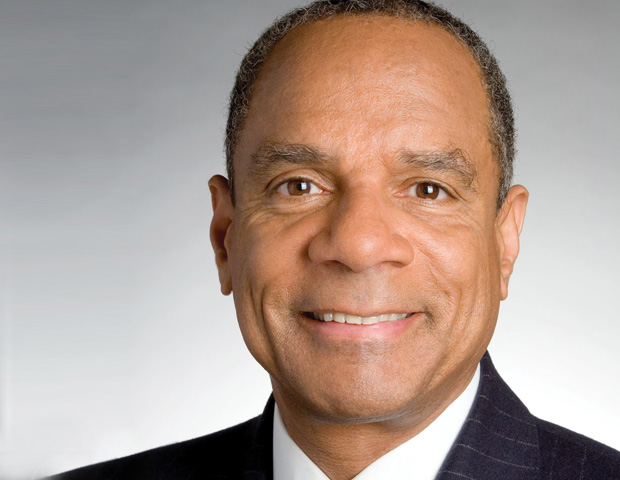
Kenneth Chenault Leaving Facebook Board; Appointed First Black Director at Berkshire Hathaway

Former American Express CEO Kenneth I. Chenault announced Friday that he was “stepping down” from the board of Facebook Inc. On the same day, Warren Buffett’s Berkshire Hathaway disclosed the nomination of the world-renowned corporate leader to its board, making him the first African American ever to serve as a director of the conglomerate. Chenault will replace departing Berkshire Hathaway board member Bill Gates, the co-founder of Microsoft Corp. and billionaire philanthropist.

According to The Wall Street Journal, Chenault, a member of the Black Enterprise Registry of Corporate Directors who became the first African American to sit on the social media giant’s board, decided not to seek re-election to the body due to differences with Facebook CEO Mark Zuckerberg related to “governance and political policies.”

The news came days after Facebook announced the appointment of The Estée Lauder Companies’ CFO Tracey Travis. She will join Peggy Alford, Senior Vice President of Core Markets for PayPal Holdings as the second African American female director to serve on its board. Alford became the first black woman appointed to the Facebook board last year. Chenault, who currently serves as Chairman and Managing Director of Silicon Valley-based VC firm General Catalyst, will continue his role as director until the company’s next annual meeting.

Chenault wrote in a post on Facebook’s Newsroom site: “Facebook plays an important role in the lives of people around the world. During the timeI served on the board, the company made progress in dealing with new challenges and continues its reach and to grow as a business…”

Source: Black Enterprise

All Content & Images are provided by the acknowledged source

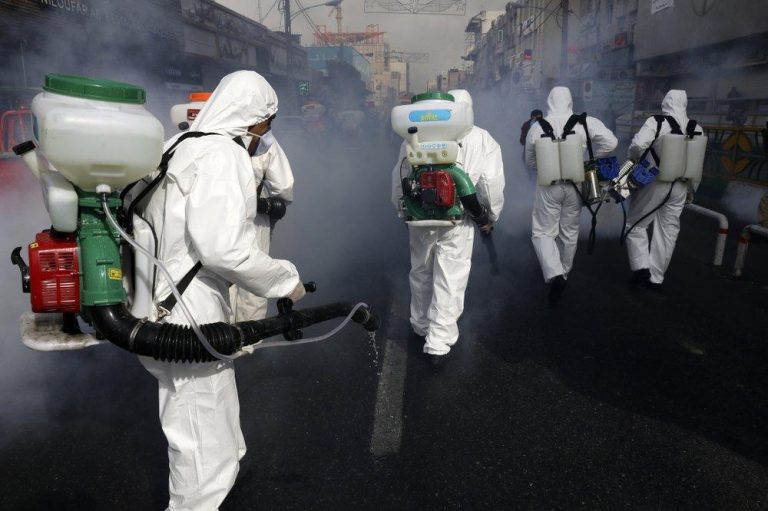
Iran Reports 113 New Coronavirus Deaths as Concerns Mount

TEHRAN, Iran (AP) — The official leading Iran’s response to the new coronavirus acknowledged Sunday that the pandemic could overwhelm health facilities in his country, which is battling the worst outbreak in the Middle East while under heavy U.S. sanctions.

Iran’s Health Ministry reported another 113 deaths, bringing the country’s total death toll to 724, with nearly 14,000 confirmed cases. It was the biggest single-day jump in fatalities since the virus was first reported in the country.

Muslim authorities meanwhile announced that the Al-Aqsa mosque in east Jerusalem, the third holiest site in Islam, would be closed indefinitely due to concerns about the outbreak, with prayers continuing to be held on the sprawling esplanade outside.

Similar measures have been taken at the nearby Western Wall, the holiest place where Jews can pray. Outdoor prayers continue, but only 10 people at a time are permitted in enclosed areas, in keeping with measures taken by the Israeli government.

Iran’s outbreak has caused growing alarm, with concerns about the government’s transparency in reporting the extent of the epidemic and its ability to contain it.

“If the trend continues, there will not be enough capacity,” Ali Reza Zali, who is leading the campaign against the outbreak, was quoted as saying earlier by the state-run IRNA news agency.

Iran is believed to have around 110,000 hospital beds, including 30,000 in the capital, Tehran. Authorities have pledged to set up mobile clinics as needed.

Zali also acknowledged that “many” of those who have died from the COVID-19 illness caused by the virus were otherwise healthy, a rare admission by local authorities that the virus does not only prey on the sick and elderly.

Full Coverage: Virus Outbreak

Health Ministry figures show that while 55% of fatalities were in their 60s, some 15% were younger than 40.

For most people, the virus causes only mild or moderate symptoms, such as fever and cough. For some, especially older adults and people with existing health problems, it can cause more severe illness, including pneumonia. Most people recover in a matter of weeks.

The virus has infected more than 150,000 people worldwide and killed more than 5,800. More than 70,000 people worldwide have recovered after being infected.

In Iran, the virus has infected a number of senior officials, including Cabinet ministers, members of parliament, Revolutionary Guard members and Health Ministry officials.

Senior Vice President Eshaq Jahangiri returned to work Sunday after testing negative, the presidency’s website said. He was absent from official meetings last week, and the semi-official Fars news agency had reported that he had contracted the virus.

Authorities have nevertheless been slow to adopt measures taken by other hard-hit countries. Iranian President Hassan Rouhani on Sunday ruled out a general quarantine and said the government was working to keep the borders open.

Dalia Samhouri, a senior regional official with the World Health Organization, said both Iran and Egypt, two of the most populous countries in the Middle East, were likely underreporting cases because of the nature of the virus, which can be spread by individuals who show no visible symptoms. Egypt has reported 110 cases, including two fatalities.

“We can easily say that the current figures are an underestimation of the actual figures,” she said.

Iran has struggled to respond in part because of crippling sanctions imposed by the Trump administration after the U.S. withdrew from the 2015 nuclear deal. The U.S. says it has offered humanitarian aid but that Iran has rejected it.

Countries across the Middle East have imposed sweeping travel restrictions, cancelled public events and called on non-essential businesses to close for the coming weeks. Many have temporarily closed schools and universities.

In the skyscraper-studded city of Dubai, a global business and travel hub in the United Arab Emirates, authorities announced on Sunday that all movie theaters, arcades and gyms would be closed through the end of the month.

Abu Dhabi, the capital of the UAE, also shut down its amusement parks and museums through the end of the month, including Louvre Abu Dhabi.

In Lebanon, police used loudspeakers to order people to evacuate the city’s famous Mediterranean boardwalk. The small country, which has reported 99 cases and three deaths, has already closed all restaurants and nightclubs, halted flights from several countries and tightened border controls. President Michel Aoun urged people to stay home.

Jerusalem’s Al-Aqsa mosque is the latest in a series of religious sites where access has been halted or strictly limited. Saudi Arabia has suspended the umrah pilgrimage to Mecca and Medina and could be forced to limit or cancel the much larger hajj later this year. On Sunday, it announced the temporary closure of all mosques and called off Friday prayers.

Sheikh Omar Kiswani, the director of the Al-Aqsa mosque, said the closure of the mosque and other buildings on the compound, including the iconic golden Dome of the Rock, would continue indefinitely.

The religious site is also the holiest in Judaism because it was the location of the two Jewish temples in antiquity. Israel occupied and annexed east Jerusalem in the 1967 war in a move not recognized internationally. The Palestinians want east Jerusalem to be the capital of their future state, and the religious site has often been a flashpoint in the decades-long conflict.

Israel imposed sweeping travel and quarantine measures more than a week ago but has seen its number of confirmed cases double in recent days, to around 200. On Saturday, the government said restaurants, malls, cinemas, gyms and daycare centers would close.

Prime Minister Benjamin Netanyahu’s trial on serious corruption charges, which was supposed to begin this week, was postponed for two months due to restrictions on public gatherings. His office said Sunday that Netanyahu and those in “close proximity” to him have been tested for the virus despite not showing any symptoms.

Palestinian officials said President Mahmoud Abbas, who is 85 years old and has age-related health issues, is no longer receiving any guests as a precaution, and is only meeting with a couple of very close aides. Most of his staff have been asked to work from home.

The officials spoke on condition of anonymity because they were not authorized to discuss the measures with the media.

The Palestinian Authority has reported 38 coronavirus cases in the Israeli-occupied West Bank, nearly all connected to an outbreak in the town of Bethlehem, where Jesus is believed to have been born. Israel and the Palestinians have largely sealed the town off.

Copyright 2020. The Associated Press. All rights reserved.

Source CBN

All Content & Images are provided by the acknowledged source

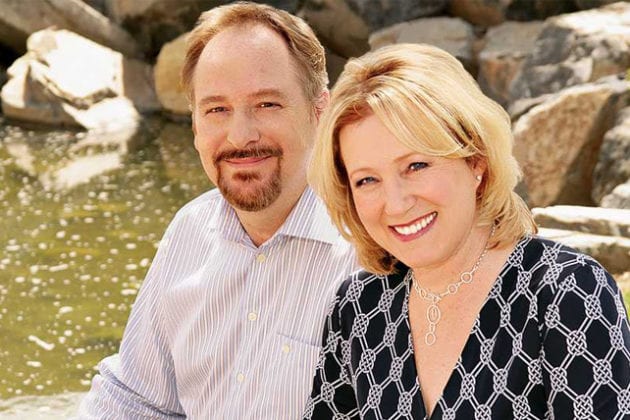
Kay Warren on the Sacred Privilege of Being a Pastor’s Wife

Being a pastor’s wife has had its ups and downs, its highs and lows. I remember that first Sunday…

“They’re here! I can’t believe it—but they’re really here!”

It was a beautiful, sunny Easter Sunday morning in Southern California, and Saddleback Valley Community Church officially launched. For 12 weeks, we and a small band of believers had met together in our home to dream, plan and organize this launch day. We had hand-addressed and hand-stamped 15,000 letters to the community, introducing ourselves and our new church. We scoured yard sales and swap meets for used nursery equipment. We copied pages from coloring books for toddlers. We searched through lists of students from a local college to find childcare workers. I practiced the hymns (complete with updated lyrics to a few) on the piano to be certain my nervous fingers didn’t hit the wrong notes. We rented a portable sound system for the Laguna Hills High School Performing Arts Theater. Rick poured over the Bible for weeks, praying for God’s words to speak to the folks that might show up. We prayed. We fasted. We believed in faith. On April 6, 1980, we stood at the gates to Laguna Hills High School and waited nervously, hoping and praying that at least a few people would try our new church.

They came! First one car, then three, then a dozen, then more. People of all ages—families, singles, old, young and everything in between—began pouring out of the cars, quickly filling the parking lot. Rick and I enthusiastically greeted them all—hardly able to take in the truth that all our wild hopes were coming true. I remember smiling through tears at one point as I held out my hand in welcome to one of the 205 folks who read our mass mailing or heard about a new church for “those not interested in a traditional church” and decided to give it a shot. “God,” I whispered, “You are faithful. This is going to work!”

In the nearly four decades since, we have had front-row seats to witness thousands upon thousands of men, women and children experience the grace of God to change their lives. This is their spiritual home, and we are family. These amazing people live sacrificially and give sacrificially so that others can know Jesus Christ as they do. These amazing people have taken the Gospel of Jesus Christ to every country in the world. These amazing people volunteer to wash windows, clean toilets, sort trash to buy Bibles, teach squirrelly toddlers and students, host small groups in their homes, feed the hungry, clothe the naked, teach English as a second language, tutor kids, walk the meanest streets to share God’s love with prostitutes and johns, courageously tell of how they’ve overcome their hurts habits and hang-ups through Celebrate Recovery, visit those behind bars, form care groups for people living with HIV and AIDS, adopt orphaned children locally and from around the world, embrace those living with mental illness, tear down the taboos of talking about suicide in church, offer grief support, take meals to families facing a crisis, use art to heal broken places in the soul, apply their gifts of technology, write music that honors God, help cranky and anxious drivers find parking spaces, and extend the love of Jesus into every corner of our community and beyond.

Well, almost every second. There were a few times…

All Content & Images are provided by the acknowledged source
Eric Geiger on Why a Decline in the Stock Market Can Be a Gift for Christians

The stock market is declining and that could be a gift for many of us. Money is not the root of all kinds of evil, but the longing and lusting for it is (1 Timothy 6:10). Greed is the corruption of the good and God-given desire to manage resources well, to provide for your family, and to be fruitful in this life. Greed is the corruption of that desire to the point when the gift of money becomes our god. Just as we can struggle with pride if we have a low view of ourselves or a high view of ourselves because we are still focused on ourselves, we can struggle with greed if we are rich or poor, in plenty or in scarcity, because greed is about the focus of our hearts.

I heard Tim Keller say in a sermon that you can tell if something is an idol for you by how you respond when it is taken away.

A decline in the stock market is a gift for us Christians because it helps us evaluate how firm of a grip greed has on our hearts. Many people took a hit when the stock market dipped and found themselves still content because their ultimate hope is not in the number on the screen. Of course, they were disappointed, but they were not crushed. For others, a drop in the stock market felt as if more than their net financial worth took a hit. It felt as if they lost part of who they are, their hope, and their sense of worth. Having possessions is vastly different from possessions having us. Having an investment portfolio is vastly different from an investment portfolio having you. A decline in the stock market is a gift because it helps us evaluate if we are stewards or if we are owned by what we think we own.

One response to having less is seen in a man who asks Jesus for more. Jesus told the famous parable of the rich fool in response to a man who wanted Jesus to fix his portfolio – to step in and have his brother give him more of the inheritance (Luke 12:13-21). He was not content, and he viewed Jesus as a means to get more. He did not come to Jesus for Jesus but for Jesus to give him more money. He was willing to use people, even Jesus, to get more.

Source: Church Leaders

All Content & Images are provided by the acknowledged source
Samuel D. James on 5 Things I Learned as a Pastor’s Kid

I grew up as a pastor’s kid and learned some pretty important lessons that churches need to know about pastors and their families.

There seems a resilient misconception that pastors are less prone than the rest of us to things like exhaustion, temptation, frustration, and loneliness. I’ve seen that the opposite is actually closer to the truth. A pastor is especially vulnerable to all these things because of the constant emotional vigilance of his calling. Most of us are grateful, even unconsciously, that our spiritual lives and our vocations don’t overlap to the degree that they do in the pastorate.

If I had one piece of advice for all evangelical churches, it would be: Generously grant rest to your pastor. If everything falls apart when he’s not there, that’s not a reason to limit his rest, it’s a reason to seriously rethink the culture of the church. A pastor who feels like he has to choose between stewarding his mind, body, and family, and making sure the church functions well, is a pastor who is on a path to burnout (or worse).

Two seemingly omnipresent misconceptions: Kids will be fine if they’re in church regularly, but requiring them to come with you will foment rebellion. Both ideas are intuitive to different kinds of people in evangelical churches, but both are wrong.

My brother in law likes to say that evangelicals often think the gospel is something you catch like a cold. If you’re around infected churchgoers, eventually you’ll come down with salvation. I don’t need to go into detail about all the stories I could tell of how this cliche was proven false, sometimes with grave consequences. Youth ministry is as good a substitute for home discipleship as going to the ER is a good substitute for diet and exercise. If there’s no prayer, bible reading, or parent-child discipleship going on in your home, and everything “seems” OK, that’s cause to be alarmed.

On the other hand, I’ve seen so many parents sheepishly acknowledge that they didn’t require their 14 year old to get out of bed for church because they were nervous such requirements would turn him against church. This might be more true if human maturity and development stopped at 16. But it doesn’t, and it turns out that when the teenage years are in the rear view, it’s still pretty easy for most folks to remember what their parents did and didn’t think was important in their home.

This is one thing that my Dad has said he wished he’d done differently with me and my siblings. Seasoned saints are more equipped to handle the frustrating parts of church government, business, or discipline than teens are. You can’t hit a button and make your child resent the local church, but you can overwhelm with its blemishes before he is able to see the beauty.

Here’s a very practical tip for pastors with kids: Think of your kid seeing business meeting fights and hearing moral failures similarly to how you think about them seeing conflicts in your marriage. You won’t be able to keep them out of the know on every tense or sinful moment with your spouse, but when they are witnesses to it, most couples will talk to them instead of assuming they’re processing it correctly. Apply that same logic to the dark side of church life. Keep your PKs out of the ecclesiological trenches as long as possible, but when they must see it, help them respond.

All Content & Images are provided by the acknowledged source
Life.Church Pastor Craig Groeschel Encourages Lonely People in Quarantine

On the thirteenth day of his quarantine, Pastor Craig Groeschel of Life.Church shared some thoughts for those who might feel “a bit discouraged” or “a little bit alone” from being quarantined because of the coronavirus.

“Today is number 13 of 14 days I’ve been completely isolated in a quarantine,” said Groeschel, whose quarantine is now over. “We were not created to be alone. In fact, isolation is a form of punishment or torture. This is not something that’s easy.”

To anyone who might think his experience in quarantine was a restful, relaxing break from work, Groeschel said, “You’ve never been quarantined before.”


If you find yourself discouraged, try to remember to think on things that are pure, lovely, and excellent. Try to focus on what you DO have rather than what you DON’T have. And if you find yourself looking for something to read, for a limited time you can still use promo code 3PRAY for $3 off on your Amazon purchase of #DangerousPrayers! 🔥

A post shared by Craig Groeschel (@craiggroeschel) on

Being isolated for days on end is difficult and not what God intended for people. Groeschel said that a major key to rising above the discouragement that comes with unwanted solitude is to redirect what our minds are focusing on. “What you’re going to find is that no matter what you’re going through, most of life’s battles are won or lost in the mind,” said the Life.Church pastor. “The mind is so important. And so when I feel alone, when I feel discouraged, I redirect my mind toward truth.”

Groeschel referenced Philippians 4:8, which says, “Finally, brothers and sisters, whatever is true, whatever is noble, whatever is right, whatever is pure, whatever is lovely, whatever is admirable—if anything is excellent or praiseworthy—think about such things.”

“If you find yourself quarantined or discouraged,” he said, “let me just remind you: Think on things that are pure and lovely and excellent. Think about what you do have, don’t think about what you’ve lost.”

The pastor said that even though he did not then have the freedom to interact with other people, he reminded himself that many people throughout the world are in much worse situations and he has much to be thankful for.

Source: Church Leaders

All Content & Images are provided by the acknowledged source

How Your Church Can Dominate With Small Groups in 2020

What are your church’s priorities? Do your priorities have anything to do with small groups in 2020? For many churches big priorities point to big events – weekend worship services, conferences, and outreach events. While all osf these things have their place, do they deserve all of the attention they get? Imagine if small groups and disciple-making were front and center for once instead of lingering on the backburner somewhere.

Jesus commanded us to “go and make disciples.” Disciples aren’t made overnight. Discipleship is not a process or a program. Making disciples requires a person. After all, disciples make disciples. If disciples could be mass produced then services and seminars would be adequate to do the job. Clearly, they don’t.

What if everything in your church revolved around small groups instead? When our church in California reached a place where 125% of our weekly worship attendance was connected into groups, priorities shifted for our staff. As far as discipleship went, the tail was no longer wagging the dog.

How can small groups rise to the top? First, you don’t have to tear everything else down to raise the value to groups and disciple-making. This is not a matter of demolishing a church’s ministry to rebuild it. No one can afford to do that. This is more the scenario of re-engineering the airplane while it’s flying. It requires more nuance. By recognizing the opportunities and creating the right alliances, your church could dominate with small groups in 2020.

Why are the senior pastors so invested in the weekend service? First, pastors put their hearts and souls into creating a sermon. If you’ve preached, you know that time and energy it takes. One pastor said that it was like having a term paper due every week.

Another reason pastors are invested in worship services is because a large portion of the church attend. It’s a good feeling to speak to a packed house. Over the years, I’ve spoken to as few as 11 people and as many as 5,000 in a single day. The bigger, the better, right?

Lastly, preaching a sermon produces immediate results. Pastors tell jokes, and they get a laugh. They hit a point hard, and they get a response. Some will shout, “Amen!” Others might become very quiet. Then, in many churches at the end of the service there is a response at the altar. While approval is not the goal, a response is certainly reassuring.

While there are other reasons for pastors to devote themselves to worship services, think about these three things: (1) pouring their hearts and souls into teaching, (2) reaching many people, and (3) receiving a response. Small groups can do this too and even at a larger scale. By putting the pastors teaching on video, an audience larger than the weekend service will be reached. All of the hard work of sermon prep doesn’t end up in a file folder, it lives on in living rooms and breakrooms and board rooms around town.

Getting the response is up to the small group pastor. Collect stories of what God is doing in groups. Let the pastor know the impact the video teaching in groups is making. If senior pastors could reach larger audiences every week wouldn’t they be interested. Your small groups will connect your congregation, but will also include many people from the community who have never darkened the door of your church. In fact, according to Rick Warren, there is a trend of people coming to a small group first, then attending a weekend service with their groups. By partnering with senior pastors, their goals will be reach and so will yours.

Do marriage conferences improve marriages? They could. They also might accelerate conflict. Do sermons make disciples. I’ve already answered that here. Do men’s retreat make better men? They could, but as Randy Phillips, the former president of Promise Keepers says, “The failure of Promise Keepers was not offering a next step after the conferences.” Essentially Promise Keepers became promise breakers. While services and events are not the be-all end-all of life change, they can be a start. They can inspire commitment, but it’s not over and done. As Marcus Buckingham said, “The problem with people is they are just never done.”

Change is difficult. People fall into patterns of behavior that they’ve learned over the years. Marriages fall into patterns. Work relationships fall into patterns. We commonly refer to this as getting into a rut. It’s hard to get out. Change is difficult.

All Content & Images are provided by the acknowledged source
Pastors Kerry and Chris Shook Share How God Used the Loss of Their Grandson to Help Others

When Kerry and Chris Shook picked up the phone, I could tell they had been up for hours and had already jumped started their day.

The Shook’s are the founding leaders of the Woodlands Church outside of Houston, Texas.

Woodlands Church has been deemed one of the top 100 fastest growing churches in America.

Although the Shooks love their church and love talking about church growth, what brings them to the call is the love of their children and grandchildren. You can tell from the excitement in their voices as the topic of family came up that they have a tremendous amount of love for their kin especially their grandchildren.

Kerry and Chris can still remember when their son Josh and daughter in law Kelly told them that they would become grandparents.  Everything about their grandson Jude, looked promising. “I can remember getting the call to head to the hospital because something was wrong with Jude,” Kerry recalled.

After arriving at the hospital, the Shooks would learn that their grandson was going to be delivered prematurely and would only be granted life for just one day (January 7 to January 8, 2017).

For them, this was devastating news. They have authored books on living life to the fullest so hearing the news that their grandchild would just be given one day to live was more than unbearable.

“I wanted to fix the situation for our children,” Kerry shared before adding, “When your children are preschoolers, you know how things are going to unfold. But when they are adults there was no rule book to guide them through situations like what Josh and Kelly were facing.”

When asked what guided them, the Kerry’s were quick to point to their faith. However, it didn’t mean that life was going to be easy.

Source: Christian Headlines

All Content & Images are provided by the acknowledged source

Ed Stetzer on a Different Kind of Calling: Spiritual Disciplines in Uncertain Times

Ed Stetzer is executive director of the Billy Graham Center, serves as a dean at Wheaton College, and publishes church leadership resources through Mission Group. The Exchange team helped with this article.

Right now, it seems the world is on fire.

And, ironically, that’s why we need to get some time with Jesus.

Spiritual disciplines matter all the time, but we need to be reminded of that in tumultuous times.

Spiritual Disciplines

Over the past three decades the topic of spiritual disciplines has experienced something of a renewal. Writers like Dallas Willard, Richard Foster, Don Whitney, and others have shown believers the importance of, to use Whitney’s phrase, disciplining ourselves for the pursuit of godliness. Walking with Christ in the practice of spiritual disciplines like prayer, fasting, worship, and service helps believers in all seasons, including times of certainty.

The coronavirus has provided plenty of uncertainty just now.

However, it is circumstances like this that remind us that we need to lean in to God in times like these.

Ironically, I wrote about spiritual disciplines as an aid to help us deal with stressful times in my book Christians in an Age of Outrage [1]. While I was talking there about how to focus on those practices that help to focus us on Christ can direct us to a godly response to outrage, I believe they are even more useful as we daily watch the news updates on COV-19.

Followers of Christ are frequently called disciples in the New Testament. The terms discipline and discipleship come from the same root, right? A person can be disciplined and not be a disciple of Jesus, but can one be a disciple of Jesus and be undisciplined?

The coronavirus offers the Christian community both an opportunity and an inventory. It provides places where we can serve the Lord and others, and it will test the depth of our discipleship. Will we surrender to fear, or will we trust the Lord and serve others?

I want to suggest three primary disciplines to help us live godly lives in this particularly tense time. I want to categorize these three in terms of inputs, outputs, and necessities.

First, we input truth through Scripture.

In a world of information overload and too many choices (168 kinds of cereal at the local supermarket, for example), amid a sea of fake news and clickbait, how do we discern truth and avoid overreacting to the information we want and need?

We lash ourselves to the Bible.

We need to return again and again to the Word of God to reorient our worldview. We do need to be aware of the best wisdom on the coronavirus and be wise in our personal response and as local churches. But we start with Scripture and we look to it for hope and wisdom. Like a car badly out of alignment, if we are careless with the information we consume, we will inevitably end up in a ditch of being swayed by worry.

Bible reading, memorization, meditation, and study keep our gaze on the path the Lord has set before us and helps us to pull against the currents to stay attuned to him.

In a world that doesn’t always regard believers in noble ways and in a time of uncertain days, immersing in biblical content reminds us of our identity. We aren’t as likely to place our security in the markets, the white house, the courts, or our circumstances when we are daily reminded our security is in a God who is both sovereign and who can be trusted.

Source: Christianity Today

All Content & Images are provided by the acknowledged source