

More American Companies Are Increasing Faith-Based Support for Employees

It has become standard practice for U.S. corporations to assure employees of support regardless of their race, gender or sexual orientation. There’s now an intensifying push to ensure that companies are similarly supportive and inclusive when it comes to employees’ religious beliefs.

One barometer: More than 20% of the Fortune 100 have established faith-based employee resource groups, according to an AP examination and there’s a high-powered conference taking place this week in Washington aimed at expanding those ranks.

“Corporate America is at a tipping point toward giving religion similar attention to that given the other major diversity categories,” says Brian Grim, founder and president of the Religious Freedom & Business Foundation that’s co-hosting the conference along with the Catholic University of America’s Busch School of Business.

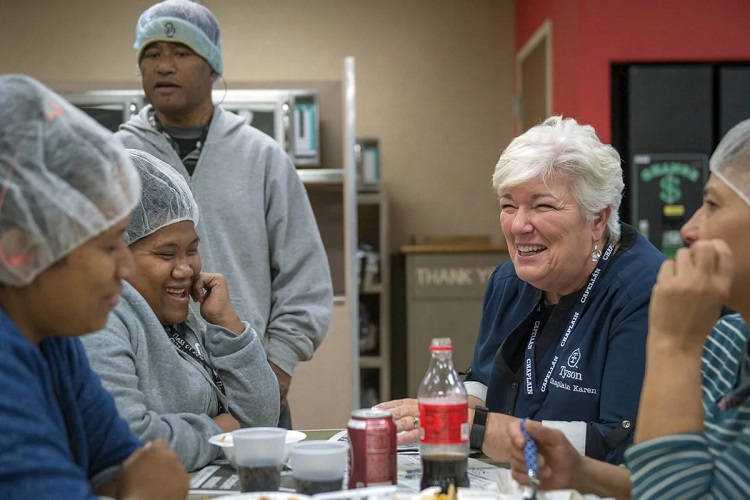
A few companies have long-established faith-in-the-workplace programs, such as Arkansas-based Tyson Foods, which deploys a team of more than 90 chaplains to comfort and counsel employees at its plants and offices. That program began in 2000.

However, Grim says most companies — over the past few decades — have given religion less attention in their diversity/inclusion programs than other categories such as race, ethnicity, gender, sexual orientation and disabilities.

Grim is an associate scholar at the Religious Liberty Project at Georgetown University and a former senior researcher with the Pew Research Center. From 2015-16, he served as chair of the World Economic Forum’s global agenda council on the role of faith.

Grim’s foundation, founded in 2014, recently completed a detailed analysis ranking the Fortune 100 companies on their commitment to religious inclusion as part of those programs.

The top 10 in the rankings featured some of America’s best-known companies — Google’s parent company Alphabet, Intel, Tyson Foods, Target, Facebook, American Airlines, Apple, Dell, American Express and Goldman Sachs.

Tyson won points for its chaplaincy program; most of the others have formed either a single interfaith employee resource group or separate groups for major religions such as Christianity, Islam and Judaism. Google’s interfaith group, the Inter Belief Network, has chapters for those faiths and for Buddhists, while Intel has a group for agnostics and atheists, as well as groups for major religious faiths.

One employer, the Internal Revenue Service, has a group specifically for Christian fundamentalists.
Grim says several other high-profile companies — including Walmart, the largest U.S. employer – have recently decided to launch faith-based employee groups.

Brian Grim, president of the Religious Freedom & Business Foundation, speaks at the launch event for the Corporate Pledge on Religious Freedom in Washington on Jan. 12, 2016. Grim says most companies — over the past few decades — have given religion less attention in their diversity/inclusion programs than other categories such as race, ethnicity, gender, sexual orientation and disabilities. (Freedom Forum Institute via AP)

One of the fastest growing faith-based groups, called Faithforce, was launched by Salesforce in 2017. Its founder, Farah Siddiqui, says more than 2,600 employees have signed up since then, joining 17 regional hubs on five continents.

Siddiqui, a Muslim whose family is from Pakistan, said the group now includes Sikhs, Hindus, pagans and humanists, as well as followers of America’s largest faiths.

“We’re a very inclusive group,” she says. “If someone has something interesting to share, we share it. There is no proselytizing.”

Siddiqui said Faithforce, in somber fashion, proved its value after a string of deadly attacks on houses of worship in far-flung parts of the world – notably the Tree of Life synagogue in Pittsburgh, three Christian churches in Sri Lanka and two mosques in New Zealand.

“We had healing circles after each of those tragedies,” said Siddiqui, who recounted in-person visits by a rabbi and a Muslim scholar.

“What we’ve done is support our employees of those faiths to show that the rest of us are here for them,” she said.

At Tyson Foods, the team of chaplains includes one Muslim, but is overwhelmingly Christian. However, the team’s director, Karen Diefendorf, says the chaplains are trained to provide empathetic pastoral care to employees and their families regardless of what faith – if any – the workers belong to.
Diefendorf, whose career includes stints as a United Methodist minister and a U.S. Army chaplain, said there’s a key difference between pastoring and chaplaincy.

“When I pastor, I only represent my denomination, my faith tradition,” she said. ‘”As a chaplain, I can support people who come from very different backgrounds…I ask them how their beliefs are helping them cope with what’s going on.”

Often, the chaplains are sought out by employees struggling with difficulties at work or at home, but Diefendorf said her team members sometimes act proactively – for example, finding tactful ways to signal to a supervisor that his or her management practices are causing problems for workers.

Her advice to other companies considering a chaplaincy team: “Making the right hire is critically important.”

“You want a person who has maturity, who is secure in their own faith but not spiritually conflicted in allowing others to pursue their faith,” she said.

Formal theological training is an asset, but not sufficient in itself, she added. “They can have all the training in the world, but if they don’t have the right compassion in their heart, they aren’t worth a plugged nickel.”

Thus far, the faith-in-the-workplace movement has mostly escaped harsh criticism. Brian Grim has taken pains to argue that faith-based employee resource groups are not a threat to LGBTQ employees, and instead should be viewed as a sign of a corporation’s overall commitment to diversity and inclusion.

American Airlines is evidence of that: Its presence high atop the new religious-freedom rankings come after many years of accolades for its strong support of LGBTQ employees.

“The perception out there is that religion is a dangerous topic, but some companies have found the opposite — that it reinforces the other things they care about,” Grim said.

Nick Fish, president of American Atheists, said companies considering faith-based initiatives should strive to ensure they are inclusive.

“Creating a work environment that is exclusionary of non-religious staff or members of religious minorities is a recipe for disaster,” he said via email. “I’d urge any employer who is considering this sort of action to instead ensure that their workplace is religiously neutral and welcoming to staff and customers of any religious belief or those who are non-religious.”

__
Associated Press religion coverage receives support from the Lilly Endowment through the Religion News Foundation. The AP is solely responsible for this content.

Source: Associated Press via Religion News Service

All Content & Images are provided by the acknowledged source
More American Companies Are Increasing Faith-Based Support for Employees

It has become standard practice for U.S. corporations to assure employees of support regardless of their race, gender or sexual orientation. There’s now an intensifying push to ensure that companies are similarly supportive and inclusive when it comes to employees’ religious beliefs.

One barometer: More than 20% of the Fortune 100 have established faith-based employee resource groups, according to an AP examination and there’s a high-powered conference taking place this week in Washington aimed at expanding those ranks.

“Corporate America is at a tipping point toward giving religion similar attention to that given the other major diversity categories,” says Brian Grim, founder and president of the Religious Freedom & Business Foundation that’s co-hosting the conference along with the Catholic University of America’s Busch School of Business.

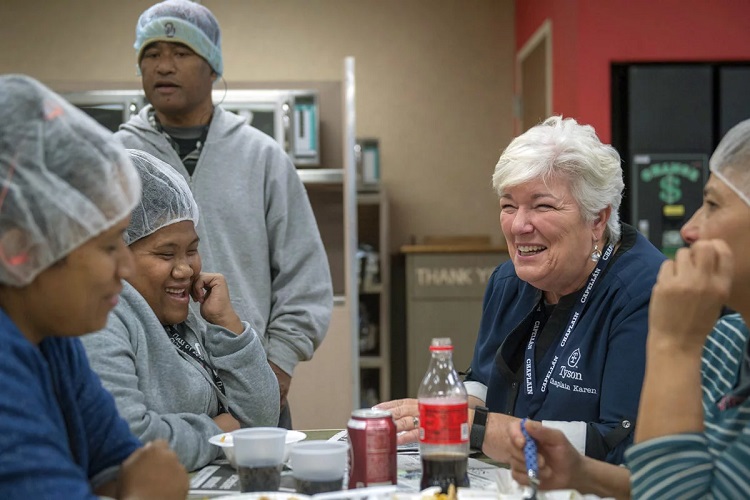
A few companies have long-established faith-in-the-workplace programs, such as Arkansas-based Tyson Foods, which deploys a team of more than 90 chaplains to comfort and counsel employees at its plants and offices. That program began in 2000.

However, Grim says most companies — over the past few decades — have given religion less attention in their diversity/inclusion programs than other categories such as race, ethnicity, gender, sexual orientation and disabilities.

Grim is an associate scholar at the Religious Liberty Project at Georgetown University and a former senior researcher with the Pew Research Center. From 2015-16, he served as chair of the World Economic Forum’s global agenda council on the role of faith.

Grim’s foundation, founded in 2014, recently completed a detailed analysis ranking the Fortune 100 companies on their commitment to religious inclusion as part of those programs.

The top 10 in the rankings featured some of America’s best-known companies — Google’s parent company Alphabet, Intel, Tyson Foods, Target, Facebook, American Airlines, Apple, Dell, American Express and Goldman Sachs.

Tyson won points for its chaplaincy program; most of the others have formed either a single interfaith employee resource group or separate groups for major religions such as Christianity, Islam and Judaism. Google’s interfaith group, the Inter Belief Network, has chapters for those faiths and for Buddhists, while Intel has a group for agnostics and atheists, as well as groups for major religious faiths.

One employer, the Internal Revenue Service, has a group specifically for Christian fundamentalists.
Grim says several other high-profile companies — including Walmart, the largest U.S. employer – have recently decided to launch faith-based employee groups.

Brian Grim, president of the Religious Freedom & Business Foundation, speaks at the launch event for the Corporate Pledge on Religious Freedom in Washington on Jan. 12, 2016. Grim says most companies — over the past few decades — have given religion less attention in their diversity/inclusion programs than other categories such as race, ethnicity, gender, sexual orientation and disabilities. (Freedom Forum Institute via AP)

One of the fastest growing faith-based groups, called Faithforce, was launched by Salesforce in 2017. Its founder, Farah Siddiqui, says more than 2,600 employees have signed up since then, joining 17 regional hubs on five continents.

Siddiqui, a Muslim whose family is from Pakistan, said the group now includes Sikhs, Hindus, pagans and humanists, as well as followers of America’s largest faiths.

“We’re a very inclusive group,” she says. “If someone has something interesting to share, we share it. There is no proselytizing.”

Siddiqui said Faithforce, in somber fashion, proved its value after a string of deadly attacks on houses of worship in far-flung parts of the world – notably the Tree of Life synagogue in Pittsburgh, three Christian churches in Sri Lanka and two mosques in New Zealand.

“We had healing circles after each of those tragedies,” said Siddiqui, who recounted in-person visits by a rabbi and a Muslim scholar.

“What we’ve done is support our employees of those faiths to show that the rest of us are here for them,” she said.

At Tyson Foods, the team of chaplains includes one Muslim, but is overwhelmingly Christian. However, the team’s director, Karen Diefendorf, says the chaplains are trained to provide empathetic pastoral care to employees and their families regardless of what faith – if any – the workers belong to.
Diefendorf, whose career includes stints as a United Methodist minister and a U.S. Army chaplain, said there’s a key difference between pastoring and chaplaincy.

“When I pastor, I only represent my denomination, my faith tradition,” she said. ‘”As a chaplain, I can support people who come from very different backgrounds…I ask them how their beliefs are helping them cope with what’s going on.”

Often, the chaplains are sought out by employees struggling with difficulties at work or at home, but Diefendorf said her team members sometimes act proactively – for example, finding tactful ways to signal to a supervisor that his or her management practices are causing problems for workers.

Her advice to other companies considering a chaplaincy team: “Making the right hire is critically important.”

“You want a person who has maturity, who is secure in their own faith but not spiritually conflicted in allowing others to pursue their faith,” she said.

Formal theological training is an asset, but not sufficient in itself, she added. “They can have all the training in the world, but if they don’t have the right compassion in their heart, they aren’t worth a plugged nickel.”

Thus far, the faith-in-the-workplace movement has mostly escaped harsh criticism. Brian Grim has taken pains to argue that faith-based employee resource groups are not a threat to LGBTQ employees, and instead should be viewed as a sign of a corporation’s overall commitment to diversity and inclusion.

American Airlines is evidence of that: Its presence high atop the new religious-freedom rankings come after many years of accolades for its strong support of LGBTQ employees.

“The perception out there is that religion is a dangerous topic, but some companies have found the opposite — that it reinforces the other things they care about,” Grim said.

Nick Fish, president of American Atheists, said companies considering faith-based initiatives should strive to ensure they are inclusive.

“Creating a work environment that is exclusionary of non-religious staff or members of religious minorities is a recipe for disaster,” he said via email. “I’d urge any employer who is considering this sort of action to instead ensure that their workplace is religiously neutral and welcoming to staff and customers of any religious belief or those who are non-religious.”

__
Associated Press religion coverage receives support from the Lilly Endowment through the Religion News Foundation. The AP is solely responsible for this content.

Source: Associated Press via Religion News Service

All Content & Images are provided by the acknowledged source
Locust Swarms 'as Big as Major Cities' Invade Africa, Threatening Crops, Millions of Lives

KANCHOMBA, Zambia- One of the world’s oldest and most destructive insects is wreaking havoc in Africa.

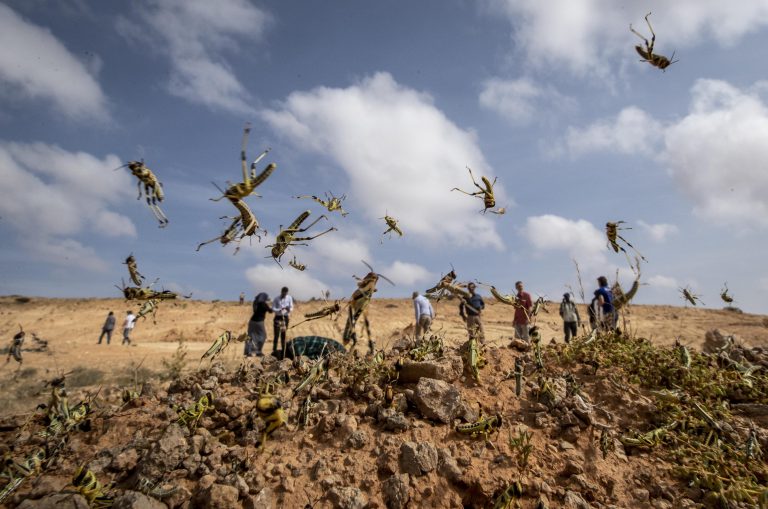
Hundreds of millions of locusts are eating their way through the continent, putting crops, food security and millions of lives at risk.

It’s almost like a page out of the Bible’s Old Testament book of Exodus. Authorities are calling it the worst outbreak in decades as billions of desert locusts swarm across a large part of East Africa.

(Map showing swarms of locusts spreading across Horn of Africa)

“Today locust swarms are as big as major cities and this is getting worse by the day,” warned Antonio Guterres, secretary-general of the United Nations.  “I ask the international community to respond with speed and generosity to ensure an effective response and control the infestation while we still have the chance.

Experts say the average swarm can contain up to 150 million locusts, travel 100 miles in a single day and grow as large as 250 football fields.

“That swarm in one day can eat the same amount of food as the entire population of Kenya,” said Keith Cressman, an expert with UN’s Food and Agriculture Organization (FAO). “That swarm in one day can eat the same amount of food as everybody here in the tri-state area – New Jersey, Pennsylvania, and New York.”

Desperate farmers in rural eastern Kenya are using blankets and other clothing or beating on pots and pans — to chase away the hungry pests. But it’s doing very little to stop them from devouring crops.

“We know that in Ethiopia there are about 420 square kilometers that have been affected so far,” said Rosanne Marchesich, an emergency response team leader with the United Nations. “There has been extensive crop damage in those areas and as it moves to other parts of the country, we expect that the impact it will have on food security and agricultural livelihoods, both for the farmers and the pastoralists, can be significant,” added Marchesich.

And now the UN is warning the swarms of the fast-breeding insects could grow more than 500 times between now and June.

“I’m seeing a big catastrophe ahead and a very big food security concern if we don’t address this problem immediately,” said a worried farmer in rural Kenya.

Caught in the path are some 19 million people, who’ve already dealt with severe food shortages. Now they face another looming catastrophe.

“The window to contain this crisis is closing fast,” warned Qu Dongyu, FAO’s director-general. “The swarms are highly mobile; the terrain often difficult; the logistical challenges immense. But left unchecked – and with expected additional rains – locust numbers in East Africa could increase 500 times by June.”

The United Nations is sending urgent appeals while infected countries deploy thousands of troops and use planes to spray pesticides against the destructive bugs.

“It gives you a sense of the scale of the crisis we are facing and we need to address it immediately,” said Dominique Burgeon with FAO.

The countries of Sudan, Eritrea, Somalia, Ethiopia, and Kenya are facing what experts say is the worst locust infestation in nearly 70 years. Earlier in the week, authorities spotted locust swarms crossing the border into Uganda and Tanzania. South Sudan is also at risk.

(Courtesy: World Vision)

For local farmers further south in countries like Zambia, they are facing another crisis — the lack of water.

Two years of little to no rain and failed harvests have forced 28-year-old Consepter Hamalambo to abandon her cornfields again this year.  

She’s among some 2 million in this country facing food insecurity.

“I didn’t harvest any crops last year or this year due to the drought which forced me to look for work elsewhere,” Hamalambo told CBN News. “I’ve been going door-to-door asking people in my village for work just so I can buy some food.”

(Courtesy: World Vision)

World Vision, the Christian aid group, is distributing maize meal, drought-resistant maize seed, and cowpeas to families hardest hit by the drought.

“There’s not enough water to generate electricity so businesses and companies have 15 hours, 16 hours of no electricity a day,” Mark Kelly with World Vision Zambia told CBN News. “That also has an impact on people being able to earn money, that has an impact on being able to buy food.”

(Courtesy: World Vision)

While locusts haven’t hit Zambia yet, farmers here worry the massive swarm sweeping across much of east Africa could fly further south bringing destruction to a region already reeling from extreme weather.

Source CBN

All Content & Images are provided by the acknowledged source
Texas Church Fires Music Minister Charged With Sexually Assaulting a Child

COPPELL, Texas (BP) — A Dallas area Southern Baptist church has fired a music minister charged with sexually assaulting a child, and told Baptist Press the alleged crime occurred before the accused’s employment there.

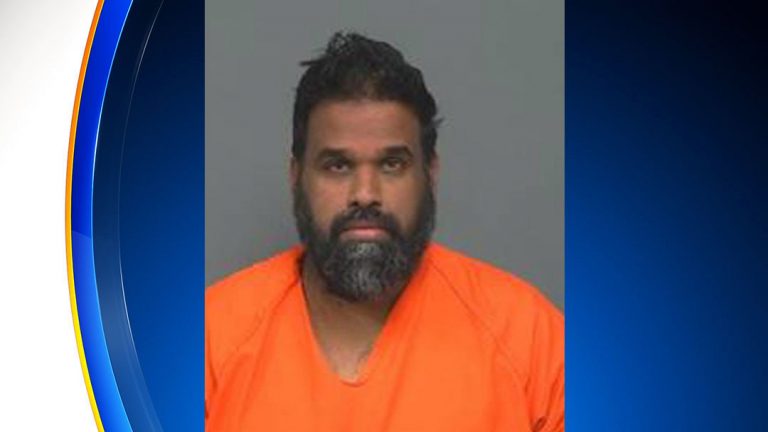
Valley Ranch Baptist Church (VRBC) in Coppell, Texas, fired 40-year-old associate minister of worship Jason Thomas after the Mesquite Police Department (MPD) arrested him Feb. 10, pastor Larry Parsley said Wednesday (Feb. 12).

“We were in contact with the Mesquite Police Department,” Parsley told BP. “We weighed everything we learned and our church council and I determined [firing Thomas] was the right decision to make at the time.”

Thomas was released on a $50,000 bond Feb. 10, the MPD told BP. Police have charged him with one count of aggravated sexual assault of a child, whom police said was under age 14. The incident reportedly occurred before 2005. Police received a report of the alleged assault on Jan. 12, the MPD said in its press release, and arrested Thomas without interference at his residence.

“The Mesquite Police have informed us that the charge relates to events prior to Jason’s employment at VRBC,” the church said in a statement updated Tuesday (Feb. 11). “Neither we nor the police are aware of any victims who are current or former members or attenders of VRBC or the Valley Ranch Baptist Weekday Preschool.”

Source: Baptist Press

All Content & Images are provided by the acknowledged source
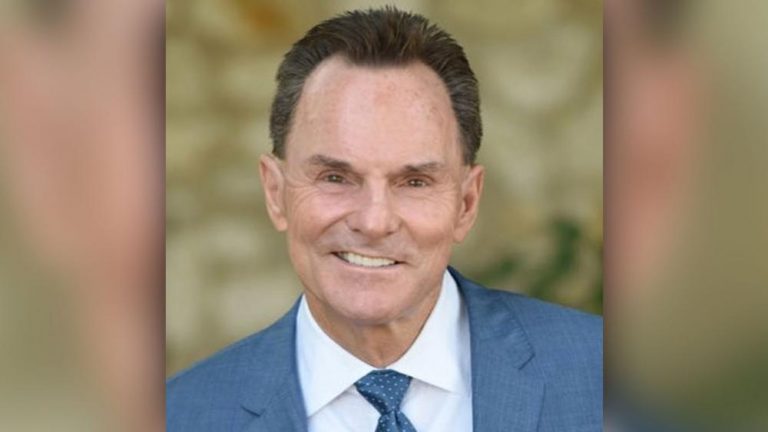
Ronnie Floyd to Host Prayer Conference Call With Asian American Pastors on Coronavirus

With coronavirus or COVID-19 killing more than 1,000 people and infecting nearly 43,000 globally, Southern Baptist Convention Executive Committee President Ronnie Floyd has announced a prayer conference call to comfort and support Asian American pastors and congregations.

The call, to be hosted by Floyd Thursday (Feb. 13) from 2–2:30 p.m. Central Time from the SBC EC building in Nashville, will include brief updates from Asian American pastors followed by perhaps 25 minutes of prayer.

“As COVID-19 spreads, a great alarm is sounding in China and across the world,” Floyd told Baptist Press in announcing the prayer call. “Our Asian American pastors and churches are very concerned about the health of their families and for many in their Asian homelands.

“Therefore, I have asked Peter Yanes, our executive director of Asian American relations and mobilization, to call upon these Asian leaders to join me in a conference call on Thursday where we can hear reports from some of them and then have a season of prayer together for them, their families and their churches.”

Floyd called on all Southern Baptists to pray especially on Thursday for the concerns of Asian Americans and the global community during the outbreak, which has spread fear, panic and xenophobia in the midst of death and illness.

Yanes has asked Southern Baptists to be gracious towards Asian American brothers and sisters during this ordeal, avoid animosity and fear, and extend Gospel love.

“For the past few weeks, I’ve been in contact with some of our Chinese pastors and leaders for updates, and praying with them over the phone, especially the heartbreaking prayer requests shared by families in Wuhan City,” Yanes told BP Monday (Feb. 10). “I’m calling all our Southern Baptist pastors and leaders to reach out to our Asian churches in their communities, and find out how they can pray and encourage them.”

Source: Baptist Press

All Content & Images are provided by the acknowledged source

Event at New Orleans Baptist Theological Seminary Helps Women to ‘Abide in Christ’

Abiding in Christ, the source of godliness and effective ministry, was the focus of the Abide Women’s Conference at New Orleans Baptist Theological Seminary (NOBTS) Feb. 7-8.

More than 300 women — ages teen to 90s — attended the inaugural event under the direction of Tara Dew, wife of NOBTS president Jamie Dew.

“It is our desire at NOBTS and Leavell College to train, equip and serve anyone — male or female — that comes to us,” Dew said. “The Abide Conference is one way we hope to serve the women on our campus, in our local churches and in our broader community to know and love God more deeply.”

Jess Archer, children and youth missions education strategist for the Louisiana Baptist Convention and plenary speaker for the two-day event, encouraged listeners to grow in Christ through prayer, Bible study, stewardship and solitude — spiritual disciplines that are “found in Scripture that promote growth in a believer.”

Source: Baptist Press

All Content & Images are provided by the acknowledged source

Ed Stetzer and Angela Suh Um to Chair 2020 Southern Baptist Resolutions Committee

Missiologist and researcher Ed Stetzer has been named chairman of the 2020 Southern Baptist Convention Resolutions Committee, SBC President J.D. Greear announced today (Feb. 11).

Greear also announced his appointment of Angela Suh Um of Cambridge, Mass., as vice chair. Um will be only the second woman to serve in a leadership role on the committee, according to Baptist Press’ review of SBC records.

“Ed Stetzer has planted, revitalized, and pastored churches across the country in a variety of settings,” Greear told Baptist Press. “Additionally, his vast experience as a researcher makes him uniquely qualified to understand the questions and concerns that the churches of the Southern Baptist Convention face. He is a strong leader who can guide the committee as they help the messengers express their positions on issues that matter to them.”

Greear continued: “Ed has planted a church in Buffalo among the urban poor, served as interim pastor of a traditional SBC megachurch in Tennessee, and ministered to pastors in between, including just two weeks ago at the Oklahoma Baptist pastors conference. He is committed to unity around the Baptist Faith and Message 2000, and seeks the Gospel above all.”

Stetzer is a professor at Wheaton College, where he also serves as executive director of the Billy Graham Center and dean of the School of Missions, Ministry, and Leadership. Prior to that, he was vice president at LifeWay Christian Resources, and has served as director of research and missiologist-in-residence for the North American Mission Board.

Source: Baptist Press

All Content & Images are provided by the acknowledged source

Southern Baptist Ethics & Religious Liberty Commission Releases Agenda for 2020

The Southern Baptist Ethics & Religious Liberty Commission plans in 2020 to continue its work with not only Congress but the Trump administration and the states on priority issues such as abortion and religious freedom.

The ERLC released its annual Legislative Agenda in early February in the face of another year of a divided legislative branch. Democrats control the House of Representatives and Republicans hold the majority in the Senate.

“In the midst of a challenging political environment, the ERLC will continue to defend existing protections for life and religious liberty while seeking opportunities to advance the issues Southern Baptists care about” at the federal level, Russell Moore and Travis Wussow wrote in the agenda.

Moore is the ERLC’s president, while Wussow is the entity’s general counsel and vice president for public policy.

The goal of the ERLC’s agenda, Moore told Baptist Press, is “to advance our broader mission of shaping consciences rooted in the Word of God and the Gospel of Jesus Christ.”

“With our work in Washington and internationally on issues surrounding religious freedom, human dignity, marriage and family, and justice, the ERLC exists to serve churches and to stand for the common good of our neighbors,” he said in written comments. “I look at these priorities with great hope and expectation, knowing that our team will engage these issues with focus and faithfulness in the year ahead.”

The ERLC will again seek to promote its policy priorities in such federal departments as Health and Human Services (HHS), Justice and State, Moore and Wussow wrote in the agenda. “We expect the Trump Administration to continue to issue a number of regulations that uphold human dignity and religious liberty, and we will support those regulatory actions.”

In addition to filing friend-of-the-court briefs with the Supreme Court, the ERLC will “extend its work on the state level” in 2020, they said. “With gridlock in Washington, state-level legislation provides an additional space” in which the entity can work.

Wussow told BP in written remarks, “In this second session of the 116th Congress, we will work to defend existing pro-life and religious liberty protections while also making the case for why we believe the foundational truths in our agenda are for the common good of all our neighbors.

“We want to serve Southern Baptists in 2020 by advancing issues important to our churches and honoring to our Lord.”

The ERLC’s 2020 agenda initiatives include many the entity has worked on for several years:

— Protection of the Hyde Amendment, which has barred Medicaid funding of abortion since 1976 and became the general label for such bans in federal health programs. Congress must pass the Hyde Amendment and similar bans each year as part of spending measures. The amendment faces opposition from within the House Democratic majority.

— Enactment of the Child Welfare Provider Inclusion Act, which would bar the government from discriminating against adoption agencies and other child welfare entities that refuse to serve in a way that contradicts their beliefs.

— Defunding Planned Parenthood, which performed more than 345,000 abortions during its most recent statistical year. The organization received $616.8 million in government grants and reimbursements during its latest financial year. The Trump administration issued a new rule in 2019 that prohibits Title X family planning funds from going to organizations that perform, promote or refer for abortions, thereby costing Planned Parenthood at least $50 million a year.

Source: Baptist Press

All Content & Images are provided by the acknowledged source

Woman’s Missionary Union Serves as Pillar of Ministry for Couple

WAYNESBORO, Pa. (BP) — It would be challenging to find a ministry couple in Pennsylvania more committed to the role of Woman’s Missionary Union than Kathy and Steve Sheldon.

For the past 35-plus years, the Sheldons have invested their lives in families, churches and communities in their home state of Pennsylvania. Much of their ministry focus has revolved around engaging their churches and associations in missions on the local, state, national and international levels — and the primary missions tool they have utilized is involvement in WMU missions support and discipleship programs.

“One of the things I found very early in my pastoral ministry was one of, if not the deepest foundation in Southern Baptist churches is missions — and the pillar of that missions is WMU,” Steve Sheldon said. “I knew if I was going to have a strong mission church that reached its community and reached the world, we needed to work through WMU.”

His wife Kathy agreed, saying: “Every church that we have served in has had WMU or I’ve introduced it to them. It’s really been important to me and to Steve because it’s a way to introduce missions to every age group, and through that, our future missionaries.

“I just think this is a wonderful way for them to be introduced to what is already happening and what their opportunities are, either locally or internationally,” she added. “There’s just so many different situations that they could be involved in. In the churches, we’ve tried to do that as far as mission trips, as far as mission projects locally and to involve every age group. I think that’s a big factor in WMU.”

Unwavering focus on missions

The Sheldons’ strong commitment to missions and all things WMU started early in their ministry journey. After being stationed in San Diego while Steve was in the U.S. Navy and then serving in churches in Kentucky while he was studying at Campbellsville College (now University) and The Southern Baptist Theological Seminary, the Sheldons returned to their home state in 1984 “and have been serving in Pennsylvania ever since,” Kathy said.

During that time, she served 11 years as president of Pennsylvania/South Jersey WMU while Steve served as a pastor and director of missions, including 23 years as pastor of Bux-Mont Baptist Church in Hatboro, Pa., in suburban Philadelphia. He recently retired as pastor of Wrightsdale Baptist Church in Peach Bottom, Pa., and they moved back to their hometown of Waynesboro.

“We’ve always encouraged the WMU organizations across the spectrum of ages,” Steve said. “Some of the churches didn’t have them but Kathy was real good at introducing those. That’s been foundational to our ministry — the mission organizations — because that’s where we train our missionaries.”

Kathy stresses missions involvement for everyone, ranging from Missions Friends, Girls in Action, Royal Ambassadors and Acteens to Women on Mission.

Source: Baptist Press

All Content & Images are provided by the acknowledged source

Coronavirus COVID-19 Cases Spike With 15,000 New Infections, 250 News Deaths in One Day

WASHINGTON – Thursday saw a drastic spike in coronavirus cases with China reporting nearly 15,000 new infections and more than 250 more deaths. 

The increase is due to expanded diagnosis criteria, allowing doctors to more quickly diagnose patients and begin treatment. 

Worldwide, about 60,000 people are infected with this novel coronavirus – now labeled COVID-19 – and more than 1,300 people have died because of it. 

The latest spike raises questions about China’s testing methods and numbers, resulting in the firing of two-party officials in Hubei, the epicenter of the outbreak. 

With the number of coronavirus cases on the rise, health officials are warning it could soon start spreading in the United States. 

The newest case in the US was confirmed Thursday in San Diego at a quarantined military base. 

Of the new cases confirmed outside China, nearly 50 were on board a Diamond Princess cruise ship quarantined off the coast of Japan. 

“As each day progresses, we are having additional people tested positive,” David Abel, a cruise ship passenger from the United Kingdom, said in a video recorded with his phone. 

And a Holland America cruise ship has finally been cleared to dock in Cambodia after it was turned away from five different ports in Asia. No coronavirus cases have been confirmed on board, however. 

“We’re all a bunch of humans that have lives outside of this cruise ship that need us,” said US passenger Angela Jones. “Families, children, pets, jobs.” 

Now, help from Israel in the form of new technology could help curb the virus. 

A facemask, made by Israeli company Argaman, has the ability to kill 99 percent of viruses, including the coronavirus. 

“It kills all viruses, all bacteria, all fungus and will do it 100 percent of the time, all day, all night, seven days a week,” Argaman president Jeff Gabbay told CBN News. “You can wash it. You can bleach it. You can dye it. You can hit it with a baseball bat. It’s going to do its job.”

Israeli scientists use invisible soundwaves to inject copper particles, with antiviral properties, into cotton. These engineers then combine the ancient tradition of spinning cotton with today’s technology. The result is a mask far more effective than the standard N-95 mask used by millions. 

The company is shipping these life-saving masks to Hong Kong.  

Source CBN

All Content & Images are provided by the acknowledged source
