
Evangelicals Must Resist Mainline Protestant Trajectory

Christian Post report–  Below are remarks from Mark Tooley’s February 19 address at Perimeter Church outside Atlanta.

Recently a Nashville area church pastor who professes to be evangelical made headlines by announcing his church’s acceptance of same-sex couples. There was more media for a Portland area minister whose evangelical denomination cut ties with his church after he announced his support for same sex marriage and LGBTQ affirmation.

Debates over same sex marriage and homosexuality were previously until fairly recently reserved for historically liberal Mainline Protestant denominations, who’ve had a 40 year conversation over Christian sexual ethics, having already liberalized theologically in the 1920s or earlier. Those debates have fueled accelerated membership loss and eventually schism for the Mainline Protestants, who have imploded from 1 of 6 Americans 50 years ago to 1 of 16 Americans today, making them no longer Mainline but more accurately oldline or even sideline.

But parts of American Evangelicalism, which has become America’s largest religious demographic in the wake of Mainline collapse, accounting for perhaps one third of Americans, is now succumbing to the same theological, ethical, cultural and political patterns that marginalized Mainline Protestants. Liberal hegemony over most Mainline Protestant denominations took about a century. But for some Evangelicals, the same process is unfolding far more quickly.

My own organization was founded in 1981 in the midst of the Cold War to challenge primarily Mainline Protestant support for Marxist revolution globally under the aegis of Liberation Theology, which manifested in moral and financial backing for Marxist insurgencies like the FMLN in El Salvador, Marxist regimes like the Sandinistas in Nicaragua, plus silence about human rights abuses and persecution of Christians behind the Iron Curtain in favor of collaboration with the Soviet Union and its proxies.

It was a long road for the Mainline Protestants, founders of American democracy and free enterprise, to active support for totalitarianism in the name of Jesus Christ. But that road began with theological compromises early in the 20th century or before, when the Bible and Christian tradition were reinterpreted into metaphors, and the redemption story for lost souls was replaced by social reform under the banner of the Social Gospel. Mainline Protestant elites by the 1930s were opposed to the “profit motive” and backing state ownership of industry. The Kingdom of God was reinterpreted as a politically and socially engineered utopia where poverty and injustice are banished by state action. In the 1960s Mainline elites further radicalized, backing an anti-imperialist narrative that demonized America and the West while sanctifying Third World Marxist revolution and its East Bloc patrons.

IRD’s founders, which included evangelical theologian Carl Henry, aggressively responded to Mainline support for Marxism by declaring that the church is not primarily a political instrument, but when it speaks politically, it should side with democracy, human rights and above all religious liberty as principles in always imperfect human governance that best accommodate the Christian view of human dignity and transcendence.

The leftward drift of Mainline Protestantism, typically disguised behind vaguely phrased sermons that utilized orthodox language with often very unorthodox meanings, was largely undetected by most actual Mainline Protestant church goers, who were uninformed about the machinations of distant seminaries and church agencies operating in their name and with their financial backing.

IRD’s challenge and research led to major exposes of Mainline support for Marxist revolution by “Sixty Minutes” in 1983 and by several articles by Reader’s Digest in the 1980s, especially focusing on Mainline ecumenical organs like the National and World Councils of Churches. In many ways, Mainline Protestantism and especially its ecumenical expressions never fully recovered their public image for probity and as pillars of American spirituality and culture, which they had remarkably sustained for 350 years. But even more importantly, theological liberalism, which rejected or minimized the supernatural, personal redemption and the afterlife, negating the evangelistic imperative, had nullified the Mainline’s ability to gain new adherents, hence a half century of continuous membership decline, for which there is no end in sight.

During this Mainline self-destruction, evangelicals quietly but steadily grew in numbers, filling the void left by Mainline retreat and elevated by Billy Graham revivals, the founding of Christianity Today, the increasing stature of evangelical colleges and seminaries, and by an explosion in entrepreneurial parachurch ministries, especially on secular college campuses, many of which were previously Mainline Protestant institutions. Evangelicals captured two generations of spiritually seeking young people, while the Mainline failed to successfully retain any generation after the World War II cohort. Evangelical denominations, including even Pentecostals, who previously were viewed as socially marginal, grew exponentially, with the Assemblies of God enjoying 500 percent growth, surpassing the once unassailable Episcopal Church, the most prestigious of Mainline denominations, and now outnumbering the Episcopalians by over 50 percent.

Evangelicals were never wholly separationist or Anabaptist and were nearly always engaged good citizens and voters, their voting patterns not very different from Mainline Protestants. But Mainline implosion facilitated the collapse of American moral consensus starting in the 1960s, creating 40 years of culture war and polarization. Evangelicals began to politically organize as the Religious Right in the late 1970s, disturbed over secularization, abortion, radical feminism, pornography, and America’s receding place in the world as the Cold War seemed to incline towards the Soviet Union’s favor.

Backed by a growing subculture of large suburban churches, Christian radio stations, televisions ministries, and intersecting parachurch groups that were both spiritual and political, the founders of the Religious Right, embodied by figures such as Jerry Falwell and Pat Robertson, helped lead formerly Democratic southern voters in Ronald Reagan’s coalition in 1980. The Moral Majority was seen as its primary voice in the 1970s, succeeded by the Christian Coalition in the 1990s, sometimes supplemented by advocacy by James Dobson’s Focus on the Family, among others.

This generation of Religious Right leadership was bold, unashamed, outspoken, polemical, combative, anxious for political and spiritual trench warfare, truly distressed over the country’s direction and shaped by decades of their own struggle on the cultural and political margins, where conservative evangelicals were treated dismissively by an American society whose elites were liberal and to the extent they were religious, often Mainline Protestant.

Liberal critics of evangelical activism through the Religious Right in the 1980s claimed they were fueling the Reagan Administration’s confrontation with the Soviet Union and perhaps even hoping to precipitate a final apocalypse that would usher in Jesus Christ’s return. The Cold War’s end, and Bill Clinton’s victories, forestalled panicked secular and liberal reactions to conservative evangelical political advocacy. But Clinton’s personal scandals and advocacy of abortion rights and gay causes further provoked evangelical indignation and political organizing, whose power continued despite the receding of both the Moral Majority and Christian Coalition.

Conservative evangelicals enthusiastically backed George W. Bush in 2000, encouraged by Bush’s own Christian testimony and personal faith devotion, although Bush remained a Mainline Protestant. But it was the 2004 Bush reelection that most alarmed liberal and secular critics, who despised Bush and did not anticipate his victory, which was facilitated by nearly 80 percent support from white evangelicals, who comprised nearly a quarter of the electorate. A new dark narrative was alleged in which evangelical-Republican alliance would promulgate Christian theocracy in America, where women and gays were oppressed, along with all non-Christians, and which would pursue imperialist wars of conquest and conquest around the world, starting with Afghanistan and Iraq.

The 2004 election results motivated leftist philanthropies to take evangelicals seriously and to fund alternative evangelical initiatives that would pull evangelicals in politically more liberal directions. George Soros funding for Jim Wallis’ Sojourners began at this time, as did other outreaches and creations of new liberal Evangelical groups espousing more liberal perspectives on immigration, the environment, enhanced interrogation, nuclear weapons, drones, among many other issues.

New efforts to inflate an Evangelical Left arose as many central institutions of evangelicalism were already internally liberalizing morally and theologically. Partly this trend was sociologically inevitable, similar to Mainline Protestant schools and institutions liberalizing in the late 19th and early 20th centuries, wanting freedom and independence. Partly it was a psychological reaction against the Religious Right by a new generation of Baby Boomer evangelical elites, who unlike Silent Generation Religious Right founders like Falwell, Robertson and Dobson, did not have to fight to gain social legitimacy, were not so shaped by the Cold War, were less confrontational and more therapeutic, and were more anxious for cordial relations with liberal and secular critics. Some evangelical academics especially chaffed at identification with the Bush Administration and were anxious for a new public and especially political identity. Naturally these Baby Boomer academics began to influence their students, who were increasingly Millennials.

The newly emboldened, funded and confident Evangelical Left was enthusiastic for Barack Obama, who was himself a liberal Protestant, represented ostensibly a post-ideological and post-racial America, would focus on social uplift at home rather than wars abroad and whose election would it was hoped would atone for America’s past racial sins. In fact, white evangelicals as a whole voted for John McCain in 2008 at nearly the rate they had supported Bush in 2004, although McCain had no similar evangelical testimony or interest in evangelical issues, and illustrating that evangelicals remained steadfastly conservative politically, no matter the candidate. But about one third of young evangelicals supported Obama, giving hope to the Evangelical Left and liberal allies that evangelicals would not remain a political monolith.

As right and left over the last 20 years have contended for evangelicals, with much media attention, Mainline Protestants have become almost politically irrelevant, although polls still show that about 20 percent of Americans broadly identify with that tradition. Mainliners were never really a political voting bloc. Historically, they had been more Republican than Democrat, since they are almost entirely white, middle or upper class, and mostly live in the suburbs or small towns. Radical Mainline elites never spoke for their own constituency. Church going Mainliners were and are more Republican than nominal Mainliners. Mainliners remain mostly conservative on economics and foreign policy, at odds with their church hierarchies, but increasingly liberal on social issues, perhaps influenced more by secular culture than by their denominational policies.

Meanwhile, evangelical liberals, as they have increasingly replicated the Mainline Protestant experience, seem oblivious or indifferent to Mainline implosion and its causes. The Evangelical Left has become increasingly bold in departing from evangelical and Christian orthodoxy on sexual issues. Obama’s endorsement of same sex marriage effectively gave permission or provided retroactive political cover for some professing to be evangelical to follow suit. Jim Wallis did so. Popular blogger Rachel Held Evans has done so. Evangelicals for Social Action, a 40 year old liberal group that has long be pacifist and statist but also pro-life and pro-marriage, has embraced LGBTQ advocacy under its new leadership. Other older evangelicals like Tony Campolo have often walked up to the line, not wanting to lose ties to the evangelical mainstream but still nodding to the liberationist narrative that LGBTQ is the next natural step for civil rights progression.

More commonly there is a growing stratum of evangelical elites and activists who avoid marriage and hot button issues as unnecessarily contentious in favor of more feel good advocacy for victims of sex trafficking, environmentalism, lobbying for illegal immigrants and exertions on behalf of the poor. The annual “Justice Conference,” endorsed by major evangelical schools and parachurch groups, embodies this trend. Although focused on social justice, it carefully avoids debates over marriage and protecting the unborn, as well as the plight of persecuted Christians. All of those issues are associated with the traditional Religious Right and therefore to be avoided in pursuit of a new public identity for evangelicals that is more collegial with liberalism and secular culture.

Nearly every minor blip and bump by anyone who’s ever been evangelical who announces for the LGBTQ cause will be widely advertised as supposed proof of historical inevitability. But polls still show evangelicals remarkably unified for traditional Christian teaching, more so than any other Christian demographic. Likely evangelicals will remain so, even if they fall mostly silent politically on this issue, as the courts attempt to snatch marriage definition away from the democratic process.

Interestingly, evangelicals in their personal views, including among the young, are as pro-life as ever. But a significant number of evangelical elites prefer to avoid the topic or to emphasize ministries or government social programs that might reduce abortion rates, rather than discuss punitive laws restricting abortion.

Avoidance or downplaying of persecution of Christians globally by many evangelicals is another notable development, especially in light of recent atrocities by ISIS against Syrian, Iraqi and Egyptian Christians. Some evangelical elites, especially among the young, see focus on Christians as self-serving and prefer a wider generic advocacy on behalf of all persecuted persons everywhere.

Other notable political trends aligned with the Evangelical Left include a growing assumption of some forms of neo-pacifism, opposition to American patriotism as a form of nationalist idolatry, and increasing hostility or at best ambivalence about Israel and American support for it. These issues are interrelated and are often influenced by neo-Anabaptist thinking and maybe unconscious Marcionite tendencies that minimize the Jewish Scriptures.

The pacifism among evangelical elites and young people owes partly to the school of John Howard Yoder and Stanley Hauerwas, partly to anxiety over inconclusive U.S. military actions in Afghanistan and Iraq, which evangelicals are perceived to have championed, partly to traditional post-Vietnam War rhetoric long touted by older activists like Jim Wallis and Ron Sider, and partly to an understandable desire for Christians to seek reconciliation over conflict.

But this pacifism, which is typically not based on traditional Anabaptist beliefs that affirm the state’s vocation for violence even as some communities are called to non-participation, is often absolutist, demanding the state renounce violence, or at least demanding that all Christians renounce participation in the state’s violence. Shane Claiborne, the Philadelphia activist who was in Iraq to stand against overthrow of Saddam, and who recently tweeted against both ISIS and U.S. police violence, is a prominent and no doubt sincere pacifist advocate among some younger evangelicals. One of his slogans has been “more ice cream, fewer bombs,” in an initiative funded by Ben and Jerry’s Ice Cream.

This pacifism among some evangelicals is also typically anti-American, with much critique of “empire” that compares America to Ancient Rome or perhaps even the Third Reich. It does not often if at all concern itself with the violence of tyrannical regimes that are hostile to America. The pacifist absolutism inspired by Yoder/Hauerwas/Wallis/Claiborne, which portrays any agents of violence, whether soldiers or police, as anti-God, is of course a stark rejection of classical Christian teaching rooted in the New Testament about God’s vocation for the state to wield the sword to avenge evil. It assumes that across history and cultures almost all of Christianity has been in error on this issue, and only a select prophetic few have been aligned with God’s favor. And except for occasional reluctant admissions from Hauerwas, who when pressed says he would allow his family to be slaughtered before physically intervening, exponents do not admit the consequences of their advocacy and, as such, offer a utopian and not Christian much less evangelical view of the world.

The evangelical rejection of American patriotism, which stereotypes the Religious Right as handmaidens to American empire, also slips into utopianism by asserting that Christians are to have no national loyalties or presumably ties to any community other than the church itself, in effect asking Christians to behave almost as disembodied spirits, without earthly ties, despite a traditional Christian that God appoints the nations, and that Christians are to serve the communities where God has placed them. This perspective almost always accepts and repeats as Christian truth a post-1960s New Left critique of American foreign policy that fantasies, as does Shane Claiborne’s 2004 book Jesus for President, that nearly all evils in the world were born in America, ignoring the wars, barbarities and genocides of Hitler, Stalin, Mao, Pol Pot, Saddam Hussein and countless others, whose tens of millions of victims apparently don’t register.

Demonizing America is closely related to the anti-Israel animus of the new Evangelical Left. Israel is seen as an extension of the American “empire” and therefore merits resistance. There is also acceptance of Liberation Theology’s narrative that Christians are called to automatic solidarity with perceived oppressed Third World persons against wealthy Western imperialists, with Israel in the latter role and the Palestinians in the first role, while ignoring history and geo-strategic circumstances. Old Religious Right enthusiasm for Israel, often perceived to be motivated by end times Dispensationalist scenarios, is to be countered with an even more zealous activism for liberation, regardless of consequences.

Of course many evangelicals prefer a so-called “pro-Israel, pro-Palestine, pro-peace” stance that is ostensibly impartial. But its goal and consequence, an end to evangelical and American alliance with Israel, are hardly impartial. Yet many well intentioned, especially missions minded evangelicals, often funded by World Vision, or hosted by groups like Telos, are escorted on biased Mideast trips or hosted at slanted conferences that portray Israel, and not other obvious actors, as the primary regional villain and persecutor of Christians. In many ways these evangelical exertions eerily resemble the Mainline Protestant tours that escorted U.S. church people to propaganda visits to the Sandinistas’ Nicaragua in the 1980s, where they were solemnly instructed that Reagan Administration aggression, and not Marxist dictatorship, was the primary threat to the Nicaraguan people.

The utopian vision of the world offered by a new generation of evangelicals, who profess to base their policies on what Jesus would do, also resembles the Mainline Protestants who cheerfully visited Bolshevik Russia in the 1920s; confidently they were seeing the future, as God ordained it. After all, didn’t Jesus favor a classless society?

Nearly all of the troubling emphases of this new form of evangelical activism, which invariably defaults left, are rooted in deeply theological error, primarily an assumption, again like the early years of liberalizing Mainline Protestantism, that the world and its peoples are essentially good but tormented by corrupt and often wicked systems, like imperialism, capitalism, environmental degradation, greed, nationalism, or even Christian Zionism and homophobia, from which liberation is urgently needed.

The new evangelical activism rejects or minimizes that people as individuals are sinners needing personal redemption that is uniquely available through Jesus Christ, a message that has always been, is now, and will always be the most important, most controversial, most appreciated and most resisted message in the world. Much of the current evangelical reaction against old style conservative evangelical witness asserts that the world rejected both America and Christianity because of Bush era policies and wars that idolatrously nationalistic evangelicals unwisely supported. But Christianity, like its Founder, who was murdered for His message, will always be hated and resisted by many. No amount of strategic messaging can avert the scandal of the Gospel. As to American prestige and popularity in the world, opinion polls don’t always accurately measure influence and success, and great powers, to retain their power, must often inspire more fear than love. The vocation of the state, American or otherwise, is not the vocation of the church, which evangelicals too often forget or decline to understand.

There is also in this new form of evangelical social witness a postmodern cognitive dissonance, which imagines that a government may simultaneously be disarmed and pacifist, ensure peace in the world, feed and clothe everybody, regulate the environment, eliminate crime, collect ever higher taxes, while never resorting to force or coercion, relying on good will by all. Such an immaculate society will exist in Heaven, but not in any temporal society this side of the Eschaton.

The patience and perseverance required to work for incremental and approximate justice while accepting that no society reaches social perfection until Christ’s presides directly is increasingly alien to the new form of evangelical activism. It is increasingly revealing itself in the sexual liberalism emerging on the fringes of evangelicalism, which accepts the postmodern and gnostic assertion that individuals can escape physical reality and the communal needs of marriage and family by claiming ever more exotic sexual and gender identities, with all disapproval to be suppressed, even by the coercive hand of the state, despite its being pacifist.

Evangelicals who veer in this utopian direction of course have, by definition, left evangelical and orthodox Christian belief. They have become liberal Protestants, essentially like Episcopalians, but lacking their liturgy and good taste. Much of this emerging problem is self correcting. As with the Mainline Protestants, liberalizing post evangelicals, as they leave orthodox Christian teaching, will lose their evangelistic zeal and their audience. Despite their egalitarian rhetoric, they will become elitists, with less and less capacity for large market share.

Mainline Protestants have declined for decades yet survive however diminished because they had 350 years of history and often generous endowments, with extensive institutional networks. Evangelicalism is mostly a modern American phenomenon and, for better or worst, lacks Mainline ballast. Liberal post-evangelicals likely will not endure for many decades, unlike liberal Presbyterians and Congregationalists.

But before their demise, liberalizing egalitarian post evangelicals may wreak a lot of damage in the church, mislead a lot of people, inflict spiritual harm in society, and portray a disfigured face of Christianity to the world far more erroneous than any of the mistakes of old style rambunctious conservative evangelicals. For this reason, we are all called to avoid the passivity and silence of orthodox Mainline Protestants 80 and 90 years ago that were mostly too polite to resist the subversion of their venerable church institutions. The sad Mainline Protestant trajectory has already evinced the fruits of compromised Christian witness. Let’s work hard to protect American evangelicalism, even its fringes, from a similar fate.

Source: Christian Post

Display Of Shroud of Turin Translates to ” A Time of Grace”, Says Archbishop

Catholic Herald report– With the aim of ensuring that the public display of the Shroud of Turin promotes conversion and healing, the archbishop of Turin has given priests throughout the archdiocese special faculties to offer absolution to women who confess to having had an abortion.

The display of the shroud from April 19 – June 24 should be “a time of grace that translates into attitudes of conversion, the fruit of repentance and newness of life,” Archbishop Cesare Nosiglia wrote in a decree signed February 18, Ash Wednesday.

According to the Code of Canon Law, “A person who procures a completed abortion” automatically incurs excommunication. Only the bishop or a priest he designates can lift the excommunication. In some dioceses the local bishop formally has granted the faculty to all priests, while in Turin and other places, the bishop grants the faculty on special occasions.

Archbishop Nosiglia wrote that the church’s ministers, meeting the hundreds of thousands of pilgrims expected to visit the Turin cathedral to see the shroud, want to “concretely demonstrate the Father’s mercy toward those who repent of an evil committed.”

However, he said, the permission granted to priests is limited to the time of the shroud’s public display so as not to “diminish the rigour of the law,” which aims to teach people how seriously wrong it is to kill an innocent life.

The archbishop asked Turin priests to re-read St John Paul II’s encyclical letter, The Gospel of Life, especially the sections numbered 58-63, which discuss the seriousness of taking the life of the most innocent human being imaginable, the way deciding to have an abortion is usually “tragic and painful” for the woman and explaining that the automatic excommunication applies also to anyone who helped a woman procure an abortion.

The penalty, St John Paul wrote, “makes clear that abortion is a most serious and dangerous crime, thereby encouraging those who commit it to seek without delay the path of conversion. In the church the purpose of the penalty of excommunication is to make an individual fully aware of the gravity of a certain sin and then to foster genuine conversion and repentance.”

Turin priests hearing the confessions of someone who has had or helped someone to have an abortion must remember that in the confessional they are “simultaneously ministers of divine justice and divine mercy,” the archbishop wrote. “Above all, they must know how to console the anguished remembering that ‘whatever our hearts condemn, God is greater than our hearts and knows everything,’” as 1 John 3:20 says.

Archbishop Nosiglia also asked priests to impose a penance that would help lead to a lasting conversion, first of all by making a commitment to “implore God’s indispensable help” by regular prayer, particularly attendance at daily Mass for a specific period of time, if at all possible. Penitents also can be asked to support, financially or through the gift of their time, programs that assist women with crisis pregnancies and other pro-life causes.

Source: Catholic Herald

Survey Reveals That 54 Percent of Republicans Believe ‘Deep Down’ Obama Is a Muslim

Christian Post report– As many as 54 percent of Republicans have said in a survey that they believe President Barack Obama “deep down” is a Muslim, and only 9 percent trust that he’s really a Christian.

Alex Theodoridis, an assistant professor of political science at the University of California, Merced, described the results as “staggering” in an article for The Washington Post on Wednesday.

The direct question asked was “Which of these do you think most likely describes what Obama believes deep down? Muslim, Christian, atheist, spiritual, or I don’t know.”

Only 45 percent of Democrats identified Obama as a Christian, though only 10 percent said that they believe he is a Muslim. Twenty-six percent said that they do not know what religion the president is, and 17 percent said they believe he’s “spiritual.”

Those who identified as Independents also largely did not trust that Obama is a Christian. Close to half, or 47 percent said that they don’t know Obama’s religious beliefs; 26 percent suggested that he’s a Muslim, and only 16 percent said that he is a Christian.

The poll was conducted as part of the 2014 Cooperative Congressional Election Study, and was undertaken by YouGov during October and November of 2013, sampling 1,000 American adults.

Obama has, on several occasions throughout his presidency, talked publicly about his Christian faith.
In January, he said that anyone who questions his faith does not know him. At the same time, he said that there would be nothing wrong if he was indeed not a Christian.

“In our lives, Michelle [Obama] and I have been strengthened by our Christian faith. Still, as you may know, my faith has at times been questioned — by people who don’t know me — or they’ve said that I adhere to a different religion, as if that were somehow a bad thing,” Obama said.

“Every person has the right to practice their faith how they choose, or to practice no faith at all, and to do so free from persecution and fear.”

That being said, Obama has also emphasized his Muslim upbringing in Indonesia during interviews with foreign press and speeches in predominately-Muslim countries. During an address to the Turkish Parliament in 2009, he said: “Many Americans have Muslims in their families or have lived in a Muslim-majority country — I know, because I am one of them.”

Theodoridis suggested that the phrasing of the survey’s question, which asked what people really think about Obama’s beliefs, could have had an impact on the results.

“Previous survey questions about Obama’s religion tend to sound like a pop quiz — such as ‘do you happen to know the religious faith of Barack Obama?’ But by asking ‘what Obama believes deep down?’ I was intentionally granting respondents license to stray from the president’s self-reported Christian faith,” he explained.

“This reveals a prevalent willingness to distrust this president or categorize him as ‘the other’ in terms of religion.”

Theodoridis also suggested that the results might be reflecting respondents’ dislike of Obama, rather than offering a genuine opinion on the president’s faith.

A number of Christian voices, including evangelical preacher Rev. Franklin Graham and former Arkansas Gov. Mike Huckabee, have accused Obama of supporting the Muslim community in expense of Christians by refusing to identify terror group ISIS as radical Islamic jihadists.

Obama has explained that he does not want to give legitimacy to ISIS and give the terror group what it wants by calling it Islamic.

Source: Christian Post


Eric Pickles:’Proper Understanding’ of Religious Faith, the Perfect Way to Fight Bigotry

Christian Today report– A “proper understanding” of religious faith is the best way to stand up to bigotry in all its forms, according to Communities Secretary Eric Pickles. He praised faith groups as a “tremendous force for good” and said faith could no longer be treated as a minority hobby.

Pickles, speaking at a reception to support Coexist House, a new London institution being developed by the Coexist Foundation and Cambridge University’s interfaith programme, criticised “violent extremists” and “aggressive secularists”.

Speaking at the Temple church in London, he said: “We live in an age of confusion and fear about religion. Violence and conflicts are erupting around the world driven by man who claim to have a monopoly on faith and on piety. Many people are concluding religion is a problem, a relic of a past, [that] it would be much better if it didn’t exist.”

He said that starting a peaceful dialogue did not guarantee a peaceful resolution.

“Most people in Britain are proud of the freedoms that we enjoy,” he said. But religion was seen as an “obstacle to progress” rather than something to be understood. This was a lazy and dangerous attitude because it left the fundamentalists unchallenged.

“Faith should no longer be treated as a personal hobby which should be for the few. This will only ensure that fundamentalists control debate enjoy a position in the public spotlight. We need to recognise that faith groups are a tremendous force for good, serving and supporting the downtrodden, the marginalised in society, and bringing our different communities together.”

He said Coexist House will play a big role in promoting religious education and mutual respect. It will help deliver “religious literacy”, increasingly seen as an essential tool to business, political, health and education leader leaders both nationally and internationally.

“Recent months of religious violence across the world have made many feel pessimistic about the future, especially the role of faith in Britain,” said Pickles. It was now “more important than ever” to demonstrate that faith was compatible with British values such as tolerance and freedom and the rule of law.

British society would be the less without strong Christian, Jewish, Muslim, Hindu and other voices of faith.

The Coexist Foundation last week organised London’s first multifaith pilgrimage.

Professor David Ford, of Cambridge University, said it would be the first of many and the new Coexist House, due to open in 2020, will provide a focal point for future pilgrimages. “For the first time this country will have a building that is fully shared between different religious traditions and open to all.”

Sir Bernard Rix, recently retired Lord Justice of Appeal, said no other city in the world besides London was better suited to a project such as Coexist House. “Diversity of faith is an opportunity for friendship and understanding, not conflict.”

Source: Christian Today

Unknown Giver Offers Reward for Return of Rare Bible

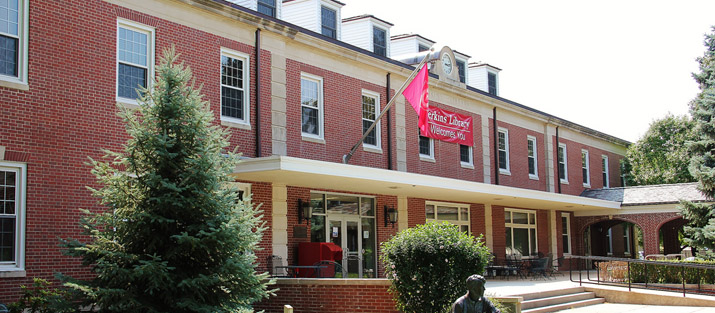
Christian Today report– An anonymous donor is offering up a $1,000 reward for the return of a rare Jewish Bible to the Hastings College’s Perkins Library with no questions asked.

The two volume Bible, valued at $6,000, was printed in 1921 for the Roxburghe Club from a manuscript called the Bible of Olivares that belonged to the Duke of Berwick and Alba. It was donated to the college in 2007.

This rare illuminated Bible features unique cover design on brown Moorish leather and many colour plates from the original manuscript. Rabbi Moses Arragel of Guadalfajara created the Castilian translation from the original Hebrew text in the late Middle Ages.

The college was not immediately able to catalogue the tomes and only discovered the loss of the set two months ago when the donor asked to see it.

Matt Fong, the chief of staff of Hastings College, said that the only lead they had of the Bible’s whereabouts was that it was last seen in an office. College officials are still unsure of whether the book was stolen, and when exactly it went missing.

“We’ve checked with everyone on campus, so all indication is that, since nobody on campus has it, that it was taken maliciously from the library. We feel bad in the sense that it was a gift to the college from a donor, and feel we need to do our due diligence to take care of those gifts to the college and put it back in its permanent place in Perkins Library,” he said.

Meanwhile, College spokesperson Alice O’Donnel said that library staff have already looked in the entire building for the Bible and reached out to offices and department who may have an academic interest in it to help with the search.

“As a campus community, we shared the news several weeks ago but as of yet have received no leads.We do hope anyone who has had contact with a book fitting this description will contact us regarding its whereabouts. Again, no questions will be asked,” she said.

According to college officials, the Bible can be returned to Matt Fong at the Daugherty Conference Center, 716 N. Turner Ave., Hastings between 9 a.m. and 5 p.m. Monday through Friday. He can be contacted through (402) 461-7786.

Source: Christian Today


Assyrian Church Leader Says US ‘Grotesque Mistakes’ is the Reason for ISIS Beheading, Kidnapping Christians

Christian Post report– Assyrian Archbishop Jacques Behnan Hindo, ordinary of the Syrian Catholic Archieparchy in Hassaké-Nisibis, has spoken out against the kidnapping of more than 260 Assyrian Christians and blamed the U.S. and its Western allies for triggering conflicts that have destabilized the region and prompted ISIS to carry out such attacks.

“With their disastrous policies — mainly the French and the U.S., with their regional allies, have favored in fact the Daesh (ISIS) escalation,” Hindo told Fides News Agency.

“Now they persevere in error, commit strategic, grotesque mistakes such as the announcement of the ‘spring campaign’ to liberate Mosul and insist on interfering with irrelevant interventions, instead of recognizing that their guaranteed support to jihadist groups has led us to this chaos and has destroyed Syria, making us regress 200 years.”

The Archbishop refers to revelations made by the U.S. that in the summer of 2015 it is going to be launching an operation along with Iraqi forces to retake the city of Mosul, the second largest city in the country. Mosul was one of the first major cities to fall under ISIS control when the terror group began its advance in 2014.

Gen. Lloyd Austin, the head of the military’s Central Command, told The Wall Street Journal in January: “If we did things alone or with some of the other allies on the ground, it could move faster,” he said. “But the Iraqis have to do this themselves.”

The U.S. and its allies have hit a number of ISIS targets across Iraq and Syria with airstrikes, but have focused on arming and supporting local ground troop forces instead of sending any of their own.

ISIS has continued to gain ground, however, and has often targeted Christians and other religious minority groups in its aggression. Last week, it released a video depicting the beheadings of 21 Coptic Christians, while earlier this week it kidnapped an estimated 262 Assyrian Christians following an attack on villages in the northeastern Jazeera province in Syria.

The archbishop confirmed the news and said: “The jihadists have taken full control of the villages on the western shore of Khabur, while yesterday afternoon, Feb. 24, all the inhabitants of 22 villages scattered along the eastern shore were evacuated and more than a thousand Christian Assyrian and Chaldean families fled to the major centers of Hassaké, Qamishli, Dirbesiye and Ras al-Ayn.”

(Photo: Reuters/Map)


The terror group’s raid on the villages caused the death of at least four Christians who had been fighting for the Assyrian milita, Fides reported.

Osama Edward, founder of the Assyrian Human Rights Network, shared fears that the Assyrians kidnapped by ISIS might be facing the same fate as the beheaded Copts.

“Maybe they are facing the same destiny. That’s why we call on all over the world, like the U.S., Europe, coalition forces — protect Assyrians, save Assyrians in Syria,” Edward said in an interview on Wednesday.

“They are facing death, people are unarmed, they are peaceful. And they need help, they are just left alone — no one’s protecting them.”

The Vice President of the Assyrian Church in Lebanon, Father Yatroun Colliana, has said that Christians in the region are under great threat, and can only “look to God” to protect them.

“ISIS terrorists carried out this attack against these Assyrian villages, and the number of our people still there in the area is somewhere between 7,000 and 10,000 people,” Colliana told the Lebanese Daily An-Nahar.

“The rest fled to Lebanon, or Iraq or other countries. At the very least, we know that our families face great dangers, and they are now threatened with death, or kidnapping or displacement.”

Colliana also pleaded for more international help, in particular for Iraq to open up its borders and allow the fleeing people to escape from the jihadists.

“The problem is that this danger still threatens our people, meanwhile the world stands by silently watching. We are asking Iraqi officials to open up the borders, at least to let women and children escape,” he said.

Source: Christian Post

Former Strip Club Converted to a Holy Facility by Washington’s Bethany Community Church

Christian Post report– A church in Washington state is converting a former strip club into an evangelistic facility that’s serving the community seven days a week.

Bethany Community Church, a Seattle-based multi-site congregation founded in 1900, acquired the former strip club called “Sugars” and has turned it into a site for missions.

The strip club was located in the city of Shoreline, which is north of Seattle. The facility will serve as part of Bethany Community Church North.

Scott Sund, lead pastor for Bethany North, told The Christian Post about how the church came to possess the strip club.

“A local businessman purchased the property from the federal government which had seized it because of money laundering and prostitution charges against the strip club in the facility,” explained Sund.

“When it came up for rent, our children’s ministry director Anna Guerrero, who lived in the same neighborhood, brought it to my attention. At the time we were looking for a full time rental in order to facilitate our Sunday worship services.”

Sund added that Bethany Community Church saw this as a way to minister and witness throughout the week. “We started worrying more about Monday through Saturday.”

“We started to dream about a coffee shop that could bless the community and a way to build relationship with the heroin addicts that frequent the area to get their methadone medication from the nearby clinic,” continued Sund.

“We are complete with a total remodel of the space. We’ve sandblasted the old beams, smashed the former mirrors, cut in dozens of windows, and transformed the place of darkness into a place where God is doing amazing things.”

Presently, the back portion of the edifice is serving as office space for a staff of seven and much of the building now serves as a coffee shop named “One Cup,” and its profits are going to charity.

When asked by CP what impact he hopes the strip club-turned-church mission will have on the community, Sund responded that the “impact of the transformation project has already started.”

“We now serve breakfast from out front of the Café every Tuesday to homeless and drug addicted people. From that outreach ministry we’ve started a Bible study,” he said. “We have a great relationship with the methadone clinic and nearby neighbors have begun work to clean up and transform their own spaces.”

In total, Bethany Community Church has five campuses: Bethany Green Lake, Bethany West Seattle and Bethany Northeast, all of which are in Seattle, as well as Bethany North in Shoreline, and Bethany Eastside in Kirkland.

Source: Christian Post


A Homeless Daily Mass- goer is Buried at the Vatican

Catholic Herald report– A homeless man who used to urge pilgrims to go to Confession and pray daily has been buried at a Vatican cemetery.

Willy Herteller, who was Flemish, died in December at the age of 80 and his body had been left unclaimed at a local morgue.

But a Vatican official – Mgr Americo Ciani, of the Roman Rota – upon discovering his death arranged a burial for him alongside illustrious Germans at the Teutonic Cemetery, just behind St Peter’s Basilica.

Vatican spokesman Fr Ciro Benedettini told the website Cruxnow.com that Vatican employees regarded Mr Herteller as a good man who attended Mass twice a day in the church of St Anna.

Fr Benedettini said: “He used to say that receiving Communion was his medicine.

“He slept with other eight homeless people, trying to bring them closer to Jesus,” he said.

Fr Benedettini said that, contrary to reports, Pope Francis was not involved in the decision to bury Mr Herteller at the Vatican.

Fr Bruno Silvestrini, the parish priest at the church of St Anna, told Vatican Radio that Mr Herteller had attended the 7am Mass for 25 years.

Fr Silvestrini said: “He was very, very open and had made many friends. He spoke a lot with young people, he spoke to them of the Lord, he spoke of the Pope, he would invite them to the celebration of the Eucharist. He was a rich person of great faith…

“Then we no longer saw him, and subsequently we heard about his death. I’ve never seen so many people knocking on my door to ask when the funeral was, how they could help to keep his memory alive,” he said.

Source: Catholic Herald

Jerusalem: Christian Building Destroyed in Arson attack

Christian Today report– A Jerusalem building belonging to the Greek Orthodox Church was torched and vandalised in a suspected hate crime on Thursday.

A spokesperson for the fire services confirmed that fighters attended the scene near the Jaffa Gate of the Old City at around 4am and extinguished the blaze. A police spokesperson described the attack as “nationalist”.

An inspection found anti-Christian graffiti sprayed on the walls of the building, and police are exploring the possibility that the incident was a hate crime. It is thought that the fire may have been started by far-right Jewish extremists, who are known to instigate ‘price tag’ attacks against Palestinian property and religious sites.

Archbishop Aristarchos of the Greek Orthodox Church said that the building has been previously threatened by “religious Jewish people”.

“It is a seminary and people live there,” he told Army Radio after the attack. “Luckily a great deal more damage was not caused. This is a saddening incident, and luckily nobody was hurt. Once, religious Jewish people with sidelocks came and issued threats. Perhaps the police will know if this is connected to them.”

Today’s attack follows the torching of a mosque in the West Bank village of Jab’aa on Wednesday. Grafitti was also found on the walls of the Muslim building, including a Jewish Star of David and the word “revenge”.

Mayor of Jerusalem, Nir Barkat, condemned the attack. “There is no room for such deplorable activity in Jerusalem. We must eradicate this behaviour and bring those responsible to justice,” he said. “We must quickly restore the peace and coexistence in Jerusalem”.

Senior Palestinian official Saeb Erekat blamed the two latest attacks on “Israeli terrorists … protected by a government that claims exclusivity over this land.”

His comments were backed by the Arab Joint List party in a statement. Criminals are being “strengthened by the racist and fascist atmosphere sweeping through the Jewish Street, under the auspices of the far-right parties,” the statement said, adding that the government has “implemented clear policies of discrimination, exclusion and oppression.”

Source: Christian Today


Together LA Conference: Pastor Rafer Owens to Speak About How He Took Back Compton From War Zone for Gangs

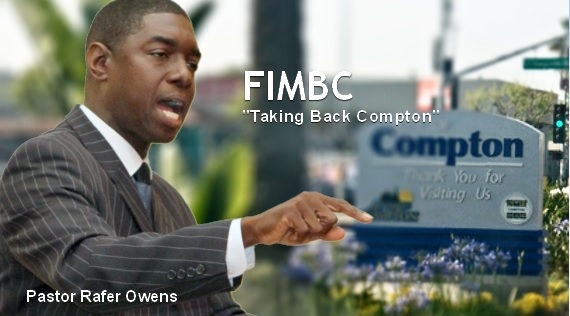
Christian Post report– Upon meeting Pastor Rafer Owens, who is both the dynamic leader of Faith Inspirational Missionary Baptist Church and a deputy sheriff serving in Compton in Los Angeles County, it is easy to understand why he was chosen to speak at Together LA, the three-day conference about discovering how to “love on” the metropolis, beginning this Thursday.

Owens has ministered for 17 years to not only a primarily black congregation but to a much wider audience – Compton, a city once known as a war zone for gangs.

“Our mission is to take back the city of Compton and bring the love of God and the spirit of God and overall revival to the city,” he said while describing the goals of his church. “What we’ve done as a church is become involved in everything that the city does and everything that would help lift up the community.”

At Together LA, where much of the discussion from nearly 50 speakers is planned to include action steps that the Christian community within the city should take toward resolving social issues, Owens, a 21-year veteran deputy sheriff for Los Angeles County, said he’s been asked to share about what his church has been doing, what “God has been doing,” and give practical illustrations showing how FIMBC became partners with Compton and has “become a blessing.”

“Christians need to get off their behinds and get up and start getting active,” said Owens, when asked what needs to be done in Los Angeles. “I don’t need to know the entire Bible, I just need to know how to love people. I believe if we just learn how to love on people with the love that God has given us we can see a major revival in the city of Los Angeles. I see a revival coming. … people are ready to get up and move forward and do the will of God and make sure that God is being seen and glorified. I believe God is raising up a standard and an army of people that want to do the will of God. When we see that we will see revival take place in a great way.”

In a Los Angeles Times article several years ago, “Homicides plunge, hope rises in Compton,” featuring Owens and his church’s community involvement, it was reported that in Compton, “slayings were at their lowest level in 25 years, people are walking the streets again. Once resembling a military operation, law enforcement is engaging more with residents.”

Owens described how many members of his church enrolled in a volunteer program for the three high schools in Compton and let school officials know that “we are at your disposal, whatever you want, whatever you need, we are here to give it.” The church’s participation in community events includes movies and gatherings in the park. Members are also given lists of neighborhoods and individual families and homes to prayer for.

In a testament to a changing Compton, Mayor Aja Brown is also scheduled to speak at the conference. Brown is described as “the new face of a changing Compton” in a recent interview with MSNBC.

Source: Christian Post