More than 100 Boko Haram militants killed in Cameroonian military

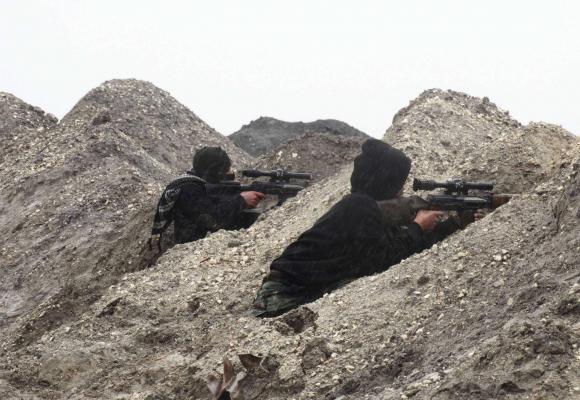
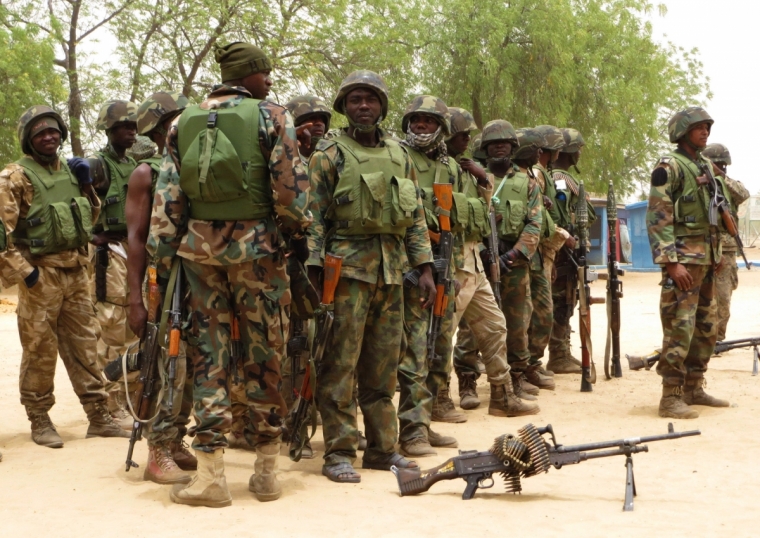
The Cameroonian military fought back against the Boko Haram terrorist organisation this week in an attack that left 143 militants dead.

Officials announced Tuesday that the men were killed when they raided a military camp in Kolofata.

Hundreds of Boko Haram members crossed the border from Nigeria and stormed the camp on Monday. The ensuing firefight lasted for five hours.

Four soldiers were wounded and a corporal was killed, but the militants suffered severe losses.

“It is by far the heaviest toll sustained by the criminal sect Boko Haram since it began launching its barbaric attacks against our land, people and goods,” Cameroonian Information Minister Issa Tchiroma Bakary said in a statement.

Cameroonian President Paul Biya was recently threatened by the group after launching air strikes against them last month, and over 130 Cameroonian schools were closed in November due to Boko Haram concerns.

Students near the Borno State border were moved towards the interior, and officials considered relocating the schools so that students can continue to learn.

“The objective of this Boko Haram is to traumatise our citizens,” Ministry of Secondary Education representative Monouna Fotso told Voice of America.

Cameroon must also grapple with thousands of displaced Nigerian and Central African Republic citizens that have fled across the border.

Cameroon’s Minister of Territorial Administration and Decentralisation, Rene Emmanuel Sadi, said that Boko Haram is crippling their country.

Thousands have been killed and an estimated 1.6 million driven from their homes due to Boko Haram violence in Nigeria, Cameroon, Chad, and Niger.

Source: Christian Today

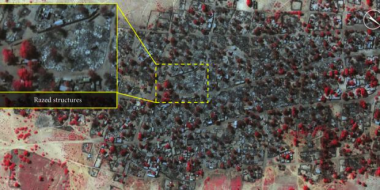
Satellite image of Boko Haram Baga attack scale of devastation

Amnesty International released today a satellite image of the magnitude of the attacks of the militant group Boko Haram on the towns of Baga and Doron Baga, Nigeria.

The Sunni Muslim jihadist group have been establishing their territory in the northeast of Nigeria and is reported to be using child suicide bombers to attack the most populated parts of cities and towns like Potiskum and Maiduguri in Yobe State. The group brought further terror to other parts of the region by massacring an estimated 2,000 people in Baga, part of Borno State.

Baga and Doron Baga, which are only 2.5 kilometers apart, suffered a devastating attack from the militant group at the start of the year, starting January 3.

According to Amnesty International’s report, Baga was estimated to have 620 structures damaged or destroyed by fire.

In Doron Baga, an estimated 3,100 structures were damaged or destroyed by fire. Other neighbouring towns were also attacked rendering an estimated total of over 3,700 structures that were damaged and destroyed.

“These detailed images show devastation of catastrophic proportions in two towns, one of which was almost wiped off the map in the space of four days,” said Daniel Eyre, Nigeria researcher for Amnesty International.

“Of all Boko Haram assaults analysed by Amnesty International, this is the largest and most destructive yet. It represents a deliberate attack on civilians whose homes, clinics and schools are now burnt out ruins.”

According to the satellite images taken January 2, the fishing boats along the shoreline were not in the photos taken last January 7. It is understood that locals fled for their safety by boat across Lake Chad and tried to cross the border to Chad and other parts of Nigeria including Maiduguri city, Amnesty International reports.

Amnesty International further reports that there are already hundreds and thousands of people who are seeking refuge and the host communities and government authorities have already stretched their capacity.

The human rights group appealed to the government of Nigeria and Chad to provide these refugees adequate assistance and take drastic measures to regain territory on the northeast and the ensure safety of the civilians.

“We are currently working to find out more details of what happened during the attack on Baga and the surrounding area,” said Eyre.

“This attack reiterates the urgent need for Boko Haram to stop the senseless killing of civilians and for the Nigerian government to take measures to protect a population who live in constant fear of such attacks.”

Source: Christian Today

Pope Francis speaks on ‘Philippines corruption and scandalous social inequalities’ and calls for CHANGE

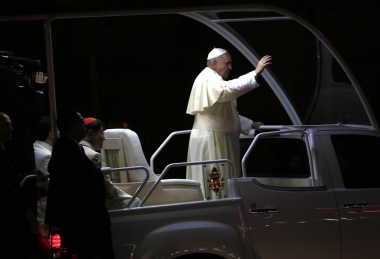
Pope Francis has called on the Philippines government to tackle corruption and hear the cries of the poor suffering from “scandalous social inequalities” in Asia’s most Catholic country.

The Pope went to the Malacanang presidential palace for an official welcoming ceremony led by President Benigno Aquino as tens of thousands of ecstatic Filipinos lined the streets.

Francis, a champion of the poor, pulled no punches in calling for a more just and caring society in the Philippines, which is about 80 percent Catholic.

“It is now, more than ever, necessary that political leaders be outstanding for honesty, integrity and commitment to the common good,” he said.

After meeting Aquino, Francis later celebrated a Mass in Manila’s colonial-style cathedral. He made a surprise detour from his schedule after the Mass when he went across the street for a brief visit a Church-run home that cares for former street children, many of whom were once child prostitutes and members of youth gangs.

Aquino, the only son of democracy champion and former president Corazon Aquino, took office in 2010 on the promise of transparency, good governance and battling corruption to lift the Philippines from poverty.

But he has struggled to shed the country’s image as one of the most corrupt in Asia as he continues to defend his allies, while at the same time chasing down politicians, bureaucrats and generals associated with the past administration.

Francis was driven to the palace from his residence at the Vatican embassy in a small blue Volkswagen Touran, in keeping with his simple, no-frills style. Enthusiastic crowds had started gathering four hours before he arrived.

The Philippines has laid on the largest security operation in its history, with about 50,000 police and soldiers on hand. Francis’ car was flanked by police vehicles, which sometimes made it difficult for people to see him.

“It has been somewhat of a security nightmare for us,” Aquino told the Pope in his address.

Francis was saluted by presidential guards at the Spanish colonial palace and greeted by hundreds of people waving Vatican and Philippine flags. Children rushed up to embrace him as he walked along a red carpet on the palace grounds.

“REJECT CORRUPTION”

The Pope urged government officials “to reject every form of corruption, which diverts resources from the poor, and to make concerted efforts to ensure the inclusion of every man and woman and child”.

Since taking office, Aquino has executed wide-ranging reforms in graft-laden agencies such as the customs and internal revenue bureaus, helping improve the Philippines’ ranking in watchdog Transparency International’s corruption perceptions index (CPI) to 85 last year from 94 in 2013 and 105 in 2012.

But cases of high-level officials in central and local governments misappropriating public funds for personal gain still abound. At least 25 per cent of the country of about 100 million are poor, according to the Philippine statistics agency.

“The great biblical tradition enjoins on all peoples the duty to hear the voice of the poor,” he told Filipino leaders.

“It bids us break the bonds of injustice and oppression which give rise to glaring, and indeed scandalous, social inequalities. Reforming the social structures which perpetuate poverty and the exclusion of the poor first requires a conversion of mind and heart,” he said.

Aquino said that, while the Church was instrumental in the ousting of former dictator Ferdinand Marcos in 1986, it “suddenly became silent in the face of the previous administration’s abuses”. Aquino’s father was assassinated in 1983 when he returned from exile to oppose Marcos.

The president was referring to the government of former president Gloria Macapagal Arroyo, who has been detained on corruption charges since 2012.

The Mass was celebrated on the same site where a church was first built with bamboo and palm leaves in 1581. Two rows of boys dressed as Swiss Guards lined its steps as he entered. In his homily, Francis said many were still “living in the midst of a society burdened by poverty and corruption”.

Later on Friday he was due to hold a rally with Filipino families. As many as 12 million people have left to find work in other countries, making the Philippines the fourth-largest recipient of remittances worldwide.

About half of the population has been affected by decades of labour migration and the strain has come at a significant social cost.

Francis has made defence of vulnerable migrants and workers a central issue of his papacy.

Source: Christian Today

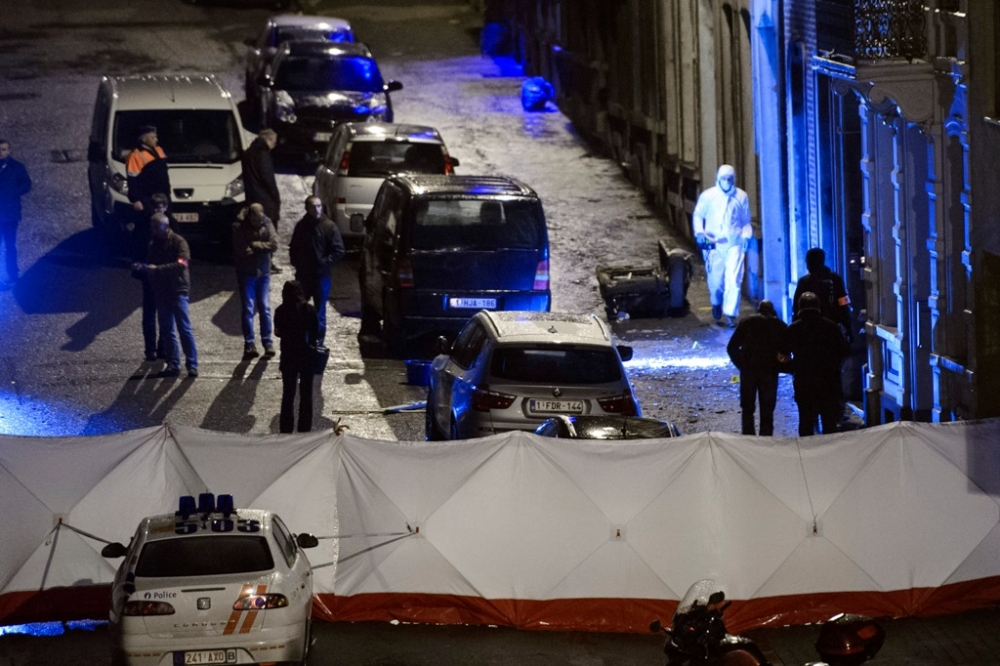
Belgium Anti-terrorist Raid: 2 suspects killed with possible IS link

Belgian authorities confirmed Thursday that a terror cell comprised of people who had returned from fighting in Syria was operating in Verviers, Belgium, and members were about to carry out major terrorist attacks inside the country. Security forces carried out 10 searches and took on heavy gufire from suspects who authorities said were using “war weapons” and “hand weapons” to combat police. Belgian prosecutors’ spokesman Eric Van Der Sypt also confirmed that no police officers were injured during the raids, and explained that the nation’s terror threat level has been raised. The next news conference will be held at 11 a.m. local time on Friday.

Two terror suspects have reportedly been killed and one seriously injured during a counter-terror raid in Eastern Belgium on Thursday. Initial reports indicate that the suspects have connections to the Islamic State terror group and might have been planning an attack in Belgium.

The raid was carried out in the Belgian city of Verviers, which is 200 miles northeast of Paris and 69 miles southeast of Brussels. It’s still unknown whether the suspects in Belgium have any connection to last week’s terror attacks in Paris.

Federal officers in Belgium took several suspects into custody outside of a train station, according to CNN affiliate VTM News.

According to The Guardian, Belgian public television channel RTBF has reported that police took action against the alleged terror group at round 6 p.m. in Verviers, and security forces were unharmed during the raid and subsequent arrests.

“The shooting at Verviers comes a day after it was revealed that a man had been arrested in Brussels on suspicion of having sold weapons to Amedy Coulibaly, one of the gunmen in the terrorist attacks in Paris which left 17 victims and three jihadists dead last week,” The Guardian reports.

“Explosions and detonations reverberated in Verviers, near the train station, a witness told RTBF. Named only as Marie-Laure, she said a helmeted police officer told her to leave the crossroads, where there was a small blue van and a car,” according to the Guardian, which also reports that three to four explosions and gunshots were also heard.

Belgian authorities are expected to hold a news conference at 2 p.m. ET Thursday to provide more information about the raid and terror suspects.

Source: Christian Post

Mark Woods: Britain’s deadliest weapon against terror might be tea

Ah, tea. Tea is lovely. Lapsang, Earl Grey, a fine Formosan Oolong, Gunpower green or delicate Darjeeling, or even plain old builders’ – it’s all a delight. Rooibos is fashionable now but I never really took to it, though have I enjoyed a (very expensive) Shipwreck blend. My grandmother drank Luaka, which I thought tasted of fish, but she enjoyed it.

Tea is British. We can’t grow it, but my goodness, we drink it – pond-fulls of the stuff when it was a luxury in the 18th century, and whole oceans ever since, when it got cheap.

Not only is it lovely, it even stops you getting cholera. And tea, properly understood, might have something to contribute to the struggle against diseases which are, in their way, equally deadly.

Our society is facing agonisingly difficult debates about the limits of freedom. Should a florist be able to choose not to sell to a customer for a gay wedding? Should a hotelier be able to refuse a room to a gay couple? Should outward symbols of religion – a cross, for instance – be banned from the workplace?

Or, an infinitely more poignant question: should cartoonists be able to draw what they like, offending, if they choose, at the deepest and most visceral level, the religious feelings of an entire section of the population?

In that case, the almost universal answer has been, “Yes, they should.” Now, we might just notice here the inconsistencies and muddle of the liberal argument. We don’t allow hate speech, we don’t allow people to be mocked and pilloried for their gender or their sexuality or their colour, for instance, but religion is fair game. We might point out that putting religion in a different category from these is to mistake the very nature of religious belief: it is to see it as an opinion on a level with liking Bach rather than Gershwin, rather than as an identity which is as fundamental to a person’s being as their gender, sexuality or colour.

Nevertheless: let’s grant that religion should not be protected. The thing about tea is that it promotes that other great British virtue, politeness. (One of the British participants in early talks with the IRA recalled later how odd it was to ask someone who’d been trying to kill you whether they took sugar.)

Politeness is an under-rated virtue. It involves a deliberate attempt to put yourself in the shoes of another person and to behave in such a way that their social discomfort is minimised. In the hands of a skilled operator, of course, it is a deadly weapon: there’s nothing as maddening as hearing someone drawl, “I’m sure you’re right” when he clearly thinks you’re an idiot.

But I think it is politeness that is missing from much of our current debate about religion and culture, not just in the tone of the debate itself – which can get pretty nasty at times – but in the failure of the participants to put themselves in the position of their intellectual or spiritual opponents.

There has been a tone of bafflement in much of what has been written, said and drawn about the Charlie Hebdo massacre: as though it is simply inconceivable that a cartoon could elicit the horrific violence which took place last week. There is no scale on which such a response could be proportionate, let alone justifiable. But this reaction fails the politeness test completely. It does not begin to understand the depth of devotion to the Prophet Mohammed felt by devout Muslims, and the corresponding horror at any perceived insult to him. Add a toxic theology of retributive violence, a ready supply of guns and ammunition, a section of the Muslim population which feels disaffected, marginalised and dishonoured, and this was going to happen.

All of us rightly reject and detest what was done in Paris. But those who say that it was simply irrational or psychopathic have not taken the trouble to think things through. And the danger is that the whole debate is framed in terms of winners and losers: either you are in favour of free speech, in which case Je suis Charlie, tout court, or you are not, in which case you are siding with terrorists.

But people of faith need to model a different response altogether. In an interview recently reflecting on Pope Francis’ address to the European Parliament in which he warned against the danger of “individualist rights”, former Archbishop of Canterbury Rowan Williams said: “The challenge is to reimagine human rights and I guess that is part of what the Pope is saying; reimagine human rights with a very, very strong emphasis on reciprocity – what we owe to one another, not just what is owed to us.”

As ever, Williams nails it. I do not, in fact, believe that it is practicable to afford religious people extra legal protection when it comes to offending language or imagery, even if it were desirable. But I do believe in politeness; a robust, challenging politeness, to be sure, but still: a way of using words and images that is fully aware of the impact they will have on their targets, and which errs on the side of kindness wherever possible.

It is not always possible, and this is where religions – all religions – need to learn politeness too. We need to reach a point where the first reaction of Christians who feel a bit persecuted is not to pick up the phone to Christian Concern. Some Muslims need to reach a point where they do not respond to offences against their faith by calling on the offenders to be silenced by law.

And some, whose spirituality has been twisted by preachers of hate and rejection, who are inspired by the nihilistic fundamentalism of Islamic State and Al Qaeda, need to reach a point where they see that God and his prophets do not require defending through violence, and that if their religion is worth anything, it can smile at those who offend it rather than seeking revenge.

Tea theology. It might catch on.

Source: Christian Today

Pope Francis speaks on Charlie Hebdo attacks: “You can’t insult others faith”

Pope Francis, speaking of last week’s deadly attacks by Islamist militants in Paris, has defended freedom of expression, but said it was wrong to provoke others by insulting their religion and that one could “expect” a reaction to such abuse.

“You can’t provoke, you can’t insult the faith of others, you can’t make fun of faith,” he told reporters on Thursday, aboard a plane taking him from Sri Lanka to the Philippines to start the second leg off his Asian tour.

Francis, who has condemned the Paris attacks, was asked about the relationship between freedom of religion and freedom of expression.

“I think both freedom of religion and freedom of expression are both fundamental human rights,” he said, adding that he was talking specifically about the Paris killings.

“Everyone has not only the freedom and the right but the obligation to say what he thinks for the common good … we have the right to have this freedom openly without offending,” he said.

To illustrate his point, he turned to an aide and said: “It is true that you must not react violently, but although we are good friends if [he] says a curse word against my mother, he can expect a punch, it’s normal.

“You can’t make a toy out of the religions of others,” he added. “These people provoke and then (something can happen). In freedom of expression there are limits.”

Seventeen people, including journalists and police, were killed in three days of violence that began with a shooting attack on the political weekly Charlie Hebdo, known for its satirical attacks on Islam and other religions.

Referring to past religious wars, such as the Crusades sanctioned by the Catholic Church against Islam, the Pope said:

“Let’s consider our own history. How many wars of religion have we had? Even we were sinners but you can’t kill in the name of God. That is an aberration.”

The Pope was also asked if he felt vulnerable to an assassination attempt or an attack by Islamic extremists.

Earlier this week, the Vatican denied Italian newspaper reports that US and Israeli intelligence officials had informed the Vatican that there could be an imminent attack by Islamist militants.

Francis said he was more worried about others – rather than himself – being hurt in an eventual attack and that he was confident about security measures in the Vatican and during his trips.

“I am in God’s hands,” he said, joking about having asked God to spare him a painful death.

“Am I afraid? You know that I have a defect, a nice of dose of being careless. If anything should happen to me, I have told the Lord, I ask you only to give me the grace that it doesn’t hurt because I am not courageous when confronted with pain. I am very timid,” he said.

Source: Christian Today

Religious Freedom Rally for sacked Atlanta Fire Chief outcome was an ” Outstandaing Success”

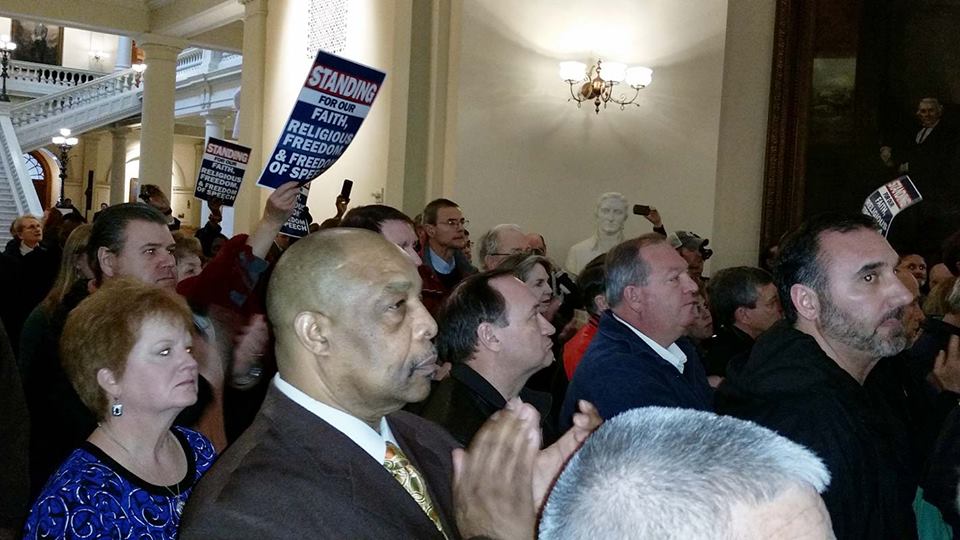
Faith leaders united for a public rally at the Georgia State Capitol on Tuesday in a show of support for ousted Atlanta Fire Chief Kelvin Cochran and according to one of the organizers, the event was a “tremendous success.”

Hundreds of religious freedom advocates gathered for the “Standing for our Faith Rally” in the Georgia State Capitol rotunda yesterday, one week to the day that Cochran was fired for espousing his Christian beliefs in a self-published book and distributing copies in the workplace.

“We thought the turnout was great,” Mike Griffin, a Public Affairs Rep. with the Georgia Baptist Convention told The Christian Post. “It was a tremendous success.”

Griffin, along with Pastor Garland Hunt of Prison Fellowship, organized yesterday’s rally in protest of Cochran’s dismissal. They, along with other conservative leaders including Cochran himself, say that Atlanta Mayor Kasim Reed’s decision to terminate the fire chief is symbolic of a growing threat on religious freedoms facing Christians and other people of faith.

“The idea that the government can force public servants to surrender their First Amendment rights is outrageous,” said Family Research Council President Tony Perkins who was also at the rally. “If a government will fire someone for their religious beliefs, no beliefs are safe from government regardless of how sacred those beliefs may be. Mayor Reed is sending a very clear message that Christians must check their faith at the door of public service.”

The event was attended by Atlanta pastors and other prominent leaders in the Christian community, including Ken Barun (Chief of Staff at the Billy Graham Evangelistic Association). It concluded with a walk to City Hall, where they hand-delivered a petition with 50,000 signatures to Reed’s office, followed by a prayer.

“The purpose of the rally was to give a show of support for chief Cochran and to draw attention to the importance of standing up for our First Amendment Rights,” Griffin said adding, “I think there is a growing concern among Christians of ‘I could be the next Kelvin Cochran.'”

In his 2013 book, Who Told You That You Are Naked?, Cochran calls homosexuality “sexual perversion” and “vulgar” and also likens it to “bestiality” among other things. He was suspended without pay late last year and forced to undergo sensitivity training when an AFRD member complained that he had shared the book with employees.

A city investigation determined Cochran had not discriminated against LGBT employees but he was fired anyway.

“I profoundly disagree with and am deeply disturbed by the sentiments expressed in the paperback regarding the LGBT community,” Reed wrote via Facebook at the time. “I will not tolerate discrimination of any kind within my administration.”

Yesterday, Reed responded to the outpouring of support at the rally for religious freedoms and said that although he too is “a man of faith,” he had no choice but to fire Cochran.

“The truth is that I am a man of deep faith myself, and we are a city of laws. Chief Cochran’s book, “Who Told You You Were Naked,” was published in violation of the city’s Standards of Conduct, which required prior approval from the Board of Ethics,” Reed wrote via Facbook on Tuesday.

In an exclusive interview with CP last week, Cochran said that he did in fact seek approval to write the book from the city’s ethics officer during a five-minute conversation. She allegedly cannot recall the conversation and he is currently exploring legal options to sue the city.

“I believe his actions, decisions, and lack of judgment undermined his ability to effectively manage a large, diverse workforce,” Reed continued. “Every single City of Atlanta employee deserves the certainty that he or she is a valued member of the team and that fairness and respect guide our employment decisions. His actions and his statements during the investigation and his suspension eroded my confidence in his ability to serve as a member of my senior leadership team.”

Since his termination, support for Cochran has grown rapidly, with fellow believers creating support pages online and directly contacting Reed to express their outrage. They want Reed to apologize to the married father of three and also reinstate him as fire chief.

“Here’s a man with impeccable integrity” said Griffin. “Chief Cochran is a man that – there’s almost no one that knows him that doesn’t speak well of him.”

Cochran, who regularly attends Elizabeth Baptist Church in Atlanta, said that he is grateful for the overwhelming support and called on Christians to unite to protect their religious freedoms.

“I would like to see a unified effort in the body of Christ. I think that our denominational boundaries, our racial boundaries, even our boundaires along political lines, democrats, republicans and independants has all weakened our voice on religious freedom,” he said of the Christian community. “Unless we come together and put all those boundaries and barriers aside for a unifed voice … we’re not going to actually have the strength politically like members of the LGBT community do.”

In 2009, Obama appointed Cochran as the fire administrator for the U.S. Fire Administration. He returned to his job as Atlanta’s fire chief the following year.

Source: Christian Post


Alex Malarkey says best-selling book is a lie

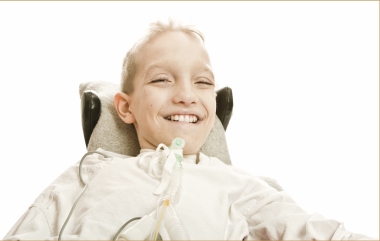
The best-selling story of a boy’s near-death experience is a fake, according to its co-author and subject.

The Boy Who Came Back From Heaven was written by Alex and his father Kevin Malarkey and published by Tyndale House in 2010. It purported to tell the story of six-year-old Alex’s experiences in heaven after a car accident in 2004, which included meeting and talking to Jesus.

Now, however, Alex – who was left quadraplegic by the accident – has written an open letter to booksellers including the Southern Baptist Convention’s Lifeway business recanting his story and taking aim at other accounts of “heaven tourism”, a genre that includes Heaven is for Real by Todd Burpo and My Journey to Heaven by Marvin Besteman.

Addressed to “Lifeway and Other Sellers, Buyers, and Marketers of Heaven Tourism, by the Boy Who Did Not Come Back From Heaven”, the letter says: “Please forgive the brevity, but because of my limitations I have to keep this short.

“I did not die. I did not go to Heaven.

“I said I went to heaven because I thought it would get me attention. When I made the claims that I did, I had never read the Bible. People have profited from lies, and continue to. They should read the Bible, which is enough. The Bible is the only source of truth. Anything written by man cannot be infallible.

“It is only through repentance of your sins and a belief in Jesus as the Son of God, who died for your sins (even though he committed none of his own) so that you can be forgiven may you learn of Heaven outside of what is written in the Bible … not by reading a work of man. I want the whole world to know that the Bible is sufficient. Those who market these materials must be called to repent and hold the Bible as enough.”

Alex’s mother Beth, who is divorced from his father and who is Alex’s caregiver, had previously disowned the book, writing on her blog: “It is both puzzling and painful to watch the book The Boy who Came Back from Heaven to not only continue to sell, but to continue, for the most part, to not be questioned.” She claimed that he had not benefited financially from it, concluding: “Alex did not write the book and it is not blessing him!”

The Southern Baptist Convention passed a resolution at its 2014 conference critical of ‘heaven tourism’ books, though they continue to be sold by Lifeway.

Tyndale House and Kevin Malarkey were approached to comment on this story.

Source: Christian Today

Church of England set to embark on sweeping changes, says Bishop Pete Broadbent

The Church of England will embark on sweeping changes aimed at getting rid of red tape and “hindrances to mission” if plans presented to next month’s General Synod are accepted.

The Church’s task group on ‘Simplification’, chaired by the Bishop of Willesden, Rt Rev Pete Broadbent, has produced a report into out-of-date and restrictive rules. In his introduction, Bishop Pete said that there is “a swathe of legislation – canons, measures and regulations – which are too complex, cumbersome to operate, and militate against change”.

“There has been a tendency over recent years, in framing our legislation, to over-prescribe, to defend against every possible eventuality, and to create a defensive bureaucracy that is in many instances no longer fit for purpose,” he continues, calling for a programme to “Identify the essential – what makes for good governance, proper legality and a clear process” and “Eliminate the rest.”

Among the targets of the report – one of four major pieces of work to go to the Synod – are restrictions on the deployment of clergy, for instance in short-term mission situations, and cumbersome procedures for closing churches and making good use of those which are no longer needed for regular worship. It also takes aim at “unusably generous compensation provisions for loss of office” where parish reorganisations – a process also needing reform – results in ministers being deemed surplus to requirements. At present, it says, “in some cases incumbents may remain in non-viable parishes until retirement, where this is seen as a more cost effective and less time consuming solution than agreeing a compensation package”.

Interviewed for the launch of the report, Bishop Pete said: “We are now in a situation where we need to do mission very urgently, where the re-evangelisation of England is our key task, and where there are a lot of things stopping that, and one of the things stopping it is the very complex and quite defensive bureaucracy that we have in terms of the legislation we operate under.”

Responses from dioceses, he said, had identified ” a lot of complexity which really doesn’t help people in terms of being able to be fleet-footed, and change things and enable things to happen in order for us to reach new ways of communicating the good news of Jesus Christ”.

If nothing changes about the way the Church operates, he said, “I do think we are near the Last Chance Saloon.

“There are parts of the country where the Church of England will probably not be surviving in 30 years time unless we do something to bring new people to church, to re-engage with our communities, to build on the really good stuff that’s already going on.

“No one is saying nothing’s happening. What we’re saying is a sea-change is needed whereby the Church needs to restructure itself in order to evangelise the country.”

Bishop Pete also called for the Synod to move quickly, saying: “I don’t want to get into a situation where we spend all our time debating whether the Church of England needs to change or not. I think it’s absolutely paramount for us to grasp this early and get on with it.”

Source: Christian Today

PEGIDA has spread to some European countries

A growing anti-Islamist group which started in Germany, has spread to a number of European countries, including Spain, Norway and Denmark.

Pegida, which stands for ‘Patriotic Europeans Against the Islamisation of the West’, is primarily concerned with immigration, though the attacks against satirical newspaper Charlie Hebdo in Paris last week seem to have stirred support for the movement in Spain and further afield.

Just a few hundred people gathered for the first march in Dresden in October, but since then the weekly demonstrations on Monday evenings have gathered momentum, most recently attracting up to 25,000 people.

But even higher numbers have attended counter-demonstrations across Germany, including Dresden, Berlin and Cologne. In Dusseldorf this week people reportedly shouted “Pegida you’re racist” as they marched, and the anti-Pegida protest in Leipzig on Monday attracted 35,000 people.

German Chancellor Angela Merkel has strongly condemned Pegida. In an address at the start of the year she said those who led the rallies “have prejudice, coldness, even hatred in their hearts”.

Despite the opposition, Pegida branches have now been set up in a number of European countries. A small Pegida march took place in Oslo, Norway this week and a demonstration is allegedly planned in Denmark on Monday. Other marches planned in Switzerland and Belgium in the coming weeks, according to Al Jazeera.

The Twitter account for the Spanish offshoot opened on the day after Paris attacks, posting pictures of the suspected terrorists. Since then it has gained almost 1,000 Twitter followers and nearly 3,000 Facebook likes.

According to the Pegida Spain Facebook page, the branch had planned to hold its first rally on Monday 12 January, but had to cancel after it was refused permission to demonstrate at the proposed site outside Madrid’s main mosque.

The group sent an email to AFP saying: “We are preparing a demonstration by Pegida Spain, where members of Pegida Germany will attend. We will publish the date on Twitter and announce it by email.”

Other social media accounts suggest there are Pegida-linked groups in the Netherlands and France among others, though these have fewer followers as yet.

On 7 January, the day of the Charlie Hebdo attacks, a ‘Pegida USA’ Twitter account was opened, and now has just over 200 followers. It describes its stance as “Freedom, tolerance, rule of law. Positions of @pegidaUSA may not fully overlap with PEGIDA but are in agreement with stand against totalitarian barbarism.”

In Pegida Germany’s19-point position paper the group claims to support asylum for refugees fleeing war, and religious freedom, including welcoming Muslims who are integrated in German society. But they say they are against Islamist fundamentalism and any hint of Sharia law in Germany, claiming they want to protect Germany’s Judaeo-Christian heritage.

Germany’s immigration figures are second only to the United States, though the eastern city of Dresden, where the protests began, has a relatively small immigrant community.

Source: Christian Today