
Attacks on Indian Churches more frequent

Attacks on churches in India appear to be on the rise. Four churches in the the county’s capital have been targeted in the last seven weeks, according to The Times of India.

The most recent attack in New Delhi was on Our Lady of Graces Church. The perpetrator was caught on CCTV breaking glass and toppling a statue of Mary early yesterday morning.

Archbishop Anil JT Couto of New Delhi says that these attacks illustrate a disturbing pattern. Speaking to NDTV, Couto said, “A clear pattern of orchestrated attacks is emerging as more and more churches are targeted, vandalised and set on fire.”

The most serious incident of the four occurred last month, when St Sebastian’s Church in East Delhi was burnt down by attackers. Traces of kerosene were found inside the church premises and police confirm it was a case of intentional arson.

Speaking of the attacks, Archbishop Couto says, “This is very disturbing and we request the authorities to take adequate measures to bring to book the miscreants who are threatening to weaken the social fabric of this great nation.”

Christians in India are not strangers to persecution. This year, the country ranks higher than ever on Open Doors’ World Watch List – a list highlighting the 50 most difficult countries to be a Christian – reaching number 21.

India’s Christians feared a rise in persecution following the election of Narendra Modi and BJP last May. In the first 100 days of the new government’s rule there were over 600 attacks on Christian and Muslim groups, despite promises of greater protection for religious minorities.

Source: Christian Today

China bans burqa

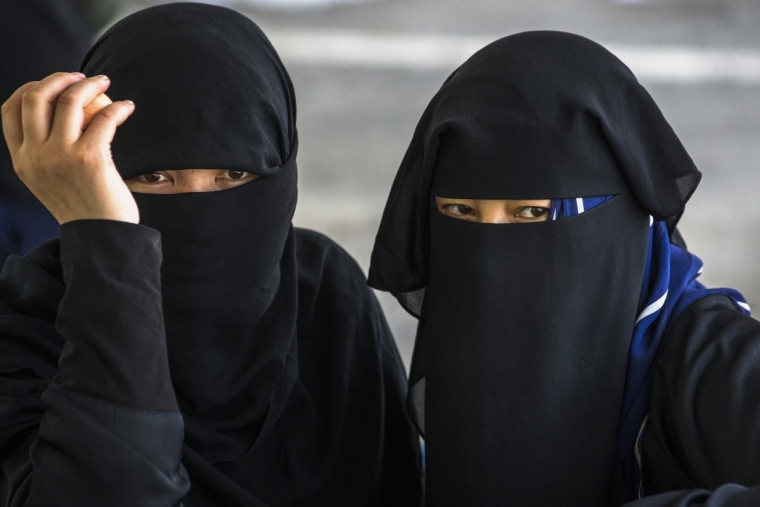
Women have been banned from wearing the burqa in the capital of Xinjiang province, home to China’s largest Muslim community in an attempt to “curb growing extremism”.

State media announced the ban in Urumqi, a city of 3.1 million people, on Saturday.

“Burqas are not traditional dress for Uygur women,” the statement said. “The regulation is seen as an effort to curb growing extremism that forced Uygur women to abandon their colourful traditional dress and wear black burqas.”

Uyghurs are a predominantly Muslim, Turkic-speaking people, who account for 45.8 per cent of the population in the northwestern region of Xinjiang, according to the 2010 census.

There have been a number of clashes between the Uyghurs and Han Chinese migrants in recent years. The Chinese government has promised to crack down on extremism in Xinjiang, and has blamed extremist terror attacks elsewhere in China on Islamists from this region.

But human rights advocates have said that the government’s laws, which claim to tackle separatism and extremism, have infringed on the rights of the Uyghurs.

The announcement also made reference to the ban on the burqa in France and Belgium, both of which came into force in 2011.

The ban in Urumqi was approved by local government last month, but given the go ahead from regional authorities this weekend, according to CNN.

Source: Christian Today

Warner Bros removes Hillsong musc documentary from schedule

Hillsong’s Christian music documentary ‘Hillsong – Let Hope Rise’ has been pulled from the Warner Bros schedule, according to Variety.

The movie, which is directed by Michael John Warren, follows the journey of Hillsong United – the young Australian group that grew from a megachurch youth ministry to one of the world’s biggest worship bands.

‘Hillsong – Let Hope Rise’ had been scheduled to air on April 1, since last July, but sources report that it has been pulled from its slot.

Worship band Hillsong United has sold more than 16 million albums and plays sell-out concerts worldwide. Its songs include Oceans, From the Inside Out and One Way. The group is led by Joel Houston, son of Brian and Bobbie Houston who founded Hillsong Church in Australia in 1983. More than 100,000 people now attend Hillsong churches in 12 locations around the world.

Warner Bros and Alcon Entertainment, who holds the rights to the documentary, had no immediate comment about the change in schedule, says Variety.

Source: Christian Today


The Catholic priest who doesn’t obey the rule of celibacy

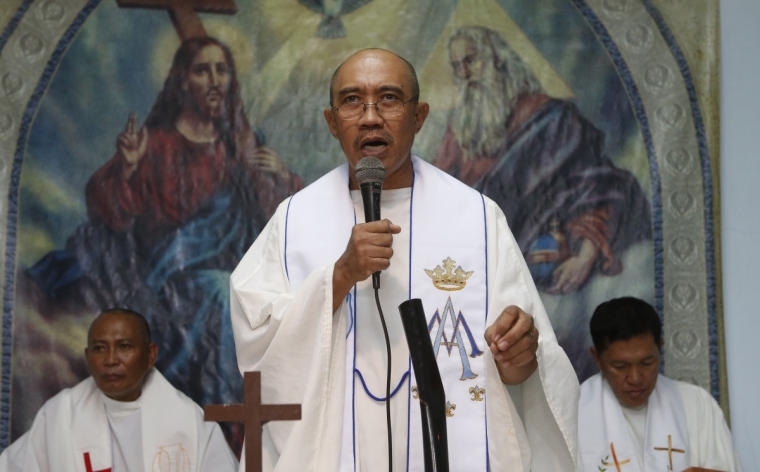
Every Sunday morning, dozens of Roman Catholics gather at a small chapel on an island in the central Philippines to listen to Father Jess Siva share his personal experiences as a priest, and as a parent.

Siva, 54, has been celebrating Mass in the town of Lambunao for the past 15 years, giving communion, performing last rites for the dying, hearing confessions and officiating at marriages.

But while his small flock admire him, Church leaders in the Philippines consider him persona non grata for failing to adhere to one of the most important tenets of the priesthood – abstaining from sex.

“This is a very serious problem within the Church,” Siva, who is the father of two boys from a relationship with a member of his congregation’s choir, told Reuters. “I hope Pope Francis will recognize us.”

Although celibacy is not expected to be directly raised during the Pope’s visit to the Philippines this week, some in the Church hope that the pontiff will in time listen to their pleas for change.

In the Philippines, which accounts for about half of Asia’s Roman Catholics, Siva is not alone. A handful of priests have been asked to leave the priesthood for fathering children.

On January 11 Siva baptized the five-month-old son, and fourth child, of fellow Catholic priest Hector Canto. Siva officiated at Canto’s marriage in 1997.

There are already high hopes the Argentine Pope will change the Church’s traditional approach to issues such as sexual morality by becoming more welcoming to gays and easing restrictions on divorced and remarried Catholics.

Last year, Francis said he believes priests should be celibate but that the rule, which dates back over 1,000 years, could be changed someday.

“Celibacy is not a dogma,” he said when asked by a reporter whether the Church might consider allowing priests to marry as they can in the Anglican, Protestant and Orthodox Churches.

“It is a rule of life that I appreciate very much and I think it is a gift for the Church but since it is not a dogma, the door is always open,” he said.

The Church teaches that a priest should dedicate himself totally to his vocation, essentially taking it as his spouse, in order to help fulfill its mission.

Some have cited celibacy as one reason for the decline in men entering the priesthood.

In Africa, Catholic priests have openly questioned the celibacy rule, saying it is incompatible with their culture. African Archbishop Emmanuel Milingo was famously excommunicated in 2006 for ordaining four married men as priests as part of his group “Married Priests Now”. Milingo himself married a Korean woman.

Africa and Asia have the fastest growing Catholic populations, and today they are home just over a quarter of the world’s more than 1.2 billion Catholics.

The rule of celibacy has also been questioned in the Pope’s own backyard. Last year, 26 women in love with priests in Italy wrote a letter urging him to make celibacy optional, describing the “devastating suffering” it causes.

“YOU ARE ON YOUR OWN”

Siva, who was ordained a priest in 1986 and started living with his partner 12 years later, is making little headway in persuading the Church’s local leadership that it is time to change.

The archdiocese of Jaro, which includes the town of Lambunao, frowns upon his actions, saying the priestly activities of Siva, Canto and another priest, Elmer Cajilig, are “illicit”.

“They are on their own,” Jaro Archbishop Angel Lagdameo told Reuters. “They have violated our rules on celibacy. We do not recognize them.”

But Filipino Catholic bishops have done nothing to stop the ministry of the three priests who have openly violated the Church discipline.

Monsignor Victorino Rivas of the neighboring Archdiocese of Bacolod said cases of priests with families are confidential and that there are no statistics on their numbers.

Siva told Reuters there were two more priests in Iloilo City who may join his self-styled ministry called “Compania de los Padres de Familia” (The Company of Priests with Families).

There are more than 3,000 priests in the Philippines, where about 80 percent of the 100 million population is Catholic.

Celibacy surfaced last year during a bitter battle over a contraceptive law, as supporters of the bill exposed priests who fathered children.

Priests who break the celibacy rule are usually put on sabbatical leave, suspended, transferred, made to undergo “formation”, and advised to leave the priesthood to marry and start a family.

On Sunday, before the Pope’s visit to Asia, Siva and the two other unchaste priests celebrated a mass to dramatize an appeal to him to show “mercy and compassion”, the theme of his pastoral visit to the country.

In many remote communities, residents accept priests who fathered children because of the shortage of clerics. “What’s more important is there is a priest in our village,” said Jeremy David, a member of the Lambunao chapel choir.

Source: Christian Today


Pope Fancis might tackle Philippines work problem

Almost 5,000 Filipinos left their homes every day between 2010 and 2013 to seek work overseas, government data shows, most hoping to provide an education for their children and to meet the most basic needs of their families.

That startling statistic helped make the Philippines one of the world’s largest labour suppliers, mainly to other countries in Asia and the Middle East.

However, the strain of decades of labour migration has come with a significant social cost in Asia’s largest Catholic community and likely will be addressed by Pope Francis during his first visit to the Philippines which starts later today (Thursday).

Francis will meet ordinary Filipinos on Friday, including a migrant worker’s family. About half of the country’s 100 million people have been affected by labour migration.

It is a timely meeting for Francis, who has made defence of vulnerable migrants and workers a central issue of his papacy. At an October synod on the family, he urged bishops to find solutions to the challenges faced daily by families.

“We acknowledge the economic benefits that it brings,” said George Campos, head of Couples for Christ, the largest Catholic family movement in the Philippines.

“But it would not compensate [for] the loss of the parent from the children and the stability of the relationship within the family,” he said.

Between 10 million and 12 million Filipinos live and work overseas. With the average Philippine family comprising five members, that means at least half the population could depend on a relative working overseas sending money home to feed, clothe and educate their families.

Their remittances, which proved resilient during global economic crises, continue setting yearly records and account for about 9 per cent of Philippine GDP.

However, the social costs of such large-scale labour migration include the alienation of parents from their children and the breakdown of families.

Infidelity and marriage annulment cases have risen over the years – there is no divorce in the Philippines – although there are no official figures.

“From experience, the number one problem of couples is infidelity,” said Father Resty Ogsimer, executive secretary of the Catholic Church-based migrant welfare group ECMI.

Cases of workers being duped into human trafficking and prostitution also appear to be on the rise. Ogsimer said Filipinos often fell victim to human trafficking after leaving through unofficial channels via southwestern Zamboanga province on the way to Malaysia and elsewhere.

That is borne out by the case of a 29-year old mother of two who left in June 2012 after a Filipino recruiter and family friend promised her work with a theatre group in Singapore.

The woman, who asked not to be identified, said she was sold as a prostitute in the Johor Bahru region of Malaysia.

She returned to the Philippines a month later, battered and bruised and with an injured knee after she escaped from a walled compound where she was held by her recruiters.

A few months after her return, she separated from her husband, who she said took their youngest child and never returned.

There are more unexpected problems, authorities say, with families becoming accustomed to spending money they would not normally have and workers getting into debt to maintain new-found lifestyles.

The Church acknowledges the problems and ECMI has sought to create ministries helping migrants’ families in Catholic dioceses around the Philippines over the past five years, Ogsimer said.

Cardinal Luis Antonio Tagle said the Church must help children and spouses left behind to keep their families intact.

“It is a pastoral concern,” Tagle said last week.

Source: Christian Today

Archbishop of York: “British Christians are not persecuted”

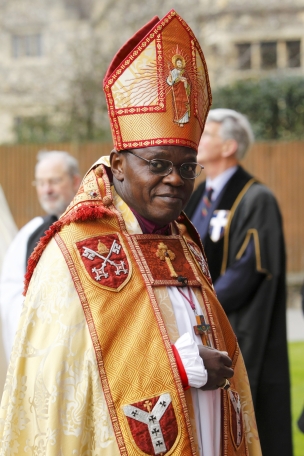
The Archbishop of York John Sentamu has dismissed the idea that British Christians experience persecution, in an interview to coincide with the publication of a set of essays on the problem of inequality in Britain.

“I lived in Uganda during the time of Idi Amin… and our archbishop was murdered by Idi Amin,” Sentamu said in an interview with The Spectator.

“I had to get out of Uganda because I had opposed Amin on a number of things which I didn’t think were ethically right… I know what persecution looks like. What is happening at the moment in England, it ain’t persecution.”

The Archbishop has edited a collection of essays entitled ‘On Rock or Sand? Firm Foundations for Britain’s Future’, due to be published next week. It’s a contemporary take on the Church of England’s 1985 ‘Faith and the City’ report, which critiqued the state of Britain’s inner cities.

Both Sentamu and the Archbishop of Canterbury Justin Welby have written a chapter of the book, which is dedicated to “hard-pressed families on poverty wages”. Other contributors include experts in economic, political and social disciples.

It’s no coincidence that the book is being published at the start of the General Election campaign; indeed, Sentamu is calling for the Church to intervene in politics, particularly on issues of social justice.

According to the Telegraph, the book “advocates a new redistribution of wealth, quoting the slogan popularised by Karl Marx: ‘From each, according to his resources, to each, according to his need.'”

But the Archbishop of York says his political stance, which includes a staunch defence of the welfare as an example of the biblical command to “love thy neighbour”, is based on theology.

Speaking to the Telegraph, Sentamu said: “That sounds extremely left wing doesn’t it?

“The truth is it is the theology of where I am coming from.

“If God has created us unique, [and] all of us have got his image and likeness, is it ever right that I should have more when somebody else has nothing?”

In his interview with the Spectator, the Archbishop of York is particularly critical of the way in which immigration is discussed in parliament, saying that politicians need “to recognise first and foremost this has been a country of immigrants, really”.

Welby’s essay criticises the idea that economic growth is the solution to all of Britain’s social ills, particularly highlighting the growing disparity between London (and the surrounding area) and the rest of the country.

“We believe that if we can fix the economy, the fixing of human beings will automatically follow,” Welby writes.

“That is a lie.

“It is a lie because it is a narrative that casts money, rather than humanity, as the protagonist of God’s story.”

Source:  Christian Today


Al Qaeda claims responsibility for Charlie Hebdo attack

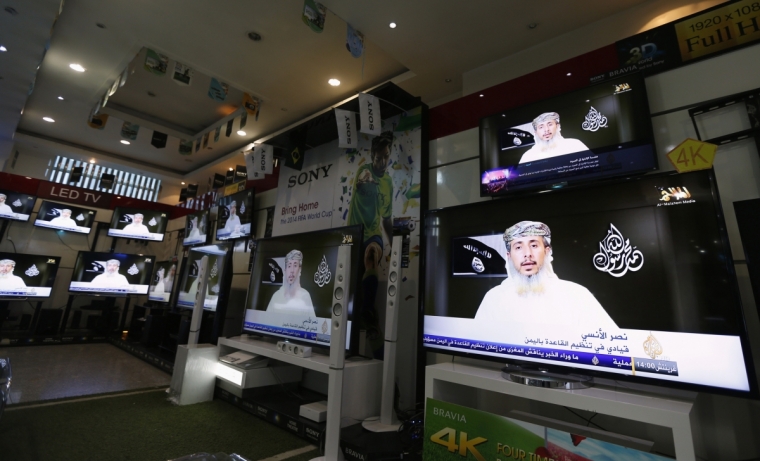
Al Qaeda in Yemen has claimed responsibility for the attack on the French satirical newspaper Charlie Hebdo, saying it was ordered by the Islamist militant group’s leadership for insults to the Prophet Mohammad, according to a video posted on YouTube.

Gunmen killed 17 people in three days of violence that began when they shot staff in Charlie Hebdo’s offices last week in revenge for the publication of satirical images of the Prophet.

One Western source said no hard evidence of a direct operational link to Al Qaeda in the Arabian Peninsula (AQAP) had yet been found.

But it was the first time that a group had officially claimed responsibility for the attack, which was led by Cherif and Said Kouachi, two French-born brothers of Algerian extraction who had visited Yemen in 2011.

In Washington, a State Department spokeswoman said the United States believed the video was authentic but officials were still determining if the claim of responsibility is true.

“As for the blessed Battle of Paris, we…claim responsibility for this operation as vengeance for the Messenger of God,” Nasser bin Ali al-Ansi, an AQAP ideologue, said in the recording.

Ansi said the “one who chose the target, laid the plan and financed the operation is the leadership of the organisation”, without naming an individual.

“ZAWAHRI’S ORDERS”

He added that the strike had been carried out in “implementation” of the order of overall al Qaeda leader Ayman al-Zawahri, who has urged Muslims to attack the West using any means they can find.

Ansi also gave credit for the operation to slain AQAP propagandist Anwar al-Awlaki, a preacher cited by one of the gunmen in remarks to French media as a financier of the attack.

It was not clear how Awlaki, killed by a U.S. drone in 2011, had a direct link to the Paris assault, but he inspired several militants in the United States and Britain to acts of violence.

The purported claim of responsibility put a new spotlight on a group often cited by Western officials as al Qaeda’s most dangerous branch. AQAP has recently focused on fighting government forces and Shi’ite rebels in Yemen, but says it still aims to carry out attacks abroad.

AQAP mocked a huge rally of solidarity for the victims held in Paris on Sunday, saying the shock on display showed the feebleness of the Western leaders who attended.

“Look at how they gathered, rallied and supported each other, strengthening their weakness and dressing their wounds,” it said.

Al Qaeda offshoot Islamic State released a video that it said showed interviews with three French fighters in Syria praising the attacks, the SITE monitoring service reported.

One said: “I say to the French people who think that the Islamic State will not reach Europe: With permission from Allah the Almighty, we will reach Europe – all ofEurope.”

“JOY AT TORMENT”

SITE also said Nigeria’s Boko Haram group had released a video showing its leader welcoming the attacks. “We have felt joy for what befell the people of France in terms of torment, as their blood was spilled inside their country. Allah is Great!” Abubakar Shekau said in the recording, according to SITE.

One Western source described Ansi as an Al Qaeda hawk reputed to have advocated a merger with the even more hardline Islamic State.

Two senior Yemeni sources said Cherif and Said Kouachi had met Awlaki in Yemen and undergone weapons training in the eastern province of Marib. However, aMarib tribal leader denied that they had trained there in 2011 or that Awlaki had been based there.

AQAP’s Yemeni leader, Nasser al-Wuhayshi, was once a close associate of al Qaeda leader Osama bin Laden, whose father was born in Yemen, a neighbour ofSaudi Arabia.

Yemeni President Abd-Rabbu Mansour Hadi complained on Wednesday that Yemen had been subjected to a politicised media campaign over the alleged 2011 visit.

“The person reported to have travelled to Yemen to learn in three days how to fire a pistol had been detained and under investigation for two years in France,” Hadi said, according to the state news agency Saba. Hadi asked why such suspicious elements had been allowed to travel to Yemen and return home without being questioned.

Source: Christian Today

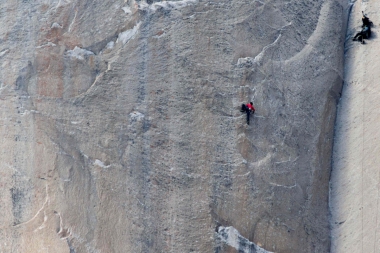
Two Climbers successfully completed El Capitan ascent

Two climbers completed a historic 19-day ascent to the summit of Yosemite National Park’s El Capitan in California on Wednesday after scaling the rock formation’s 3,000-foot (900-metre) sheer granite face without climbing tools, representatives said.

Tommy Caldwell, 36, and Kevin Jorgeson, 30, made it to the top of El Capitan at 3:30 pm, said spokeswoman Jess Clayton of clothing company Patagonia.

The two men, who were the first to climb El Capitan’s so-called Dawn Wall without bolts or climbing tools but used safety ropes in case of falls, climbed the rock face in stages beginning on December 27. They had been expected to reach the summit on Wednesday afternoon.

The Dawn Wall of El Capitan is divided into 32 climbing pitches, which are varying lengths of rock that the climbers mastered with only their hands and feet. The wall has been scaled before, first by legendary climber Warren Harding in 1970, but never without climbing tools.

Yvon Chouinard, Patagonia’s founder and owner who climbed El Capitan in 1964, joked about attitudes toward evolution in a tongue-in-cheek statement celebrating the ascent. He said it “leaves Pope Francis with no choice but to admit our closest relative is the chimpanzee.”

Caldwell and Jorgeson reached the final 11 pitches on Tuesday after working their way past some of the toughest stretches on the rock.

Since the warmth of the day caused their hands and feet to perspire, the two often started climbing at dusk. They used ropes and other tools to move back and forth between the pitches they were attempting to master and their campsite, perched high on the rock.

Jorgeson struggled for several days last week on difficult pitch 15, at one point being forced to rest for two days while the skin on his fingers healed after being ripped off by razor-sharp ledges.

Their attempt on El Capitan was closely watched in the climbing world and drew worldwide news headlines and attention on social media as they made progress toward the summit.

Caldwell, 36, who is sponsored by Patagonia and is one of National Geographic’s “adventurers of the year” for 2015, conceived of the climb in 2007, the company said. Jorgeson spent five years preparing for the climb, his website said.

Source: Christian Today

China steps up security in border it shares with North Korea

China is sending civilian militias to help secure the border it shares with North Korea, state media said, in the wake of two reported killings of Chinese citizens by North Koreans that could strain ties between Pyongyang and its sole major ally.

The China Defence News said on Wednesday it had established a civilian-military defence system in the Danubian prefecture of Jilting province. Danubian shares a border of about 500 km (310 miles) with North Korea.

“China and North Korea are both keeping guard on the border,” the newspaper said. “The situation is more complicated and relying on just one party would make it difficult to achieve effective control.”

The government has also “guided the establishment of militia patrols” to guard border villages. Every 10 neighboring households would have their own border security group and there would be 24-hour video surveillance, the newspaper said.

Last week, China said it had lodged a protest with North Korea after media reported that a North Korean army deserter had killed four people during a robbery in the Chinese border city of Helong late last month.

State media has raised questions about the China-North Korea relationship, saying that the Chinese government “should not be too accommodating”.

China is North Korea’s most important diplomatic and economic ally, although three nuclear tests, several rounds of sabre-rattling and violence on the China-North Korea border have tested Beijing’s support.

The 520 km-long Tumen River that divides China and North Korea is a popular route used by defectors fleeing the secretive North.

Source: Christian Today

Philippines: Pope flies in to tropical storm

Security fears and a potential storm had Philippines leaders on edge ahead of the arrival today of Pope Francis on his first visit to Asia’s largest Catholic nation, where millions of people are expected to attend public events.

Church bells will toll across the Philippines, a mostly Catholic nation of about 100 million people, when Francis arrives on the final leg of his week-long Asian tour at about 5.45 pm.

However, the Philippine weather bureau expects a tropical storm will dump heavy rain on Francis’s devoted followers, who are already thronging the streets in anticipation of his arrival.

Francis will bring a message of compassion to millions of poor Filipinos suffering from the effects of corruption, decades-old insurgencies and climate change, as well as the problems faced by the families of the 10 million-12 million Filipino migrant workers overseas.

He will visit the central province of Leyte, which is still struggling to recover from Typhoon Haiyan that killed 6,300 people in 2013. About two million people are expected to attend an open-air mass on Saturday at Tacloban City airport, almost completely destroyed by Haiyan.

In Manila, around six million people are expected to hear Francis say Mass at Rizal park, the largest in the capital, on Sunday, probably exceeding the record crowd of 5 million during Pope John Paul II’s 1995 World Youth Day Mass.

The government has declared a three-day public holiday to clear traffic in Manila, a city of 12 million people, and has even closed financial markets.

On Wednesday, President Benigno Aquino personally inspected motorcade routes and public venues, which were lined with black-and-white concrete barriers topped by thick wire mesh to control eager crowds.

Interior Secretary Manuel Roxas said Aquino was willing to serve as Francis’ “personal bodyguard” to ensure his safety. In a televised address on Monday, Aquino appealed to Filipinos to follow security rules after two people were killed in a stampede during a religious procession on Friday.

Nearly 50,000 soldiers and police from across the Philippines will be deployed in the country’s biggest security operation. In 1970, a Bolivian artist dressed as a priest tried to stab Pope Paul VI when he arrived at Manila airport.

In 1995, a group of Islamist militants conspired to assassinate Pope John Paul II in Manila, a plan uncovered by police after an accidental fire in the militants’ rented apartment.

Source: Christian Today