Bishop Heather Cook suspected of being drunk at her consecration

Christian Today report– Bishop Heather Cook, who has been charged in connection with the death of a cyclist, was suspected of being drunk at her own consecration, according to an official Church timeline of events.

Cook hit 41-year-old cyclist Tom Palermo after driving her SUV into a bicycle lane in Baltimore on December 27 last year. She then left the scene of the accident, but returned around 20 minutes later.

Testing showed that the bishop was three times over the alcohol limit for drivers in Maryland at the time of the incident and she later confessed in court that she has an alcohol problem.

Now a timeline posted on the website of the Diocese of Maryland shows that a bishop at the lunch before her consecration in September reported her for being drunk. The entry reads: “Bishop Sutton suspects that Cook is inebriated during pre-consecration dinner and conveys concern to Presiding Bishop. Presiding Bishop indicates she will discuss with Cook. Cook consecrated a bishop.”

The Presiding Bishop was Rt Rev Katharine Jefferts Schori. The entry for October reads: “Bishop Clay Matthews from the Office of Pastoral Development for the Episcopal Church, meets with Cook. Details confidential to only the Presiding Bishop’s office.”

Cook had a previous conviction for drunk-driving in 2010, of which the Church’s authorities were aware.

She has been released on bail of $2.5 million and was asked to resign from her position, with the Standing Committee of the Episcopal Diocese of Maryland saying they “agreed unanimously that you are no longer able to function effectively in the position of Bishop Suffragan given recent events”.

Source: Christian Today

Pro Life Campaigners ‘fear the worst’ as MPs prepare to vote on three-parent babies

Catholic Herald report– A leading pro-life charity has said it “fears the worst” as MPs prepare to vote on whether to change the law to allow three-parent babies.

MPs will vote later today on an amendment to the Human Fertilisation and Embryology Act that would allow IVF clinics to replace an egg’s defective mitochondrial DNA with healthy DNA from a female donor, which would result in babies having DNA from three people

Life, Britain’s biggest pro-life charity, has been asking people to lobby their MPs to vote against the proposed change to the law, however a spokesman said in a statement that he was not optimistic about the outcome of the debate.

“We fear the worst. The Department of Health, led by Health Minister Jane Ellison, who was educated in a Catholic convent school, is bent on getting its way,” the statement said.

“It tried to smuggle legislation through Parliament but was forced to bring its proposals onto the floor of the House to be voted on by all MPs, but it is still insisting that what it proposes, so-called mitochondrial donation, is not genetic modification and there’s nothing to worry about. That is simply nonsense.”

SPUC, a pro-life campaign group, has also raised its concerns ahead of the vote in the House of Commons. In a statement, the campaign group described Britain as “the pioneers of abuses of unborn children”.

Paul Tully, SPUC’s general secretary, said: “The 1990 Human Fertilisation and Embryology Act was not intended to permit human cloning, and so the alteration of germ-line genetic material was forbidden.

“However, the proponents of the 1990 Act held out promises of cures and medical advances for children with inherited diseases if they were allowed to use some embryos as guinea-pigs. These benefits failed to materialise.”

Mr Tully added that if the MPs vote in favour of the amendment then it would “sets a precedent for wider cloning of human beings, not in a sinister dictatorship or science fiction world, but here in the UK”.

“We are the pioneers of abuses of unborn children like legalised abortion, IVF and genetic screening, and we are in danger of losing all feeling for the victims of such medicalised exploitation,” he added.

“MPs have been consistently misled in the past about the prospects of success and the future intentions of those who want to use the tiniest humans – human embryos – for experiments. They should reject today’s proposals,”

Meanwhile, Andrea Minichiello Williams, chief executive of the Christian Legal Centre, has also called on MPs to vote against the law changes.

Changing the law would be crossing “an ethical, legal and scientific line” and would make the UK a “rogue state amongst the international community of ethical scientific endeavour,” she said.

In a letter to MPs, she wrote: “The Government is effectively seeking a licence to allow experiments on human beings – not only on human embryos but a life-long experiment on the children who are born as a result, and their children and their children.”

A petition has also been launched by the ProLife Alliance against the proposed amendment to the law.

Last week, Bishop John Sherrington, of the bishops’ conference department for Christian Responsibility and Citizenship, urged MPs to vote against proposed legislative change.

Source: Catholic Herald

GracePointe Church comes out in Support of Gay Marriage

Christian Today report– In a drastic turn from evangelical tradition, the GracePointe Church in Franklin, Tennessee has voted to support gay marriage.

According to The Tennessean, Pastor Stan Mitchell revealed on Friday that the church held two years of intense and “at, times, devastating” discussions before coming to thedecision to support gay marriage when other evangelical churches are sticking to tradition.

Pastor Stan Mitchell, who heads the church, spoke about these discussions during a sermon in a January 11 service. The pastor described hearing stories of “joy” and “unspeakable pain” from the participants. Pastor Mitchell also spoke of close friends in the evangelical community who accused him of betrayal for deciding to bring his congregation in support of gay marriage.

Other people, Mitchell told The Tennessean, found themselves gravitating towards GracePointe because they feel “grateful to have found a place like ours, willing to engage in vital conversations in spite of their difficulty.”

With the change in policy, Mitchell posted on the church’s website that they will now honour and extend full privileges to gay members of the congregation. These privileges include child dedication, leadership opportunities and marriage services, which were previously withheld from them as the church did not yet support gay marriage or relationships.

Mitchell said the privileges will be extended “with the same expectations of faithfulness, sobriety, holiness, fidelity … and willingness as expected of all.”

The GracePointe Church is the second evangelical church in a row in Tennessee to come out in support of gay marriage. The Presbytery of Middle Tennessee also recently voted in favour of supporting gay marriage in the congregation.

According to Ellen T Armour, rector of the Carpenter Program in Religion, Gender and Sexuality, the GracePointe Church’s reversal of its stance towards gay marriage is indicative “(of) the larger transformation that’s been happening in the US” as the American population shows a growing acceptance of gay marriage.

“It’s been happening for a while with Christians in general,” she said.

Source: Christian Today

China: Communist Party Re-affirms Religion Opposition

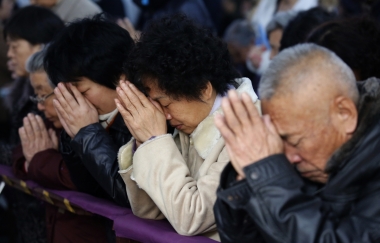
Christian Today report– Officials in China’s Zhejiang province have reaffirmed that members of the Communist party (CPC) must categorically reject all religion.

Only applicants who renounce religion will be accepted, a party authority said on Friday. Those wishing to join the CPC, which currently has at least 80 million members, will be required to undertake a course on Marxism, and anyone found to have participated in religion in the past will have to “rectify” their beliefs.

As the CPC is officially atheist, members have never been able to publically hold religious beliefs. Friday’s announcement, printed in the state-run Global Times newspaper, however, suggests that the pre-examination system for recruiting party members has not always been upheld forcefully. It should be “improved and implemented,” authorities said.

The comments are thought to be part of a wider crackdown on Christianity in Zhejiang, and particularly the city of Wenzhou – also known as the ‘Jerusalem of the East’ due to its thriving Christian population.

Christians in the region believe that the Government is specifically targeting them as part of its bid to retain complete control. Estimates vary, but over 300 churches are thought to have been demolished in recent months, while others have had crosses removed.

Li Yunlong, a professor at the Party School of the CPC Central Committee, told the Global Times that “Party members are banned from joining religions. Believing in communism and atheism is a basic requirement to become a party member.”

“This could be a part of efforts against the penetration of western hostile forces,” he warned.

The CPC is the largest political party in the world, and membership is considered to be a good networking opportunity. Many ordinary civilians, particularly young people, therefore join in the hopes of furthering their career. However, for those with a faith, it’s not an easy decision.

“Churches in Beijing and Shanghai in particular are mostly drawn from the middle classes; white collar workers and well-educated young people from relatively comfortable families, and so for them, applying for party membership would be a part of meeting their career goals,” a country expert told Christian Today in November.

“But it presents a problem for them; should they officially renounce their religion but practise it discreetly, or leave the Church completely, or not apply to join the party at all?”

Speaking anonymously, the spokesperson from Christian Solidarity Worldwide (CSW) added that there has been a “knock on effect” for Christians following the introduction of a hard-line approach to various parts of civil society by President Xi Jinping.

“There’s been talk about having to making sure that churches in China follow a Chinese Christian theology, and at the same time Xi Jinping has talked more than pervious leaders about returning to traditional beliefs,” she said.

“All of this has left some Christians to fear a change in the political climate for churches in China.”

Although the right to freedom of religious belief is guaranteed under Article 36 of the Chinese Constitution, that protection is limited to those who worship within state-sanctioned religious bodies. Those who choose to practise their faith outside of these, or whose beliefs are not officially recognised by the government, are at risk of being accused of participating in illegal activities, which carries heavy punishment.

Last year, a senior a senior official within the CCP, Zhu Weiqun, was forced to dismiss allegations that widespread corruption in the party is due to a lack of religious belief.

In a piece for the Global Times, he said that a ban on religion is “the important ideological and organisational principle which has been upheld since the founding of the party. There is no doubt about it.”

Source: Christian Today

Warning to Prime Minister Narendra Modi

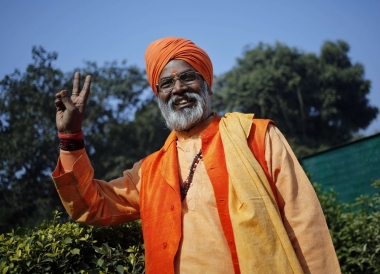
Christian Today report– In an ashram near the Ganges river in the Himalayan foothills, Indian priest-turned-politician Sakshi Maharaj mimes rowing a boat to illustrate what will happen if Prime Minister Narendra Modi’s government ignores Hindu nationalist demands.

“Modi will have to be a boatman: one oar must focus on the economy and the other must concentrate on the Hindu agenda,” says Maharaj, clad in saffron robes and sitting cross-legged on a bed.

He twirls his bejeweled fingers in the air, explaining that otherwise the boat will spin in circles.

The Hindu priest, who has been charged with rioting and inciting communal violence, is the embodiment of hard-line religious elements in Modi’s party whose strident behavior is dragging on the government’s economic reform agenda.

In recent months, Maharaj has created uproar by describing Mahatma Gandhi’s Hindu nationalist assassin as a patriot, saying Hindu women should give birth to four children to ensure the religion survives and by calling for Hindus who convert to Islam and Christianity to be given the death penalty.

For the first time since the election last year, some lawmakers in Modi’s Bharatiya Janata Party (BJP) are rebelling against his focus on mending the economy and governance at the expense of promoting Hinduism.

This is testing the authority of a leader who captured power to a degree not seen since Indira Gandhi ruled India more than three decades ago. Hard-line Hindu politicians impatient with Modi’s refusal to champion their cause are beginning to advance their own agendas.

Maharaj, for example, wants to make it illegal for Hindus to change religions and seeks the death penalty for slaughtering cows, an animal revered by Hindus.

Protests erupted at the most recent parliamentary session over a campaign by hardliners to convert Muslims and Christians to Hinduism, torpedoing key foreign investment legislation that the opposition had earlier agreed to pass.

Modi had to use executive orders to drive policy, but they are seen as a stopgap measure that cannot replace reforms needed to address India’s slowing economic growth.

“Modi has a major problem with these extremist elements,” said S. Chandrasekharan, director of the South Asia Analysis Group in New Delhi. “If he can’t bring them under control they are going to … sap the energy needed to carry out reforms.”

In a sign the world is watching, US President Barack Obama warned on a recent visit that India’s success depended on it not splintering along religious lines.

“I AM A POWERFUL MAN”

At the spiritual retreat, or ashram, elderly disciples with long gray beards bend to kiss the feet of Maharaj, who wears light brown socks with sandals, an orange turban, gold-framed Dolce and Gabbana glasses and a chunky gold-colored watch.

With a self-proclaimed following of 10 million people, Maharaj, a four-time member of parliament, draws support through a network of dozens of ashrams and colleges.

“I am aware that I am a powerful man,” Maharaj says. “I can make or break the government.”

Maharaj is charged by police with rioting and inciting a mob after helping tear down a 16th-century mosque in Ayodhya in 1992, an event sparking riots in which around 2,000 people died.

He admits being present at the demolition but says he could not stop the crowds. In India, trials can take decades because of a shortage of judges.

Modi will have a clearer idea of whether radicals elements are alienating voters when the BJP fights elections in New Delhi. Also this month, the government must present the budget and try to enact three emergency decrees in parliament.

In December, Modi told lawmakers their behaviour was hurting the party and warned them not to cross the Lakshman Rekha, a forbidden line in Hindu mythology, according to party officials briefed on the meeting.

“The message is loud and clear: there is no room for any diversion from the economy,” said G.V.L. Narasimha Rao, a spokesman for the BJP.

“GAME OF CHESS”

The battle for the government’s direction is particularly acute for Modi, because he and his party are ideologically rooted in Hindutva, or Hinduness, a concept sometimes defined in strident opposition to Muslims and Christians.

Modi himself has consistently denied accusations that, as chief minister of Gujarat, he did not do enough to prevent riots in which more than 1,000 people died, most of them Muslims. A Supreme Court inquiry found no evidence to prosecute him.

The Rashtriya Swayamsevak Sangh, the powerful ideological wing of the BJP, supports lawmakers like Maharaj who are working to make India a Hindu nation, said a senior RSS official who asked not to be named.

“We will support them because it is all for a Hindu cause,” he said. There was no evidence to suggest that the RSS was actively involved in pushing the hardliners’ agenda, however.

Modi’s ties with radical Hindus “can be best described as a game of chess,” said Ramchandra Guha, one of India’s leading historians. “Both sides are on board when it comes to establishing the Hindu supremacist agenda, but they want to follow a different strategy to achieve it.”

Maharaj says most Indians, including Modi, privately share his views, and he will continue promoting Hindu supremacy.

“The only difference is he is refined and maybe we are crass,” Maharaj says of Modi. “We may have to fine-tune the message but the message will remain the same.”

Source: Christian Today

Japan Vows to Avenge Countrymen’s Beheadings by ISIS

Christian Today report- Japanese Prime Minister Shinzo Abe vowed to avenge the deaths of two countrymen killed by extremist Muslim organisation the Islamic State (IS) after a new beheading video was released over the weekend.

The terrorists executed journalist Kenji Goto in a video published Saturday—a week after IS published a death photo of aspiring military contractor and Japanese citizen Haruna Yukawa.

Abe promised “to make the terrorists pay the price,” and condemned the actions of the militants in a statement.

“I am infuriated by these inhumane and despicable acts of terrorism, and resolutely condemn these impermissible and outrageous acts,” he said.

“I will never forgive these terrorists. I will work with the international community to hold them responsible for their deplorable acts.”

Yukawa, 42, was first captured in Syria in April 2014, but released with the help of Goto, 47. Yukawa reentered Syria months later, and was captured a second time in July 2014. Goto entered Syria in October, reportedly to rescue Yukawa. Abe said he grieved for their families.

“I am rendered simply speechless,” he intimated. “When I think about the unbearable pain and sorrow that his family must be feeling, I am rendered simply speechless.

“As a government, we have pursued every possible means to save their lives. We feel greatest sorrow and profound grief.”

IS demanded $200 million for the release of Goto and Yukawa after Abe pledged the same amount in non-military aid to countries fighting the terrorists in Iraq and Syria. A former Japanese diplomat and foreign affairs advisor to Abe called the executions a wake-up call.

“This is 9/11 for Japan,” Kunihiko Miyake insisted. “It is time for Japan to stop daydreaming that its good will and noble intentions would be enough to shield it from the dangerous world out there.

“Americans have faced this harsh reality, the French have faced it, and now we are, too.”

While Japan remains a pacifist country, Abe will reportedly seek to expand the role of the military legislatively in the coming weeks.

“No country is completely safe from terrorism,” he told Parliament last week. “How do we cut the influence of ISIL, and put a stop to extremism? Japan must play its part in achieving this.”

Source: Christian Today

Cuba set to have its First Church

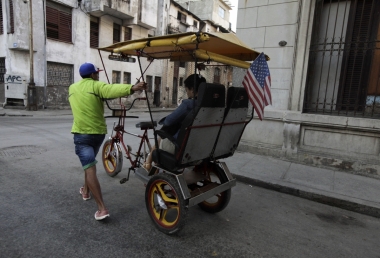
Christian Today report- A remote town in western Cuba is set to be the first parish in the country to build a new church, as official government policy in the Communist nation towards religion makes a major shift.

According to CNN, a new Catholic church is set to be built in the remote town of Sandino. The new church will take two years to build and will have a capacity to accommodate 200 churchgoers.

Rev Fr Cirilo Castro told CNN that Sandino’s Catholics have celebrated Mass once a week in a converted garage for many years now. The priest drives to the town every week to officiate as part of his ministerial duties to the province under whose jurisdiction the town falls. However, when the new church is completed, Fr Castro said that he will minister full-time in the town.

The diocese assured Sandino’s residents that “everything is ready” for the construction of the new church.

“There is money to start, there is the construction material to start, there are the permissions to start,” Bishop Jorge Enrique Serpa Pérez said.

CNN reported that most of the money that was donated for the church’s construction came from the St Lawrence Catholic Church in Tampa, Florida.

“Much of Tampa’s history and culture comes from Cuba,” Rev Tom Morgan, St Lawrence’s vicar, told CNN. “It’s absolutely fantastic they are building a new church, and I hope to be able to visit one day.”

Fr Morgan also hopes that the changes in the US Treasury’s policies could make it possible for St Lawrence to contribute materials for the church’s construction.

Religious freedom was suppressed after the 1959 revolution that brought the late Fidel Castro to power. However, since 1998, the Cuban government began easing up on its restrictions on the Catholic Church. This year, the government began approving requests for the construction of churches in the country, with the project in Sandino being the first to receive a green light.

Source: Christian Today

Candidates must focus on Important Issues, says Nigerian Cardinal

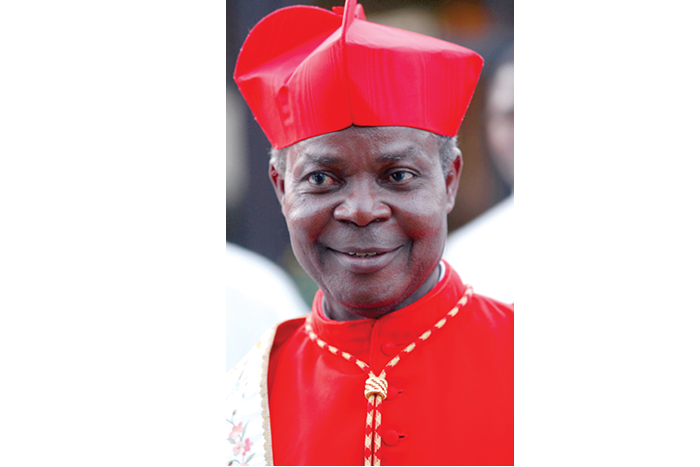
Catholic Register report-The retired archbishop of Lagos called on candidates in Nigeria’s Feb. 14 elections to focus on issues of importance to voters rather than on character assassination and smear tactics.

Cardinal Anthony Olubunmi Okogie, retired archbishop of Lagos, urged candidates to “publish their manifestoes and defend them.”

“They should be bold to say this is what they will do when they get there. It is through this that the electorate will be convinced that such candidates will be able to perform on assumption of office,” Okogie said.

The cardinal expressed fear that violence and bloodshed would erupt if the candidates do not keep in check comments about their opponents and their supporters.

“It’s already happening, as you can see, that the atmosphere is tensed. I am praying seriously, I am begging God to avert it,” he said.

”Look at the reports and advertorials in the newspapers. Instead of the candidates addressing the issues, the campaign is nothing but abuses, unearthing the past, disgracing themselves,” he said.

Polls suggest a close race between President Goodluck Jonathan and former military ruler Muhammadu Buhari, who lost to Jonathan in 2011.

Nigeria has been beset by government corruption, a flagging economy despite immense oil wealth and the Boko Haram insurgency, which nongovernmental organizations estimate has forced up to 1.5 million people from their homes and claimed 11,000 lives.

Okogie challenged the candidates to explain how they will tackle the country’s declining standard of education, unemployment, rising insecurity, poor electricity service, youth restiveness and kidnapping and hostage-taking.

“If we really want to keep Nigeria one as it should be, we should see one another as brothers and sisters. That’s the correct and proper thing to do,” he said.

The cardinal urged candidates to explain how they would partner with the international community to strengthen the Nigerian armed forces and offer plans to rescue more than 200 female students abducted in April.

He also warned candidates to guard against having political “godfathers” who would hinder them from fulfilling their campaign promises and suggested that corruption could end by reducing salaries for public officials.

“Then you will see that there will be few, sincere and honest people aspiring to political offices as against those jostling to milk the national cake,” he said.

In Washington, the U.S. Commission on International Religious Freedom warned of the potential for religiously motivated violence around the election.

“Every effort needs to be undertaken to ensure peaceful elections and prevent the use of religion to stir up more violence,” said a Feb. 2 statement from Katrina Lantos Swett, chairwoman of the commission. “The events leading up to and immediately following Feb. 14 are crucial to Nigeria’s long-term stability and status as a multi-religious and multi-ethnic society.”

Source: Catholic Register

Pope to promote peace during visit to Bosnia-Herzegovina

Catholic Register report– In an effort to help bolster a minority Catholic population and encourage dialogue and friendship among once-warring ethnic and religious communities, Pope Francis announced he would be visiting Bosnia-Herzegovina.

The Pope said he hoped the one-day trip June 6 to Sarajevo, the capital, would help “be an encouragement for the Catholic faithful, give rise to the development of the good and contribute to strengthening fraternity, peace, interreligious dialogue and friendship.”

The Pope made the surprise announcement Feb. 1 after praying the Angelus with those present in St. Peter’s Square.

It will be Pope Francis’ eighth trip abroad and the 11th country he visits outside of Italy since his election two years ago.

The Balkan nation, which is struggling to rebuild itself after a devastating war marked by ethnic cleansing, is still largely divided along ethnic lines. Bosniaks make up 48 percent of the country’s nearly 4 million people, while Serbs make up 37 percent and Croats 14 percent. About 40 percent of all citizens are Muslim, 31 percent Orthodox and 15 percent Catholic.

The 1992-1995 conflict saw a Serb campaign of ethnic cleansing of Bosnian Muslims after the mostly Muslim Bosnia-Herzegovina declared independence from Yugoslavia in 1992. More than 200,000 Muslims and tens of thousands more were killed in the conflict, more than 600 Catholic churches were destroyed and hundreds of thousands of Catholics were forced to flee certain regions.

Although the 1995 Dayton Peace Accords ended the fighting, the complex political structures the peace deal established — with one area administered by ethnic Serbs and another by a Muslim-Croat federation — meant the mostly Catholic Croat community became powerless and discrimination against them grew, according to Bosnia’s bishops.

During their “ad limina” visit to the Vatican in 2006, the bishops told journalists that Catholics were slowly “becoming second-class citizens in our own country.”

Cardinal Vinko Puljic of Sarajevo said at the time that Bosnia-Herzegovina is “a confused country” whose complex political structure is unsustainable, unjust and must be changed. Corruption and political stalemate are said to be rampant.

It has the highest youth unemployment rate in the world with nearly 63 percent of 15- to 24-year-olds without work. The overall unemployment rate of about 44 percent and a perceived sense of political inaction to address the country’s economic woes have led to a series of protests and demonstrations in some cities.

St. John Paul II visited Bosnia-Herzegovina twice in his 26-year-long pontificate: in 2003, and in 1997 when he celebrated Mass in a snowstorm in the war-ravaged capital Sarajevo. The nation, he said later, was “a symbol of the contradictions and hopes” of the 20th century.’

Pope Francis is expected to repeat the late-Pope’s calls for a change of heart and living one’s faith as the key to solving social and political problems, and building a culture of forgiveness, reconciliation and respect.

Pope Francis had been invited to Sarajevo last year to mark the 100th anniversary of the beginning of the First World War, which was triggered by the assassination of the Austro-Hungarian heir to the throne in Sarajevo on June 28, 1914.

The Pope’s visit will fall on the anniversary of D-Day, June 6, 1944, when the Allied invasion of Normandy marked the start of the Allies massive push into occupied Western Europe during World War II.

Bosnia-Herzegovina is also the nation where Medjugorje is located. A Vatican commission of cardinals, bishops, theologians and other experts, working under the auspices of the Vatican’s doctrinal congregation, is still studying the events at Medjugorje, where six village children said they first saw Mary in June 1981. The visionaries have said they still see apparitions and that they have received more than 40,000 visits from Mary.

Source: Catholic Register

Niger Archbishop set to restore ties with Muslims after attacks

Christian Today report- Despite the violent attacks carried out by Muslim mobs in the Niger, the Archbishop in the capital city of Niamey is determined to mend ties with the Muslim community all over the country.

Violence erupted in various cities in the Niger on January 16 and 17 following the publication of French satirical weekly magazine Charlie Hebdo of a cartoon depicting the Prophet Mohammed. Enraged Muslims attacked in mobs and destroyed properties owned by Christians including places of worship.

“We’re still trying to understand the savagery which erupted here — but it’s certain it was well thought-out, prepared and organised,” outgoing Archbishop Michel Cartateguy of Niamey told the Catholic News Service.

The Archbishop is due to be replaced by Archbishop Djalwana Laurent Lompo, but his successor has not yet been installed due to the eruption of violence.

Archbishop Cartateguy also told CNS of his belief that Islamist group Boko Haram had “certainly helped direct” the orchestration of the attacks against Christians in Niamey, Zinder and Maradi. The Archbishop also said that the violence included children, some “as young as 10.”

On the other hand, the Archbishop also thanked the courage of the local Muslims who protected Christians during the violence.

“We know some local Muslims, young included, showed courage and solidarity by sheltering Christians in their family homes. Some also stood in our church doorways saying the rioters would have to kill them as well,” the Archbishop revealed.

Archbishop Cartateguy said that the local Muslims were only following the teachings of their prophet Mohammed. “They told me the prophet Muhammad protected Christians in his day and pledged to follow his example by helping Christians in danger now,” he told the CNS.

For now, the Archbishop said that what they have to do is rebuild not only their churches but also their ties with their Muslim neighbours.

“We now have to reconstruct hearts and minds deeply scarred by these events and renew the friendly ties we always had with the Muslim community,” he said.

Source: Christian Today