


Jim Denison on Movies, Culture, and the Wisdom of Frederick Douglass

Jim Denison is the founder and CEO of the Denison Forum, a nonprofit Christian media organization that comments on current issues through a biblical lens. The views expressed in this commentary do not necessarily represent those of BCNN1.

Brad Pitt won an Academy Award last night for Best Supporting Actor. (He won an Oscar in 2014 as a producer.) In his acceptance speech, he said, “They told me I only had forty-five seconds up here, which is forty-five seconds more than the Senate gave John Bolton this week.” Thus began a night of awards juxtaposed with politics and surprises.

Joaquin Phoenix won the Best Lead Actor award for Joker and spoke out against artificially inseminating cows. Parasite became the first non-English-language film to win the Best Picture award. Presenter Natalie Portman wore a cape on which were written the names of women who weren’t nominated for an Academy Award for Best Director.

The Oscars felt to me like an evening of cultural commentary interspersed with occasional awards. The popularity of many of the actors and presenters can delude us into thinking Hollywood speaks for us.

The opposite is actually more the case.

Of the nine movies nominated for Best Picture, Joker made the most money, ranking ninth in box office sales for 2019. Avengers: Endgame grossed more than twice that much.

Women make up 50.8 percent of the American population, but they have received .01 percent of Best Director nominations in Oscars history (five out of 447 official nominations in ninety-two years). People of color comprised nearly 37 percent of the American population in the 2010 census, but only one person of color was nominated in the four major acting categories (actress Cynthia Erivo for her lead performance in Harriet).

Of the nine movies nominated for best picture, seven are set in the past. Eight are about white people; six of the eight are about white men.

In 1940, Hattie McDaniel became the first black actor to win an Academy Award. That year, the Oscars were held in a “no blacks” hotel. After accepting her award, she was made to sit at a segregated table away from the rest of the Gone With the Wind cast.

We would like to think that the Academy Awards have become more representative of our society since then, but of the 276 acting Oscars given since 1940, only sixteen went to black actors (5.8 percent). Seven went to Latin American and Asian American actors (2.54 percent).

Some demographics are woefully underrepresented by Hollywood, while others are hugely overrepresented.

The LGBTQ advocacy organization GLAAD noted that in 2018, 18.2 percent of films from the major movie studios contained LGBTQ characters. 20th Century Fox led the way at 40 percent, followed by Universal Pictures with 30 percent. GLAAD also reported that 10.2 percent of regular characters appearing on broadcast scripted primetime television programming in 2019 were LGBTQ; they want that number to grow to 20 percent by 2025.

These efforts to ensure that movies and television overrepresent the number of LGBTQ Americans are effective. According to Gallup, US adults estimate that 23.6 percent of Americans are gay or lesbian, when the number is actually 4.5 percent.

Source: Christian Headlines

All Content & Images are provided by the acknowledged source

John J. Paris and Kevin Wildes on Making an Idol of Brain-Injured Patients and What ‘Sanctity of Life’ Means

The Rev. John J. Paris is a professor emeritus and research professor at Boston College. The Rev. Kevin Wildes is university professor at St. Joseph’s University. Both are Jesuit priests. The views expressed in this commentary do not necessarily reflect those of BCNN1.

In a recent RNS column, Charles C. Camosy, in writing about new research about people who are in a “persistent vegetative state,” cited Dr. Joseph Fins’ studies of what Fins calls “deep brain stimulation.” Fins reports that his research reveals that many patients diagnosed as in a persistent vegetative state in fact have some level of consciousness.

That leads Fins, and with him Camosy, to favor “a new civil rights” movement to be sure all brain-injured patients get “up-to-date” diagnoses, good pain management and the latest therapies to help them improve. That aspirational goal sounds as if it ought to be readily adopted.

But Camosy goes further by invoking the case of Terri Schiavo, the Florida woman in a persistent vegetative state whose case drew international attention in the mid-2000s when her husband moved to end her life support. “We were there for Terri Schiavo and her family,” Camosy notes, before saying, “There are new and influential allies to be had in the fight to protect people who have serious brain injuries.” He concludes, “The time to move is now.”

It is important not to confuse Schiavo’s case with the patients with whom Fins is concerned. In his autopsy report, Florida’s Pinellas County chief medical examiner, Jon R. Thogmartin, confirmed that her condition was consistent with that of someone in a persistent vegetative state, that her brain had “atrophied” to about half that of normal, that she was blind and that no treatment could have remotely improved her condition.

Throughout his piece, Camosy’s analysis, unlike Fins’, does not differentiate among the categories of those who suffer serious brain injuries: “brain death,” “persistent vegetative state,” “locked in syndrome,” a “minimally conscious state” and “coma.” For Camosy, all of these are lumped into “persistent vegetative states” and classified as “vegetables.”

In this Camosy is not unique. John Paul II in a 2004 address to the Pontifical Academy for Life argued that patients in a persistent vegetative state are not vegetables, but human beings with all of the dignity of others created as humans. In the same address John Paul maintained that “artificial” nutrition and fluids are “natural” means, not medical treatments. As such they are “ordinary care” that must be provided to every unconscious patient.

Every medical association that has addressed the issue and every court of final jurisdiction that has ruled on it, including the U.S. Supreme Court, has rejected that analysis. Each declared that artificial nutrition and fluids, unlike food and water, are medical treatments to be assessed as any other medical intervention, i.e., on the subjective assessment of the patient (or proxy), as to the proportionate benefit and burden of the intervention.

Here the medical societies and the various appellate courts follow the consistent analysis of Catholic moral theology from Pope Basil the Great in the 4th century through the Vatican’s 1980 “Declaration on Euthanasia” and John Paul II’s 1995 encyclical Evangelium Vitae, all of which hold that medical interventions have limited efficacy. They are to be utilized on the basis of the patient’s (or proxy’s) judgment on the benefit and burden that accrue to the patient from their use.

Camosy’s view that medically assisted feeding and hydration are “ordinary” treatments means they would be morally required. But traditionally, a medical treatment is considered “ordinary” only if it offers hope of improved health. If there is no hope of improvement, there is no moral reason to pursue the treatment.

Even if there is a hope of benefit, the benefit alone does not always make a treatment morally obligatory. If a treatment is either physically or morally burdensome for the patient or others, then one can morally withhold or withdraw the treatment. The assessment of the burdensomeness of a treatment is a quality-of-life judgment, made by the patient or her surrogates, relative to the patient’s perception of his or her own life.

Source: Religion News Service

All Content & Images are provided by the acknowledged source
Southern Baptist Convention Pastors’ Conference Announces Speakers and Theme for 2020

Bestselling author Wayne Cordeiro and former International Mission Board president David Platt are on a preliminary lineup of 2020 Southern Baptist Convention Pastors’ Conference speakers announced Monday (Feb. 10) at sbcpc.net.

“Beloved,” based on 1 John 4:11, is the theme of the conference set for June 7-8 at the Orange County Convention Center in Orlando, Fla., conference president David Uth has announced.

“The goal is for every pastor and his family to be encouraged and more committed to loving one another because Jesus first loved us,” Uth, pastor of First Baptist Church of Orlando, told Baptist Press Monday. “This verse represents both a reminder and a challenge that are desperately needed right now.

“This year’s Pastors’ Conference will be an opportunity for pastors and their families to experience a different kind of conference; one that not only celebrates our commitment to the Word of God and the ministries He has given us, but also to have fun and celebrate because we are in the entertainment capital of the world, Orlando!” he told BP.

Source: Baptist Press

All Content & Images are provided by the acknowledged source
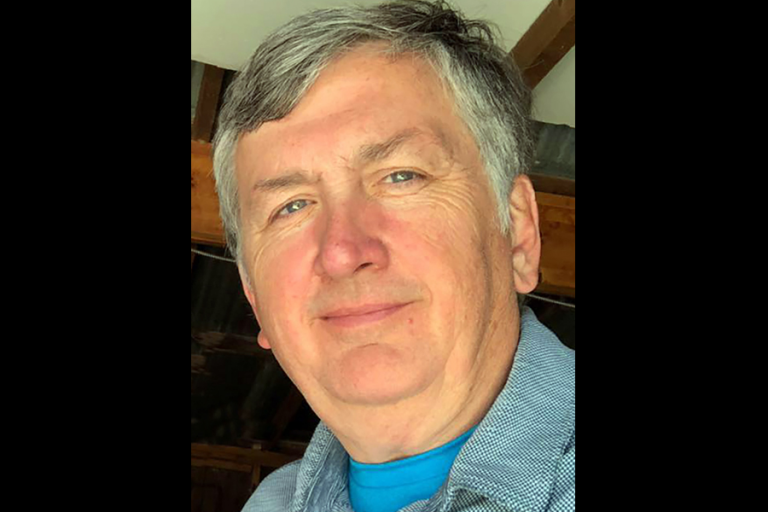
Dakota Baptist Convention Hires Fred MacDonald as New Executive Director

The Dakota Baptist Convention Executive Board has hired Fred MacDonald as executive director and treasurer to succeed Garvon Golden who retired.

Executive board chairman Dude Garrett announced the appointment Saturday (Feb. 8) in a press release.

“We have great respect for Fred and how God has used him in God’s kingdom work,” said Garrett, pastor of Temple Baptist Church in Fargo, N.D. “[MacDonald] is not a stranger to the Dakotas, having served in various roles in the Dakotas for over 10 years, and we look forward to his expertise in leading the convention.”

MacDonald has served in several denominational posts, most recently as director of associational missions for Pecos Valley Baptist Association in New Mexico, where he helped establish an international partnership with Hope Baptist Centre in Pretoria, South Africa. The partnership has seen dozens come to faith in Christ and 21 South African pastors and their wives trained in the biblical basics of pastoral ministry, the DBC said.

“Over the past 35 years [my wife] Denise and I have had the blessing of serving God in various churches, associations, and state conventions,” MacDonald said in the press release. “Many of these years have been spent in the Dakotas where we both grew up and went to school. We have a great love for the Dakotas and for Dakota Baptists.

“Serving with the churches of the DBC as executive director is an exciting thought,” MacDonald said. “We are honored to return and serve with the churches of the DBC to fulfill the Great Commission across the Dakotas and around the world.”

MacDonald is scheduled to begin May 1 in the post.

Source: Baptist Press

All Content & Images are provided by the acknowledged source
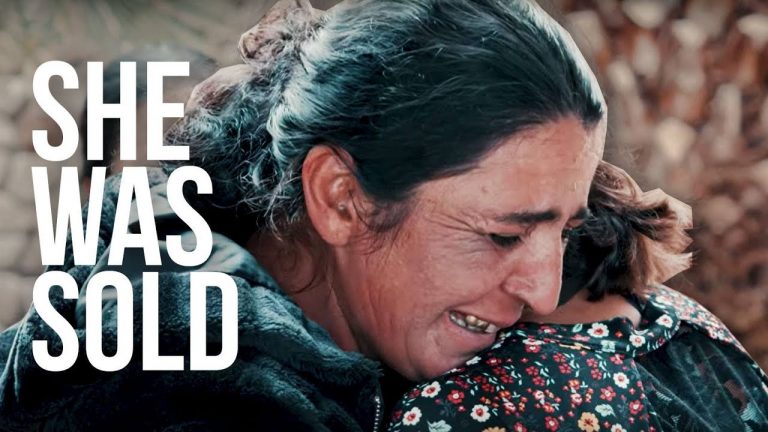
WATCH: Victim of Human Trafficking Reunites With her Family After 25 Years

Although Belle was born 25 years ago in Romania, a country with many impoverished areas where human trafficking is common, this story has implications for the realities that occur in America also.

After her birth, doctors in the hospital told Belle’s parents that she’d died, and she was given to a trafficking orphanage. She was adopted and then sent to the United States. Operation Underground Railroad has many teams that rescue people all around the world from human trafficking, and the nonprofit helped Belle fly to meet her birth family for the first time.

It’s a common misconception that sex trafficking is worse in other countries than in America. But statistics show that the U.S. was ranked as one of the world’s worst places for human trafficking in 2018, and over 49,000 cases have been reported to the National Human Trafficking Hotline since 2007.

SOURCE: Charisma News

All Content & Images are provided by the acknowledged source

Jennifer Lopez Says ‘It’s Silliness’ that a ‘Small Faction’ of People Called her Halftime Show Inappropriate

Jennifer Lopez was asked late last week what she thought about those who felt her performance at the Super Bowl LIV was too racy, and her response was laughter.

Dismissing those who disagreed as a “small faction” of people, she told Variety that it’s “silliness” to call it inappropriate while adding both she and Shakira are “really respectful performers who are moms, have kids, who are very conscious of what we do.”

Lopez didn’t outline her definition of respectful nor explain how her skimpy outfit and pole dancing fit into those parameters.

“We did a show that I believe was a celebration of women and our Latino culture that was really well received,” the star added. “That small faction of people that wanna be negative about it not something I can even let in because it was such an amazing night, so many beautiful things came out of it.”

SOURCE: Faithwire

All Content & Images are provided by the acknowledged source

Here We Go: Starbucks Promotes Transgender Agenda in #WhatsYourName Campaign Commercial

A new commercial from Starbucks is attempting to raise awareness of the daily challenges faced by transgender youth.

The advertisement aired during the first week of February and aims to show people that Starbucks welcomes everyone, regardless of who you are or want to be.

At Starbucks, writing your name on a cup and calling it out is a symbol of our warm welcome. Starbucks welcomes you, whoever you are. #whatsyourname Find out more at https://t.co/6BrvpLfKZb pic.twitter.com/w1ge3ZKu0C

— Starbucks UK (@StarbucksUK) February 2, 2020

The 90-second commercial starts out like a story, showing a trans teen who is referred to as “Jemma” during different times of the day.

At the end of the ad, the teen goes to Starbucks where the barista asks for a name.

“It’s James,” the teen responds with a smile. The employee writes “James” on the cup and the words “every name’s a story” appear on the screen.

The coffee giant launched the commercial as part of the #WhatsYourName campaign.

SOURCE: CBN News

All Content & Images are provided by the acknowledged source

Michael Brown on ‘Love Your Enemies’ Is a Command, Not a Suggestion

Jesus taught it. Paul reaffirmed it. And neither of them said their teaching was optional for Christians. Instead, God Himself commands us, His children, to love our enemies and to bless those who curse us.

No one said it would be easy. No one even said it would be possible, without divine help. But, without any question, the call to love our enemies is a divine command, not a human suggestion.

In the words of Jesus, “You have heard that it was said, ‘You shall love your neighbor[a] and hate your enemy.’ But I say to you, love your enemies, bless those who curse you, do good to those who hate you, and pray for those who spitefully use you and persecute you, that you may be sons of your Father who is in heaven. For He makes His sun rise on the evil and on the good and sends rain on the just and on the unjust. For if you love those who love you, what reward do you have? Do not even the tax collectors do the same? And if you greet your brothers only, what are you doing more than others? Do not even the tax collectors do so? Therefore be perfect, even as your Father who is in heaven is perfect” (Matt. 5:43-48).

In the words of Paul, “Bless those who persecute you; bless, and do not curse. … Repay no one evil for evil. Commend what is honest in the sight of all men. If it is possible, as much as it depends on you, live peaceably with all men. Beloved, do not avenge yourselves, but rather give place to God’s wrath, for it is written: ‘Vengeance is Mine. I will repay,’ says the Lord. Therefore, ‘If your enemy is hungry, feed him; if he is thirsty, give him a drink; for in doing so you will heap coals of fire on his head.’ Do not be overcome by evil, but overcome evil with good” (Rom. 12:14, 17-21).

To be sure, this is not talking about how our country’s military should respond to a foreign invader. Nor is it telling a husband and father what to do if a serial killer breaks into his home, intent on killing his wife and children.

These teachings refer to our interpersonal relationships. To our attitudes. To our responses.

Will we bless those who curse us, or will we curse them back? Will we love those who hate us, or will we hate them back? Will we overcome evil, or will we be overcome by evil?

There are certainly times for making a spirited defense of one’s position, especially for the cause of righteousness. And there are certainly times when evil must be publicly and plainly rebuked.

But you can rebuke someone while having great love for them at the same time.

You can even want justice to be done while having great love for the criminal justly sentenced for his crime.

In short, the command to love our enemies does not call on us to compromise our ethics. It calls on us to take our ethics to a higher level, hating evil to the point that we refuse to be corrupted by it.

At the recent National Prayer Breakfast, “Arthur Brooks, a Harvard professor and president of a conservative think tank, had decried a ‘crisis of contempt and polarization’ and urged his listeners to ‘love your enemies.’”

In response, President Trump remarked, “I don’t know if I agree with you,” adding, “I don’t like people who use their faith as justification for doing what they know is wrong.” And, the president continued, “Nor do I like people who say, ‘I pray for you’ when you know that is not so.”

SOURCE: Charisma News

All Content & Images are provided by the acknowledged source
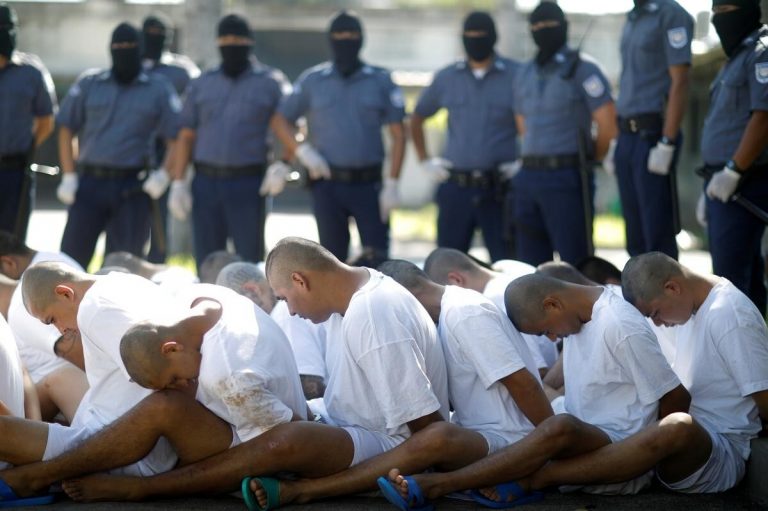
J. Lee Grady on Jesus Is Transforming Salvadoran Gang Members

This Monday, I stood in front of 600 male inmates at a prison in Izalco, El Salvador. The men were dressed in white T-shirts and white drawstring pants, and many of them sported tattoos on their faces and necks. All the men were members of violent gangs when they were incarcerated. About 20% of them were affiliated with the MS-13 gang—a group known for horrific attacks on women, children and police officers.

Yet I felt no fear as I looked out over the crowd and shared a message from Luke 15 about the prodigal son. Most of the men were carrying Bibles, and when I announced my text, they immediately turned to the passage. I could hear them yell, “Amen,” or “Gloria a Dios,” when I stressed an important point. And they clapped and cheered when I reminded them that the kosher Jewish father in the story welcomed his wayward son home even though the boy smelled like pigs.

Almost every prisoner in this huge group became a Christian after arriving at the Izalco prison. Two churches now operate inside the facility, pastored by men who were once tough criminals. All the men now gather for Bible study every day, they hold prayer and fasting vigils, and they are helping each other to grow spiritually.

When the men worshipped on Monday, six guys used plastic paint tubs for drums while an inmate with a huge smile led the praise choruses. The men sang louder and with more passion than I’ve witnessed in most churches in the outside world.

I told the inmates: “!Jesucristo vive dentro de esta prisión!” (“Jesus Christ lives inside this prison!”) The men screamed with approval.

“Our government is encouraging this movement,” says Oscar David Benavides, director of the prison. He says in 2016 he was allowed to encourage evangelism among inmates. When men experienced conversions, he intentionally moved them into buildings where there were non-Christian inmates.

SOURCE: Charisma News

All Content & Images are provided by the acknowledged source

Anne Graham Lotz on Be Careful Not to Miss These Road Markings God Has Laid Out

“See, I am setting before you today a blessing and a curse: the blessing if you obey the commandments of the Lord your God, which I am commanding you today, and the curse, if you will not obey the commandments of the Lord your God, but turn from the way which I am commanding you today” (Deut. 11:26-28a).

When I drive down the highway, painted lines on the pavement provide helpful guidance. A dotted white line lets me know that if the lane of oncoming traffic is clear, I can pass other cars. A solid line means no passing is allowed. The highway department is not trying to take away my joy in driving. The lines on the road are intended to keep me safe, and keep others safe, while I’m on my way to my destination.

In a similar way, as we live and travel down life’s road, we can push the boundaries God has established. But we do so at our own peril. If we go outside His “road markings,” the likelihood is that we will get hurt, as well as hurt other people. At the very least, we will experience life on a lower level than He intended. The alternative is to take God at His Word, stay within His boundaries and trust Him to know what’s best for us.

—When God says to have no other gods before Him, He knows that other gods—such as money, fame, sex, pleasure, power—will enslave you.

—When God says not to create and worship idols, He knows that behind them are demonic forces who will weaken you, deceive you and suck you into evil attitudes, words, actions and thoughts that you had no idea you were capable of having or saying or doing.

—When God says not to misuse His Name, He knows that unless you reverence Him, you will not have even the beginning of wisdom with which to live and make your decisions.

SOURCE: Charisma News

All Content & Images are provided by the acknowledged source
