Judge: Boston City Hall Can Refuse to Fly Christian Flag despite Flying Other Religious, Cultural Flags

Judge: Boston City Hall Can Refuse to Fly Christian Flag despite Flying Other Religious, Cultural Flags


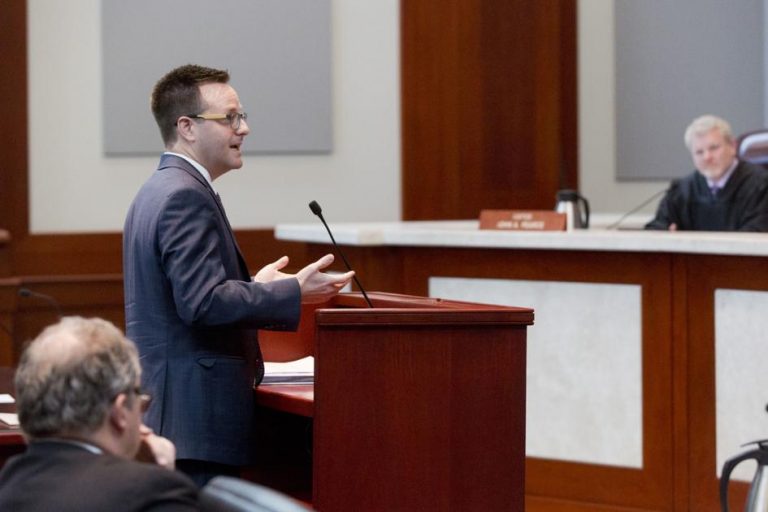
The city of Boston does not have to raise a Christian flag at City Hall Plaza, a federal judge ruled this week.

According to the Christian Post, the decision comes even after the City Hall Plaza has raised flags for other groups, including an LGBT support flag.

In 2018, Harold Shurtleff sued the city after the city government refused his 2017 request to fly a Christian flag outside City Hall.

Shurtleff heads Camp Constitution, an organization that intends to “enhance understanding of our Judeo-Christian moral heritage.” The organization has previously hosted Constitution Day and Citizenship Day events at City Hall.

Shurtleff had requested that the city fly a Christian flag on Constitution Day on Sept. 17, 2017. The city denied the request under its policy that the city has the discretion to decide which flags may be flown outside City Hall.

Liberty Counsel, the group representing Shurtleff, says the city has never rejected any flag from flying until Shurtleff’s 2017 request.

Court documents show that the city of Boston raised nearly 300 flags between 2005 and 2017 from different organizations.

U.S. District Court Judge Denise Casper issued an order, saying the “display of flags outside City Hall is government speech.”

“The [then-head of the property management department Gregory Rooney] had never considered a religious flag prior to the…

… Read More

Click here to read the rest of the story from our content source/partners – Christian Headlines.

قالب وردپرس

Planetary scientist thinks there is life on a Jupiter moon: ‘Always remember the source of your personal worth’

Monica Grady is a professor of planetary and space science
and the newest chancellor at Liverpool Hope University in the UK. In other
words, she knows (much) more about planetary science than I do.

She thinks there is most likely life beneath the icy exterior shell of Jupiter’s moon Europa.

In fact, she calls this possibility “almost a racing
certainty.” While life on Mars is possible, she says, “I think we’ve
got a better chance of having slightly higher forms of life on Europa, perhaps
similar to the intelligence of an octopus.”

There are plans to send a NASA mission called Europa Clipper
to look for life on the frozen moon. And there’s much interest in further
exploration of Mars as well. But Grady thinks life on the latter, if it exists,
is “likely to be very small—bacteria.”

She adds: “I’m fairly certain we’re all there is at our
level of intelligence in this planetary system.”

‘Always remember the source of your personal worth’

A story about aliens (to us, not
to them) with the intelligence of an octopus on a moon that is 390 million
miles from us is more interesting than practical. Here’s a very practical fact
I do know with absolute certainty: God made everything that exists on Europa.
And everything that exists on Earth.

And he made it all for a purpose.
Including you.

Max Lucado offers this reflection in today’s devotional: “We all ask the question, ‘Am I somebody important?’ It’s easy to feel anything but important when your ex takes your energy, or old age takes your dignity. Somebody important? Hardly. But remember this promise of God: you were created by God, in God’s image, for God’s glory.”

Max then quotes Genesis 1:26 and
notes: “God never declared, ‘Let us make oceans in our image,’ or ‘birds
in our likeness.’ The heavens above reflect the glory of God, but they are not
made in the image of God. Yet you are! And because God’s promises…

… Read More

—

Click Read More to read the rest of the story from our content source/partners – Denison Forum.

قالب وردپرس

Dan Britton on One Prayer That Can Change Your Life

The views expressed in this commentary do not necessarily reflect those of BCNN1. Opinions expressed are solely those of the author(s).

Prayer is hard! It takes work. I often feel guilty that I don’t pray enough. Even when I do, I wish I prayed longer. When my prayer life is lacking, rushed and forced, it unfortunately becomes a last resort instead of a first response.

Prayer is the one thing that can have the greatest impact on our lives and the lives of others, yet it becomes an option, not an absolute. Prayer is a discipline we need, want and value. It gets pushed aside to the never-ending demands and busyness of life. This can minimize and marginalize our prayer lives. Prayer becomes a 911 call — a plea for help — instead of a continual conversation with our Lord. There’s nothing wrong with 911 prayers, but when they become our only prayers, then there is something wrong.

Often, when I ask people about their prayer life, I usually get a similar confession. We like the effects of prayer but not the hard work of prayer. We want the results, benefits and blessings without the surrender, sacrifice and sweat. We resort to microwave prayers instead of Crock Pot prayers. Quick and short instead of slow and long. God longs for us to commune with Him. Instead, we give him “quick words of prayer.”

The crazy thing is I have never met someone who says they feel great about their prayer life. Engaging God through prayer can be an ongoing battle. Recently, I talked with a friend who started a prayer ministry 20 years ago and has mobilized 20,000 full-time prayer missionaries. He spends over 25 hours a week in their prayer room and, guess what, he told me he struggles with praying! We are never satisfied with our prayer life because there is always room to grow when it comes to praying.

Unfortunately, learning how to pray doesn’t come naturally. I believe the best way to learn is from a mentor. Barry Spofford, who passed away in 2015, was my spiritual mentor who taught me how to pray. For 23 years, I had the joy and honor of serving on staff with Barry and starting Fellowship of Christian Athletes in many countries around the world. God used Barry as a spiritual coach to show me the importance of spiritual disciplines, especially prayer. Spending hours of prayer on my knees with Barry, I saw God move mountains. I learned how to pray, not just talk about prayer.

When we met, Barry slipped off his Timex watch, set the timer for an hour, put the watch on the table, and then dropped to his knees. No talk; just prayer. He modeled how to pray right away, instead of waiting, which was the key. He lived by the motto, “Pray it, don’t say it.” He seized the moment and prayed instantly. Barry taught me the power of constant, unbroken, continual, spontaneous prayer. Activating prayer was as simple as calling upon the Lord at all times.

SOURCE: Christian Post, Dan Britton

All Content & Images are provided by the acknowledged source

Utah Proposes Bill That Would Require Pornography to Have Labels Warning of ‘Addictive Sexual Behavior’ and ‘Low Self-Esteem

A newly introduced proposal in Utah requires pornography to come with labels warning of “addictive sexual behavior” and “low self-esteem” among other ill effects in the latest legislative push against porn.

According to state Rep. Brady Brammer, R-Highland, the proposed label on pornography circulated in the Beehive state warns of impairment of “brain development, emotional development, and the ability to maintain intimate relationships,” the Salt Lake Tribune reported Tuesday.

Exposure to porn may also result in “the improper objectification of and sexual violence towards others, among other numerous harms,” Brammer’s label would also say.

“The idea is we’ve already found that … exposing minors to pornography can be extremely damaging,” Brammer said, drawing inspiration from a California measure, Proposition 65, which required warning labels on products that contain certain cancer-causing chemicals.

“We’ve already made that finding as a state. So [the bill] says, well, let’s put a warning label on pornography, and we’re going to enforce it the same way that California’s Prop 65 is enforced,” he said.

Defenders of pornography often do so on First Amendment grounds. The lobbying arm of the pornography industry and longtime foe of anti-porn activists is called the Free Speech Coalition.

Brammer’s bill stipulates such warning labels ought to be displayed on the cover of any pornography print publication or shown for at least 15 seconds prior to the viewing of online explicit videos or images.

SOURCE: Christian Post, Brandon Showalter

All Content & Images are provided by the acknowledged source

Richard Land on Sexual Abuse in the Church, Part 1 — The Children

The views expressed in this commentary do not necessarily reflect those of BCNN1. Opinions expressed are solely those of the author(s).

Question:  There have been disturbing reports about child sex abuse in churches, sometimes even the father being the perpetrator, and pastors and counselors saying that the perpetrator has repented and pushing reconciliation and forgiveness even though the victim believes the perpetrator is faking it and feels unsafe.  Church leaders have even pushed for children to forgive and live with the father who sexually abused them and some have resulted in continual abuse.  How do you balance repentance, forgiveness, born-again theology, and protecting the victim and preventing further abuse – both in a counseling setting and in a church setting?  How do you deal with a convicted child sex abuser joining the church and setting up proper protection while also needing to recognize someone beyond their past sins?

We have all been scandalized by the voluminous reports of sex abuse within our churches and Christian communities. Our hearts break when we discover sexual predators in our midst who have violated a sacred trust by perpetrating sexual violence within the fellowship of believers.

Of course, we must do everything we can as churches to prevent sexual violence and sexual exploitation within our churches and Christian communities. It is our Christian duty to do background checks and put in place guidelines, procedures, and safeguards both to help prevent such behavior and to encourage it being reported and dealt with immediately when it does occur. All reports and allegations must be taken seriously and reported to the proper authorities.

Our grief is particularly acute when the victims are innocent children. What do you do when someone has confessed their crime of molesting children, has served their sentence, and has asked for reinstatement as a church member on the basis of being a redeemed and forgiven sinner?

While serving as interim pastor of a Baptist church several years ago, I was presented with just such a situation. A young man in his mid-twenties had been convicted in his late teens of sexual molestation of a child. He had served his sentence and purportedly been rehabilitated in prison. He had then been released and returned home to live with his parents. His father (a church deacon) and mother wanted to start bringing him back to church, which he also strongly desired to do. The deacon leadership asked me, “What do we do? The boy has expressed remorse and asked for forgiveness.  Should we deny him the right to worship in the Lord’s house?”

SOURCE: Christian Post, Richard Land

All Content & Images are provided by the acknowledged source

PODCAST: The Road from Text to Sermon, Part 5 (Proclaim #56 with Daniel Whyte III)

Welcome to episode #56 of PROCLAIM! — the podcast that teaches every Bible-believing Christian how to preach the Gospel by any means necessary in many different settings, including using the internet and the new “podcast pulpit”.

Our Scripture Verse on preaching is Acts 10:42 which reads: “And he commanded us to preach unto the people, and to testify that it is he which was ordained of God to be the Judge of quick and dead.”

Our quote on preaching today is from Reinhard Bonnke. He said, “You may not be allowed to stand on the pulpit in your church to preach, but every junction in your area is a pulpit, stand there and preach.”

In this podcast, we are using as our texts, the following three books: “Lectures to My Students” by Charles H. Spurgeon; “The Preacher and his Preaching” by Alfred P. Gibbs; and “Biblical Preaching” by Haddon W. Robinson.

Today, our topic is titled “The Road from Text to Sermon, Part 5” from “Biblical Preaching” by Haddon W. Robinson.

1. We Explain It: “What Does This Mean?”

The first developmental question centers on explanation: What does this mean? Does this concept, or parts of it, need explanation?

The question, “What does this mean?” can be pointed at different targets. First, it can be directed toward the Bible: “Is the author in the passage before me developing his thought primarily through explanation?” When Paul wrote to his friends at Corinth, he explained how the diversity of gifts granted to its members should work for, and not against, unity in the congregation. He sums up his idea in 1 Corinthians 12:11–12: “But one and the same Spirit works all these things, distributing to each one individually just as He wills. For even as the body is one and yet has many members, and all the members of the body, though they are many, are one body, so also is Christ” (NASB). In the verses surrounding this statement Paul explains the concept either by breaking it down into particulars, such as enumerating spiritual gifts, or by illustrating it through the example of a human body. By that analogy he explains that a church, like a body, consists of many different parts, but each one contributes to the life and benefit of all. A preacher handling this section of the Corinthian letter should be aware that Paul expands his thought primarily through explanation, and that explanation will probably be the major thrust of a sermon from this passage.

When the apostle Paul wrote to his young associate Titus, he wanted him to appoint elders in Crete. In Titus 1:5–9 Paul explained to Titus what he was to look for in appointing overseers in the churches. He wrote:

The reason I left you in Crete was that you might put in order what was left unfinished and appoint elders in every town, as I directed you. An elder must be blameless, faithful to his wife, a man whose children believe and are not open to the charge of being wild and disobedient. Since an overseer manages God’s household, he must be blameless—not overbearing, not quick-tempered, not given to drunkenness, not violent, not pursuing dishonest gain. Rather he must be hospitable, one who loves what is good, who is self-controlled, upright, holy and disciplined. He must hold firmly to the trustworthy message as it has been taught, so that he can encourage others by sound doctrine and refute those who oppose it. (NIV)

Paul’s subject is “What are the qualifications for a leader in the church?”

His complement is “The candidate must be ‘blameless.’”

Paul states that twice. The apostle explains what “blameless” means in three concrete frameworks: the candidate’s family life, his personal life, and his ministry. A sermon based on this passage will do a great deal of explaining of the particulars that Paul lays down. (In addition, you might want to consider other characteristics that might go into a “blameless” leader today.)

Let’s Pray —

All Content & Images are provided by the acknowledged source
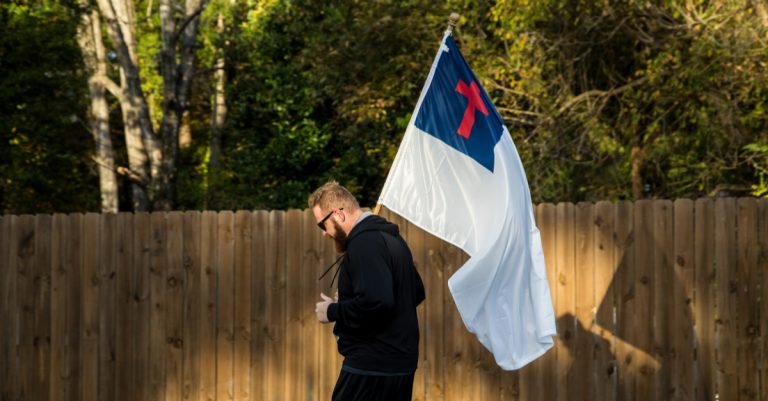
Judge Reverses Criminal Convictions of Christian Aid Workers Who Left Food and Water for Immigrants in Arizona Desert

Four aid volunteers who left food and water for immigrants who illegally entered the country by way of the Arizona desert in 2017 had their criminal convictions overturned Monday by a federal judge who ruled that the government’s prosecution violated their religious freedom rights.

U.S. District Judge Rosemary Marquez, an Obama appointee, ruled that the four volunteers serving with the No More Deaths ministry of the Unitarian Universalist Church of Tuscan were engaging in a “sincere” exercise of their religious beliefs.

The volunteers — Natalie Hoffman, Oona Holcomb, Madeline Huse, and Zaachila Orozco — left food and water in an area of rugged landscape in the Cabeza Prieta National Wildlife Refuge near the Mexico border where immigrants have been known to die of dehydration and exposure to extreme temperatures.

Last January, they were convicted by a federal magistrate of violating regulations governing the refuge and faced fines and probation since they entered without out a permit, drove on restricted-access roads and left food and water.

However, the defendants argued that their actions were taken with the goal of “mitigating death and suffering” and that the actions were exercises of religion protected by the Religious Freedom Restoration Act.

“The Court finds that Defendants demonstrated that their prosecution for this conduct substantially burdens their exercise of sincerely held religious beliefs,” the ruling states. “[A]nd that the Government failed to demonstrate that prosecuting defendants is the least restrictive means of furthering any compelling governmental interest.”

The Cabeza Prieta National Wildlife Refuge spans over 800,000 acres in the Sonoran Desert.

SOURCE: Christian Post, Samuel Smith

All Content & Images are provided by the acknowledged source

In National Prayer Breakfast Address, Arthur Brooks Reminds Audience That ‘Jesus Said Love Your Enemies’

In an address delivered at the 68th National Prayer Breakfast in Washington, D.C., conservative author Arthur Brooks encouraged biblical love amid a nationwide “crisis of contempt and polarization,” reminding attendees that Jesus ordered His followers to love — and not just tolerate — their enemies. 

Opening his speech, Brooks, a professor of public leadership at the Harvard Kennedy School and senior fellow at the Harvard Business School, described himself as a “follower of Jesus.”

“[The same Jesus] who taught us to love God and taught us to love each other,” he added. “Today, I’m here to talk to you about the biggest crisis facing our nation and many other nations today: It’s the crisis of contempt and polarization that’s tearing our societies apart.”

“In this crisis resides the greatest opportunity we have ever had as people of faith to lift our nations up and to bring our people together,” Brooks declared.

When it comes to an “old” problem like contempt and polarization, It’s important to “think differently” to achieve a new and effective solution, he said.

The author of 11 books turned to the words of Jesus, society’s “greatest entrepreneur” and thinker, from Matthew 5: “You have heard that it was said, ‘Love your neighbor and hate your enemy.’ But I tell you, love your enemies and pray for those who persecute you.”

Such words are as “subversive and counterintuitive” today as they were 2,000 years ago, Brooks said.

SOURCE: Christian Post, Leah MarieAnn Klett

All Content & Images are provided by the acknowledged source
Starbucks Partners with Organization Promoting Sex-Changes for Minors

Starbucks Partners with Organization Promoting Sex-Changes for Minors


Starbucks has launched a new transgender-friendly commercial and campaign that will benefit a controversial British charity that supports overturning the age limit when children can receive cross-sex hormones.

The #WhatsYourName campaign features an ad showing a transgender boy being called “Jemma” by friends and acquaintances until arriving at a Starbucks, where an employee asks, “And what’s your name?”

“James,” the transgender boy answers.

The employee then writes “James” on the cup.

Starbucks says the campaign “celebrates this signature act” of a name change and “was inspired by real-life experiences of people who were transitioning.” 

“We discovered that they found Starbucks stores to be a safe space, where their new name was accepted, and they could be recognised as who they are,” a Starbucks press release said.

But the #WhatsYourName campaign has drawn criticism for Starbucks’ partnership with Mermaids, a London-based charity that “supports gender-diverse children and young people until their 20th birthday,” according to its website. Starbucks hopes to raise at least £100,000 for Mermaids.

Mermaids has been the source of criticism in the United Kingdom and even within UK mainstream media for its push to overturn the nationwide ban on children under 16 receiving opposite-sex hormones. 

“Basing it on an age is completely inappropriate,” Susie…

… Read More

Click here to read the rest of the story from our content source/partners – Christian Headlines.

قالب وردپرس

Five Christian Leaders and Political Commentators Respond to Trump’s Acquittal

After a months-long impeachment process that has exposed many divisions in the nation, the Senate voted to acquit President Trump Wednesday on two articles brought by Democratic members of the House: abuse of power and obstruction of Congress.

The votes were 52-48 and 53-47, with Sen. Mitt Romney, R-Utah, voting to convict the president on the first article. Other than Romney, the Senate votes fell along partisan lines, with every Democrat voting to convict and every Republican voting to acquit. The acquittal came the day after Tuesday’s State of the Union address.

Speaking Thursday in the East Room of the White House, President Trump celebrated the end of the process, and took aim at those who launched the effort, such as Rep. Adam Schiff, D-Calif., and Democratic House Speaker Nancy Pelosi.

“Nancy Pelosi is a horrible person,” the president said, adding that he did not think she was sincere in her prayers.

Throughout the impeachment process, Pelosi often emphasized that it was sad time for the country and said she was praying for the president and urged Americans to be prayerful.

The president also made a point to thank the Republican members of the House and Senate who were either part of his defense team or who most vocally backed him in the past several months. Trump predicted House Minority leader Kevin McCarthy, R-Calif., would soon become Speaker of the House.

Reactions to the president’s acquittal and White House speech Thursday have poured in. Here’s how some Christian thought leaders and public figures are responding.

Evangelist Franklin Graham, who has at times been among the most vocal and persistent defenders of the president, expressed that the impeachment was a waste of time.

“He’s not guilty” wrote Graham on his Facebook page, speaking of Trump.

“This has been such a distraction and a waste of time for our country. There’s so many important things that Washington needs to join the President in focusing on. The President has said he’s not bitter. I wish that Nancy Pelosi, Mitt Romney, Chuck Schumer and others would give up on their bitterness and hatred and start working with this President instead of against him.

He added: “The Bible warns us, “…if a house is divided against itself, that house will not be able to stand” (Mark 3:25).

Denny Burk, a public theologian and professor at Boyce College in Louisville, Kentucky, said he felt the president should have been more gracious in his address Thursday.

“I suppose this was never in the cards, but the nation really could have benefited from a positive, constructive speech,” Burk tweeted Thursday.

“After a bitter fight, it takes generosity, character, and self-forgetfulness to come up with those kinds of words, but that is not what we have,” he said.

Sojourners magazine founder, president and editor-in-chief, Jim Wallis, a progressive evangelical, heaped praise on the lone Republican senator to vote to convict the president, noting the role faith played in Romney’s decision.

“I am thankful for Senator Mitt Romney’s courageous decision to be the first Senator ever to vote to impeach a President from his own party by saying, ‘I take an oath before God as enormously consequential.’ And the long poignant pause when he spoke about his faith in the Senate,” Wallis wrote on Twitter Wednesday.

SOURCE: Christian Post, Brandon Showalter

All Content & Images are provided by the acknowledged source