


Jonathan Aigner on Why Church Music Time is Not Worship

Jonathan Aigner holds a music degree from Baylor University in Texas and a Master of Arts in theology from Wheaton College in Illinois. He is an elementary school music teacher and the traditional worship minister at a United Methodist church. Kelsey and Jonathan live in the Houston, Texas area with their beloved dog. The views expressed in this commentary do not necessarily represent those of BCNN1.

This is music. Just music. Only music. Strums on a guitar. Slaps on a drum. Chords chopped onto an electrified piano. Glib, high-larynx wails into a hot mic. I’d advise against it, of course, but you can certainly choose to like it if you want. You are free to immerse yourself in the electronically-boosted experience.

Just don’t call it worship.

It’s just music.

I’ve said before that there’s a reason the contemporary pop-worship church holds such a low view of Holy Communion. It just doesn’t understand the point. Music is their substitute sacrament. Through commercial music, they allow themselves to be carried away on an emotional level into a perceived sensory connection with the divine. When you interpret worship through the lens of emotional stimulation, the bread and wine don’t make sense. It doesn’t compute. No overwhelming feeling equals no worship. But for the historic church, there was no worship without the Eucharist. It was the natural culmination of the liturgy. We take in the bread and wine, and we are poured out into a dry, thirsty creation as participants in the gospel story.

This saccharine substitution contains the ultimate compromise. God is willing to give us the real presence, but instead we’ve settled for something else. In fact, we’re so sold on it that we’re willing to throw away wads of cash for a pseudo-divine, over-romanticized, emotional experience.

Music is not worship. Worship is a function of the church where the Word is preached and the sacraments are administered. It is a disciplined, structured reenactment of God’s story that we as God’s people participate in as if our lives depended on it. The church enters as God’s covenant people, shaped by redemption’s story. We participate in the proclamation of God’s Word. We give thanks at Table.

And then we go, strengthened, changed, renewed, refocused by the grace God offers to us.

All Content & Images are provided by the acknowledged source
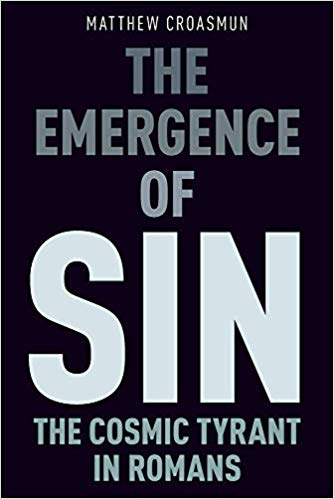
Theologian Scot McKnight’s Review of ‘The Emergence of Sin: The Cosmic Tyrant in Romans’ by Matthew Croasmun

Scot McKnight is an American New Testament scholar, historian of early Christianity, theologian, and author who has written widely on the historical Jesus, early Christianity and Christian living. He is currently Professor of New Testament at Northern Baptist Theological Seminary in Lombard, IL. The views expressed in this commentary do not necessarily represent those of BCNN1.

My review of a fantastic new book, now in paperback: Matthew Croasmun, The Emergence of Sin: The Cosmic Tyrant in Romans (New York: Oxford University Press, 2017).

Sin in the Pauline letters seems to be more than the violation of a command and seems to take on systemic force. Christian theology’s doctrines of original sin and guilt are but one example of theological attempts to come to terms with lower case sins and upper case Sin as a tyrant. In Matthew Croasmun’s recently published dissertation, The Emergence of Sin, a series of proposals are made that provide innovative solutions to all the above and more.

Croasmun establishes both the contours and parameters of the discussion in chapter one, which sorts out scholarship more or less into the individual or psychological (R. Bultmann), cosmic or mythological (E. Käsemann), and the systemic view of liberation theologians (E. Tamez). His terms are “sin came through sinning” (4), standing under definite dualism’s lordships (11), and sinful institutions (15). Croasmun’s contention is not that these elements are not each present, for they are, but that they can’t explain enough. Sin, what is it? Personification or a hyper reality? Is the individual sinning paradigm sufficient for the cosmology and anthropology at work? Is not Sin experienced as something outside and inside, as some kind of cosmic tyrant? What happens then to cosmology and anthropology? “We would prefer a reading that can hold together both sides of the contradiction, about which Bultmann and Käsemann more or less choose sides: that is, that human agents are subject to a power, Sin, that constrains their freedom to act; and that they are nevertheless responsible for their sin. Liberationist readers move us in the direction of being able to hold these two “sides” of the debate in tension, though not without introducing their own difficulties and limitations” (15). Whether it is social or cosmic forces, the systemic theory of Sin acting upon humans offers promise in coming to terms with the Pauline presentations in Romans. How then can Sin be explained as an enslaving force or power? Are the structures simply consequences of individual sins or do they take on a power of their own? What happens then to cosmology and anthropology? What is a person, or what is an agent? Is Sin a person or agent? Sin, Romans 7:8, makes clear is some kind of agent acting upon the person in his or her attempt to observe Torah.

The singular contribution of The Emergence of Sin is Croasmun’s lengthy, accessible and paradigm-altering proposal that sin by the individual, Sin as a cosmological presence and Sin as a systemic can be explained best by emergence theory. In chapters two and three the author examines emergence theory and personhood by appealing to the physical and social sciences as well as philosophy, sociology and psychology. His concern is “trans-ordinal theory,” or the relationship of various levels and how one is caused or correlated with another. Emergence is “concerned with the appearance of higher-order properties at coordinating higher levels of complexity” (23). The “wetness” of water, beehives, memory and money each briefly illustrate emergence that appears to be both caused by lower order elements yet taking on something of a life of its own. Dualistic theories are on their way out as some kind of ontological monism becomes more and more the scientific orthodoxy. Reductionisms are emergentism’s primary challenge: that is, the thought that lower levels always explain higher levels. However, “explain” and “explain away” are not the same thing. The mind does not exist apart from the chemicals at work in the brain, yet the mind and its intentions do real work in the world (hence, something like emergence is better than dualism or reductionism).

The core to Croasmun’s explanation of emergence theory itself is the dialectical relationship of supervenience and downward causation. Supervenience is not as intuitively clear as downward causation: the former refers to a causal basis of higher properties from which they emerge while the latter contends that what emerges works back almost in cyclical fashion upon the supervenience base making it more of what it is. They feed on one another and form one another. I shall enter our topic now into the discussion: human agents sin and from these sins, Sin emerges and Sin as an Agent works back on humans to precipitate more sin and sinning. Sin is ontologically dependent for its existence on human sinning. Croasmun’s ability to think through various systems of thought comes into play in these two chapters, each of which both demonstrates and illustrates this interplay of supervenience and downward causation. For example, the mind supervenes on the brain but the mind is not reducible to brain. Mind, thus, is more than brain.

Importantly, the question becomes Is the Mind then something other than brain? Croasmun examines this dialectic with amazing dexterity in chemistry, biology, sociology, and then focuses on racism. Back to sins and Sin: “In this light, the conflict between Käsemann and more radical liberationists, on the one hand, and Bultmann and the Vatican, on the other, is entirely predictable: it is the conflict between dualists and reductionists. Those more committed to modernist frameworks (Bultmann and the Vatican in this case) adopt the reductionist view. Those more committed, largely for theological reasons, to the recovery or preservation of premodern frameworks (Käsemann, Gaventa, etc.) adopt a dualist view. Those less committed to modern or premodern Western frameworks (non-Western liberationists and postmodern Westerners) are inclined toward something that looks more emergent” (55).

Source: Christianity Today

All Content & Images are provided by the acknowledged source

Mission Project Expands Bible Knowledge in the Persian Gulf

Joining 80 leaders from 24 countries in Washington, DC, last September, the World Evangelical Alliance (WEA) announced 2020 to be the Global Year of the Bible.

“Ignorance of Scripture is ignorance of Christ,” said WEA general secretary Ephraim Tendero. “In contrast to the sacred writings of many other traditions, the Bible is meant to be read and understood by all people.”

But what if they cannot read? This is the case for up to 40 percent of the 1.5 million Telugu-speaking workers in the Gulf states. Having dropped out of school in their native India, these migrants find that the crowded labor camps of the United Arab Emirates (UAE) and Bahrain offer the best opportunity to support their families back home.

But having come to the glitzy Gulf to gain a meager share of petrodollars, many find also the spoken—and storied—words of Jesus.

In 2019, the Bible Society of the Gulf (BSG) was awarded “Best Mission Project” by the United Bible Societies (UBS). Honored in the category of “Focusing on Audiences,” BSG’s pioneering audio and storytelling work among illiterates distinguished it among the 159 UBS branches worldwide.

“We help migrant workers rediscover themselves as children of God,” said Hrayr Jebejian, BSG general secretary. “Through the faith and hope of scripture, they gain the strength to navigate their many challenges.”

Jebejian’s book, Bible Engagement, noted during the UBS ceremony, described the long working hours, high rates of suicide, and sexual abuse endured by migrants in the UAE—65 percent of whom are Telugu. Their average monthly wage is $175, which sometimes goes unpaid. The kafala system of sponsorship places the migrant’s passport in the hands of the employer, complicating any return back home.

International attention in recent years has led to legal reform, but the isolation of labor camps means many violations go unnoticed. And the lack of communal space ensures that the church is often the only venue for outside social interaction, whether the migrant is Christian, Muslim, or from the majority Hindu population.

Babu Ganta, communications director for the BSG, first traveled to the Gulf in 1983 to train English teachers. An educated Telugu Indian, his dismay at the average of two suicides per week drove him to write Hope, a simple booklet of scriptural encouragement and the plan of salvation.

“My words won’t comfort, or convict people of sin,” he said, “but God’s words will.”

Yet despite distribution of 300,000 copies in 19 languages, too many were still unreached.

Back in 2000, UBS realized that a changing world demanded it shift from traditional distribution targets to a focus of engagement and transformation.

In South Africa, the local Bible society tackled the AIDS epidemic. The UK society emphasized the arts. The Peru society addressed issues of spousal and child abuse.

In the Gulf, the BSG turned to illiteracy, designing a large print workbook on the Sermon on the Mount as an elementary primer. Over 12,000 have been distributed through migrant churches so far.

“Every night after work, we gather in our room and have a ‘family’ prayer by reading this book,” Renuka, an elementary-educated Telugu working for a cleaning company, told Ganta.

“We share our thoughts and pray for one another.”

But in the late 2000s, the BSG introduced the Mega Voice Player (MVP) and Proclaimer audio tools for those who could not read at all. Loaded with the Telugu Bible and other Christian materials, up to 200 MVPs and 800 Proclaimers are distributed each year. (Proclaimers can be used in a church service of up to 100 people. MVPs are designed for smaller groups.)

Source: Christianity Today

All Content & Images are provided by the acknowledged source

WATCH: Tony Evans Speaks on Having Strength in Your Struggles

Tony Evans Speaks on Strength in Your Struggles. This sermon was preached on 02/02/2020 at Oak Cliff Bible Fellowship.

All Content & Images are provided by the acknowledged source

Christians Shine the Light of Jesus Christ in Coronavirus Panic

The World Health Organization (WHO) has declared the coronavirus to be a global health emergency.

WHO deliberated for two weeks about whether or not to make the declaration about the coronavirus, which began in China’s Hubei province, in the city of Wuhan. The declaration gives WHO the ability to put travel advisories in place and to review measures being taken to stop the virus.

The death toll has already exceeded 170 and continues to grow, with well over 8,000 cases identified. China Partner’s Erik Burklin says the declaration means little to the average person, but does incite a feeling of panic. “I think right now a lot of the medical professionals, including the ones in China, don’t know what they’re dealing with. They just are basically reacting to the symptoms.”

The most dramatic action has been taken in the city where the coronavirus first mutated. Burklin says, “Wuhan has literally been shut down and many other cities in the same province have been shut down. You can’t travel. You can’t go outside. You can’t go to stores. In fact, they’re running out of food and all kinds of basic items.”

But the Gospel continues to spread. China Partner has a strong relationship with the Christians in Wuhan, and Burklin says pastors there are ministering in the middle of the panic. “They basically encourage their congregations not to fear and to be at the forefront of helping others.”

SOURCE: Mission Network News, Kevin Zeller

All Content & Images are provided by the acknowledged source
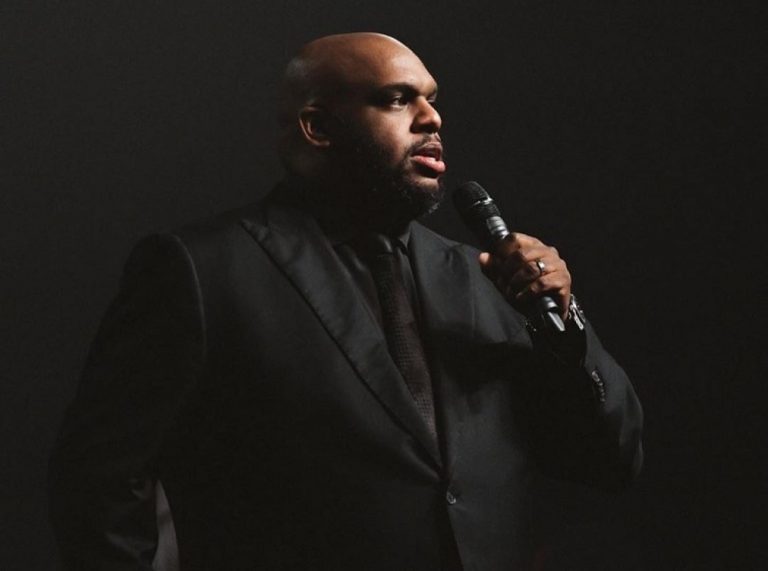
John Gray Says Ron Carpenter Gave Him Church Property With Over $13 Million Debt and Has Refused to Meet Privately to Settle Disagreement

Pastor John Gray of Relentless Church in Greenville, South Carolina, says he is “eagerly” waiting to go to court Friday with fellow megachurch leader, pastor Ron Carpenter of Redemption Church, in a dispute over payments for the Relentless Church campus owned by Carpenter.

Gray, who is fighting a lawsuit filed by Carpenter and his wife, Hope, to evict Relentless Church from the Greenville property, was given until the end of 2019 to take his church elsewhere amid allegations that he had been “shady” and “dishonest” in executing an agreement with the Carpenters after they passed the reins of their Redemption Church to him in 2018, which he rebranded as Relentless Church.

In dueling statements released by the pastors Tuesday, which were published by Fox Carolina, they promised to present strong evidence showing bad faith by the other party and concerted efforts to settle the ongoing dispute privately.

“After many unsuccessful attempts to rectify these matters privately and spiritually, we had no confidence that the truth of the situation would be revealed except through the legal process. On February 7, 2020, we will submit to the court over a hundred pages of evidence of Relentless’s slow payments, non-payments, delinquencies, repossession notices, and pre-foreclosure notices related to their operations at the Greenville church campus,” Carpenter said in his statement.

In 2018, after handing the keys of their church to Gray, the Carpenters moved to San Jose, California, to officially become the new pastors of the 14,000-member Jubilee Christian Center, which they renamed Redemption.

Carpenter alleged that it has been a difficult year for his church financially as a result of the dispute and said he is looking forward to a swift resolution so everyone can move on.

“This last year has been financially devastating to Redemption. We do not have the ability to continue to carry the responsibilities of both campuses in California and in South Carolina. Relentless’s decisions have put us in a position that is not sustainable. Our desire is to simply have a chance to continue the Greenville ministry and save the properties from foreclosure,” Carpenter said.

SOURCE: Christian Post, Leonardo Blair

All Content & Images are provided by the acknowledged source

Here We Go: Homosexual Actor Billy Porter Appears on Sesame Street Wearing a Dress

Pose star Billy Porter has responded to critics who are upset that he’ll appear on the upcoming 51st season of Sesame Street.

Last week, the iconic children’s television show shared several photos of the 50-year-old actor on set filming the 51st season, in which he re-wore the velvet tuxedo gown and jacket by designer Christian Siriano that he first donned at the 2019 Oscars.

This led to some backlash from critics who called it ‘disappointing’ and even signed a petition to get the episode pulled — but Billy thinks those who don’t like it should butt out.

The 51st season doesn’t have a premiere date yet, but will have 35 episodes which will premiere first on HBO Max and then air for free on PBS Kids.

The decades-long children show has has countless celebrity guests on over the years, but Billy’s inclusion has sparked strong opinions.

Much of the reaction has been incredibly positive, though several critics have come out to say that Billy wearing a dress on the show in inappropriate for children.

Billy begs to differ.

‘If you don’t like it, don’t watch it,’ he told the Page Six, adding that it’s odd that people see a man in a dress and immediately think of ‘perverted demon sex.’

‘Like, what about me singing with a penguin [on the show] has anything to do with what I’m doing in my bedroom?’ he went on

‘The really interesting thing for me is that that’s what it’s all about when it comes to LGBTQ people — the first thing everyone wants to talk about is how we having sex.

‘Stay out of my bedroom and you will be fine — that is none of your business.’

Source: Daily Mail

All Content & Images are provided by the acknowledged source
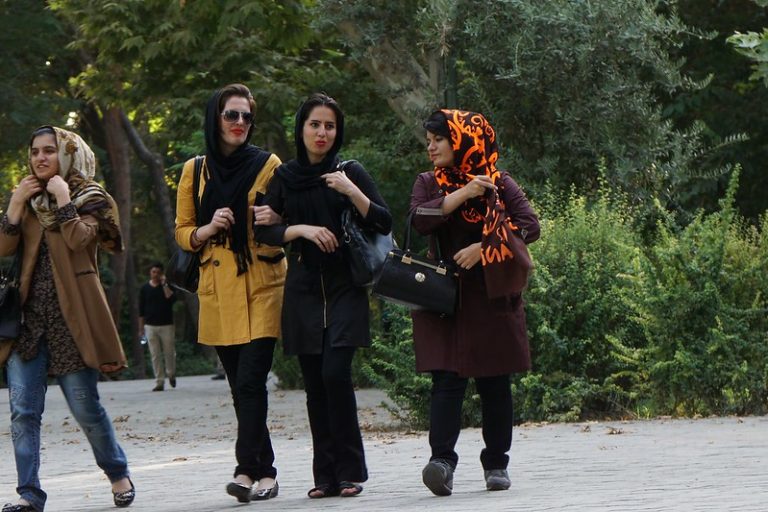
Iranian Women Search for Freedom

For years women in Iran have been silenced by harsh laws and strict codes. Yet now, even in the face of increased pressure from morality police, women are taking a stand for their freedom.

Not Forgotten, a division of Uncharted Ministries, sees this searching for freedom as a first step toward finding ultimate freedom in Christ. However, the journey is a long one.

Recently Iran licensed 2000 additional morality police for the purpose of enforcing public conduct codes, especially for women. But what prompted such an action?

Since the 1979 revolution in Iran, strict codes under Sharia law have been an every day reality. These cover a variety of topics, many of which are moral topics. Women went from relatively great freedom, to having every move watched and evaluated. Suddenly wearing a head covering was mandatory for all Iranian women; and it was enforced.

Now it is a symbol of oppression that many women are rebelling against.

Iranian women abroad and at home are condemning the headscarf and those who endorse it. One recent example was Shohreh Bayat who oversaw a match at the Women’s World Chess Championship without the scarf. Now she is afraid to return home, concerned that the country or her family will make an example of her.

SOURCE: Mission Network News, Anna Deckert

All Content & Images are provided by the acknowledged source
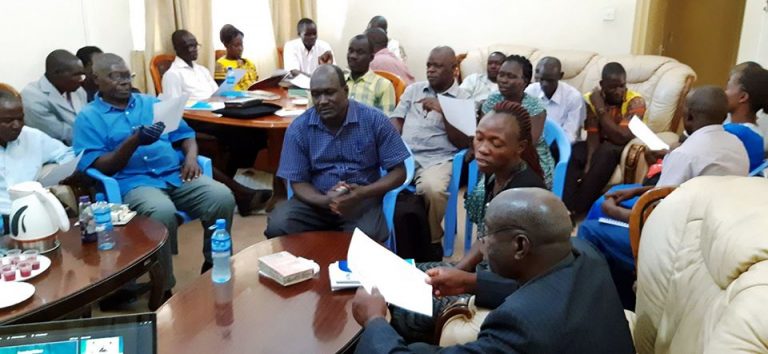
Terrorism in Kenya Fails to Hinder Church-planting Strategy

Not long ago, Non-Government Organizations saw Kenya as a safe place to establish a beachhead for projects in the surrounding countries.

To some degree, that remains true, as Kenya provides ready access to hotspot areas and has a reliable infrastructure. However, there is rising concern over the recent increase in attacks by Al-Shabaab in northern Kenya.

Who is Al-Shabaab? They’re an extremist group running raids between the border of Kenya and Somalia. Under the evaluation of the Fragile State Index (formerly the Failed State Index), Somalia ranks number two on the list due to the lack of a functioning government.

FMI’s Bruce Allen explains the lawlessness and piracy issues neccesitated a response. “There is a multinational peacekeeping force on the ground in Somalia, trying to keep the peace between rival warlords; terrorist groups like Al Shabaab, which is an offshoot of al Qaeda. Kenya is a part of that multinational peacekeeping force.”

The warlords and terror groups running rampant in Somalia want the peacekeepers out, Allen says. “Kenya happens to be a real easy target because they neighbor Somalia, so there’s that proximity so that they can launch attacks and raids across the border into neighboring Kenyan counties.” Al Shabaab’s goal is to motivate Kenya’s government to withdraw peacekeeping forces from Somalia. Kenya wants to stabilize the region.

SOURCE: Mission Network News, R.B. Klama

All Content & Images are provided by the acknowledged source

EveryCampus Sets Goal to Reach Every College in America with the Gospel

Last year LifeWay Research reported that most college students stop attending church regularly during the years they were in school. More than half of college campuses do not have a known Christian organization, InterVarsity confirms.

But InterVarsity Christian Fellowship believes a revival is on the way. National Evangelist for InterVarsity, York Moore, explains that InterVarsity felt the Holy Spirit leading them to work with college students towards a revival in their EveryCampus initiative.

EveryCampus is a collaborative initiative dedicated to bringing Gospel communities to every college campus in America. How do they plan to do this?

It starts with prayer. “We designated 2019 as the year of prayer for EveryCampus. And our goal was to simply prayer walk on site, physically, every single one of the 4,948 campuses in America,” Moore says.

A Prayer walk is a simple act of walking through a college’s campus with a group of other volunteers to pray for a revival at that college and to pray the students there would come to know the Lord. EveryCampus provides Prayer-walkers with a helpful prayer guide to walk them through the steps of praying over a campus.

Currently, EveryCampus has prayer walked over 3,700 college campuses.

According to more, “That was really extremely exciting to see so many people… get behind the vision of prayer walking the campuses of the United States. But we want more. This thing is about revival.”

SOURCE: Mission Network News, Sarah Traill

All Content & Images are provided by the acknowledged source
