Here We Go: Edinburgh Cancels Christian Conference Over Pastor’s Biblical Views on LGBT Relationships

The city of Edinburgh canceled a Christian conference after complaints that Larry Stockstill, a preacher from Louisiana, would be the keynote speaker.

According to Premier Christian News, Stockstill, a preacher, author and pastors’ mentor who also runs the church planting network Surge Project, was supposed to speak at the Surge Conference in June 2020. The conference is meant to help churches learn ways to grow.

Stockstill’s keynote address was titled “The Purpose and Privilege of Pastoring.”

Edinburgh received complaints about Stockstill, who has described same-sex relationships as “offensive”, “repulsive” and “deeply grievous.”

Stockstill preaches at Bethany Church in Baton Rouge, Louisiana.

The group heading the conference, Destiny Ministries and Destiny Church Glasgow will need to find another location for the conference if the group wants Stockstill to speak.

In 2018, the Church of Scotland banned Destiny Ministries from using its buildings because of the group’s “fundamentalist doctrines.”

The cancellation comes after Franklin Graham was banned from the arena and conference center Liverpool ACC.

Source: Christian Headlines

All Content & Images are provided by the acknowledged source

Jim Denison on How Christians Glorified God in and Through Super Bowl LIV

Jim Denison is the founder and CEO of the Denison Forum, a nonprofit Christian media organization that comments on current issues through a biblical lens. The views expressed in this commentary do not necessarily represent those of BCNN1.

The Kansas City Chiefs defeated the San Francisco 49ers in yesterday’s Super Bowl by a score of 31 to 20. The Chiefs came back from a ten-point deficit in the fourth quarter to give their beloved head coach, Andy Reid, his first NFL championship.

What about the game will be remembered long after the score is forgotten?

Chiefs quarterback Patrick Mahomes is now the first quarterback in NFL history to win a Most Valuable Player award, a Super Bowl, and a Super Bowl MVP by the age of twenty-five. However, he has been known for his humility since high school.

According to his coaches, “He was always about the team, always about his teammates, always about the other person.” Mahomes has been following Jesus since coming to faith in middle school.

Chiefs punter Dustin Colquitt has been active in the Fellowship of Christian Athletes and Athletes in Action. He says, “As a Christian, I think God has given me that platform to say, ‘Hey, I’ve allowed you to do a lot of things, and I need you to speak my Name.’”

49ers receiver Jordan Matthews became a Christian during his second year in the NFL and says “everything changed.” Another 49ers receiver, Marquise Goodwin, made headlines when he and his wife lost a premature son just hours before a game but continued to trust the Lord.

And Chiefs CEO Clark Hunt has been very public about his commitment to Christ. I was his pastor in Dallas and know personally of his family’s love for the Lord.

After the Chiefs won the AFC title, Clark said: “I want to thank the Lord for blessing us with this opportunity. The glory belongs to him.” After his team won the Super Bowl last night, he told the world: “I want to thank the Lord for blessing our family with all these incredible people who helped us bring this championship home.”

Earl Smith is the chaplain for the San Francisco 49ers. He previously served as a chaplain at California’s San Quentin State Prison, where he witnessed twelve executions and played chess with Charles Manson. He has been the 49ers’ chaplain since 1997.

Smith shares Christ by focusing on spiritual themes that connect with the players’ interests: hope, trust, and accountability. For instance, at the beginning of this season, he gave each of the players a tiny glass bottle, and with each victory, he gave the players a mustard seed to put in their bottles.

This is just one way he is planting the seed of the gospel in the soil of their souls.

“I have seen guys really grow,” he said. “I’ve seen young men who came in searching who have gone from searching to helping other men that were searching; guys mentoring the walk for others.”

Source: Christian Headlines

All Content & Images are provided by the acknowledged source

Megachurch Pastor John Ortberg Allowed Volunteer Who Admitted to Being a Pedophile to Work With Children

John Ortberg, a popular evangelical author and megachurch pastor, betrayed a “bond of trust” by allowing a church volunteer who admitted being attracted to minors to still work with children, according to a statement from the elders at the Bay Area church he leads.

“In July of 2018, a person serving in the Menlo Church community came to John and shared in confidence an unwanted thought pattern of attraction to minors,” the church’s elder said in a statement. “The person assured, to John’s satisfaction, that the person had not acted on the attraction and sought John’s support. John believed the person and provided prayers and referrals for counseling.”

But Ortberg took no steps to bar the person from working with minors, according to the elders. He also did not talk to other staff or church members about the situation.

The church’s statement did not name the third party who brought Ortberg’s actions to the church’s attention. On Sunday (Feb. 2.), Daniel Lavery, Ortberg’s estranged son, posted a message on Twitter saying he and his wife had reported the pastor.

Lavery said that a church member had confessed having “obsessive sexual feelings about young children” for years and that they had intentionally sought out “unsupervised” positions where they could volunteer with children — including volunteer opportunities that included overnight travel. He also said that the church member told him “John Ortberg had continually encouraged this person in their unsupervised work with children.”

After speaking to the church member, Lavery said he and his wife confronted his parents about the situation. He said that John Ortberg and his wife, Nancy, were aware of the church member’s confession. He also wrote that John Ortberg defended his handling of the situation and said that their advice was dismissed — in part because both Lavery and his wife are transgender. Lavery also said that Ortberg did not know if the church member was still traveling overnight with children.

Lavery, who writes the Dear Prudence advice column for Slate.com, said that he suggested that the church member seek treatment and immediately stop volunteering with church. He also said he wrote to Ortberg and urged him to report the situation to the church’s elders. When his father did not do that, Lavery said he and his wife reported their concerns to the church board.

Following that conversation, Ortberg went on leave.

Lavery said that he did not know if the church member had ever acted on their attraction to minors.

“I have no firsthand knowledge of any criminal activity, and I have real compassion for anyone trying to treat sexual compulsions with accountability and oversight,” he wrote on Twitter. “But the situation they had created was risky, unsafe and unsustainable.”

In their statement, Menlo Church leaders say they hired an independent investigator to look into the concerns over Ortberg’s handling of the church member.

Source: Christianity Today

All Content & Images are provided by the acknowledged source

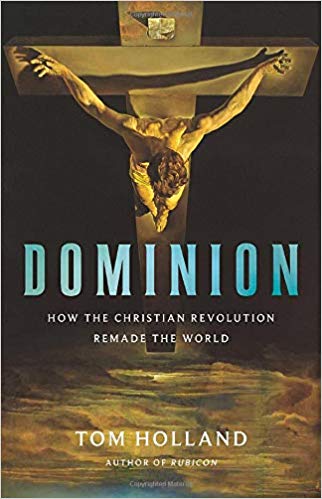
Book Review: ‘Dominion: How the Christian Revolution Remade the World’ by Tom Holland

Review by Philip Jenkins. Jenkins is distinguished professor of history at Baylor University. His many books include The Next Christendom: The Rise of Global Christianity (Oxford University Press) and The Great and Holy War: How World War I Became a Religious Crusade (HarperOne). The views expressed in this commentary do not necessarily represent those of BCNN1.

Tom Holland’s Dominion: How the Christian Revolution Remade the World is a substantial work that makes a straightforward case. In Holland’s view, the teachings of Jesus constituted an ethical revolution that would gradually transform human consciousness, to the extent that we today find it hard to imagine credible alternative systems. When we see Christians, past or present, behaving in ways we may find abominable, in matters such as war, slavery, colonialism, or patriarchy, our disgusted attitudes must themselves be understood as products of that sweeping revolution. Without the existence of Christianity, it would not occur to us to abhor such things, whoever the perpetrators might be.

Beyond any single policy or attitude, Christianity mattered because it taught respect (or even veneration) for the poor and the oppressed. That implied the historically unprecedented exaltation of humility, forgiveness, and love. Moreover, the faith created the practical urge to offer aid and relief, to assist the poor, and (among other things) to reject infanticide. Christianity is the essential foundation of the liberal West, of democracy, and of notions of human rights. As the book’s jacket copy proclaims, “Concepts such as secularism, liberalism, science, and homosexuality are deeply rooted in a Christian seedbed. From Babylon to the Beatles, Saint Michael to #MeToo, Dominion tells the story of how Christianity transformed the world.”

These are bold claims, to which I will certainly offer some caveats. What is not debatable is the very high quality of the book as a whole, and its appeal to anyone interested in Christian history. Rather than offering a straightforward narrative, Holland tells his story through 21 vignettes, each representing a particular historical moment, which he uses to advance his larger argument. Those together constitute three distinct eras of the church: Antiquity, Christendom, and a period he calls Modernitas, extending from roughly the middle of the 17th century to the present day.

The Antiquity section begins, winningly, with some pre-Christian examples, which serve to outline the framework from which the new order would emerge. Later, for instance, we have snapshot accounts of the issues and debates arising from Mount Tabor in Bohemia in 1420, St George’s Hill in England in 1649, or the Somme battlefield of 1916. In each case, Holland takes a specific incident as a launch pad for a wide-ranging account of related movements and themes, an approach that yields surprising and provocative connections. Thus, a section on “Lyon 177” naturally begins with the Gaulish persecution of that year, and the deeds of the church Father Irenaeus, but is soon conducting the reader through the following two centuries, through pivotal figures like Origen and sects like the Donatists. Some of Holland’s biographical sketches, such as that of Catherine of Siena, are effective, moving, and memorable.

I am confident that Holland could, if he chose, have expanded any or all of these quite rich vignettes to book-length studies in their own right. A reader feeling daunted by the whole book could very profitably dip into any of these chapters as a freestanding item. Although the book assumes little previous knowledge, the more familiarity readers have with the larger field, the more they will get out of this erudite work, and it repays multiple readings. This is a seriously rewarding project, well written and consistently thoughtful, and it can be heartily recommended.

But—and obviously there is a but—I would raise some objections. Looking through the list of vignettes, we must be struck by their overwhelmingly European focus, particularly upon Western Europe, whether Roman Catholic or Protestant. From the seventh through the 18th century, for instance, all the examples fit this category. You might find that reasonable, given that, during this era, Christianity had been seriously reduced from its earlier splendors in other parts of the world, such as Central Asia. But in Egypt and across the Middle East, those other churches persisted very strongly well into the 13th century and beyond. Nor, oddly, does Holland have much of note to say about Eastern Orthodox Christians, who right up to the First World War constituted perhaps a third of the world’s Christian believers.

In noting this, I am not just pleading for a larger number of representative examples, but mainly suggesting that perhaps the Christian reality Holland stresses—this supposed Christian revolution—hit some areas of the world and not others. If, for instance, we find that churches in France or Italy saw some values as fundamentally and integrally Christian, while the churches of Egypt or Syria did not, that does undermine the idea that the tradition of Jesus and his first followers inevitably led to certain conclusions or outcomes. We can hardly argue that the Coptic or Russian churches, for instance, just failed to receive the appropriate memos. Rather, it implies that those “revolutionary” values arose from a particular constellation of circumstances that affected Christians in (Western) Europe and Euro-America, but not elsewhere. They simply were not part of the faith’s original DNA, which exposes a weak point in his argument.

Source: Christianity Today

All Content & Images are provided by the acknowledged source

‘I’m a Christian. That’s Not What We Stand For’: Taylor Swift Rips Republican Politician Campaigning on Biblical Marriage in New Documentary

‘I’m a Christian. That’s Not What We Stand For’: Taylor Swift Rips Republican Politician Campaigning on Biblical Marriage in New Documentary


Netflix recently released a documentary following Taylor Swift as she writes her Lover album, muses about breaking away from the image created early in her career and discusses her decision to step into the political arena in 2018. 

Miss Americana begins in early 2018 with Swift discovering that her album Reputation was not nominated for any of the three biggest categories in the Grammys.

One major theme of the one hour and 25-minute film is Swift’s decision to endorse former Tennessee Governor Steve Bresden in his tense Senate race against Republican Marsha Blackburn. Swift received criticism in 2016 for not speaking out against Donald Trump during the 2016 Presidential race. The singer revealed in the documentary that she didn’t speak out in 2016 because she was in such a dark place for most of that year. She reasoned that because she was in such a difficult place personally, she didn’t want to speak out just so she could draw more ire from people and then have to retreat back into the difficulties she was facing.

Swift passionately argued for coming out against Blackburn in a tense scene with two publicists, her father, and her mother. In the scene, which Spencer Kornhaber of The Atlantic described as “almost too dramatic to believe that it wasn’t staged,” the men are sitting in chairs with Swift…

… Read More

Click here to read the rest of the story from our content source/partners – Christian Headlines.

قالب وردپرس

Jeff Christopherson on the Kingdom Power of Friends

Jeff Christopherson is a church planter, pastor, author and Missiologist at the Send Institute – an interdenominational church planting and evangelism think tank. The views expressed in this commentary do not necessarily represent those of BCNN1.

On this journey of leading ourselves, we have discussed two Kingdom realities that should create a great sense of spiritual apprehension in the heart of any potential leader (see Part 1 here and Part 2 here).

The troubling fact that my lowest point of character is my highest point of capacity should drive us to a place of analysis and deep introspection. Knowing that the way I do one thing is the way I do everything should eradicate any semblance of self-reliance and move us to a place of desperate dependence. The fallacy of ‘sin management’ only extends the rope which eventually hangs us.

But where do we bring the fruit of this authentic introspection?

Evangelical Christianity in the West has become a largely individualistic pursuit. We make much of a personal relationship with God, the priesthood of the believer, and discovering God’s will for our lives.

We worship corporately; yet often it is little more than group isolation as we listen to one speaker, make individualistic applications in our personalized study Bibles, and take our leave until next week.

In this contemporary understanding of the body of Christ, it is left to the individual believer to get his or her house in order through sheer intrinsic motivation. There is no place for accountability and support because there is no place for self-revelation. We are all on our own.

As a result, those in the church of Jesus Christ experience about the same level of social dysfunction as those outside its community. The salt, light, and yeast we are commissioned to be are impossible because our character reflects no radical differences that are captivating to the lost. Practicing this over time, our differences are now only distinguished by our socio-political preferences. Probably not what Jesus had in mind.

So how does a Kingdom citizen break away from this culture of isolationism and experience something more transformative? Something more Acts-like?

The humility of community becomes the key. It is imperative that church leaders experience and model a different type of faith, one far less individualistic and far more transparent. When James said, “Therefore, confess your sins to one another and pray for one another, that you may be healed” (James 5:16), he was taking for granted that his audience understood the humility of a Kingdom community.

The notion of corporate isolationism was as foreign to the New Testament audience as the prosperity gospel was to Jesus’ apostles – cultural synchronistic aberrations designed to comfortably ensconced sinners in their preferred addictions.

The gospel call was to go deeper in community and to honestly admit sins of character in an environment of support and account- ability. Transformation. “Whoever conceals his transgressions will not prosper, but he who confesses and forsakes them will obtain mercy” (Prov. 28:13).

Because of the ecclesiological culture we have inherited through a semi-reformed reformation, most church leaders have rarely experienced a New Testament-esque version of spiritual community and therefore have little insight on how to reproduce it. If that is the case for you, let me suggest four ideas.

1. Make It Personal

Considering much of any leadership culture reflects the strengths and weaknesses of its leadership, it becomes essential to begin the assignment of enlarging my personal character capacity. Gather into a peer-mentoring group with other planters/pastors that are geographically close and make a priority of meeting weekly. Read together, learn together, pray together, and grow together.

Source: Christianity Today

All Content & Images are provided by the acknowledged source

Groundhog Day and Super Bowl LIV: Predictions and the plan of God

Punxsutawney Phil emerged from his burrow yesterday morning around 7:25 a.m. EST and did not see his shadow. This means that we will have an early spring.

Except that, according to the National Oceanic and Atmospheric Administration, Phil has been right only 40 percent of the time over the last ten years.

Perhaps a robot could do Phil’s job more effectively. That’s the suggestion of People for the Ethical Treatment of Animals, which is concerned for Phil’s health and wellbeing.

Whether Phil should stay in the forecasting business or not, it is worth noting that since his first prediction in 1887, he has forecast an early spring only nineteen times before yesterday.

Unfortunately for Phil, the country was far less focused yesterday on his shadow (or lack thereof) than on the pending Super Bowl. As you know, the favored Kansas City Chiefs defeated the San Francisco 49ers by a score of 31 to 20.

The fact that the favorite won was a bit surprising,
actually. The underdog has won twenty-three of the past fifty-three Super
Bowls, including five straight from 2012 through 2016.

So, if you’re looking for a way to predict future Super
Bowls, it may be that Punxsutawney Phil can help.

The Super Bowl has fallen on Groundhog Day only once before,
in 2014. That year, Phil predicted a long winter, and the underdog Seattle
Seahawks won big, 43 to 8 over the favored Denver Broncos. This might suggest
that since Phil predicted an early spring yesterday, the favored Chiefs should
have won, which they did.

So, we may have discovered a pattern upon which to base
future Super Bowl predictions: when Phil predicts a long winter, pick the
underdog; when he predicts an early spring, pick the favorite.

Except that we have only two such predictions to base our pattern upon.

And there’s another problem: if the Super Bowl continues to fall on the first Sunday in February as currently scheduled (the NFL has released dates only through…

… Read More

—

Click Read More to read the rest of the story from our content source/partners – Denison Forum.

قالب وردپرس

49ers Chaplain Says Team Studied Biblical Themes of Hope and Trust During Season

San Francisco’s ability to embrace an attitude of selflessness was the key to the 49ers’ drive to the Super Bowl, according to team chaplain Earl Smith, who also says that theme was mirrored in the team’s Bible studies over the past year.

The 49ers will face Kansas City Sunday in Super Bowl 54.

Smith told Sports Spectrum the 49ers’ season reminded him of the selflessness exhibited by the NBA’s Golden State Warriors when they won their championship in 2015. Both teams played as “one unit,” he said.

“[The 49er players] were happy for each other, and it wasn’t just a personal happiness, but there was a joy among the guys, the coaches, the administration, and for me, that’s really what it was about,” Smith said. “… These guys are just one. They’re not selfish. They really want each other to do well. And I was really proud to see that. I was really happy and blessed that I could see that materialize on the field.”

The players, Smith said, studied “hope, trust and accountability” during Bible studies with him during the season.

“We spent like a month – a series – on each of those things,” he told Sports Spectrum.

They also studied the Lord’s Prayer and the theme of what “the Lord is.”

Source: Christian Headlines

All Content & Images are provided by the acknowledged source

Here We Go: Sesame Street to Feature Homosexual Actor Billy Porter Apparently Wearing a Dress

Sesame Street said Thursday that Emmy Award-winning actor Billy Porter will appear in an upcoming episode of the popular series while – apparently – wearing a dress.

Sesame Street posted photos of Porter on social media with celebratory taglines.

“An iconic day with an iconic person. Thanks for visiting Sesame Street, @theebillyporter! #Season51,” the series’ official Twitter account said in a message.

An iconic day with an iconic person ♥️ Thanks for visiting Sesame Street, @theebillyporter! #Season51 pic.twitter.com/Yre2PO4a0p

— Sesame Street (@sesamestreet) January 30, 2020

“Billy Porter bringing those fierce vibes to Sesame Street,” the series’ official Facebook page said in a post.

The appearance by Porter, who is gay, likely would have gone unnoticed by most if not for the pictures accompanying the social media messages. Sesame Street’s Twitter and Facebook accounts each showed Porter wearing his famous tuxedo dress, or gown, on set with the characters.

Porter – an actor and Broadway performer – is known for wearing women’s clothes.

Sesame Street did not disclose whether his choice of clothes is discussed on the show.

The posts sparked a social media debate.

Source: Christian Headlines

All Content & Images are provided by the acknowledged source

Here We Go: Iowa Dismisses Case Against Convicted Sex Offender Who Molested Students at Christian School is No Longer a Threat After Undergoing Gender Transition Treatment

The Iowa Attorney General’s Office has dismissed a case against a former Midwest Christian Services student convicted of sex crimes after the student identified as a woman.

According to the Des Moines Register, court records show the state dismissed the case in early January.

Attorney General spokesman Lynn Hicks did not comment on the reason for the dismissal other than to say “an offender’s hormone levels are an important part of substantiating an offender’s likelihood of recidivism.”

In November, the Storm Lake Times reported that Joseph Matthew Smith, 23, was “undergoing medical treatment that is needed prior to (Smith) potentially undergoing gender reassignment surgery.”

Smith had previously been convicted of molesting an MCS student in 2014.

Smith has received treatment for gender reassignment the past two years at Newton Correctional Facility. In October 2017, Smith first expressed a desire to “get started on transgender classification” and began using female pronouns. Smith now prefers to be called “Josie.”

An Iowa Department of Corrections spokesman said Smith had been transferred to the Sioux City Residential Treatment Facility for transitional release. He did not say when Smith will be released.

Source: Christian Headlines

All Content & Images are provided by the acknowledged source