

Pew Research Study Reports That Churchgoers Are Widely Mixed on Satisfaction With Sermons

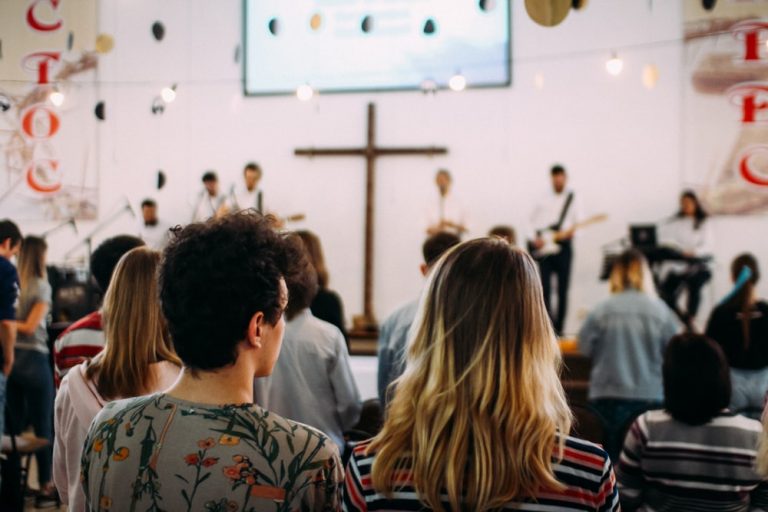
Sermons are a distinctive feature of worship services among most of the various traditions of Christian churches. And while many churchgoers consider sermons a major element of the worship experience, satisfaction with sermons is widely mixed, Pew Research Center says in a report posted Jan 28 on its Fact Tank page.

In reporting on two related recent studies, Pew says, “there are differences by religious tradition in how satisfied churchgoers are with what they hear from the pulpit – as well as in the length and content of those sermons.”

In its 2019 opinion survey of 6,364 U.S. adults, Pew said that 90% of respondents who attend church services “at least a few times a year are satisfied with the sermons they hear.” Protestants, Pew reported, “are somewhat more satisfied than Catholics” with the sermons they hear.

In breaking down opinions of sermons, Pew said its survey found that 61 percent of evangelical Protestants (six-in-ten) say they are “very satisfied” with the messages. That’s almost double the 32 percent of evangelical respondents who said they are “somewhat satisfied,” according to Pew’s report.

Almost a third – 32 percent – of Catholic respondents, indicated they are “very satisfied” with sermons, which are formally referred to as the “homily” in the Catholic Mass, as well as in the worship traditions of Anglican, Lutheran, and Eastern Orthodox Churches.

Just over half – 52 percent – of Catholic respondents indicated they are “somewhat satisfied.” A higher percentage of Catholics – 15 percent – than Protestant respondents – 7 percent – say they are “not too” or “not at all” satisfied.

“It is unclear from the 2019 survey why churchgoers’ satisfaction in sermons differ,” Pew said.

Some clues about the levels of satisfaction in sermons among Christian faith and worship traditions may be found in Pew’s review of 49,719 sermons on video.

In its study The Digital Pulpit: A Nationwide Analysis of Online Sermons, Pew said that its analysis revealed variations of length and content among Christian groups.

Source: Christian Headlines

All Content & Images are provided by the acknowledged source

'It Smells Like Freedom': What's Next for Britain Now That Brexit Has Kicked In

LONDON – Britain’s 47-year relationship with the European Union officially ended at 11 p.m. Friday night to shouts of jubilation by Brexit supporters.

The party is over and London is out of the European Union. Now Brussels will be watching nervously to see if any other nations will follow Britain out the door.

Italy, Poland, Denmark, and Finland are all said to be unhappy with the EU. But are they unhappy enough to leave?

And Britain still has an 11-month transition period, until 2021, before its last ties to the EU are cut. Brexit Party leader Nigel Farage says he likes the way Prime Minister Boris Johnson is handling it so far.

“Well, I think he’s saying all the right things. I mean he’s saying we won’t have any jurisdiction from the European Court of Justice, good. We are aiming for a Canada-style trade deal, which means the rest of our economy won’t be bound by EU rules. Good. No regulatory realignment, good. In fact, it’s everything I’ve ever wanted,” Farage said.

But there is a sense here that Britain has just stepped into the unknown, and those who opposed Brexit fear rough times ahead.

Brexit opponent James Parkes described his mood as, “Depressed. Down-beaten.”

But Brexit supporters believe that, for their great nation, the future just got brighter.

Supporter Toby Brennan said, “I think things are going to be tough in the beginning, but I think we’re going to make it. It may take a year, it may take a couple of years, but you know what? It smells like freedom.”


Source CBN

All Content & Images are provided by the acknowledged source

Nijay Gupta on Owen Strachan’s Comments on Christian Manliness

Nijay K. Gupta (PhD, University of Durham) is Associate Professor of New Testament at Portland Seminary, George Fox University, Oregon, and author of Worship that Makes Sense to Paul. The views expressed in this commentary do not necessarily represent those of BCNN1.

A few days ago, Owen Strachan made this statement on Twitter

“The gospel of grace takes men who have been softened by the devil and makes them hard, strong, lean, loving, and ferocious in pursuit of God and his glory. See νδρζεσθε in 1 Cor. 16:13, best translated “act like men.” Men aren’t soft. Men must be tough in Christ.”

There are quite a number of things that are unclear and unbiblical about this statement. Strachan seems to have a developed a theology of “softness” that he doesn’t bother to define or explain here. His theology has more in common with a Hans and Franz SNL sketch (watch one HERE) than the Bible. I think his statement is easy to refute. (And I am sad that it needs refuting at all.)

I. The Devil does not seem to have a man-softening agenda

A study of satanology in the Bible will quickly reveal the Devil’s main objective is to convince people to sin. In fact, we find that his agenda tends to involve getting people to acquire power rather than relinquish it (see Matt 4:9). He is associated with murder (John 8:44), acts of power. Man-softening is not his MO.

II. Strachan does not (and probably could not) define “softness” as a vice relevant only to men

Strachan fails to define softness in a clear or convincing way. Does it mean gentle? All Christians are called to be gentle (Gal 5:23). Does it mean warm and intimate? The model for this is Jesus who lovingly leans on the Father’s chest (John 1:18). Or perhaps it means cowardly? But in that case no believer should be cowardly, man or woman. All are called to be brave, resilient, strong. Who would favor “softness” if it meant cowardice? And perhaps again he means “weak in faith”—again, not a sin only relevant to men.

III. The verb νδρζεσθε is not best defined as “act like a man”

It is true this literally means “act like men,” but that does not assume that is the best way to translate it or understand it in 1 Cor. This verb comes from a cultural image of the courageous and fearless man, a nod to the great warriors of the day. But we must not assume all men were always courageous. And, likewise, we must neither assume all women were always cowardly. Hebrews extolls the brave faith of Rahab (11:31). Note too the intrepid and clever mother of the Messiah (Revelation 12). And what shall we say about the early martyrs Perpetua and Felicitas? The verb νδρζεσθεwould naturally apply to all of these because they were brave.

Source: Christianity Today

All Content & Images are provided by the acknowledged source

Violence in Plateau State, Nigeria, Escalates With Over 40 Christians Reported Killed and Church Buildings Burned Downin Muslim Fulani Herdsmen Attacks

JOS, Nigeria, January 30, 2020 (Morning Star News) – At least 32 people were killed and a pastor’s house and church building were burned down in two nights of attacks this week by Muslim Fulani herdsmen in Plateau State, Nigeria, sources said.

The Church of Christ in Nations (COCIN) building and home were destroyed in an attack on predominantly Christian Marish village on Monday evening (Jan. 27), one of three communities in Bokkos County hit in armed assaults that began the previous evening, area residents said. The attacks were the latest bloodshed in an escalation of violence in Plateau state, where herdsmen killed Christians in Riyom and Mangu counties earlier this month.

Herdsmen killed 17 people in Marish and Ruboi villages on Monday after killing 15 people in an attack on Kwatas on Sunday (Jan. 26), Titus Ayuba Alams, former speaker of the Plateau state House of Assembly, told Morning Star News.

“The attacks took place between the hours of 7 p.m. and 4 a.m. on Kwatas on Sunday, and also on Monday within the same time frame on Ruboi and Marish by the herdsmen,” Alam said.

Five people were wounded in the attacks and several houses were burned, area resident Theophilus Mancha told Morning Star News.

“A pregnant woman and 16 others have been killed,” Mancha said.

Kwatas, Marish and Ruboi are suburbs of Bokkos town, about 15 kilometers (nine miles) southwest of Plateau State University, Bokkos.

Kelly Kanang, another area resident, confirmed that Fulani herdsmen launched the attacks.

Benjamin Dogo of Kwatas informed Morning Star News in a text message, “Our people have been killed again. About 15 of the dead have been evacuated to the mortuary along with many others that sustained injuries during the attack on Sunday night.”

State police said 13 persons were killed and five injured in the attack on Kwatas. Police spokesman Ubah Gabriel Ogaba on Monday confirmed the attack by “unknown gunmen” on Kwatas in a press statement.

Ruboi and Marish were attacked after police issued the statement, and officers have provided no details on those attacks.

Source: Christian Headlines

All Content & Images are provided by the acknowledged source

Chiefs win Super Bowl LIV: How Christians glorified God in and through the game

The Kansas City Chiefs defeated the San Francisco 49ers in yesterday’s Super Bowl by a score of 31 to 20. The Chiefs came back from a ten-point deficit in the fourth quarter to give their beloved head coach, Andy Reid, his first NFL championship.

What about the game will be remembered long after the score is forgotten? 

Patrick Mahomes was “always about the other person” 

Chiefs quarterback Patrick Mahomes is now the first quarterback in NFL history to win a Most Valuable Player award, a Super Bowl, and a Super Bowl MVP by the age of twenty-five. However, he has been known for his humility since high school. 

According to his coaches, “He was always about the team, always about his teammates, always about the other person.” Mahomes has been following Jesus since coming to faith in middle school. 

Chiefs punter Dustin Colquitt has been active in the Fellowship of Christian Athletes and Athletes in Action. He says, “As a Christian, I think God has given me that platform to say, ‘Hey, I’ve allowed you to do a lot of things, and I need you to speak my Name.’” 

49ers receiver Jordan Matthews became a Christian during his second year in the NFL and says “everything changed.” Another 49ers receiver, Marquise Goodwin, made headlines when he and his wife lost a premature son just hours before a game but continued to trust the Lord.  

And Chiefs CEO Clark Hunt has been very public about his commitment to Christ. I was his pastor in Dallas and know personally of his family’s love for the Lord. 

After the Chiefs won the AFC title, Clark said: “I want to thank the Lord for blessing us with this opportunity. The glory belongs to him.” After his team won the Super Bowl last night, he told the world: “I want to thank the Lord for blessing our family with all these incredible people who helped us bring this championship home.” 

From Charles Manson to the 49ers 

Earl Smith is the chaplain for…

… Read More

—

Click Read More to read the rest of the story from our content source/partners – Denison Forum.

قالب وردپرس

Why Pastors Leave a Church After a Major “Success”

By Thom S. Rainer

“I can’t believe he resigned.” 

The recent comment to me was from a church member of a seemingly healthy church. The pastor had been at the church seven years and decided to leave the congregation. In this particular example, there was no significant conflict. There was no pressure for him to leave. To the contrary, he was loved by most of the church members. 

But he quit. 

Not only did he quit, he decided to take a break from church leadership and took a job in the secular world.

“But what was really strange,” the church member commented, “we had just celebrated one of our biggest accomplishments in years with the building of our new worship center. It was really a success in many ways.” 

The church member obviously did not know that her pastor’s resignation was not that uncommon. In fact, we hear from pastors almost every month who decide to leave their churches when things are going very well. Simply stated, pastors sometimes leave in the aftermath of some seemingly big accomplishment, such as the construction of a new building, the adoption of another church, or the meeting of a major financial goal. Why? Why do they leave when things seem to be going so well? 

We asked pastors these questions. They gave us one or more of these four responses: 

  1. The pastors were burned out. The accomplishment took every ounce of their energy and then some. They were burned out and worn out. They simply did not have the energy to resume a more normal ministry.
  1. The…

… Read More

—

Click here to read the rest of the story from our content source/partners – Thom Rainer.

قالب وردپرس

Master P and Son Romeo Miller Now Focusing on Making Christian Content and Preparing to Release Faith-Based Film “God Is Real”

Mainstream celebrities Master P, born Percy Robert Miller, and his son, Romeo Miller, attended the 28th annual Movieguide Awards where they told The Christian Post that they’ve veered away from their past hip-hop messages to create content that reflects their Christian faith.

While on the red carpet, Master P acknowledged the importance of being at an awards show that celebrates faith and family films.

“Romeo has started a brand, Romeo Land, and it’s all about having great content,” he told CP.

Along with his roster of businesses, the hip-hop and sports mogul said his movie company, Genius Minds Pictures, and his son’s new company, Romeo Land, are gearing up to release a Christian film.

“We have our first faith-based movie coming out, it’s called, ‘God Is Real.’ So people are going to see this everywhere,” he said.

“Don’t be afraid to grow and change,” Master P maintained. “Where I come from, I come from the streets, I come from the struggle and pain. Without God, I wouldn’t be here. So why not change and grow up and do right?”

Along with “God Is Real,” Romeo is starring in the faith-based movie, “Can You Hear the Lamb.”

SOURCE: Christian Post, Jeannie Law

All Content & Images are provided by the acknowledged source

Visit These Unique Old Churches in Norway, England, and Virginia

It’s that time of the year when spring or summer getaways are planned.

But instead of following the crowds to a beach consider a trip centered on religious heritage, including unique architecture and art on par with the finest museums.

Norway

This Nordic country isn’t known for its old churches, but with 28 wooden medieval-era churches it should be.

Called stave churches, the name comes from the construction method of erecting load-bearing posts — staves in Norwegian — upon rocks or sill frames.

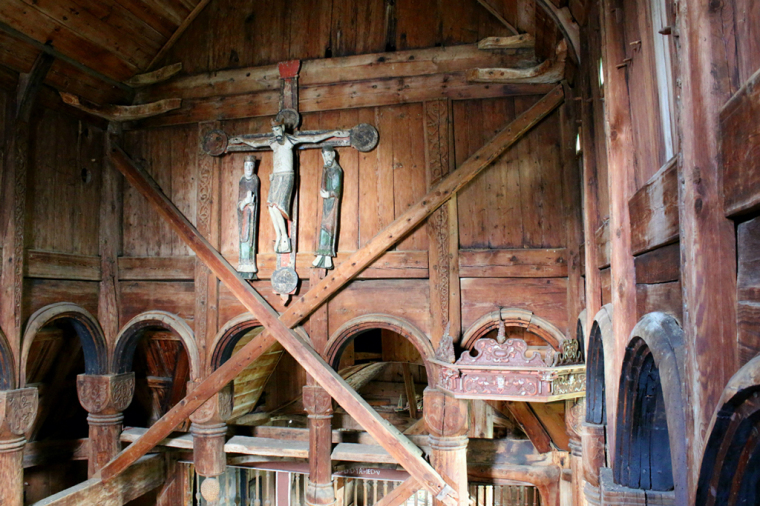
Kaupanger’s 12th century stave church features a 16th century baroque interior. Other notable stave churches are found in Borgund and Urnes, the latter of which dates to the year 1130 and includes its original crucifix.

Most of the stave churches are located in Norway’s Fjord region, which means flying into Bergen or Trondheim and renting a car.

Norfolk and Suffolk, England

East Anglia, as the region encompassing the historic English counties of Norfolk and Suffolk is called, has over 150 medieval churches with round towers. By contrast, this style is incredibly rare elsewhere in England.

Many remain active houses of worships. Others are so-called redundant churches in the care of the Churches Conservation Trust.

SOURCE: Christian Post, Dennis Lennox

All Content & Images are provided by the acknowledged source
Visit These Unique Old Churches in Norway, England, and Virginia

It’s that time of the year when spring or summer getaways are planned.

But instead of following the crowds to a beach consider a trip centered on religious heritage, including unique architecture and art on par with the finest museums.

Norway

This Nordic country isn’t known for its old churches, but with 28 wooden medieval-era churches it should be.

Called stave churches, the name comes from the construction method of erecting load-bearing posts — staves in Norwegian — upon rocks or sill frames.

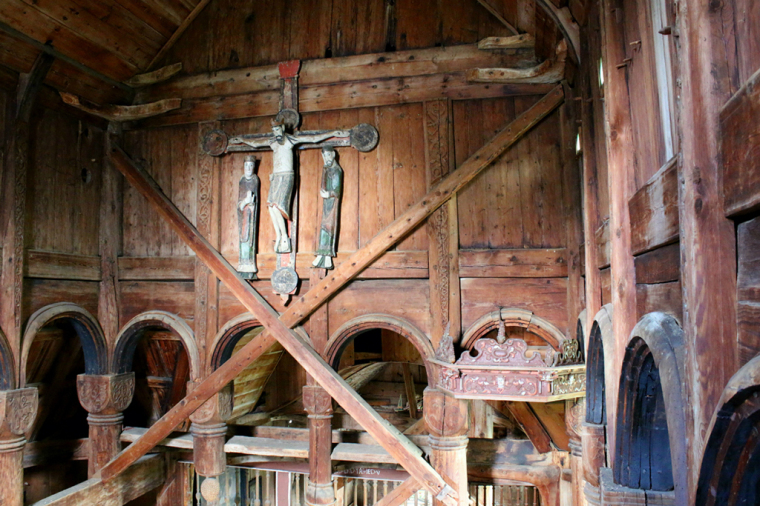
Kaupanger’s 12th century stave church features a 16th century baroque interior. Other notable stave churches are found in Borgund and Urnes, the latter of which dates to the year 1130 and includes its original crucifix.

Most of the stave churches are located in Norway’s Fjord region, which means flying into Bergen or Trondheim and renting a car.

Norfolk and Suffolk, England

East Anglia, as the region encompassing the historic English counties of Norfolk and Suffolk is called, has over 150 medieval churches with round towers. By contrast, this style is incredibly rare elsewhere in England.

Many remain active houses of worships. Others are so-called redundant churches in the care of the Churches Conservation Trust.

SOURCE: Christian Post, Dennis Lennox

All Content & Images are provided by the acknowledged source
Brian G. Chilton on The Impact of God’s Omnipresence in the Life of a Christian

The views expressed in this commentary do not necessarily reflect those of BCNN1. Opinions expressed are solely those of the author(s).

While God used apologetics to bring me back to faith, God uses theology to humble, awe, and comfort me before his amazing presence. Theology is a passion of mine. My resume will show how much I love theology. As I mentioned in a previous post, I realized that schools hiring teachers desire applicants to possess 18 hours of graduate study in a chosen field. Curious as to what hours I held, I began to investigate how many hours I possess in different fields. I realized that by the time I finish my Ph.D., I will carry 30 hours of theological study. I guess you could call me an overachiever. I certainly don’t say this to sound braggadocios. I merely mention this to note the great impact theology has made in my life.

Even while I have devoted much of my time to theological studies, I still find the words of Dr. Daniel Mitchell, Professor of Theology at Liberty University, to ring true, “The more we study God, the bigger God becomes.” I asked him about what he meant by that statement in a class that I had with him. Mitchell noted that he did not mean to say that we make God bigger in our imaginations, but rather we begin to understand how big God truly is the more we study him. When we understand the grandeur of God, our worries tend to fade away in the warm, strong arms of God.

One divine attribute that provides both awe and serenity is God’s divine omnipresence. The word omnus means “all.” We all understand what the term presence means. Thus, God has the capacity to be in all places at all points of time. There is not a place where God’s presence is not found. Scripture indicates the omnipresent nature of God in many locations, but it is most explicitly found in Psalm 139. David writes as he speaks to God,

“Where can I go to escape your Spirit? Where can I flee from your presence? If I go up to heaven, you are there; if I make my bed in Sheol, you are there. If I live at the eastern horizon or settle at the western limits, even there your hand will lead me. If I say, ‘Surely the darkness will hide me, and the light around me will be night’—even the darkness is not dark to you. The night shines like the day; darkness and light are alike to you” (Ps. 139:7–12, CSB).

From the text at hand, God is shown to be present in every location at the same point in time. Wayne Grudem defines God’s omnipresence as the following: “God does not have size or spatial dimensions and is present at every point of space with his whole being, yet God acts differently in different places” (Grudem, Systematic Theology, 173). Divine omnipresence impacts the believer in multiple ways, but for the sake of space, I will concentrate on only five.

SOURCE: Christian Post, Brian G. Chilton

All Content & Images are provided by the acknowledged source