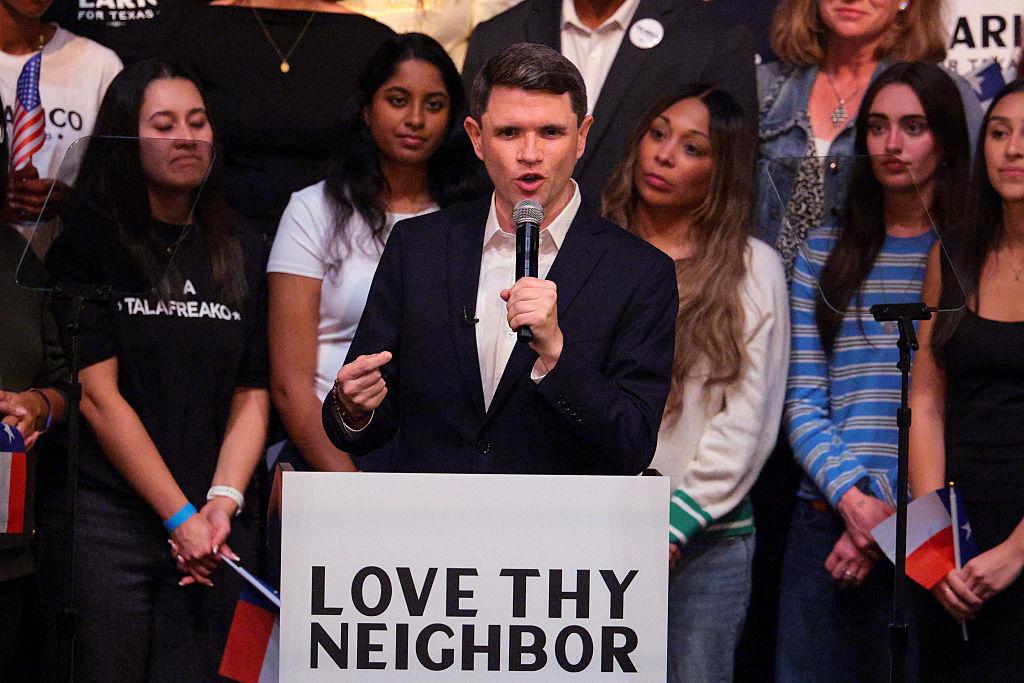
The 2026 United States midterm elections have brought renewed attention to the growing influence of progressive Christian voices in American politics, following significant victories by Democratic candidates with backgrounds in Christian ministry and theological education. Among the most prominent winners are Methodist pastor Rev. Adam Hamilton, who defeated Republican incumbent Roger Marshall in Kansas, and former Presbyterian seminarian James Talarico, who defeated Republican Ken Paxton in Texas. Their victories have attracted considerable attention because both candidates openly incorporated their Christian convictions into their political campaigns. A report published by The Washington Post on 5 November noted that five Democratic congressional candidates who were clergy members or had seminary backgrounds won their elections, prompting discussions about a possible resurgence of the religious left in American public life.
Hamilton’s victory was particularly historic, as he became the first Democrat elected to represent Kansas in the United States Senate since 1932, ending a 94-year period without a Democratic Senate victory in the state. He is the founding pastor of Church of the Resurrection, a large United Methodist congregation in the Kansas City area, and has established a reputation as a Christian author and speaker. During his campaign, Hamilton presented himself as an independent-minded candidate who wanted to reduce political divisions and address concerns about healthcare, food assistance and the cost of living. In Texas, Talarico’s victory was equally significant, as he secured a Democratic Senate victory in a state traditionally dominated by Republicans. A former middle-school teacher and Presbyterian seminarian, Talarico frequently drew on biblical teachings when discussing poverty, economic inequality, social responsibility and political leadership. His campaign also emphasised the importance of addressing corruption and the growing cost of living.
The victories have prompted wider conversations about the relationship between Christianity and American politics, particularly the influence of progressive Christians in a political environment where conservative evangelical movements have traditionally received considerable attention. The Christian Left generally describes Christians who draw on biblical teachings to support causes such as poverty reduction, social justice, equality and the protection of vulnerable communities. However, political analysts caution against interpreting the election results as proof that American Christians are moving towards one political ideology. Economic concerns, voter dissatisfaction and the candidates’ individual appeal also contributed to the outcomes. Nevertheless, the victories demonstrate that Christian involvement in American politics extends across different theological and political perspectives. They have also renewed questions about how religious convictions should influence public leadership and national policymaking