Christians in China Giving Out Surgical Masks and Sharing the Love of Jesus in Coronavirus Hot Zone

UPDATE: 12 AM, FEB. 9: By Sunday morning, deaths from the coronavirus reached 811, surpassing SARS, and the number of confirmed infections rose to 37,198, most of them in Hubei province, according to Chinese officials.

As the death toll from the coronavirus reaches 724 and the number of confirmed cases rises to 34,546, Christians in China — where the illness originated — are distributing masks and sharing the love of Christ on the streets in the city of Wuhan, the epicenter of the outbreak.

While fear and insecurity have gripped the 11 million residents of Wuhan, a city in China’s Hubei province, Christians there have been out on the streets giving out masks and sharing the love of Jesus and the hope the Gospel brings, according to Christian Broadcasting Network’s Asia correspondent Lucille Talusan.

“They’re very courageous,” she was quoted as saying. “They give out masks and they say that they are Christians and they share the love of Christ and point to Jesus to bring hope to them and their families and the whole of China. … This is really a break-through.”

The coronavirus originated in Wuhan about two months ago and can lead to respiratory illnesses which are fatal in some cases. While at least 724 people have died from the disease and 34,546 people have been confirmed to have the illness, the actual numbers are believed to be much higher, according to Bloomberg.

Earlier during the week, a Chinese pastor living Wuhan, identified only as “A Wuhan Pastor,” wrote to the international faith community, urging them to pray and revealing that fellow pastors from around the world had been reaching out.

“It is readily apparent that we are facing a test of our faith,” the pastor wrote. “The situation is so critical, yet [we are] trusting in the Lord’s promises, that his thoughts toward us are of peace, and not evil (Jeremiah. 29:11), and that he allows for a time of testing, not to destroy us, but to establish us.”

SOURCE: Christian Post, Anugrah Kumar

All Content & Images are provided by the acknowledged source

Florida Woman Wins Legal Battle to Hold Bible Study at Condo Complex After She Was Banned from Doing So

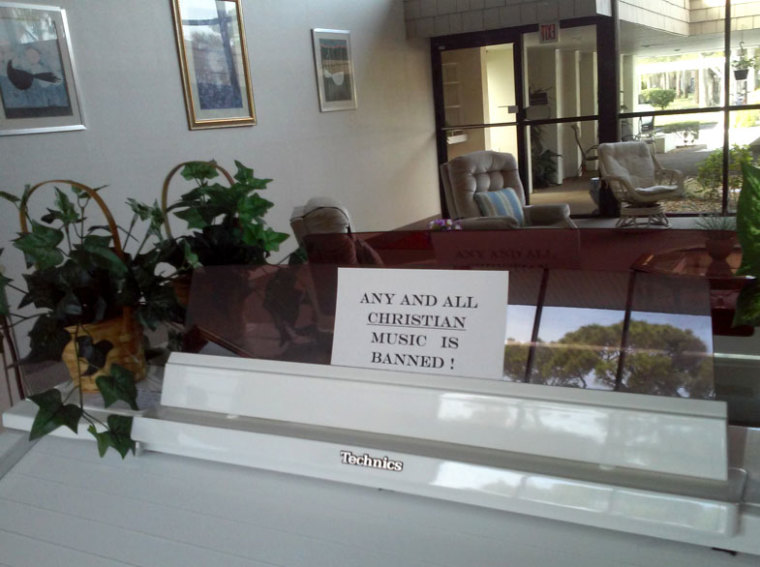
A Florida woman, who filed a federal complaint after her homeowners association barred her from continuing to host a Bible study in the social room of her own condominium complex, has reached a settlement allowing her to carry on with the religious activity, a legal group that represented the Christian woman said.

The agreement states that Donna Dunbar, a Seventh-day Adventist lay minister who runs a nationally recognized soup kitchen with her husband, “may continue to use the social room on a weekly basis to hold a Bible study without being subject to special rules or restrictions,” said First Liberty Institute in a statement, calling the settlement “excellent news.”

“Her victory is more proof that we are taking part in a historic turning point when people of faith are reclaiming religious freedom at an unprecedented rate,” the group said.

Dunbar, a retired senior citizen, started a small women’s Bible study last year in the common room of the Cambridge House complex in Port Charlotte, Florida, for two hours on Monday mornings. Less than 10 friends, some of whom are not Cambridge residents, attended the study.

Around three months later, Dunbar was told by the then-treasurer for the Cambridge House Board of Directors that the group would have to acquire insurance for the meetings. No other groups were required to purchase insurance to use the common areas for their meetings. After disputing the need for insurance, Dunbar went ahead and complied with the demands so that the weekly Bible study could continue.

However, the Cambridge House board of directors then passed a resolution stating, “Prayers and other religious services, observations, or meetings of any nature shall not occur … in or upon any of the common elements.”

SOURCE: Christian Post, Anugrah Kumar

All Content & Images are provided by the acknowledged source

Prisoners in West Africa Find an Unexpected Salvation

Native missionaries in a country in West Africa did not know what to expect when they went to preach to inmates at a prison they had never visited, in a town unknown to them.

After a more than six-hour trip on rough roads that put them in town in the hottest part of the afternoon, they had to rely on people in the street to help them find the prison, the native ministry leader said.

They had a plan for how to proclaim Christ in a way that would most resonate with the inmates, but some things you couldn’t plan for in the 92-percent Muslim country. They were stunned to be greeted by a social service officer who had witnessed their preaching in the prison closer to their ministry base.

The social service officer began shouting to the prison personnel eating lunch in an adjoining room, according to the ministry leader.

The message seemed to be the last chance for the inmates and the only hope God offered them.

“These people that you see here among us have transformed the lives of detainees and prison officers during their stay in our prison, and I myself was present that day,” the officer told those eating. “Please rise to welcome those partners who came from far away. I know them, they always come with good news – they are Christians, men with a big heart, to come to see us.”

In a country that is less than 1 percent Protestant Christian, the ministry leader said the officer’s testimony opened hearts in their favor before they had even begun.

“Without further ado, the other leaders stood up to walk towards us,” he said. “Each one came in turn, to present himself to us according to his name and rank. Thank you, Lord – suddenly the atmosphere had changed, and joy and peace invaded everyone’s hearts.”

The prison warden led them to his office to welcome them, and the missionaries presented the soap, toothbrushes and other hygiene products they had purchased for prisoners in the sanitation-depleted facility.

The prison officials felt a great relief to see all the donated items, the warden told him.

“The warden testified that we were the first partners to come to them to offer them such gifts,” the leader said. “He said, ‘Our prison is totally lacking in sanitation products and materials,’ as he pointed to the reserves, which was almost exhausted. ‘The detainees have really been in need for a very long time,’ he continued. Seeing the amount of donations, the entire penitentiary team continued to thank us.”

SOURCE: Christian Aid Mission

All Content & Images are provided by the acknowledged source

Tauren Wells Talks New Music, Billie Eilish, Preaching at Lakewood, Fatherhood, and Touring With TobyMac

Award-winning Christian artist Tauren Wells says his new music is uniquely a representation of who God made him to be and maintains that, unlike secular music, his songs offer people the hope of Jesus while talking about the difficulties of life. 

Wells released his latest album, Citizen Of Heaven, last week, while he’s out on tour with TobyMac for the Hits Deep Tour. Along with the release of his new music, the multitalented musician has a new role as a preacher at Lakewood Church in Houston, Texas, under pastor Joel Osteen. He also has the honor of being a supporting act for TobyMac on the road.

The following is an edited transcript of Wells’ interview with The Christian Post where he talks about the differences between his music and contemporary Christian music, secular pop music, as well as his goal as a father to raise children who will grow up to have a true relationship with God.

Christian Post: Your music stands out from your CCM peers, how do you describe your unique style?

Wells: Thanks for pointing that out. We are who we are and if we allow ourselves to be who God created us to be, I think we are extremely effective because no one else can be us.

So many of us are chasing this moving target that is the expectations of other people. I’m trying to lay those expectations down and be who God has called me to be. I think there are people out there that enjoy it, that know that I’m not out here trying to be a superstar.

I want to do things with excellence and I want to represent Jesus with my creativity and the tools that we put in my tool bag. So I like coming on a tour and dancing and having the lighting program, like a pop show, and the band smacking and giving people an experience to soak in and enjoy while I turn their eyes from me to Jesus. That’s the hope, that’s the goal.

I think that’s what makes what we do as artists who share our faith differently than other artists. Because if you go to mainstream pop show, what you’re getting is who’s on stage. But my goal is to point people beyond the people on stage and that’s what we hope that we’re doing.

CP:  Pop-star Billie Eilish took home a number of Grammys at this year’s award show, and many people resonate with her music, which is pegged as “dark” as she talks about depression. You have a song on Citizen of Heaven titled “Trenches” that also talks about hard times, but your song takes it another step further. Can you talk a little bit about that?

Wells: I think that’s so good. I think that that’s what God created musicians and songwriters and poets and painters and writers to do, is tap into human emotion and somehow articulate what we’re all feeling, but what we all might not be equipped to talk about or to express.

So it’s a really special thing that we get to do. I think the difference between Billie and me, for instance, is it’s one thing to write about your feelings, it’s another thing to not settle at the level of your feelings. As if that’s all there is to experience. What I do is, I write about how I feel but I also write my response to what those feelings are.

I think what the church has missed a great part is that feelings are OK. That we have permission to feel.

SOURCE: Christian Post, Jeannie Law

All Content & Images are provided by the acknowledged source

PODCAST: Whyte House Family Devotional Reading of Charles Spurgeon’s Morning and Evening #23 (with Daniel Whyte III)

This is Daniel Whyte III, president of Gospel Light Society International with the Whyte House Family Devotional Reading of Charles Spurgeon’s Morning and Evening podcast. This is Episode #23.

Charles Spurgeon was a prominent English Particular Baptist preacher. He was very influential among the Christians of various denominations during his age and even today, and is commonly called the “Prince of Preachers”. After some time of alternately searching for God and running from God, he had a powerful encounter which led him to give his life to Christ. Spurgeon was only 16 when he preached his first sermon and he began publishing books shortly afterward. At the time of his death, he had preached nearly 3,600 sermons and published 49 volumes of commentaries, sayings, anecdotes, illustrations and devotions. Spurgeon said, “encouraging thoughts are like honey to the heart”, and wrote this devotional in hopes that its uplifting messages for each day of the year would bring comfort and refreshment to our walk with God. He was inspired by Isaiah 50:4 which reads, “He wakeneth morning by morning. He wakeneth mine ear to hear as the learned” and Psalm 63:5-6 which says, “My soul shall be satisfied as with marrow and fatness; and my mouth shall praise thee with joyful lips; when I remember Thee upon my bed, and meditate on Thee in the night watches.”

1 Corinthians 3:23 reads: “And ye are Christ’s; and Christ is God’s.”

“Ye are Christ’s.” You are his by donation, for the Father gave you to the Son; his by his bloody purchase, for he counted down the price for your redemption; his by dedication, for you have consecrated yourself to him; his by relation, for you are named by his name, and made one of his brethren and joint-heirs. Labour practically to show the world that you are the servant, the friend, the bride of Jesus. When tempted to sin, reply, “I cannot do this great wickedness, for I am Christ’s.” Immortal principles forbid the friend of Christ to sin. When wealth is before you to be won by sin, say that you are Christ’s, and touch it not. Are you exposed to difficulties and dangers? Stand fast in the evil day, remembering that you are Christ’s. Are you placed where others are sitting down idly, doing nothing? Rise to the work with all your powers; and when the sweat stands upon your brow, and you are tempted to loiter, cry, “No, I cannot stop, for I am Christ’s. If I were not purchased by blood, I might be like Issachar, crouching between two burdens; but I am Christ’s, and cannot loiter.” When the siren song of pleasure would tempt you from the path of right, reply, “Thy music cannot charm me; I am Christ’s.” When the cause of God invites thee, give thy goods and thyself away, for thou art Christ’s. Never belie thy profession. Be thou ever one of those whose manners are Christian, whose speech is like the Nazarene, whose conduct and conversation are so redolent of heaven, that all who see you may know that you are the Saviour’s, recognizing in you his features of love and his countenance of holiness. “I am a Roman!” was of old a reason for integrity; far more, then, let it be your argument for holiness, “I am Christ’s!”

PRAY.

Thank you for listening to the Morning and Evening podcast. If you do not know the Lord as your Savior, here is how you can be saved from Hell and walk with the Lord morning and evening until you go to that wonderful place called Heaven when you die:

First, accept the fact that you are a sinner, and that you have broken God’s law. The Bible says in Romans 3:23: “For all have sinned and come short of the glory of God.”

Second, accept the fact that there is a penalty for sin. The Bible states in Romans 6:23: “For the wages of sin is death…”

Third, accept the fact that you are on the road to hell. Jesus Christ said in Matthew 18:8: “Wherefore if thy hand or thy foot offend thee, cut them off, and cast them from thee: it is better for thee to enter into life halt or maimed, rather than having two hands or two feet to be cast into everlasting fire.” Also, the Bible states in Revelation 21:8: “But the fearful, and unbelieving, and the abominable, and murderers, and whoremongers and sorcerers, and idolaters, and all liars, shall have their part in the lake which burneth with fire and brimstone: which is the second death.”

Now that is bad news, but here’s the good news. Jesus Christ said in John 3:16: “For God so loved the world, that he gave his only begotten Son, that whosoever believeth in him should not perish, but have everlasting life.” Just believe in your heart that Jesus Christ died for your sins, was buried, and rose from the dead by the power of God for you so that you can live eternally with Him. Pray and ask Him to come into your heart today, and He will.

Romans 10:9 & 13 says, “That if thou shalt confess with thy mouth the Lord Jesus, and shalt believe in thine heart that God hath raised him from the dead, thou shalt be saved… For whosoever shall call upon the name of the Lord shall be saved.”

If you believe that Jesus Christ died on the Cross for your sins, was buried, and rose from the dead, and you want to trust Him for your Salvation today, please pray with me this simple prayer: Holy Father God, I realize that I am a sinner and that I have done some bad things in my life. I am sorry for my sins, and today I choose to turn from my sins. For Jesus Christ sake, please forgive me of my sins. I believe with all of my heart that Jesus Christ died for me, was buried, and rose again. I trust Jesus Christ as my Savior and I choose to follow Him as Lord from this day forward. Lord Jesus, please come into my heart and save my soul and change my life today. Amen.

If you believed in your heart that Jesus Christ died on the Cross, was buried, and rose again, allow me to say, congratulations on doing the most important thing in life and that is accepting Jesus Christ as your Lord and Saviour! For more information to help you grow in your newfound faith in Christ, go to Gospel Light Society.com and read “What To Do After You Enter Through the Door”. Jesus Christ said in John 10:9, “I am the door: by me if any man enter in, he shall be saved, and shall go in and out, and find pasture.”

If you accepted Jesus Christ as your Savior today, please email me at [email protected] and let us know. There is some free material that we want to send you. If you have a prayer request, please e-mail that to us as well, and we will pray for you until you tell us to stop.

God loves you. We love you. And may God bless you.

All Content & Images are provided by the acknowledged source

Thom S. Rainer on Research Shows Younger Generations Prefer Smaller Worship Services

The views expressed in this commentary do not necessarily reflect those of BCNN1. Opinions expressed are solely those of the author(s).

Larger churches will have a more difficult time staying larger.

At least, that is my postulate according to our early research.  And to be clear, I am defining a larger church by the size of its largest worship service, not by its total attendance. It looks like churches that are intentional about moving to more services, more venues, and more sites can indeed get larger.

This research is based on the attendance size of an individual service, not on the cumulative size of a church’s combined services. In simple terms, it will become increasingly difficult for a church to replace lost attendees at large worship gatherings.

Here are some of my thoughts:

SOURCE: Christian Post, Thom S. Rainer

All Content & Images are provided by the acknowledged source

Native Missionaries Help Children in Peru Battle Poverty’s Monsters with School Supplies

The children want to learn. The teachers want to teach. But neither the school in the Peruvian jungle village nor the schoolkids have enough money for school supplies like notebooks.


“Children go to school without notebooks, and teachers cannot do their job,” the leader of a native ministry said.

A young boy in one village told his mother, an ethnic tribal Christian, that he could not remember anything the teacher said, and that his teacher could not give him assignments because he had no notebook. His mother replied, “Let’s pray to God to provide.”

She had no idea how they might obtain paper, pencils and the backpacks for little ones to transport them over rough, uneven paths, but hours away by motorcycle native missionaries were preparing to bring school supplies.

She had no idea how they might obtain paper, pencils and the backpacks for little ones to transport them over rough, uneven paths.

“When the boy saw our ministry distributing school supplies at his village,” ministry leader said, “he ran toward his mother and said loudly, “God has answered us, Mom!”

In another remote, ethnic village, teachers had given native missionaries a list of needed school supplies. The team arrived to deliver the exact items needed as well as new clothes for children 3 to 5 years old, the age group most lacking, the ministry leader said.

“The teachers thanked us, saying, ‘God really thought of us, because many of the children come to school from far away, walking and without school supplies. Now we will be able to work!’” he said.

On one three-hour trip to deliver school supplies to 250 ethnic Ashaninka schoolchildren, the ministry team had to fight through fierce rains.

“The rain was so strong that it was impossible to move towards their destination,” the leader said. “They arrived very wet to the jungle village where the parents with their children were waiting for them to receive the school supplies that had been offered.”

The students ranged from kindergarten to high school.

“On that cold and rainy morning, approximately 250 school-age children were able to receive school supplies,” the leader said. “After they shared the Gospel, they began to distribute the school supplies grade by grade. Upon completion, the parents and authorities of the tribal village thanked our team for this selfless gesture towards them. Finally, we distributed Bibles among the local teachers and village authorities.”

SOURCE: Christian Aid Mission

All Content & Images are provided by the acknowledged source

Nancy Pelosi Leaves Out Christians When Praying for Persecuted Religious Minorities at National Prayer Breakfast

When Democratic House Speaker Nancy Pelosi, a Catholic, spoke at the National Prayer Breakfast in Washington, D.C., last week, she prayed for the persecuted, listing religious persecution around the world, but did not specifically mention Christians.

“Oh, Lord, we thank all gathered at this prayer breakfast for lifting our voices for the poor and the persecuted, the millions who are missing or murdered because of their faith,” Pelosi prayed at the event Thursday, according to The Daily Signal. “Let us pray for the Panchen Lama and all the Tibetan Buddhists imprisoned in China or missing for following their faith,” she continued.

The House speaker also prayed for the “1 to 3 million Uighurs in China forced from their homes and incarcerated in camps,” as well as for “Raif Badawi in Saudi Arabia and for all the writers and religious free thinkers imprisoned for speaking their minds.”

Pelosi then prayed for “priests, rabbis, pastors, and religious leaders around the world whose freedoms have been stolen because of what they believe … countless Muslims and other religious minorities, often unseen and unnamed, who have been abducted, oppressed, and abused because of who they are and what they believe, their faith.”

In its 2020 World Watch List, leading Christian persecution watchdog Open Doors USA released its annual data report, saying this year highlights a drastic increase in attacks against Christian buildings and the imprisonment of Christians.

SOURCE: Christian Post, Anugrah Kumar

All Content & Images are provided by the acknowledged source

Ken Blackwell on American Progressives Consider Religious Freedom to be an Inconvenient Right

The views expressed in this commentary do not necessarily reflect those of BCNN1. Opinions expressed are solely those of the author(s).

As political and ideological divisions in our nation become more polarized, it seems religious intolerance has become a tool of choice for many waging war on traditional American values. 

Why? Because faith brings values, principles and morals. None of these comport with hedonism, socialism or narcissism.

The first task for the Founding Fathers was to codify the roles and responsibilities of all branches of government, state and federal, in the U.S. Constitution. After ratifying the document in 1788, some Founders were concerned there was not quite enough law to ensure the heavy hand of government would not encroach on individual liberty. James Madison then drafted the Bill of Rights and it was ratified in 1791.

It was no accident that religious freedom was in the first amendment. The Founders sought to protect people from government limiting faith. What they never saw coming was religious oppression from one group of “We the People” to another.

Technology and media have lifted the veil on cultural declinists who depend on the removal of God from the public square. Public figures embrace hypocrisy, and the entertainment industry mocks values and celebrates immorality as recently demonstrated in the Super Bowl halftime show.

The Trump Administration has made religious freedom a central issue. President Trump has issued strong statements embracing religious liberty, released guidance protecting prayer, and made a powerful United Nations speech calling for global religious freedom.

It is, ironically, possible that this embrace of existing religious freedom by the President and by newly-emboldened Americans of every faith is further inciting morally rudderless relativists and secularists to push their oppressive anti-faith agenda. Freedom, Godliness and the rule of law is the natural enemy of progressive values.

SOURCE: Christian Post, Ken Blackwell

All Content & Images are provided by the acknowledged source

Keith and Kristyn Getty on How to Improve Congregational Singing

The views expressed in this commentary do not necessarily reflect those of BCNN1. Opinions expressed are solely those of the author(s).

Ninety believers opened their hymnals. The pianist began the familiar chords of “It Is Well with My Soul.” Everyone in the room opened their mouths and sang with deep wells of emotion on their faces. But they sang softly, remaining seated and hesitant to let their voices ring.

Why? The pastor explained: “If we sing too loudly, the other tenants of this building will call the police on us. The authorities will close down our meeting, take me in for questioning, and possibly worse.”

This scene took place in an unregistered church in a nation that forbids Christians from assembling together. The congregation loves to sing. But they are longing for a better country, a heavenly worship gathering where they will be able to raise their voices without fear.

All of this raises the question: how are churches in the West, where we have considerably more freedom, doing at congregational singing? In contexts where we can praise Christ as enthusiastically as we’d like, is our singing as strong as it could be?

God himself sings over his people (Zeph 3:17), and he has created us in his image. We are compelled to sing by the glory and majesty of God. Scripture commands us to fulfill the delightful privilege of singing together when the local church gathers (Col 3:16). Christ has redeemed us, causing praise and gratitude to well up in our hearts. All of this means singing should be as natural to us as breathing. And yet, this side of eternity, no church sings perfectly. We’ve all got room to grow. And the decisions pastors and musicians make will either help or hinder their flocks in this vital aspect of the church’s life.

With all of that in mind, we’d like to offer four suggestions for how churches can improve their congregational singing, along with four pitfalls to avoid.

Suggestion #1: Begin with the pastor.

God’s Word calls pastors to set an example for the flock (1 Pet 5:3). If a pastor walks into the service late, reads over his sermon notes during the singing, and looks disengaged, it conveys to the congregation that singing doesn’t matter. On the other hand, when a pastor delights to praise Christ in song, his joy transfers to the whole church. No matter who may lead the singing, the pastor himself is also a “worship leader.” What a delightful privilege!

Corporate worship is a feast on the Word of God. Paul tells us that we let the Word of Christ dwell in us richly through the songs we sing (Col 3:16). That means that pastors should see the church’s songs as an extension of their teaching ministry. You’re placing words on the lips of the congregation, and they’re likely to remember these words longer than they remember your sermon! The congregation sits at the banquet table of the King; don’t serve them junk food.

Pitfall #1: Don’t abdicate; collaborate.

We fear that the ministry of song and sermon are functionally separate in too many church services today. It’s easy to let the musical folks plan the worship through singing, while the pastor prepares his message. But this drives a wedge through the service, separating what God intends for us to keep together. Every moment of the church’s gathering is both an expression of worship to God and a ministry from God to us through his Word. Singing the Word, praying the Word, reading the Word, preaching the Word, seeing the Word summarized in baptism and the Lord’s Supper—all of it is doxology.

This means that pastors should collaborate with their musical staff and volunteers rather than abdicate their responsibility. Pastors (those who are “able to teach,” according to 1 Tim 3:2) ought to exercise some form of oversight over the whole gathering, since every aspect of the service teaches and shapes the congregation. But don’t do this alone. Include and involve the musical staff and/or volunteers with which the Lord has blessed you. There are a thousand ways that pastors, worship leaders, and musicians can work together.

So, pastors, steward your relationship well with those who give leadership to music. Empower and equip them. Let them know that they have your support and trust. Don’t lord it over them, but listen to their input.

Likewise, worship leaders and musical volunteers, foster a thriving relationship with your pastor. Pray for him. Be patient if he doesn’t understand music well. Seek to learn from him about theology even while you try to teach him about music.

Suggestion #2: Sing great songs.

If congregational singing is a holy act, and if we are what we sing, then we can’t be lazy in selecting hymns. We must choose great songs—songs that artfully exult Christ with deeply meaningful lyrics and melodies we can’t wait to sing. Better to have a small repertoire of excellent songs you sing well than an ever-growing list of the “latest and greatest” material that the congregation barely knows. Our folks can only internalize a limited number of songs deep down in their hearts. Like a museum curator who selects only the best works of art to display, we must take care to pick songs of the highest quality.

Strive for songs that aren’t just theologically true, but that declare the truth in soul-stirring poetry. Choose melodies that aren’t just singable for your church, but that enhance the meaning of the words through their compelling beauty. Just as a master chef selects ingredients that are at the same time nutritious, aromatic, and flavorful, we should prioritize songs of substance that seem to get richer the more deeply you plumb their meaning.

Great songs have stood the test of time. Our ancestors have entrusted us with them, and we should pass them along to our children. Assemble any Christian group, and practically everyone can join you in singing “Amazing Grace” confidently and passionately. We’re drawn to sing great music, much like we’re drawn to stand in awe of a beautiful painting.

There are great new songs too. They breathe fresh air into our singing and help connect age-old truth with modern sounds. These are appropriate, too, though harder to find.

Pitfall #2: Don’t settle for a song simply because it checks a box.

Sometimes churches select songs that herald robust theology but are too difficult to sing. This can discourage church members, making them feel that they need to be “musical” in order to participate, when Scripture commands the whole church to join in.

On the other hand, some songs have melodies that sing incredibly well, but their words are vague spiritual clichés. Again, hymns like this will ironically discourage a singing culture in your church, because over time the lyrics will not dig deep roots into believers’ hearts.

The connection between song selection and your church’s culture of singing usually takes years to develop. It’s not the type of thing you can change in a week or a month. But with patience, prayer, and perseverance, careful pruning of your song list can engender real growth in the congregation’s joy in song.

SOURCE: Christian Post, Keith and Kristyn Getty

All Content & Images are provided by the acknowledged source