Franklin Graham Says He is ‘Surprised’ by Backlash in UK Over Evangelistic Tour and Views on Homosexuality

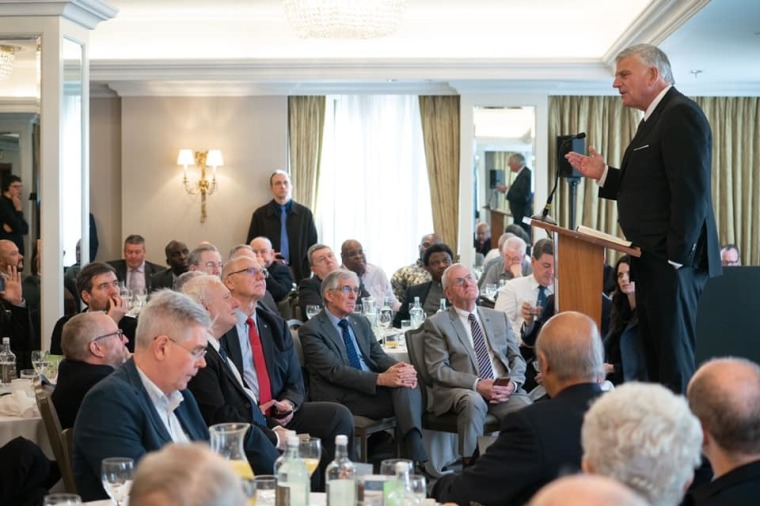
Evangelist Franklin Graham has said in a media interview that he’s surprised to see all the confirmed venues in the United Kingdom pulling out due to his views on homosexuality, even as his supporters have started an online petition calling it “bullying” and a “hate crime.”

“I have been surprised… I’m not coming to speak against anybody and I don’t name any groups of people,” Graham, the son of the late evangelist Billy Graham, told Christian Today, based in the U.K., in an interview. “I’m coming to tell people how they can have a relationship with God through faith in Jesus Christ.”

Graham plans to tour the U.K. with eight stops starting in May, and the Billy Graham Evangelistic Association, which he heads, says more than 1,800 churches across the United Kingdom are cooperating with it “to share the Gospel in multiple cities this spring.”

Currently, he and his team are searching for other venues after all the original locations canceled despite having signed contracts and received deposits.

What he’s most concerned about is the stifling of free speech for churches.

“… If we don’t stand up for the right to free speech and freedom of religion, there are lots of churches in this country that meet in public who are at risk,” he told Christian Today. “They could be kicked out, they could be forced to go somewhere else, just because of their faith.

“We haven’t broken any laws and I think it’s important for the church that we resolve this matter so that it protects them,” he said of possibly pursuing legal action.

This isn’t the first time the evangelist met opposition from LGBT groups. In 2018, bus ads for his 2018 evangelistic festival were pulled following outcry from LGBT groups.

Graham believes that the need for preaching the Gospel in the U.K. is “greater than ever.”

He wants people “to know that we are all sinners and our sins separate us from God.”

SOURCE: Christian Post, Anugrah Kumar

All Content & Images are provided by the acknowledged source

PODCAST: The Scripture & the Sense Podcast #408: Amos 1:4-5 (with Daniel Whyte III)

This is Daniel Whyte III with The Scripture & The Sense Podcast #408, where I read the Word of God and give the sense of it based on an authoritative commentary source such as the Bible Knowledge Commentary. This podcast is based upon Nehemiah 8:8 where it says Ezra and the Levites “read in the book in the law of God distinctly, and gave the sense, and caused them to understand the reading.” The aim of this podcast is that through the simple reading of the Word of God and the giving of the sense of it, the church would be revived and the world would be awakened.

Today we are reading Amos 1:4-5.

4 But I will send a fire into the house of Hazael, which shall devour the palaces of Benhadad.

5 I will break also the bar of Damascus, and cut off the inhabitant from the plain of Aven, and him that holdeth the sceptre from the house of Eden: and the people of Syria shall go into captivity unto Kir, saith the Lord.

________

That was Amos 1:4-5. Now here is the sense of it.

The Bible Knowledge Commentary reads:

In the judgment on each of the first seven nations God is pictured as a suzerain Lord who has brought his armies to punish a vassal city for its revolt. The attack begins in each case with a fire that would eventually consume the walls and/or fortresses of the city and leave it a smoldering ruin. In punishing Damascus God declared He would smash the bar of the city gate and break down the gate, stripping the city of its defenses. He would destroy the rebel king who reigned over the wicked and proud nations. Valley of Aven and Beth Eden may refer to other regions of Aram, Baal-bek and Bit-A-di-ni. More likely, they are derogatory references to the area and palace of Damascus, meaning “Valley of Wickedness” and “House of Pleasure.” The house (dynasty) of Haz-a-el would be terminated, and the A-ra-me-ans would be exiled back to their place of origin, a Mesopotamian site called Kir. In essence, this punishment would be a complete reversal of Aram’s proud history. God, who had originally brought them out of Kir ), would send them back, after obliterating all they had achieved. This judgment was carried out by the Assyrians under Tig-lath-Pi-le-ser III in 732 b.c.

____________

Thank you for listening to the Scripture & The Sense Podcast. Remember to read the Word of God each and every day and pray without ceasing to God for wisdom to understand it and apply it to your life. Most importantly, believe on the Lord Jesus Christ and thou shalt be saved. Please stay tuned for a complete presentation of the Gospel of the Lord Jesus Christ so that you can get your soul saved from Hell to that wonderful place called Heaven when you die. May God bless you and keep you is my prayer.

All Content & Images are provided by the acknowledged source

Deaf Muslim Man Shares his Testimony of How he Came to Jesus Christ

Many reports on Mission Network News describe how God is moving in the Muslim world. Today, a Deaf believer describes how God’s Spirit is stirring Deaf Muslim hearts.

A believer we’ll call “Zed” was born Deaf to Muslim parents in Central Asia. Through an interpreter, Zed describes how coming to Christ created both friction and Gospel opportunity in his Deaf community at college.

“The Deaf world, as you might know, is so small,” he begins. “Word got around rather quickly that I was saved. So, many of these Deaf Muslims were coming to me and [asking], ‘Why did you convert to Christianity?’”

Read Zed’s full testimony here.

When Zed became a believer, he shared his testimony with members of his Deaf community and patiently answered their questions. Unfortunately, many people returned Zed’s kindness with evasion; some even turned hostile, he says.

“One of my friends… he straight up told me he wanted to kill me.”

When Zed learned of his friend’s anger, he extended forgiveness and love. “My friend was like, ‘No, you have this seething rage towards me. You have to have it’,” Zed says.

SOURCE: Mission Network News, Katey Hearth

All Content & Images are provided by the acknowledged source
Here’s What to Pray for as Iranian Tensions Boil

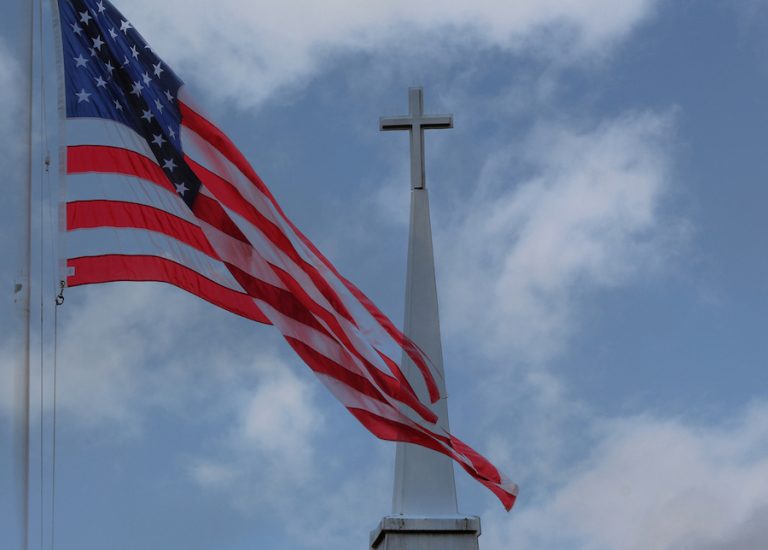
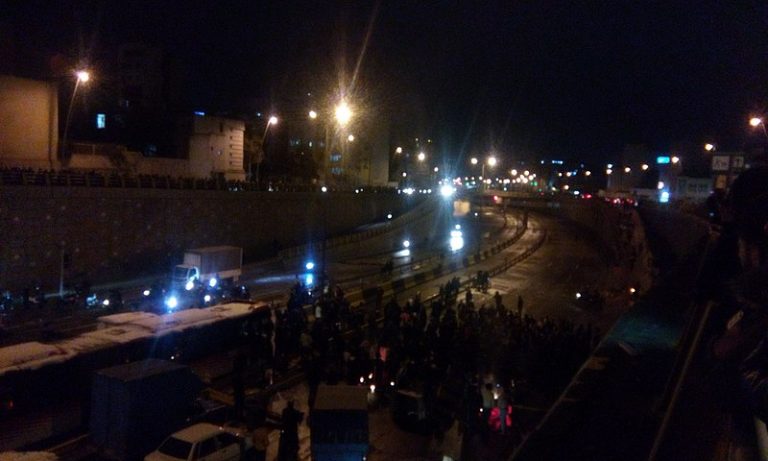
Iran is reeling. Violence and anger spreads like a blanket over the nation’s citizens and leaders, and every headline seems to add fuel to political fires. And according to Todd Nettleton of Voice of the Martyrs USA, Christians get caught in the flames.

As of late, most headlines focus on growing U.S.–Iran tensions. January brought news of the assassination of Iranian General Qasem Soleimani. Then, not long after protestors turned their anger against the U.S., an Iranian missile downed a Ukranian passenger jet, and protest immediately turned back toward Iranian leadership.

But discontent started much earlier than either of these episodes. Iran is “a country that is facing hyperinflation [and] high unemployment rate,” Nettleton says. “Basic food items have grown too expensive for the average person, and so many people are just eating bread and cheese.”

As if things weren’t bad enough, Iranian officials raised gas prices in December.

Actually, they tripled them overnight.

“Literally you wake up the next door day and they say, ‘Oh, hey, by the way, gas just tripled in price today, and also you can only buy a certain number of gallons. There’s a ration system in place,’” Nettleton says.

This decision affects many Iranian citizens, but Christians were especially wounded by this move. According to Nettleton, “what our Christian brothers and sisters are saying is, ‘Hey, the part of our ministry is getting in a car and driving to places to meet with believers, but also to evangelize, to share the Gospel, not just driving across our city or across town, but literally driving around the country, driving to other cities where we have outreach events and where we have other churches that we’re coordinating with.’”

That means that by tripling the cost of gas, authorities have effectively tripled the cost of ministry for the Iranian Church.

SOURCE: Mission Network News, Alex Anhalt

All Content & Images are provided by the acknowledged source
Tauren Wells on His New Music, Touring With TobyMac, and Billie Eilish

Award-winning Christian artist Tauren Wells says his new music is uniquely a representation of who God made him to be and maintains that, unlike secular music, his songs offer people the hope of Jesus while talking about the difficulties of life.

Wells released his latest album, Citizen Of Heaven, last week, while he’s out on tour with TobyMac for the Hits Deep Tour. Along with the release of his new music, the multitalented musician has a new role as a preacher at Lakewood Church in Houston, Texas, under pastor Joel Osteen. He also has the honor of being a supporting act for TobyMac on the road.

The following is an edited transcript of Wells’ interview with The Christian Post where he talks about the differences between his music and contemporary Christian music, secular pop music, as well as his goal as a father to raise children who will grow up to have a true relationship with God.

Christian Post: Your music stands out from your CCM peers, how do you describe your unique style?

Wells: Thanks for pointing that out. We are who we are and if we allow ourselves to be who God created us to be, I think we are extremely effective because no one else can be us.

So many of us are chasing this moving target that is the expectations of other people. I’m trying to lay those expectations down and be who God has called me to be. I think there are people out there that enjoy it, that know that I’m not out here trying to be a superstar.

I want to do things with excellence and I want to represent Jesus with my creativity and the tools that we put in my tool bag. So I like coming on a tour and dancing and having the lighting program, like a pop show, and the band smacking and giving people an experience to soak in and enjoy while I turn their eyes from me to Jesus. That’s the hope, that’s the goal.

I think that’s what makes what we do as artists who share our faith differently than other artists. Because if you go to mainstream pop show, what you’re getting is who’s on stage. But my goal is to point people beyond the people on stage and that’s what we hope that we’re doing.

CP:  Pop-star Billie Eilish took home a number of Grammys at this year’s award show, and many people resonate with her music, which is pegged as “dark” as she talks about depression. You have a song on Citizen of Heaven titled “Trenches” that also talks about hard times, but your song takes it another step further. Can you talk a little bit about that?

Wells: I think that’s so good. I think that that’s what God created musicians and songwriters and poets and painters and writers to do, is tap into human emotion and somehow articulate what we’re all feeling, but what we all might not be equipped to talk about or to express.

So it’s a really special thing that we get to do. I think the difference between Billy and me, for instance, is it’s one thing to write about your feelings, it’s another thing to not settle at the level of your feelings. As if that’s all there is to experience. What I do is, I write about how I feel but I also write my response to what those feelings are.

I think what the church has missed a great part is that feelings are OK. That we have permission to feel.

So much church says, ‘No, you got the joy of the Lord, it’s your strength. No, we got the Prince of Peace, it’s peace that passes all understanding. He’s gonna guard our minds and all of that is absolutely true.

But we are not always there and to ignore our emotions and our feelings is to ignore the way that God designed us and made us. He gave us our feelings as an indicator for our soul to know what’s happening beneath the surface of our lives. But what this music that is charged with hope and charged with faith does, is it calls me higher than my feelings.

It brings my faith perspective into my depression. It brings the Gospel into my struggles and brings peace into my anxiety. So it’s one thing to say, “I feel anxious.” It’s another thing to believe that Jesus is enough to give me peace in my anxiety. And although I really feel it and it’s real, it’s not telling me the whole story.

That’s the heart of “Trenches.” “Trenches” is this picture of Jesus that we desperately need. That He’s not off sitting on some pedestal. He is in the trenches of the human experience. That is what we believe about God. That He became a man and He was grieved with what were are grieved with, He was hurt by the things were hurt by, He was tempted by the things we are tempted by. There is no temptation that is not common to man.

He has experienced our pain and became sin for us. He’s not off far and away, He’s right there by our side, fighting for us in the lowest moments of our lives. It’s the greatest hope. The hope is that I’m not alone.

Source: Christian Post

All Content & Images are provided by the acknowledged source
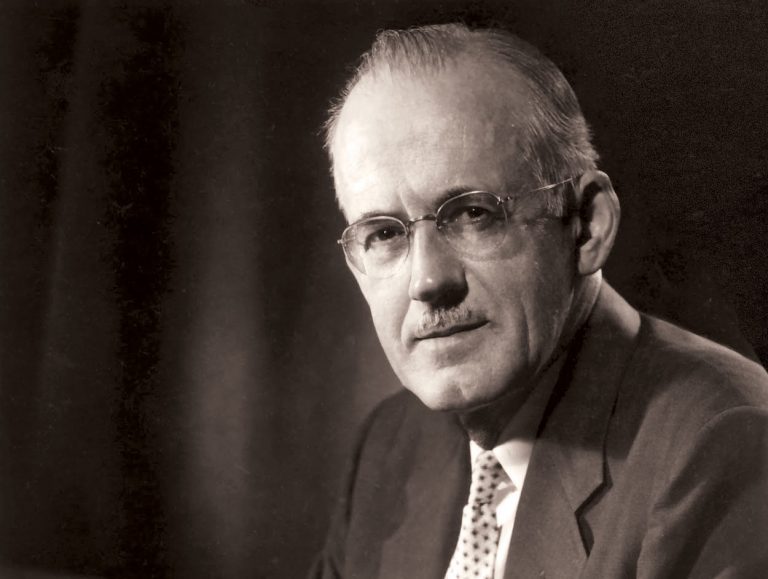
“The Walk of Faith,” by A.W. Tozer

There are spiritual lessons for every Christian believer in the life of godly Enoch, seventh generation from Adam through Adam’s third son, Seth. We are impressed that he could resist the devil and find fellowship with his Creator-God, for he lived in a worldly society headed for destruction. Enoch’s daily walk was a walk of faith, a walk of fellowship with God. The Scriptures are trying to assure us that if Enoch could live and walk with God by faith in the midst of his sinful generation, we likewise should be able to follow his example because the human race is the same and God is the same! Beyond that, Enoch reminds us that the quality and boldness of our faith will be the measure of our preparation for the return of Jesus Christ to this earth. We walk by faith as Enoch did, and although it is now 20 centuries after Christ’s sojourn on earth, we hold firmly to the New Testament promise that our risen Lord will return to earth again!

All Content & Images are provided by the acknowledged source
Heated Debate Over Intersectionality and Critical Race Theory Overshadows Southern Baptist Convention’s Racial Reconciliation Sunday

As the Southern Baptist Convention (SBC) marks its annual Racial Reconciliation Sunday on February 9, the denomination faces continued controversy surrounding critical race theory and intersectionality. The observance, now in its 56th year, highlights SBC efforts to eradicate racism, promote healing and unity, and encourage diversity within congregations. Formerly called Race Relations Sunday, the name was changed in the year 2000.

Arguments against Racial Reconciliation Sunday have resurfaced largely due to “Resolution 9: On Critical Race Theory and Intersectionality,” which passed at last year’s SBC convention. The denomination’s Ethics & Religious Liberty Commission (ERLC), which provides resources for Racial Reconciliation Sunday, is trying to clarify what it calls “misinformation” about the observance.

For this year’s Racial Reconciliation Sunday, the ERLC is providing a bulletin insert with an excerpt of Pastor Jamaal Williams’ article “Intentionally Cultivating Multicultural Churches.” Williams, lead pastor at Sojourn Church Midtown in Louisville, Kentucky, credits Jesus with originating the concept of diversity but admits that pursuing it can be challenging.

“The process is painful for pastors and congregations alike,” he writes. “Not only does it challenge heart-level issues of prejudice, but it challenges lifelong preferences regarding music, expressiveness in services, preaching style and more.” Williams advises congregations to strive for Christian maturity, build bridges, “continuously sow seeds” to expand God’s kingdom, listen to one another, and extend grace and forgiveness.

As non-Hispanic whites are projected to become a minority in America, Williams says, churches must start seeking diversity immediately or risk becoming obsolete “monocultural silos.” By contrast, he writes, when earthly congregations reflect “the portrait of heaven we’re given in Revelation 7:9,” they have the power to “transform the mores of society.”

SBC President J.D. Greear has spoken repeatedly about the sin of racism and the common humanity of all people. In 2018 he wrote: “If we want the SBC to be a homogeneous, conservative, white Anglo-Saxon movement, then cultural hegemony is fine. But if we want to reach the diverse communities throughout the U.S., then we better get ready to change our cultural and leadership structures.”

Intersectionality refers to the different ways that various forms of discrimination or marginalization overlap and interact. Critical race theory is a movement to change—and improve—how society organizes itself around racial categories and oppression.

Critics say those ideologies are injecting theological liberalism into society and the SBC. Intersectionality has been at the center of the denomination’s debate about allowing women pastorsJohn MacArthur called Resolution 9 a “watershed” moment signaling that the SBC is allowing the culture to interpret the Bible.

In an article titled “Critical Race Theory, Intersectionality, and the Gospel,” Tom Ascol calls the concepts “Marxist” and “incompatible with biblical Christianity.” His proposed amendment to Resolution 9, emphasizing that critical race theory and intersectionality aren’t just tools but dangerous ideologies, was rejected at last year’s SBC convention.

Ascol writes that even if they’re considered analytical tools, these concepts can’t be used neutrally because they “have ideas and principles embedded within them that are, at best, antithetical to the way of Christ.” He objects to viewing religion in terms of power dynamics and oppression, saying that “fails to evaluate people in their primary relationship, which is as creatures made in the image of their Creator.”

Focusing on someone’s victim statuses, Ascol writes, “clouds the fact revealed in the Bible that every person’s fundamental problem is that they have sinned against the holy God who created them.”

Writing at SBCVoices.com, Todd Benkert argues that critical race theory and intersectionality may be both a “dangerous ideology” and a “useful analytical tool.” He urges a balance, saying Christians should move beyond “mere trigger words” and not “reject an idea merely because of its source.”

Source: Church Leaders

All Content & Images are provided by the acknowledged source
Pray for First Baptist Church Bay St. Louis, Mississippi

Location: Bay St. Louis, Mississippi

Pastor: Brett Frazier

Weekly Worship: 9:00 and 10:30 AM, Central

Fast Facts: First Baptist Church Bay St. Louis began in 1896. Over the years, it has been a steady lighthouse in a resort town. Many people who visit the church are snow birds or weekenders. The church is known by locals as “the Baptist church in the Bay” that showed up after Hurricane Katrina hit. With the help of 30,000 plus Southern Baptist Convention friends from all 50 states, the church helped rebuild the city of Bay St. Louis.

The Mississippi gulf coast is growing and expanding rapidly, and 90% of the residents in Bay St. Louis admit to having no church affiliation whatsoever. FBC Bay St. Louis is the only SBC church within the city limits. Please pray for Pastor Frazier and the members as they minister to their community and visitors to their area.

Also pray for FBC Bay St. Louis’ staff as they prepare for their upcoming Easter services.

Website: www.fbcbsl.org


“Pray for . . .” is the Sunday blog series at ThomRainer.com. We encourage you to pray for these churches noted every Sunday. Please feel free to comment that you are praying as well.

If you would like to have your church featured in the “Pray for…” series, fill out this information form..

… Read More


Click here to read the rest of the story from our content source/partners – Thom Rainer.

قالب وردپرس

Soldier Kills 26 in Bloodiest Shooting Spree in Thailand

NAKHON RATCHASIMA, Thailand (AP) — A soldier with a grudge gunned down 26 people and wounded 57 in Thailand’s worst shooting spree before he was fatally shot inside a mall in the country’s northeast on Sunday, officials said.

Officials said the soldier was angry over a financial dispute, first killing two people on a military base and then went on a far bloodier rampage Saturday, shooting as he drove to the mall where shoppers fled in terror.

It took police sharpshooters 16 hours to end the crisis.

Authorities said Sgt. Maj. Jakrapanth Thomma was behind the attack in Nakhon Ratchasima, a hub for Thailand’s relatively poorer and rural northeastern region. Much of the shooting took place at Terminal 21 Korat, an airport-themed mall filled with colorful Lego sculptures, a merry-go-round and huge replicas of landmarks from around the world.

“This incident was unprecedented in Thailand,” Prime Minister Prayuth Chan-ocha told reporters as he gave the final tally Sunday morning after visiting the wounded in hospitals.

“I hope this is the only one and the last incident, and that it never happens again. No one wants this to happen. It could be because of this person’s mental health in this particular moment,” he said.

Prayuth said he was worried that people inside the mall could be accidentally hit by bullets fired by police, but added, “I have checked, that didn’t happen.”

Video taken outside the mall showed people diving for cover as shots rang out mid-afternoon Saturday. Many were killed outside the mall, some in cars, others while walking.

Nattaya Nganiem and her family had just finished eating and were driving away when she heard gunfire.

“First I saw a woman run out from the mall hysterically,” said Nattaya, who shot video of the scene on her phone. “Then a motorcycle rider in front of her just ran and left his motorcycle there.”

Hundreds of people were evacuated from the mall in small batches by police while they searched for the gunman.

“We were scared and ran to hide in toilets,” said Sumana Jeerawattanasuk, one of those rescued by police. She said seven or eight people hid in the same room as her.

“I am so glad. I was so scared of getting hurt,” she said.

Shortly before midnight, police announced they had secured the above-ground portion of the mall, but were still searching for the shooter. About 16 hours later, officials held a news conference outside the mall to announce the gunman was fatally shot.

Defense Ministry spokesman Kongcheep told Thai media that the first person killed was the commanding officer of the 22nd Ammunition Battalion, in which the suspect also served. He said the gunman had fired at others at his base and took guns and ammunition before fleeing in an army Humvee.

City and neighborhood police officers, who asked not to be identified because they were not authorized to release information, said the man fired shots as he drove to the mall. Thai Rath television aired mall security camera footage showing a man with what appeared to be an assault rifle.

The man also posted updates to his Facebook page during the rampage.

“No one can escape death,” read one post. Another asked, “Should I give up?” In a later post, he wrote, “I have stopped already.”

A photo circulated on social media that appeared to be taken from the Facebook page shows a man wearing a green camouflaged military helmet while a fireball and black smoke rage behind him. Jakrapanth’s profile picture shows him in a mask and dressed in military-style fatigues and armed with a pistol. The background image is of a handgun and bullets. The Facebook page was made inaccessible after the shooting began.

Terminal 21 Korat, a multi-level glass and steel mall, is designed to resemble an airport terminal, complete with a mock control tower and departure gates. A large model passenger jet dangles from wires beside one of the main escalators.

Each of its seven retail floors is decorated to represent a different country. A giant replica of Paris’ Eiffel Tower soars to the ceiling, while a model of London’s Big Ben dominates another area, and a massive model of California’s Golden Gate Bridge spans an open courtyard. A two-story golden Oscar statue towers over a food court.

Many malls in Thailand, including Terminal 21’s namesake in Bangkok, have metal detectors and security cameras at entrances manned by uniformed but unarmed security guards. Checks on those entering are often cursory at best.

In Bangkok, the original Terminal 21 in the bustling heart of the city was filled with shoppers as usual Sunday morning. There were no signs of increased security or commemoration of the tragedy that unfolded a few hours’ drive away.

Gun violence is not unheard of in Thailand. Firearms can be obtained legally, and many Thais own guns. Mass shootings are rare, though there are occasional gun battles in the far south of the country, where authorities have for years battled a long-running separatist insurgency.

The incident in Korat comes just a month after another high-profile mall shooting, in the central Thai city of Lopburi. In that case, a masked gunman carrying a handgun with a silencer killed three people, including a 2-year-old boy, and wounded four others as he robbed a jewelry store. A suspect, a school director, was arrested less than two weeks later and reportedly confessed, saying he did not mean to shoot anyone.

Copyright 2020. The Associated Press. All rights reserved.

Source CBN

All Content & Images are provided by the acknowledged source
Jason Carter on Why Christians Need to Be Meek During This Year’s Elections

“Blessed are the meek, for they shall inherit the earth.” (Matthew 5:5)

Evangelicalism is a house divided politically in 2020.  The last few weeks have seen major evangelical volleys back and forth over the political divide.

The brouhaha started with Christianity Today’s editor-in-chief Mark Galli’s editorial “Trump Should be Removed from Office” and continued to gain steam with the follow-up piece from CT’s President/CEO Timothy Dalrymple’s “The Flag in the Whirlwind.” The most recent high-level evangelical rebuttal was penned by evangelical theologian and ethicist Wayne Grudem “Trump Should Not be Removed from Office.” All call themselves evangelicals.  All are highly respected. CT has been the flagship evangelical periodical since 1956, being founded by Billy Graham, and Grudem is responsible for Systematic Theology, one of the most popular single-volume systematic theology textbooks assigned in seminaries and bible colleges over the last 25 years. There is probably not an evangelical pastor in America who has not read Christianity Today or heard of Wayne Grudem.

I have no reason to exacerbate the divisiveness.  My voice is not a national voice. My concern is pastoral and local: to shepherd the people under my care and make sure our corporate witness to Jesus Christ in our community is stronger in 2020 despite the divisiveness of our political landscape. To that end, let me make a modest proposal and advocate for a seemingly forgotten Christian attribute.

I believe the Christ-centered trait evangelicals most need in the political arena (and on social media) in 2020 is meekness. Let me explain.

In the 17th century, Matthew Henry wrote a little book called A Discourse on Meekness and Quietness of Spirit. The puritan writer argued that the old term meekness (mansuetus in Latin) was often associated with the process of taming wild beasts of burden and curbing the aggressiveness of a wild, bucking stallion. By curbing a naturally aggressive nature, meekness could actually characterize a formerly aggressive horse.

The opposite of meekness is unbridled aggressiveness rooted in an easily bruised ego that lashes out with the tongue. The opposite of meekness is wading into controversy at every opportunity while provoking the other in endless confrontation.  Matthew Henry argued that meekness wisely cools the heat of passion and curbs the often-untamable tongue. Meekness is strength harnessed.

In short, a meek person gives a wise, poised, and measured reaction – something often foreign to the hyper-aggressive type of engagements that have become (virtually) normalized on social media.

I believe evangelical Christians would be wise to recover the lost trait of meekness during the upcoming political elections. Yes, there is a place for healthy discourse in the public square. Yes, there is a place for healthy dialogue across the political spectrum. Yet the modest question I raise to my fellow evangelicals is this: is social media the place where those ideals organically happen in a manner that adorns the gospel of Jesus Christ above all things in a winsome way to a watching world?

In a previous blog post, I alluded to George C. Edwards III, the presidential historian at Texas A&M, who conducted the seminal study on the history of “The Bully Pulpit” in American politics.  The results were counter-intuitive.  During the 20th and 21st centuries, presidents have given fireside chats, appeared on radio and TV, and crisscrossed the nation to stump at rallies for their point of view.  Edwards’ study argues persuasively that all those activities of “The Bully Pulpit” never moved the needle of public opinion in the President’s favor or translated into significant legislative victories for presidential policies in Congress.

“It is true for all presidents. They virtually never move public opinion in their direction,” Edwards tells National Journal…”It happened for Ronald Reagan. It happened for FDR. It happens all the time. You should anticipate failure if you’re trying to change people’s minds. The data is overwhelming.” [1]

In other words, all the ranting and raving, all the advocating and cajoling by the President of the United States of America – the most influential and powerful person on the planet for much of the 20th and 21st centuries – did not sway public opinion.

Source: Church Leaders

All Content & Images are provided by the acknowledged source