

Jon Nielson on 3 Common Traits of Youth Who Don’t Leave the Church

Jon Nielson is the college pastor at College Church in Wheaton, Illinois. Jon is currently working toward his Doctor of Ministry degree at Trinity Evangelical Divinity School. He has authored two books: Bible Study: A Student’s Guide (P&R, 2013) and The Story: The Bible’s Grand Narrative of Redemption (P&R, 2014). The views expressed in this commentary do not necessarily represent those of BCNN1.

“What do we do about our kids?” The group of parents sat together in my office, wiping their eyes. I’m a high school pastor, but for once, they weren’t talking about 16-year-olds drinking and partying. They were talking about youth church attendance. Each had a story to tell about a “good Christian” child, raised in their home and in our church, who had walked away from the faith during the college years. These children had come through our church’s youth program, gone on short-term mission trips and served in several different ministries during their teenage years. Now they didn’t want anything to do with it anymore. And, somehow, these mothers’ ideas for our church to send college students “care packages” during their freshman year to help them feel connected to the church didn’t strike me as a solution with quite enough depth.

The daunting statistics about churchgoing youth keep rolling in. Panic ensues. What are we doing wrong in our churches? In our youth ministries?

It’s hard to sort through the various reports and find the real story. And there is no one easy solution for bringing all of those “lost” kids back into the church, other than continuing to pray for them and speaking the gospel into their lives. However, we can all look at the 20-somethings in our churches who are engaged and involved in ministry. What is it that sets apart the kids who stay in the church? Here are just a few observations I have made about such kids, with a few applications for those of us serving in youth church ministry.

The Apostle Paul, interestingly enough, doesn’t use phrases like “nominal Christian” or “pretty good kid.” The Bible doesn’t seem to mess around with platitudes like: “Yeah, it’s a shame he did that, but he’s got a good heart.” When we listen to the witness of Scripture, particularly on the topic of conversion, we find that there is very little wiggle room. Listen to these words: “Therefore, if anyone is in Christ, he is a new creation. The old has passed away; behold, the new has come” (2 Cor. 5:17). We youth pastors need to get back to understanding salvation as what it really is: a miracle that comes from the glorious power of God through the working of the Holy Spirit.

We need to stop talking about “good kids.” We need to stop being pleased with youth church attendance. We need to start getting on our knees and praying that the Holy Spirit will do miraculous saving work in the hearts of our students as the Word of God speaks to them. In short, we need to get back to a focus on conversion. How many of us are preaching to “unconverted evangelicals”? Youth pastors, we need to preach, teach and talk—all the while praying fervently for the miraculous work of regeneration to occur in the hearts and souls of our students by the power of the Holy Spirit! When that happens—when the “old goes” and the “new comes”—it will not be iffy. We will not be dealing with a group of “nominal Christians.” We will be ready to teach, disciple and equip a generation of future church leaders—“new creations”!—who are hungry to know and speak God’s Word. It is converted students who go on to love Jesus and serve the church.

Recently, we had “man day” with some of the guys in our youth group. We began with an hour of basketball at the local park, moved to an intense game of 16” (“Chicago Style”) softball, and finished the afternoon by gorging ourselves on meaty pizzas and two-liters of soda. I am not against fun (or gross, depending on your opinion of the afternoon I just described) things in youth church ministry. But youth pastors especially need to keep repeating the words of Ephesians 4:11-12 to themselves: “[Christ] gave…the teachers to equip the saints for the work of the ministry, for building up the body of Christ.” Christ gives us—teachers—to the church, not for entertainment, encouragement, examples or even friendship primarily. He gives us to the church to “equip” the saints to do gospel ministry in order that the church of Christ may be built up.

If I have not equipped the students in my ministry to share the gospel, disciple a younger believer and lead a Bible study, then I have not fulfilled my calling to them, no matter how good my sermons have been. We pray for conversion; that is all we can do, for it is entirely a gracious gift of God. But after conversion, it is our Christ-given duty to help fan into flame a faith that serves, leads, teaches and grows. If our students leave high school without Bible-reading habits, Bible-study skills, and strong examples of discipleship and prayer, we have lost them. We have entertained, not equipped, them…and it may indeed be time to panic!

Source: Church Leaders

All Content & Images are provided by the acknowledged source

Charles Stone on the 5 Biggest Mistakes Pastors Make on Sundays (and How to Avoid Them)

Dr. Charles Stone is Lead Pastor at West Park Church in London, Ontario, Canada. He is the author of five books including Holy Noticing: The Bible, Your Brain, and the Mindful Space Between Moments (Moody Press, 2019). His sixth book coming in October by Equip Press, will be Every Pastor’s First 180 Days: How to start and stay strong in a new church job. The views expressed in this commentary do not necessarily represent those of BCNN1.

For pastors, Sunday can be the most draining day of the week. Intense people interaction, teaching or preaching, seeing our critics, trying to remember names, and attempting to put our own problems aside to listen to other peoples’ problems add up to a stress-filled day. The very day we want to be at our best requires more from us than any other day. As a result, we can easily make one or more of the five biggest mistakes pastors make on Sundays. Evaluate this list to find out how many you make. I follow the list with some suggestions on how to avoid them.

All Content & Images are provided by the acknowledged source

Calvinist Blog Sends Southern Baptist President J.D. Greear ‘Worst Christian of 2019’ Award

J.D. Greear, the President of the Southern Baptist Convention since 2018, was voted the worst Christian of the year in 2019. Greear pastors The Summit Church in North Carolina, one of Outreach Magazine’s Fastest Growing Churches in America. As many pastors can probably relate to, not everyone in his congregation is without displeasure about something he may have done, said, or preached on. Many can also relate as well, that with the emergence of social media and everyone offering their criticism online, the walls of influence broaden beyond the walls of the church.

The Pulpit & Pen is known as a Calvinist blog with a history of criticizing the Charismatic movement, liberal Christianity, the Southern Baptist Convention, and many others they disagree with. On January 1, 2020 Pulpit & Pen posted an article entitled ‘Who is the Worst Christian of 2019?’ Its nominees for the title were Danny Akin, Beth Moore, J.D. Greear, Jeff Durbin, James MacDonald, and John David Edie. Writer Seth Dunn called Greear’s leadership deplorable because his church cancelled Sunday services during Christmas, charged for tickets to a Good Friday service, he supported Beth Moore, and he preached about the Bible whispering about homosexuality.

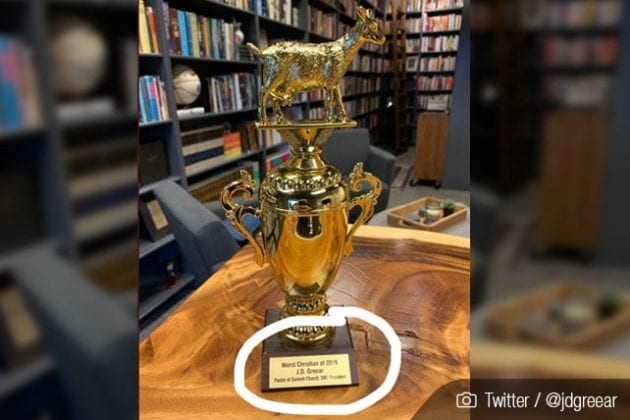
Pastor Greear won the Worst Christian of 2019 award, professionally engraved and topped with a goat on the top. He posted it on Twitter with the hashtag #worstchristian2019 and #thegoat. Over 628 people have commented on the photo, and over 4000 have liked it. The award probably came from someone as a joke because of the Pulpit & Pen article and therefore probably did not come from Pulpit & Pen itself. *Correction, I apologize to Pulpit & Pen writer Seth Dunn as he reached out to me and confirmed he did send the trophy. 

Well, this came in the mail today, anonymously. It was an honor just to be nominated. Never dreamed I’d win. #worstchristian2019 #thegoat pic.twitter.com/0lonmSmQ9J

— J.D. Greear (@jdgreear) February 6, 2020

Priscilla Shirer, Beth Moore, Daniel Im, Jen Wilkin, D.A. Horton, Rebecca McLaughlin, and hundreds of others have commented on the award.

Source: Church Leaders

All Content & Images are provided by the acknowledged source

Dale Hudson on Seeing Ministry as a Calling of God or a Career

Dale Hudson has been serving in children’s ministry for over 30 years. He is an author, speaker and ministry leader.  He is the founder and director of Building Children’s Ministry. BCM helps churches build strong leaders, teams and children’s ministries. The views expressed in this commentary do not necessarily represent those of BCNN1.

I recently heard someone talking about their “career” in children’s ministry. I personally don’t believe ministry is a career.  I believe it is a calling of God.

Most people who are in ministry are not in it because they decided to make a “career” of it.  They are in ministry because God did a supernatural work in their heart and ushered in an invitation to give their life to reaching and discipling people.

That was my case.  When I was 16-years-old, God began to quietly whisper into my spirit that He wanted me to give my life to reaching people.  At first, I said “no way.”  That is not something that was on my radar.  And it was definitely not something I wanted to pursue.  But the “calling” continued to pursue me.

I’ll never forget the day I got on my knees and said “yes” to God’s call.  I told God I’m going to stop running away from Your plan for my life and start running toward it.

And if you are called, I am sure you remember God pursuing you for ministry as well.

Even now, you may sense God calling you to give your life to reaching kids and families.  You may be experiencing a burning bush call from God.

A career is about the income.  A calling of God is about the outcome.

A career is you pursuing finances and prestige.  A calling is you pursuing God.

A career comes from your plans.  A calling comes from God’s plans.

A career is about climbing the ladder.  A calling is about climbing higher in your relationship with God.

A career is about seeing how many people can serve you.  A calling is about seeing how many people you can serve.

Source: Church Leaders

All Content & Images are provided by the acknowledged source
Dwayne ‘the Rock’ Johnson Pays Tribute to Late Wrestler Father Rocky ‘Soul Man’ Johnson With Tearful Eulogy

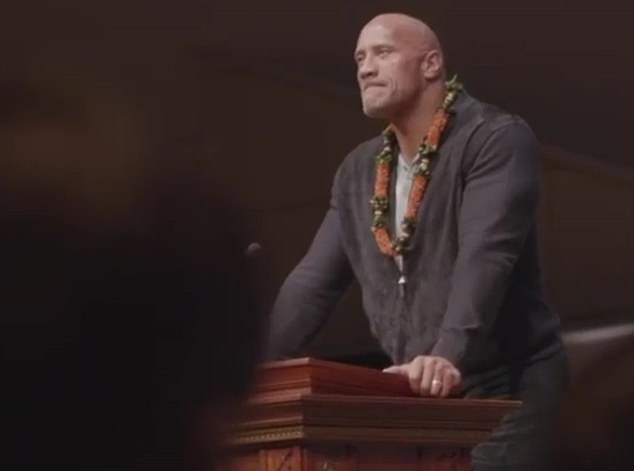
Dwayne ‘The Rock’ Johnson has been mourning the loss of his father Rocky ‘Soul Man’ Johnson.

Also a professional wrestling legend, his friends and family held a funeral for him last month.

The Rock took to Instagram Saturday with a video of the tearful, heartfelt eulogy he gave at the wake.

He also accompanied the video with a beautiful caption: ‘Dad, you lived a full and meaningful life.

‘You trail blazed and even harder, you changed people’s harsh behaviors toward a man of color. Paving the way for me, my family and generations to come.’

The caption concluded: ‘I love you and now I have an angel to call by name. I’ll see you down the road, Soulman. Til we meet again. Your son.’

The 47-year-old took a few seconds to start his speech, as he attempted to work up the words while choking back tears.

Source: Daily Mail

All Content & Images are provided by the acknowledged source

CrossFit Spokesperson Who Was Fired for Biblical Beliefs on Homosexuality Asks for Funds for Wife’s Life-Saving Transplant

In 2018, popular exercise and fitness company CrossFit found itself in the crosshairs of the LGBT outrage mob. Russel Berger, a legal researcher and spokesperson for CrossFit, was eventually fired after tweeting in defense of a franchise owner who canceled an LGBT pride-themed related workout because he believed pride is a “foundational detractor of health.”

After standing up for his belief in God and being punished for it, a showing of faith that was greatly edifying and encouraging to millions of believers who read the story, Berger is now humbly seeking help as his wife’s medical condition is deteriorating and medical bills are mounting.

After writing on Facebook that help is “not easy for me” to ask for because he is “prideful and stubborn,” Berger opened up about how difficult it has become to be a full-time caretaker while also trying to provide for his family.

The GoFundMe has already raised $50,000 out of the $100,000 goal — but even that is only scratching the surface of what he needs.

Want to help? You can do so HERE.

Berger explained his situation:

For the past ten years, I (Russell) have watched my wife Katherine battle a rare genetic disorder. It has affected her connective tissues, her autonomic nervous system, and multiple organ systems in her body.

Despite her doctor’s best efforts, Katherine’s condition has deteriorated. Last year, she was diagnosed with intestinal failure. Since September of last year, her only source of nutrition and fluid has been through a central line to her heart. She has also continued to receive bimonthly infusions of immunoglobulin that help to keep her disease from progressing further. Katherine is currently being treated by some of the best gastrointestinal  doctors in the world, and has been recommended for intestinal transplant.

Though we are thankful for these life-saving interventions, they present a constant risk of complications. She has had multiple hospitalizations over the past few months, and had three central lines replaced due to infection.

As Katherine’s illness has progressed, she has lost the ability to drive, and struggles to complete many simple daily tasks on her own. Our 11-year old has also begun to show symptoms of the same disease, and has lost the ability to walk. Out of necessity, I have become a full-time caretaker for our family. This has been very difficult for us financially.

Source: CBN

All Content & Images are provided by the acknowledged source
Impeachment Leads to Theological War of Words Between Trump, His Critics, and His Supporters

Religious rhetoric is not uncommon on Capitol Hill, where politicians often thread references to the Almighty into speeches while participating in political theater. But in the drama-filled final week of President Trump’s impeachment trial, God was essentially a supporting character.

Senator Lindsey Graham said he used his God-given common sense to decide the impeachment case against President Trump was “BS.”

Senator Mitt Romney declared his faith compelled him to believe the president was guilty of an impeachable crime.

The President himself insisted that faith was a crutch used by his rivals — and admitted that following Jesus’s advice about “loving your enemies” was hard for him.

All three were part of a theological war of words over Trump’s impeachment that has been going on for months, with the commander-in-chief and his opponents invoking the divine and questioning each other’s faith.

Lawmakers from both parties — including Rep. Alexandria Ocasio-Cortez, D-New York, and Rep. Barry Loudermilk, R-Georgia — quoted scripture in December to shore up their respective arguments regarding the impeachability of the president’s actions. The faith debate heated up days later when the editor of Christianity Today garnered a rebuke from the president for penning a bombshell editorial calling for Trump’s removal from office.

But the God talk escalated in earnest on Wednesday (Feb 5.), when Utah Sen. Mitt Romney, a member of the Church of Jesus Christ of Latter-day Saints, cited his faith while explaining his decision to break with his party and vote to convict Trump of at least one offense.

“I am profoundly religious,” he said in explaining the decision. “My faith is at the heart of who I am.”

Romney’s remark and eventual vote triggered a heated reaction from Donald Trump when the president delivered a speech on Thursday at the National Prayer Breakfast, an annual religious gathering in Washington, D.C.

“I don’t like people who use faith for justification for doing what they know is wrong,” Trump said in a reference to Romney.

The president would voice a similar critique a few hours later during an address at the White House. After celebrating his acquittal, he railed against lawmakers who supported his impeachment and removal from office, singling out Romney in particular.

“And then you have some that used religion as a crutch,” he said, noting that he was referring to a “failed presidential candidate” and suggesting that Romney had “never used” faith in political discourse in the past.

Romney has spoken about his faith often as a politician, and once delivered an entire speech on his religious beliefs while running for president in 2007. His office declined to comment on the president’s remarks.

Trump received backup on Thursday from South Carolina Sen. Lindsey Graham, who was asked about Romney during an appearance on “The Brian Kilmeade Show.”

“All I can tell you is that God gave us free will and common sense. I used the common sense God gave me to understand this was a bunch of BS,” Graham said. “They hate Trump, they were going to impeach him the day he got elected and if you can’t see through this, your religion is clouding your thinking here.”

He also doubted Trump’s impeachment would play a role in his pursuit of eternal salvation.

“When I go to meet God at the pearly gates, I don’t think he’s going to ask me, ‘Why didn’t you convict Trump?’ I may be wrong, but I don’t think that’s going to be at the top of the list,” Graham said.

Source: Religion News Service

All Content & Images are provided by the acknowledged source

Excommunicated Catholic Hermit Monks Find Peace in Scotland

Stephen De Kerdrel, a hermit monk who was recently excommunicated by the Catholic Church, didn’t like Pope Francis right off the bat.

While watching the pontiff on TV as he emerged for the first time in 2013 before faithful gathered in St. Peter’s Square, De Kerdrel took a good look at the pope’s clothes — simple and unadorned — and knew, he said, that something was “terribly, terribly wrong.”

Francis’ decision not to wear the mozzetta, the red velvet and fur lined cape reserved for popes, was for De Kerdrel the initial indication that this pontificate was going to break with tradition. As the Argentine pope’s pontificate progressed, it became clear to De Kerdrel that the Catholic Church was opening its doors to the world in an unprecedented way.

But from the remote Orkney island of Westray in the far north of Scotland where he lives, De Kerdrel and his two companions — fellow monk Damon Kelly and Sister Colette Roberts — were not seeking to build bridges with the world.

Instead, the trio was trying to escape from it.

Day after day, that world evolved further away from their beliefs, casting the three out to places that (despite their isolation), in today’s interconnected reality filtered through sectarian news outlets, were never remote enough.

Just before Christmas, the three hermits were excommunicated by the Roman Catholic Church for denouncing Pope Francis and most of the Roman Catholic Church’s hierarchy as being in league with Satan.

“We have broken from a false pope, a false magisterium, at the moment, and a false Curia and false bishops and cardinals,” De Kerdrel told Religion News Service in a mid-January phone interview.

“We’ve broken with them; we’ve not broken with the church. The church is there, but it’s under all this mess,” he said.

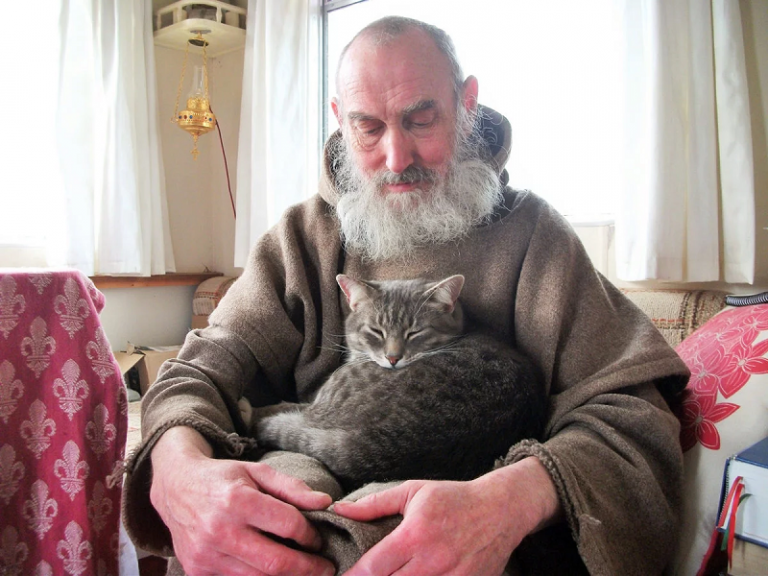
A variety of cats live with the monks on the island of Westray in Scotland. Courtesy photo

Excommunication is the latest step in a long journey by the three companions who, for years, have tried to cut themselves off from the sins of the world, as they see it, so they can live closer to God.

It’s a journey that took them from the Midlands of England to the remote islands of Scotland. They have been living there as hermits since 2016, with a handful of cats, in a pair of run-down homes with no running water. They have just enough electricity from solar power to run their blog and help them manage during the half of the year when sunlight is scarce.

The journey began 21 years ago this April, when both Kelly, now 58, and De Kerdrel, now 67, left the Capuchins, a Catholic religious order, to become hermits. While it’s hard to believe today that some still choose a hermetic lifestyle, the practice continues to exist in the Catholic tradition, as well as in many other religions.

Traditionally desert-dwellers who trace their origins to the prophet Elijah, Christian hermits choose to seclude themselves from the comforts and distractions of interacting with fellow humans to devote their lives to prayer, and sometimes penance, in order to support the world with their intentions.

Throughout history, hermits have enriched the Catholic tradition with some of its holiest and most intellectual minds, including St. Jerome and St. Basil, whose contributions to Catholic thinking and theology have led them to be considered “doctors of the church.”

Though beards, fasting and vows of silence are still a mark of hermits today, not everyone leading a hermetic life is isolated from the world. Mario Aguilar, a Benedictine hermit originally from Chile who also lives in Scotland, is a professor of divinity at the University of St. Andrews and is an active Twitter user.

“You have to look at the complexity of the different kinds of contemplative lives,” he told RNS in a phone interview (Feb. 7), adding that there are as many types of hermits as there are priests and lay people. Today, he added, a growing number of lay people have been attracted to this lifestyle, including himself.

“In secular terms, the hermit is somebody spending more time in solitude rather than in a community for the purpose of finding God,” he said.

Aguilar’s book, “The Way of the Hermit,” details his life as an eremite and activist, sleeping on the floor, providing his own food, occasionally listening to the BBC or praying for the victims of the coronavirus. He invites Buddhist and Hindu hermits to retreats and wrote a biography of Pope Francis, whose work he follows with passion.

“The eremitic vocation is to see God, but not in a selfish manner,” he said, adding that “you have to be a terrible hermit to start worrying and start blogging.”

But the three hermits in Orkney, according to Aguilar, may have been disenchanted with the world already, choosing to initiate a “Catholic revival” not unlike the Celtic monks who arrived on the island as early as the 4th century.

“It has been an odyssey like no other,” De Kerdrel said.

For years, the hermits moved from one island to another, never being able to find a place where they were welcome or didn’t get into trouble.

At first, the hermits were set up in a hut in the Galloway Hills in Scotland with a small wooden chapel and a garden. They were then separated, with De Kerdrel going to the jagged coasts of the Isle of Mull and Kelly to administer to youth not too far away.

Once reunited, Kelly and De Kerdrel were joined by Roberts, now 64, in 2004 after she left behind her job as a consultant surgeon in the U.K. Before that she had been taking care of her chronically ill mother, who died in 2002.

De Kerdrel described her as “an anchorite nun,” referring to the women who would traditionally live in small homes attached to the church and care for its needs.

The hermits’ real troubles began after the July 2013 passage of a bill by the British Parliament legalizing same-sex marriages, which are considered “intrinsically disordered” unions by the Roman Catholic Church. That decision prompted Kelly to aggressively protest against homosexuality — including passing out leaflets that police have described as “homophobic” and telling a lesbian couple that the Catholic Church “used to burn people like you,” according to news reports.

Eventually Kelly was arrested 13 times, convicted five times and spent about 148 hours in prison cells, said De Kerdrel. Kelly’s public distaste and aggressiveness toward same-sex couples led the bishop of the Diocese of Northampton, in England, to ask the hermits to leave.

Source: Religion News Service

All Content & Images are provided by the acknowledged source

BET’s “Sunday Best” to Return for 10th Season Spring 2020

BET’s Sunday Best is returning for season 10.

Jonathan McReynolds took to Instagram to make the announcement, also sharing that he’d be sitting in the middle of the judges panel again.

If you think you have what it takes to be gospel’s next superstar, submit your audition here.

Good news. Better news. Great news. Greater news. 🙌🏾 @betsundaybest #BetSundayBest

A post shared by Jonathan McReynolds (@jonmcreynolds) on

SOURCE: Gospel Goodies – Aliya Faust

All Content & Images are provided by the acknowledged source
China’s Coronavirus Reminiscent of Third Century Plague that Ravaged the Roman Empire

As the coronavirus  spreads, Christians remember a plague that ravaged the Roman Empire in the third century.

The coronavirus continues to spread in China and other Asian countries – there are over 20,000 cases worldwide. It is a time of fear for many people, but Denise Godwin of International Media Ministries (IMM) finds a parallel between the coronavirus and a plague that ravished Rome and the surrounding lands roughly AD 250-270.

She says IMM was shooting the story of Cyrprian, a bishop of Carthage. The plague was actually named after him because he rallied the Christians to care for the sick and even attend to burial for the dead. “But the thing that struck me the most [is] now as we see this modern day plague creeping into our newsfeed . . these Christians in the third and the fourth century, went and helped people who [were] being shut out in the streets by family members who were panicked because of the illness that they were seeing.”

Cyprian himself remarked the plague was so severe it seemed like the world was ending. The plague, combined with near-constant wars, left the Roman Empire depleted, and famines followed. While the exact nature of the disease is unknown, some experts point out similarities to Ebola.

Godwin says, “I’m inspired by the believers in the third and fourth centuries who made a mark on their community by serving people who were harmed by the plague of their times.”

SOURCE: Mission Network News, Kevin Zeller

All Content & Images are provided by the acknowledged source
