
Translation for Keys for Kids Discipleship Program Underway in Nepal

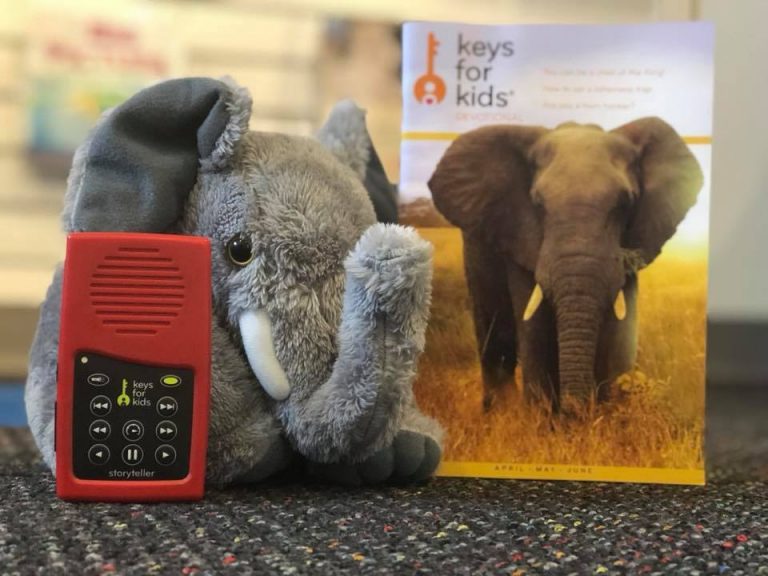
Nepal may be a former Hindu kingdom, but its people are hungry for the Gospel.  In February, a new partnership began between Keys for Kids Ministries and Good News Nepal.  Today, they’re making headway on a kids’ discipleship project.

Keys for Kids’ Executive Director, Greg Yoder, says their partner in Nepal is focused on the finish line. “He has already [translated] the first quarter of Keys for Kids and they are right now being checked by some Nepali believers for accuracy and context and making sure they’re theologically correct,” Yoder says.

“He has a priority to create these translations so that his kids can understand the Gospel better.”

Keys for Kids’ translation partner hungers for biblical teachings because he grew up without Christ. The Name of Jesus is new to his entire community, Yoder explains. “It is an unreached people group and they’re very excited about having materials to reach young people for Jesus Christ,” he says.

How many of Nepal’s people groups are “unreached”?  The answer to this question varies by source. According to Joshua Project, all but 10 of Nepal’s 285 people groups are unreached, while IMB puts the number of unreached people groups at 153. Whatever the exact number, it’s safe to say Christ is a stranger to most of Nepal’s varied people groups.

Keys for Kids and Good News Nepal hope to change this reality for the next generation.

Translating Keys for Kids content from English to Nepali is the first of a multi-step process, Yoder says. After Nepali believers finish checking the translation work, it will go back to Keys for Kids’ partner for edits and rewrites. Then, he’ll send a corrected draft for final review and approval.

SOURCE: Mission Network News, Katey Hearth

All Content & Images are provided by the acknowledged source

Mission Aviation Fellowship’s Hospital House Serves Coronavirus Patients’ Families in Indonesia

The ongoing COVID-19 crisis has hospitals around the world scrambling for help and families unsure how to help hospitalized loved ones. In Indonesia, however, patients rely on their families year-round.

Indonesian hospitals don’t provide the same kind of care many Western hospitals do. As a result, families are the ones tasked with providing food, changing bedding, and even picking up medication for patients admitted to the hospital. But then night falls and families are sent away from the hospital, and many are left with nowhere to go.

That’s where Mission Aviation Fellowship (MAF) steps in. Since June of 2013, MAF staff and families have been running a hospital house, or Rumah Singgah, for patients and their families in Kalimantan. Pilots and mechanics help provide medical evacuations and transport for individuals in the Indonesian interior, then their families help care for them at the hospital house.

Staff maintain five bedrooms and additional space for patients and their families. The house is within walking distance of the hospital so families have easy access to their loved ones. In the meantime, they can cook, bathe, and wash their clothes at the house.

And MAF staff do more than just provide space. Kathryn Boogaard, wife of a MAF pilot mechanic; Angie Johnson, wife of a MAF maintenance specialist; and Amy Eadie, wife of a MAF mechanic all work with the hospital house.

“We’ll go and visit the hospital house and we’ll visit with the families and pray for them, and some families just are content with that,” Johnson says. “But other families that do need extra care, you really build a relationship with them.”

For example, one farmer almost lost his hand in a chainsaw accident. Forced to undergo three months of physical therapy, he needed a place to stay with his family. MAF staff combined funds, shopped for the family’s groceries, gave them a safe and comfortable place to stay, and visited them on a regular basis to build a relationship with them.

Another guest ran into Johnson and her husband mid-hike long after his stay at the hospital house. His wife had given birth in the hospital, and while the new family stayed with MAF, the Johnsons and other staff members came and prayed with them. When he recognized them, he thanked them graciously.

SOURCE: Mission Network News, Alex Anhalt

All Content & Images are provided by the acknowledged source

Turkish Government Using the Hagia Sophia to Broadcast Islamic Messages


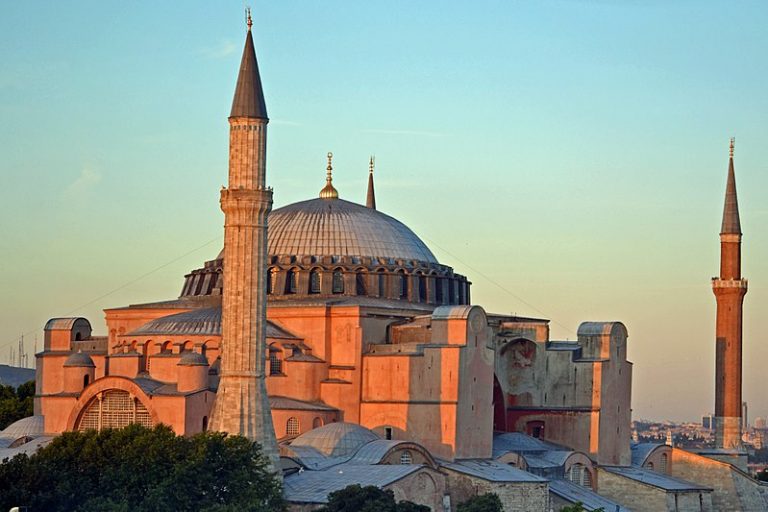
The Hagia Sophia, an ancient and iconic Christian church in Turkey, has been used by the government to broadcast Muslim messages.

David Curry of Open Doors USA says the Hagia Sophia represents the heart of the Eastern Orthodox Church and has been special to Christians for centuries. Emperor Constantine, the first Christian Roman emperor, approved the initial construction. It burned down twice, but the version standing today was completed in the year AD 537.

Curry says, “What Turkey has done during this current crisis is they have begun broadcasting Islamic messages from this Christian church. They had made it into a museum previously, but you now have the government of Turkey using this crisis to take over territory, to continue to push Christians into the margin of their community.” Read more here.

Turkey has persecuted Christians more and more in recent years, as President Recep Tayyip Erdoğan has leaned towards more radical Islam.

SOURCE: Mission Network News, Kevin Zeller

All Content & Images are provided by the acknowledged source

Coalition Forces Stop Organized Breakout by ISIS Prisoners After Prison Riot in Syria

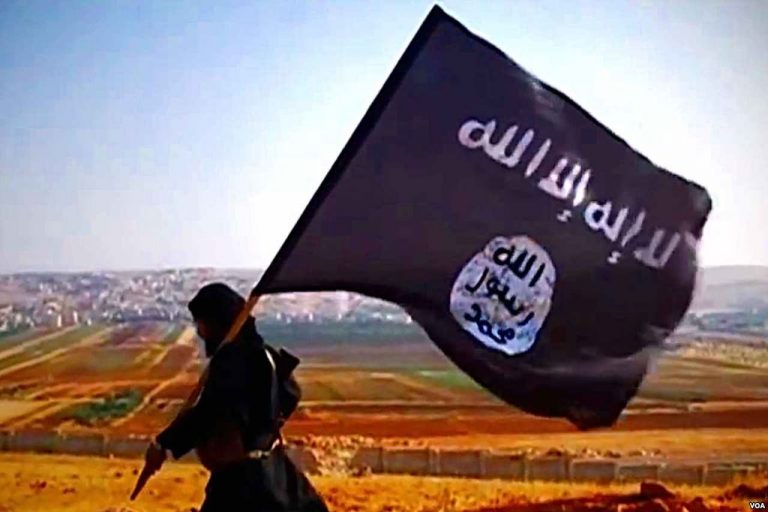
Coalition forces have regained control of a prison in northeast Syria after ISIS prisoners organized a breakout. Prisoners disabled security cameras and then rioted, but officials say no one escaped.

This prison riot occurred in Syria, but the threat exists everywhere ISIS does. Last week, the Islamic State called on followers worldwide to exploit security gaps caused by the coronavirus. See our full coronavirus coverage here.

“There’s so much work that has to go into containing this coronavirus. In the midst of chaos like this, this is the perfect scenario for terrorist groups to slip in and do some damage,” Uncharted Ministries’ Tom Doyle explains.

“Once the world spotlight is off, they feel free to move and come up with another plan to unleash on humanity. We have to be ready for more.”

Typically, Doyle says, terrorists increase their attacks on believers during the Easter holiday – which is just around the corner.

Every spring, believers around the world gather to commemorate Christ’s death and resurrection. Whether it’s called Easter Sunday or Resurrection Sunday, persecution typically spikes on this holiday, and in the days leading up to it.

“From Palm Sunday to Easter Sunday is like our ‘hot zone’ for Christians around the world,” Doyle says. “This is what Satan does: he attacks Christians during Passion Week…he hates Resurrection Day, so believers pay the price.”

SOURCE: Mission  Network News, Katey Hearth

All Content & Images are provided by the acknowledged source

Rohingya Refugees in Bangladesh are Ready to Embrace Christ

The Rohingya people are very open to the news of Jesus, but authorities trying to protect them are hindering evangelism efforts.

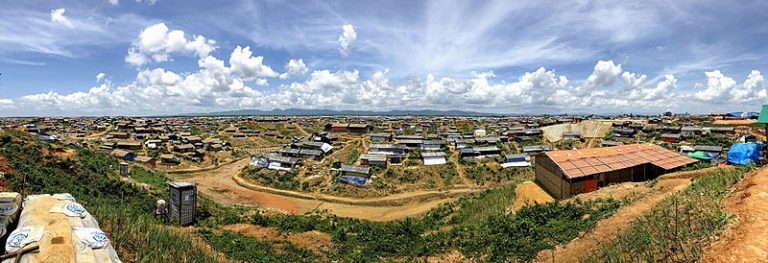
Greg Kelley of World Mission describes the setting in which the Rohingya refugees in Bangladesh live. “They’ve got them all concentrated very tightly in a place called Cox’s Bazar. You literally can look to your left and see the mountains of Myanmar and then you’re in these camps that are all clustered together.”

Kelley was initially denied entrance into the camps, but he managed to get in anyway. He says, “It really works to the advantage of people trying to do ministry in there. Because as much as they have them tightly consolidated with very specific boundaries, the Rohingya will kind of spill out a little bit over the street. So you could be on one side of the street, and not technically inside the camp. You walk on the other side of the street, now you’re in the camp.”

Kelley describes tremendous ministry opportunities inside these camps.

But there is one problem.

The UN allows aid to come into the camps, but they heavily restrict outsiders sharing their religion while in the camps.

And it’s easy to see why. The Rohingya people have been severely mistreated, and the UN is trying to protect their culture. Read more about the struggles of the Rohingya here.

The solution? Kelley says, “The ultimate conclusion [is] Rohingya reaching Rohingya, which needs to be kind of the endgame goal, if you will. Because that’s the only way that the exponential advancement of the Gospel takes place.”

SOURCE: Mission Network News, Kevin Zeller

All Content & Images are provided by the acknowledged source

Jim Denison on Three Reasons We Should Serve Others as Jesus Served Us

In an article I wrote earlier, I discussed the impact of the coronavirus pandemic on weddings in the US and around the world. Now, let’s think about the other end of the spectrum: its impact on funerals.

States and cities across the country have limited the number of participants at funerals, many to ten or less. As a result, some families are turning to technology such as live-streaming or Web platforms. Others are holding private funerals with plans to hold public memorial services weeks or months in the future.

Across four decades of pastoral experience, I can tell you this: the number of people who attend a funeral service has no bearing on the eternal significance of the life being celebrated. I have officiated at very large services for people who were only tangentially committed to their faith. I have also officiated at very small services for humble servants whose days were spent loving Jesus and loving others.

Their service emulated the Suffering Servant whose love has changed our lives.

Three reasons to serve others as Jesus served us

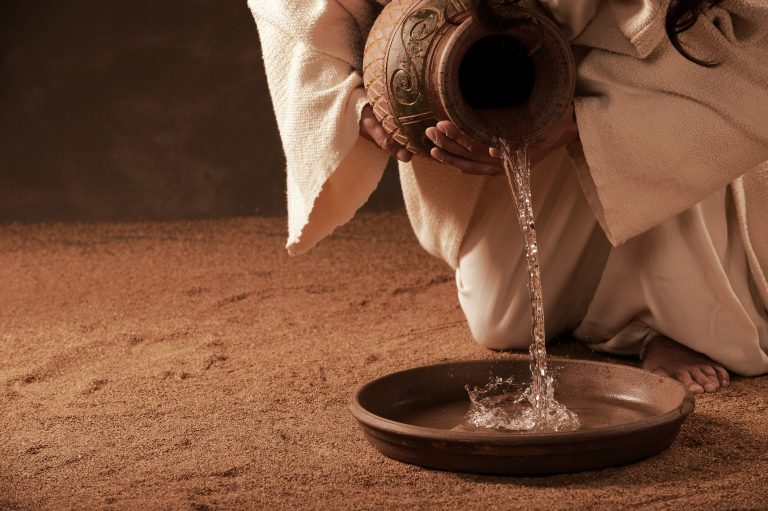
John 13 tells us that on Maundy Thursday, our Lord performed a shocking task: “He laid aside his outer garments, and taking a towel, tied it around his waist. Then he poured water into a basin and began to wash the disciples’ feet and to wipe them with the towel that was wrapped around him” (vv. 4–5).

This work was so menial that no Jew could be made to do it, not even a Jewish slave. What would prompt the King of kings to stoop to such depths?

Verse 3 explains verses 4 and 5: “Jesus, knowing that the Father had given all things into his hands, and that he had come from God and was going back to God.”

Our Lord knew three facts about himself.

SOURCE: Christian Post, Jim Denison

All Content & Images are provided by the acknowledged source

Josh Laxton on the CARES Act & Your Church Staff

We are in unprecedented times, and (for most of us) the health crisis is just weeks away. However, for all of us, the financial crisis is here.

There are roughly 350,000 churches in the United States. Most are small and have a single (often part time) staff member. Some employ hundreds. However, Warren Bird of the Evangelical Council of Financial Accountability estimates that there are 1 million people on the payroll of US churches, the majority of whom are part-time, often working other jobs.

Thus, the Congress and the President included them in the most recent stimulus bill, The CARES Act (and the Paycheck Protection Program, which is part of that act), as part of a plan to avoid sudden and vast amounts of unemployment.

While this is a fluid situation, we are committed to learning more about the CARES Act in the hours and days to come.

As such, you should expect this page to be updated.

An Overview You Need to Know

We turned to trusted voices to get the best imformation we would. One particular trusted resource that we want to note is Richard Hammar, who also revised his original article at Church Law and Tax (also a part of Christianity Today) regarding the PPE. Here’s what he noted:

What is Covered?

In addition, our friends at Vanderbloemen have provided some helpful resources about how the loan funds can be used to cover payroll costs, group health insurance benefits, paid sick leave, medical and insurance premiums, mortgage or rent payments, and utilities.

Furthermore, payroll costs can include:

What You Need to Do Now

Therefore, in light of what we do know, here are four things you need to be doing now with regard to thinking and praying through your church’s finances in this crisis.

Source: Christianity Today

All Content & Images are provided by the acknowledged source

Jeff Christopherson on the Greatest Gospel Question of This Moment

Jeff Christopherson is a church planter, pastor, author and Missiologist at the Send Institute – an interdenominational church planting and evangelism think tank.

For some of us, it’s hard to think about mission right now.

This sentiment is surely understandable—pastors and church leaders are scrambling to discern the best path forward to love and lead the sheep entrusted to their care. This work, combined with genuine personal anxiety about the coming crisis, sickness, and death, leaves many with little mental or emotional margin to consider how best to care for those outside of the flock.

Yet such efforts are needed, perhaps now more than ever. Our last decade stands as a condemning witness to almost every tribe for the lack of prioritization in disciple-making. Many have authored compelling articles which included undeniable stats of languishing evangelism numbers.

The calls for increased efforts in evangelism often elicit resounding “amens” from pews to tribal leaders alike. Yet even with all the hearty ‘amens’, the numbers suggest that we’ve failed to make progress. Could it be that this moment of global crisis comes with a Sovereign reawakening from our complacent self-fascination to a renewed commitment our King’s commission?

There seems to be three means of gospel engagement that never change. Disciples of Jesus are always positioned with these three tools in their missionary arsenal: what we say, what we do, and how we respond. Let’s think about each in light of the current COVID-19 pandemic and how we might effectively lean into each for missionary engagement.

What We Say

The gospel is multifaceted. This is the brilliance of God’s plan. God’s redemptive work is impossible to contain in one image or concept, so the biblical writers use many different pictures to convey the glory of what God has done for us in Christ.

What We Do

Disciples of Jesus demonstrate the veracity of their words through physical acts that model the character of Christ. Now, more than ever, it’s vital that God’s people do just that. Preaching from the comfortable confines of our sanctuaries feels a bit empty and hollow when disconnected from selfless actions.

Source: Christianity Today

All Content & Images are provided by the acknowledged source