

“The Way Back” Review: Ben Affleck Is at His Best in Sad and Sobering Basketball Drama, says IndieWire’s David Ehrlich

Modern Hollywood’s messiest comeback artist is finally ready to show his work on screen, and there isn’t a moment to waste. You can tell from the first minutes of “The Way Back” that construction worker Jack Cunningham is unlike any character Ben Affleck has ever played before — he’s not trying to impress anyone. There’s no twinkle in his eye, no swagger in his step, no “smartest guy in the room” energy to the way he carries himself. He murmurs when he talks, drinks a beer in the shower every morning, and sparks to the salesman at his neighborhood liquor store as if that’s the only stable relationship he still has left in his life.

Swollen and greasy (Affleck has never looked bigger, or seemed quite as small), Jack is a far cry from the chiseled Bruce Wayne, the brave Tony Mendez, or even the self-parodic cheater Affleck embodied in “Gone Girl.” Wasn’t this guy supposed to be Boston’s George Clooney, or at least its apology for Mark Wahlberg? What about the next Clint Eastwood? Cursed to be a movie star in an age that doesn’t need them, Affleck has grown almost unrecognizable from the middle-class matinee idol that Hollywood first swooned over in the late ’90s.

And yet, his compellingly underplayed performance in “The Way Back” feels like it might be the most personal thing he’s ever done. That’s not just because the meta-text of it all is so hard to ignore, and that Affleck shot this movie shortly after finishing a stint in rehab (the actor’s own misadventures with alcohol are chronicled by the tabloids, and his mea culpas by the Times). In fact, it has more to do with how Gavin O’Connor’s modest and moving sports drama refuses to let its leading man reclaim something of his old screen persona. It denies Affleck the crutch of his natural charisma, or the chance to hide behind a story that’s bigger than himself. In fact, this sober little studio movie is so uncommonly effective because of its steady insistence that life can’t be lived in reverse; that, contrary to its title, there’s no going back.

The raw and redemptive tale of a broken soul who starts piecing himself back together when he’s hired to coach his old high school basketball team, “The Way Back” only sounds like a movie that you’ve already seen 100 times because — in broad strokes — it is. But “Miracle” director O’Connor (who could make this kind of thing in his sleep) and screenwriter Brad Ingelsby head-fake expectations in a number of significant ways, avoiding the easy layups endemic to the sports genre in favor of a story that finds more drama in running drills than it does in playing the big game.

We meet Jack when he’s circling the drain — every night is spent bungee-jumping a few inches closer to rock bottom, and they all end with him being carried home from the local watering hole by the same old man who used to do the honors for his dad. There’s a sharp darkness underlying Jack’s addiction (the details of which are revealed with a shiv of exposition in the second act), but understanding the reasons for one’s self-destructive behavior can fool people into thinking they have it under control. A defensive early scene between Jack and his sister (Michaela Watkins) makes it all too clear that he’s hurting too much to let anyone even acknowledge his pain. Affleck isn’t suave here; whatever charm Jack has is suffocated under layers of scar tissue. He’s being driven by his damage, and ready to snap at anyone who forces him to look in the rear-view mirror.

Jack needs the kind of help he doesn’t know how to ask for, and that’s when someone unexpectedly puts their faith in him. You get the sense that Father Edward Devine (“E.R.” chief John Aylward) — the long-time principal of Bishop Hayes High School — has been informed that his school’s greatest former basketball star has fallen on hard times, but it could also just be an act of Devine providence. The team’s previous coach is out for the season with a heart attack (a possible side effect of losing every game of the season), and they need someone to sub in right away. Twenty-four beers and a dark night of the soul later, Jack acquiesces.

Click here to continue reading.

SOURCE: IndieWire – David Ehrlich

All Content & Images are provided by the acknowledged source
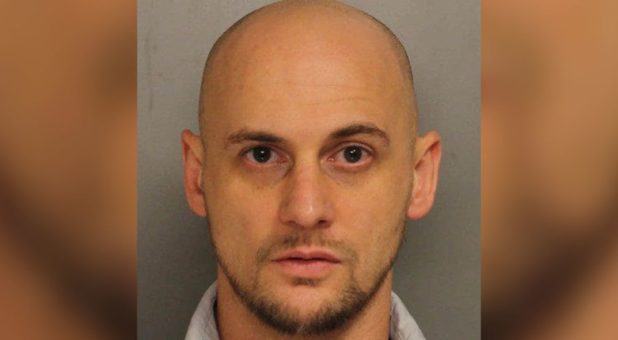
Pennsylvania Youth Pastor who Sexually Abused Teen Girl and Got her Pregnant then Ordered Hit on Senior Pastor Who Reported him is Sentenced to Three to Six Years in Prison

A youth pastor in Pennsylvania who got a 17-year-old girl pregnant in 2016 has now been charged with hiring someone to murder his senior pastor and the judge who presided over his case.

The Mercury News reports that 37-year-old Jacob M. Malone allegedly offered to pay a fellow inmate to commit the murders last year while in Laurel Highlands state correctional institute.

A teenage girl gave birth to Malone’s child in 2016. Malone was arrested after his senior pastor, Harold Lee Wiggins, reported him to the police. The teenager claimed that Malone had been sexually assaulting her since she started living with him and his family at the age of 17.

SOURCE: Charisma News

All Content & Images are provided by the acknowledged source
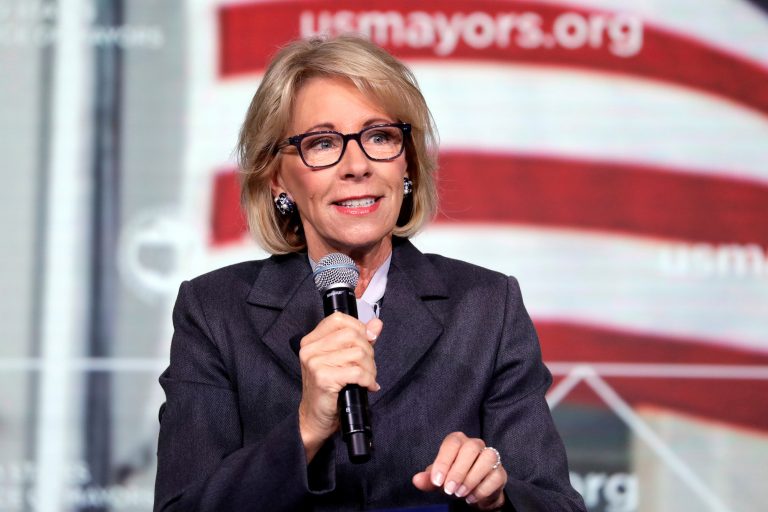
U.S. Secretary of Education Betsy DeVos Speaks Out About her Faith and her Goal of ‘Academic Freedom For All’

U.S. Secretary of Education Betsy DeVos, who is a key player in the nation’s ongoing discussion about school choice and academic reform, is a devout Christian with a lifetime commitment to her faith.

And in a recent interview with The Pure Flix Podcast, DeVos dove deep into her biblical roots, her passion for education and her perspective on potential reforms.

“I was fortunate enough to be born into a family that raised me to make my faith my own,” she said. “I had exposure from my first memories to weekly church services.”

While DeVos was brought up in a Christian home, it wasn’t until her teen years that her faith was more firmly rooted.

“My faith really became my own when I was a late teen, early 20s,” she said, adding that she has since had continued challenges that have helped her learn and grow. “I’m grateful to have had that foundation.”

The Trump-appointee went on to note that faith is “foundational to everything” she does, explaining how her views about individual value translate to the educational realm.

“I firmly believe every single child is a uniquely created individual with great potential and there are too many kids that are just not able to develop that full potential, because they are in a place that simply is not cultivating that for whatever reason,” DeVos said.

Listen to DeVos share her faith journey and her passion for education:

She noted that there are many teachers across the U.S. who are doing a wonderful job, but added her belief that the system, as it currently stands, doesn’t meet diverse needs.

“Kids are different,” DeVos said. “They learn differently and a one-size-fits-all, cookie-cutter approach does not work.”

SOURCE: Charisma News

All Content & Images are provided by the acknowledged source

Pentecostal/Charismatic Churches of North America Elects Rev. David Wells to be New President

Dr. David Wells, general superintendent of the Pentecostal Assemblies of Canada, has been elected to serve as president of the Pentecostal/Charismatic Churches of North America (PCCNA) at its 2020 Annual Meeting. Rev. Wells will assume leadership on May 1, 2020. Outgoing President Jeff Farmer will continue to help lead the Next-Gen Cohort of 30 emerging leaders, appointed by member denominations and organizations.

Dr. Wells has served as the vice-chair of the Pentecostal World Fellowship and on the executive boards of the World Assemblies of God Fellowship and the PCCNA. He served on the board of the Evangelical Fellowship of Canada from 1999–2013 and served as chair of that board from 2007–2013. He completed his undergraduate studies in theology at Vanguard College in Edmonton, Alberta, and has a Master of Arts in Christian Ministry from Briercrest Seminary, Saskatchewan. In May 2013, he was awarded an honorary Doctor of Divinity degree by McMaster Divinity College. In April 2014, he was awarded an honorary Doctor of Divinity degree by Briercrest College and Seminary, and in July 2017 an honorary Doctor of Divinity degree by Pentecostal Bible and Leadership Institute, Malawi.

SOURCE: Charisma News

All Content & Images are provided by the acknowledged source
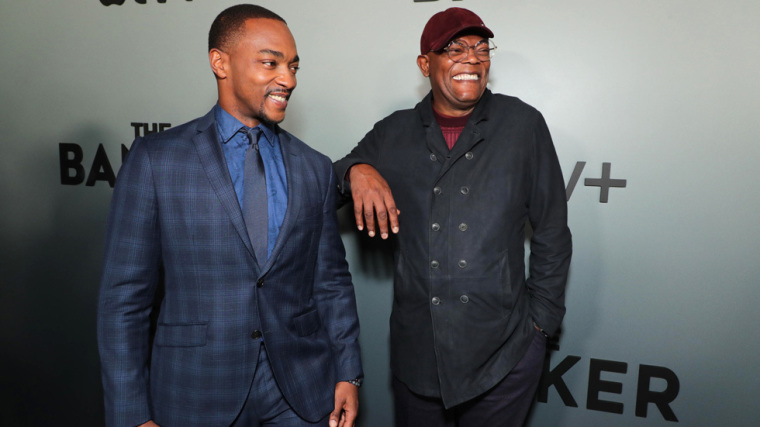
Anthony Mackie, Samuel L. Jackson, and Nia Long Hope “The Banker” Inspires Churches to Discuss Financial Literacy and the Wealth Gap in America

The forthcoming film “The Banker” should motivate the church to address the issues of financial literacy, caring for the “least of these,” and perseverance in the face of adversity, according to stars Samuel L. Jackson, Anthony Mackie, and Nia Long. 

Based on historic events that took place in the 1950s and ’60s, “The Banker” tells the true story of Bernard Garrett (Mackie) and Joe Morris (Jackson), a pair of African American entrepreneurs who made themselves part of the real estate game in Los Angeles, California, and Texas.

Due to racial inequality, the two men decide to hire a white man, a home-repair worker named Matt Steiner (Nicholas Hoult), to act as the head of their company while they posed as a janitor and a chauffeur and ran the business.

Thanks to their savvy and financial ingenuity, Garrett and Morris made it possible for black citizens to move into formerly all-white neighborhoods before the Fair Housing Act of 1968 made discrimination unlawful. Their success ultimately drew the attention of the federal government, which threatened everything they had built.

Directed by George Nolfi, “The Banker” brings to life a fascinating true story of financial gamesmanship and racial discrimination in a segregated America. The film premiered at a special event at the National Civil Rights Museum on Monday that was attended by The Christian Post.

Mackie (the “Avengers” series), told CP he hopes the film motivates church leaders to address the issue of financial literacy from the pulpit.

“Financial literacy is something that we need to talk about in the church weekly,” he stressed. “I feel like when we go to church, we look for guidance and leadership. So we need the spiritual understanding of our day to day lives, but also our financial security so that we can take care of our families.”

The actor added that Scripture often addresses the importance of stewarding one’s money wisely, adding: “Tithing is there to build and grow the church and spread the Lord’s work. So in order for me to be a vehicle of the Lord, I need to have a home and a strong family system so that I can go out and live by His Word. That’s why it’s so important to talk about financial literacy.”

Jackson, who grew up in segregated America, told CP that while the country has come a long way, there’s still a “serious wealth gap” that makes it difficult for many African American and low-income families to achieve the “American dream.”

SOURCE: Christian Post, Leah MarieAnn Klett

All Content & Images are provided by the acknowledged source
Anthony Mackie, Samuel L. Jackson, and Nia Long Hope “The Banker” Inspires Churches to Discuss Financial Literacy and the Wealth Gap in America

The forthcoming film “The Banker” should motivate the church to address the issues of financial literacy, caring for the “least of these,” and perseverance in the face of adversity, according to stars Samuel L. Jackson, Anthony Mackie, and Nia Long. 

Based on historic events that took place in the 1950s and ’60s, “The Banker” tells the true story of Bernard Garrett (Mackie) and Joe Morris (Jackson), a pair of African American entrepreneurs who made themselves part of the real estate game in Los Angeles, California, and Texas.

Due to racial inequality, the two men decide to hire a white man, a home-repair worker named Matt Steiner (Nicholas Hoult), to act as the head of their company while they posed as a janitor and a chauffeur and ran the business.

Thanks to their savvy and financial ingenuity, Garrett and Morris made it possible for black citizens to move into formerly all-white neighborhoods before the Fair Housing Act of 1968 made discrimination unlawful. Their success ultimately drew the attention of the federal government, which threatened everything they had built.

Directed by George Nolfi, “The Banker” brings to life a fascinating true story of financial gamesmanship and racial discrimination in a segregated America. The film premiered at a special event at the National Civil Rights Museum on Monday that was attended by The Christian Post.

Mackie (the “Avengers” series), told CP he hopes the film motivates church leaders to address the issue of financial literacy from the pulpit.

“Financial literacy is something that we need to talk about in the church weekly,” he stressed. “I feel like when we go to church, we look for guidance and leadership. So we need the spiritual understanding of our day to day lives, but also our financial security so that we can take care of our families.”

The actor added that Scripture often addresses the importance of stewarding one’s money wisely, adding: “Tithing is there to build and grow the church and spread the Lord’s work. So in order for me to be a vehicle of the Lord, I need to have a home and a strong family system so that I can go out and live by His Word. That’s why it’s so important to talk about financial literacy.”

Jackson, who grew up in segregated America, told CP that while the country has come a long way, there’s still a “serious wealth gap” that makes it difficult for many African American and low-income families to achieve the “American dream.”

SOURCE: Christian Post, Leah MarieAnn Klett

All Content & Images are provided by the acknowledged source

Colorado Pro-Life Group May Get Proposal to Ban Late-Term Abortions on Ballot After Submitting Over 138,000 Signatures to State

A Colorado pro-life group collected over 138,000 signatures in the hopes of getting an initiative on the state ballot to ban late-term abortions in most circumstances.

The Due Date Too Late campaign announced that they turned in the signatures to the Colorado Secretary of State’s Office on Wednesday, putting them one step closer to getting their initiative on the ballot.

In order to be added to the Colorado ballot, the proposed measure needs to have at least 124,632 valid signatures. The state has 30 days to review the petitions.

The campaign noted in a Facebook post on Thursday that they were able to get around 43,000 of the signatures over the past week alone.

“We reached the minimum for submission and are now waiting for an official count. We have the best volunteers in the world! Thanks for speaking for those who cannot speak for themselves,” they stated.

Lauren Castillo, a spokeswoman for the campaign, told Colorado Public Radio that she was “confident” that the measure has “enough to qualify” for the ballot.

“It was an all-volunteer effort,” said Castillo. “I think it was really indicative of the grassroots movement. As word-of-mouth continued to spread, the momentum just continued to build.”

SOURCE: Christian Post, Michael Gryboski

All Content & Images are provided by the acknowledged source
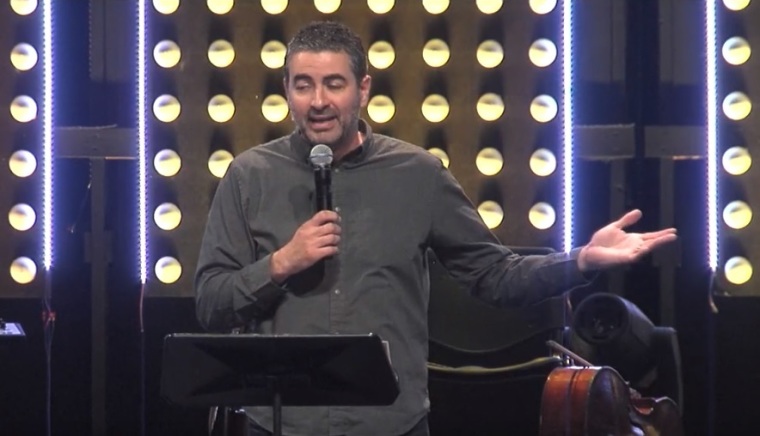
Apologist Alan Shlemon Gives Three Ways Christians Can Determine Whether an Idea is ‘Biblical or Bogus’

A Christian apologist laid out three ways Christians can judge whether an idea is “biblical or bogus” in a speech that was part of a student-centered apologetics event in Allen, Texas.

Alan Shlemon, author and speaker with the apologetics group Stand to Reason, gave remarks at the reTHINK Apologetics Student Conference, held last week at Cottonwood Creek Church in Allen.

During his talk last Friday, Shlemon laid out three steps that help guard against false religious ideas.

The first step is to “seek to study scripture,” which involved reading the Bible. Shlemon told students that when they “come across an idea or some kind of claim, we need to test it against Scripture.”

The second step is to “seek wise counsel,” with Shlemon giving examples of parents, young group leaders, and pastors, among others.

“Chances are, you don’t know the Bible entirely, you don’t have perfect theology, you don’t understand the Christian worldview completely, and guess what? That’s OK. I don’t either. Nobody does,” he explained.

“But what that means is you can and should seek wise counsel. People who might be more biblically mature than you or walked with Jesus longer.”

Shlemon said his counsel was his boss, Stand to Reason founder and President Greg Koukl, who hosts a radio program that invites people to call in and ask spiritual questions.

The third and final step in determining the validity of an idea, according to Shlemon, is to “seek the consensus of historic Christianity.”

“What has the Church taught for 2,000 years?” asked Shlemon. “If the idea or the claim that I am considering right now is contradicted by 2,000 years of church history, or it is a completely new idea, then it causes me to become suspicious.”

SOURCE: Christian Post, Michael Gryboski

All Content & Images are provided by the acknowledged source
Europe Forsakes Christianity for ‘Paganism’

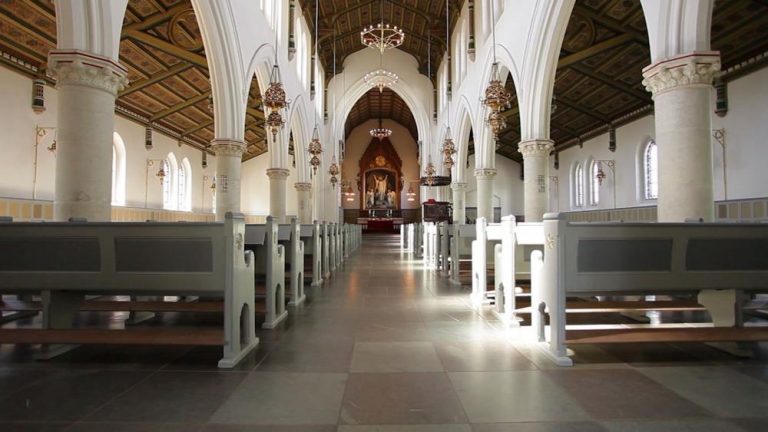
Martyr’s Free Church in Edinburgh is part of the rich history of Christianity in Scotland. Today it’s “Frankenstein,” a bar that describes itself as a family-friendly venue but also a place for stag parties, bar top dancers and monsters.

St Paul’s Church in Bristol, England is now a school for circus performers.

And in Llanera, Spain, the Church of Santa Barbara is now “Kaos Temple,” a skateboard park.

But before you get angry at the new owners, understand that Europe today has more empty church buildings than it knows what to do with because Europe is, by and large, no longer Christian.

You could say these churches are the remnants of a “lost civilization.” Christian civilization. It was once at the very heart of Europe’s life and culture. Those days are over.

Belief in the Christian God Has Plummeted

“In Britain, something like 70 or 75% of British [people] under 30 say they have no religion,” says theologian Stephen Bullivant, author of Mass Exodus.

And Bullivant has more bad news: Europe’s move away from Christianity is accelerating.

SOURCE: CBN News, Dale Hurd

All Content & Images are provided by the acknowledged source

Study Finds, Alcohol Ads Cause Children to Drink

Children are enticed into underage drinking by alcohol advertisements on television and social media, research suggests.

A U.S. study in the Journal of Studies on Alcohol and Drugs found that children were often exposed to alcohol advertisements on apps and during television programs.

Evidence showed that for each additional hour of television viewed by children per day, the risk of starting to drink increased by 9%. For films the figure was even higher, at 15%.

Smoking

Authors Michael Weitzman and Lily Lee drew comparisons to teenage smoking, where tobacco ads were regulated in the U.S. when it was concluded they caused children to smoke.

Weitzman said: “Advertising changes teens’ attitudes about alcohol and can cause them to start drinking. Just as tobacco advertising causes teen smoking, exposure to alcohol ads causes teens to drink.

“The young are particularly vulnerable due to their potential for forming brand loyalties, limited scepticism and high use of social media—where alcohol marketing is increasingly found.”

The researchers called for alcohol ads on television and social media to be regulated in a similar way to tobacco.

SOURCE: The Christian Institute

All Content & Images are provided by the acknowledged source
