TACOMA, Wash. – The Pierce County Council chambers will soon display the national motto “In God We Trust.”…report by breaking Christian News
The controversial resolution to make the Pierce County Council chambers the first public place in Washington to display “In God We Trust” was approved by the council Tuesday night.
Supported by Councilman Jim McCune, the resolution asks to place the “inspiring slogan” with words that are “a profound source of strength and guidance” prominently in the chambers.
“‘In God We Trust’ is universal,” McCune said after the 4-3 vote, “It’s a statement used all over the world. It’s not alienating anybody out.”
Tuesday’s council meeting featured a lively debate over the place of the motto in a government setting, given it’s reference to God.
Council members Connie Ladenburg and Rick Talbert introduced several late amendments they admitted were designed to showcase the “absurdity” of the discussion. They failed.
One late change that would include “E Pluribus Unum” (out of many, one) in the display was approved.
But Talbert took McCune to task for proposing this resolution in the first place.
“I believe this is a calculated effort on (McCune’s) part to impose his religious beliefs on the people on Pierce County,” said Talbert.
“It’s not going to be religious at all,” responded McCune after the hearing, “I think it was a good debate.”
When installed, Pierce County will become the first municipality in Washington to display the national motto.
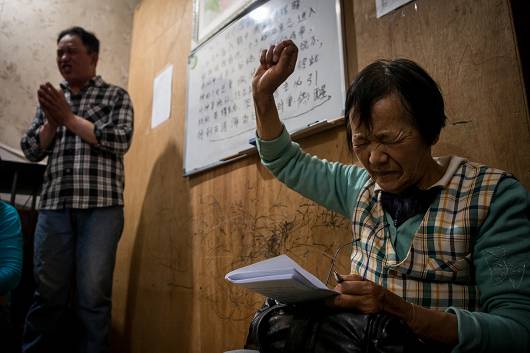
EAST ASIA (BP) – Alexander and Maggie Kirkpatrick* moved to East Asia in 1989 — the same year as the Tiananmen Square massacre. Their wedding anniversary shares the same date…report by Baptist Press
During their 25 years of service, the Kirkpatricks watched China change and the church boom. The Christian workers say the number of believers in the country is “staggering.”
“The day where we arrive in a city and we go for months and months and never find a Christian are really gone,” Maggie said. “That is a major, major God-thing.
“[We] would pray that the Gospel would take root in the far reaches,” Maggie, recalling their first years on the field, said.
“We would be disappointed, if after 25 years, we couldn’t find any trace of the Gospel in any of the places we’ve been,” she said. “But God hasn’t disappointed. We can find the results of evangelism and discipleship, even in some of the most far-flung places.”
The Kirkpatricks moved to Asia to work in an unengaged and unreached city in western China. In the late 80s and early 90s, western China was the “wild west” — uncharted territory for many Westerners.
“Twenty five years ago, we came here to be the Christians in those cities and to be a presence of Christ in some of those unreached places,” Maggie said.
As the nation and church were still recovering from Mao Zedong’s Cultural Revolution, “it was very difficult to even find anyone who believed,” she added.
“[Believers] were there; they were the remnants of the church prior to the Cultural Revolution. It took time and relationships to find some of those people.
“In the meantime, we set about breaking new ground and winning the lost,” Maggie recalled. “It is many of those people who believed in the early days who are now taking the Gospel forward in China.”
Stories and historical tapestries began to unfold as Christian workers in China led people to Christ.
“Interestingly, as we’ve won new people, we began to discover more and more about the church that was left here after the Communist takeover,” Maggie said. “A number of those networks from prior to 1950 are still alive and well and spreading the Gospel not just in China but all over the world.”
Believers from 20-30 years ago began new house church streams, sharing the Gospel domestically and internationally.
“It is all a God thing; it wasn’t our doing that caused a wave of change,” Alexander said. “We were just there on the front row, or second row, participating in the joy.”
The change of a nation
Politician and reformer Deng Xiao Ping’s economic reforms ushered in a new era for the nation, the couple noted. China’s economy went from being state-run, to foreign companies being encouraged to joint venture with Chinese companies.
“The younger generation is quickly forgetting what their grandparents’ generation went through during the Cultural Revolution,” Maggie said. “That era in China, to them, is long ago and far away. Their China is connected to the world.”
The Kirkpatricks at first had to travel in and out of China from neighboring countries. “It’s gone from us not even knowing if we could live in country for long periods, to being here long-term,” she said, recalling they even had to use special currency.
The city where they first served is now a major hub for expatriates. Western amenities are abundant such as Starbucks, Dolce and Gabbana, Mexican food and Walmart.
The couple remembers when Chinese people lived in work units called a “danwei.” People of the same profession would live in the same building.
Under the old socialist system, food, housing and health care were all provided. Now, people are free to live wherever they choose and provide for themselves.
The Kirkpatricks remember big Russian trucks and no private cars. Bicycles were the main form of transportation in the late 80s and early 90s.
Now, Lamborghinis, Maseratis and Ferraris tear through the empty night streets, revving their high-dollar engines. “China has so many millionaires — that was unheard of back then,” Maggie said.
However, a recent World Bank listed China among the five nations housing the world’s poorest people.
Freedom of travel has also been a major change. The couple recalled when only the Communist Party could get a passport and visa.
“From Paris, to Munich to Rio de Janeiro, to Mogadishu; pick a city, [Chinese people] are there,” Maggie pointed out.
If there is a sizable population of Chinese people in a city, virtually in every nation in the world, the Gospel is as well, she added.
“If they take the Good News with them,” Alexander said, “it will be a way to get the Good News out faster.”
As the Chinese moved into various cities to find work, cities became a prime place for seeing the Gospel spread.
“[Apostle] Paul was relating to people in the cities,” he said. “Cities are still strategic because of … migrants coming to the city to find work.”
Migrant workers move frequently. And many of them who are new believers often return to their hometowns and begin spreading the Good News. “[The Gospel] travels back with them to their homes and families,” Alexander said.
Alexander said he’s partnering with a seminary in the U.S. to provide theological education for believers.
The role of the Western Christian worker in China has changed, he added. Now, their role is “primarily to come alongside [local] workers, provide training, equipping, encouragement … and eventually finish the task, the Great Commission.”
Growth of a nation
Alexander said he sees parallels between the growth of his own son and daughter and the growth of the church in China.
“At first, you need a lot of information on what to do and how to do… As you grow in your walk, you need someone to come along and encourage and work alongside … not as much directive but more supportive,” Alexander said.
In addition to training, Alexander counsels pastors and leaders on small group dynamics, investing time into building up the church and helping believers learn how to cast vision. He challenges Chinese believers to take the Gospel to unreached areas.
Maggie said, “The local brothers and sisters are doing the work. Some of the things they need to accomplish what God is asking them to do are things we can provide.”
The Chinese church sends its own workers to countries Westerners cannot enter. Chinese believers also founded the Back to Jerusalem movement — a commitment to take the Gospel to unreached areas.
“In 25 years, we’ve gone from seeing people come to faith, to training them, to seeing them do it themselves,” Maggie said.
Even with the rapid changes and developments in China, the Kirkpatricks said there are many places in China that are the “old China.”
“There are places where the future and past coincide,” Alexander said.
The next 25 years are an open book for China, The Kirkpatricks say. They pray it will be 25 years saturated with the Bible.
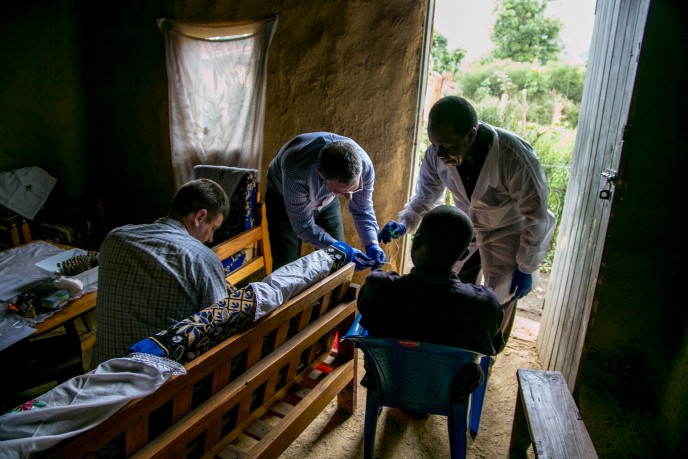
As the most severe Ebola epidemic on record spreads through central Africa, infecting and killing hundreds of citizens and foreign aid workers, and raising the specter of outbreaks all over the world, an Israeli research team is working with survivors to develop antibodies against the lethal virus…Report by israel21c
Dr. Leslie Lobel tells Israel 21c that he and fellow principal investigator Dr. Victoria Yavelsky have spent many years studying native immunity to Ebola and another equally lethal Equatorial African virus, Marburg, at Ben-Gurion University of the Negev’s Center for Emerging Diseases, Tropical Diseases and AIDS.
Ebola, a hemorrhagic fever, is one of the deadliest viruses in the world. It kills up to 90 percent of its victims, while Marburg, another hemorrhagic fever, kills up to 88%. Ebola can be spread through sweat and saliva and there is no vaccine or cure. In the latest outbreak, the worst ever, more than 670 people have died, including Americans.
“Currently we’ve tracked all Ebola and Marburg virus survivors in Uganda, studied their immune responses to these viruses and identified survivors with a strong immune response,” he says. “We take blood samples from them and isolate monoclonal antibodies that neutralize the virus in our lab here at Ben-Gurion.” Yavelsky and Lobel’s therapeutic approach was proven as a successful potential treatment by their colleagues in the US military, and at several other laboratories. This approach is regarded as the most promising way to prevent Ebola and Marburg, and it could be available within five years.
Lobel travels to Africa about five times a year. “We have set up a base laboratory in Entebbe, with our Ugandan colleagues, so that we can process human blood samples in under 12 hours from the time of collection, which is required for our work. After the samples are tested and deemed to be non-infectious, we ship them to Israel and our team here develops antibodies from the samples,” Lobel says.
With funding from the US National Institutes of Health and other resources, Lobel’s lab is now getting ready to test its human monoclonal antibodies in mice and non-human primates. This will be performed abroad because no live virus research is permitted in Israel.
“We have a five-year plan and I believe we could have proof of concept with human monoclonal antibodies in monkeys in three to five years,” Lobel predicts. “If we can prove it in two animal models we can eventually use it in humans.”
He notes that the work being done at Ben-Gurion University is essential, since there are few studies on survivors of Ebola and there is no effective treatment thus far.
“We’re quite advanced in terms of studying the immune response in survivors in central Africa to develop a prophylactic and therapeutic [approach],” he tells Israel 21c.
The Israeli company Vecoy Nanomedicines is developing a biomedical technology platform that tricks a virus into “committing suicide,” a tactic that could neutralize viral threats like Ebola, hepatitis and HIV. However, Vecoy’s Dr. Eitan Eliram tells Israel 21c that Vecoy has not yet found sufficient funding to go forward.
Several other experimental vaccines and therapeutic approaches to Ebola and Marburg—mostly in the United States and Canada—are in various stages of development.
The current outbreak was noticed last February in Guinea, a country that is normally outside the usual ecosystem for Ebola, according to Lobel. At the end of March, the US Centers for Disease Control sent a team to assist Guinea Ministry of Health and World Health Organization (WHO) in formulating an international response to the outbreak that is now affecting other African countries including Sierra Leone, Liberia and Nigeria.
Poor compliance with health authorities and many customary practices are thought responsible for the rapid spread of the virus. Because of international travel, however, the Ebola specter hangs over much of the world. Accordingly, WHO has been holding emergency coordination meetings in several countries, and nations such as Liberia are sealing their borders and establishing screening centers. The most affected areas are imposing quarantines.
As of the end of July, Nancy Writebol and Dr. Ken Brantly, two American aid workers stationed at a Liberian hospital, tested positive for the Ebola virus.
An Israeli analyst told CNN’s Wolf Blitzer Friday morning that he received information from reliable sources that 3,000 Hamas elite soldiers told their families goodbye and appear ready to carry out suicide attacks on Israel…reported by The Blaze
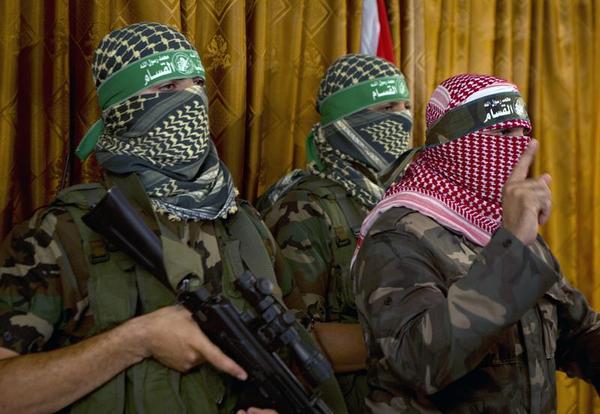
(Photo:THE BLAZE/MOHAMMED ABED/AFP/Getty Images
Middle East analyst Gershon Baskin said that all the fighters were equipped with suicide vests and that they had expected to die in terrorist attacks.
Abu Obeida (R), the official spokesperson of the Palestinian militant group Ezzedine al-Qassam brigade, the armed wing of Hamas, give a press conference on July 3, 2014 in Gaza City. Islamist Hamas movement, whom Israel has blamed for the kidnap and murder of the three teenagers in June, said it held Netanyahu’s government directly responsible for the killing of Abu Khder. ‘You will pay the price for your crimes,’ it said. Baskin spoke just hours after a Hamas suicide attack, believed to have been conducted by the group’s militant wing Ezzedine al-Qassam brigade, killed two Israeli soldiers. During the surprise Hamas attack, which happened two hours into the 72-hour agreement for a cease fire, the militants captured an Israeli officer.
“You say these elite fighting forces they’re all prepared– they all go in with suicided vests ready to kill themselves in order to kill Israelis?” Blitzer asked as Baskin nodded.
“I was told by someone who had spoke to Al-Qassam, the military wing of officer who said that before the ground operation began they were all instructed to go to their families and say goodbye to their families with the intent that they would not be returning alive from this battle,” Baskin told Blitzer in an news report airing live from Israel. “This is one of the very difficult things about fighting with an organization like Hamas, particularly these very dedicated soldiers, combatants who are not afraid to die.”
“We will do what needs to be done to protect our people,” Mark Regev, spokesman for Israeli Prime Minister Benjamin Netanyahu told Blitzer after Baskin’s interview.
Two American missionaries who have been working to fight the deadliest outbreak of Ebola virus in history, continue fighting for their lives after contracting the disease. Major airlines are meanwhile banning flights into West Africa as the outbreak spreads.
Charlotte-based missionary group SIM USA, which is assisting efforts at a Liberia treatment center alongside Samaritan’s Purse, said that both Dr. Kent Brantly and Nancy Writebol are in stable condition, but are suffering from some symptoms of the virus and face critical days ahead.
“The next few days are critical in assessing the recovery of these Ebola crisis responders,” Bruce Johnson, president of SIM USA, said on Tuesday. “SIM and Samaritan’s Purse invite people to pray for the full restoration of our two workers and for the stemming of the spread of this virus across Liberia and other nations of West Africa.”
The latest update from the World Health Organization on Sunday noted that there have been 1,201 people in total diagnosed with Ebola across Liberia, Sierra Leone and Guinea, and 672 deaths.
BBC News added that airline Asky in West Africa has said that it has stopped flying into Liberia and Sierra Leone, explaining that the decision is aimed at keeping “its passengers and staff safe during this unsettling time.”
Nigeria’s largest airline, Arik Air, has also banned flights to Liberia and Sierra Leone as a response to the outbreak.
Brantly’s family released a statement on Tuesday thanking people for their prayers:
“As people with a deep faith in Jesus, we sincerely thank the thousands of people worldwide who have lifted up Kent and this dreadful situation in prayer. We continue to lean on that faith and take great consolation in our God in these times.
“We have a strong family unit within a stronger faith community that has given us incredible support. Kent remains very physically weak, but his spirit has been determined throughout this ordeal,” the statement read.
The family added that this is a challenging time for them, and they will not be speaking with the media at this time. They also asked for people to continue praying for the doctor, his colleague Writebol, along with the healthcare workers and patients battling Ebola.
SIM and Samaritan’s Purse have said that they are evacuating all nonessential personnel from Liberia, and are monitoring closely evacuees for symptoms of the virus.
The Ebola outbreak has killed a number of top doctors fighting the virus in close quarters, most recently Dr. Sheik Humarr Khan in Sierra Leone, who was branded a “national hero” by the country’s health ministry.
The Associated Press reported that Khan had been hospitalized in quarantine. There is no vaccine and no specific treatment for the Ebola virus, however, and fatality rate can range from 60 to as high as 90 percent.
Dr. Samuel Brisbane, one of Liberia’s most high-profile doctors, also died earlier this week from the disease while treating patients at the John F. Kennedy Memorial Medical Center in Monrovia.
Brisbane was the first Liberian doctor reported to have died from the outbreak, though an Ugandan doctor working in the country also died earlier in July.
Ebola is spread through bodily fluids such as saliva, sweat, blood and urine, while symptoms include a sudden onset of fever, intense weakness, muscle pain, headache and sore throat, which is followed by vomiting, diarrhea, rash, impaired kidney and liver function, and in some cases, both internal and external bleeding.
WHO has not yet recommended travel or trade restrictions be applied to the West African countries, but shared of fears that the outbreak could be hitting other countries as well.
The Ministry of Health of Nigeria reported its first probable case of Ebola last week, involving a 40-year-old Liberian male national who recently travelled to Nigeria, but came down with Ebola symptoms and died at a hospital shortly after arrival.
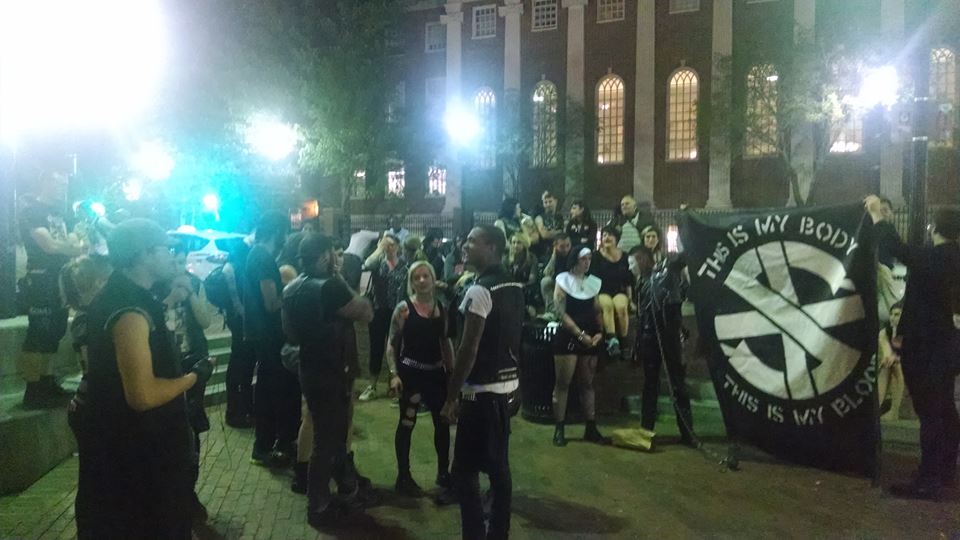
Over 37,000 people have signed a petition against a planned satanic black mass in Oklahoma City, which has also been protested by the Roman Catholic archbishop of the city.- originally reported by CP
“The black mass is an attempt to rip God out of the fabric of our nation. That’s why more and more people are joining the protest,” said John Ritchie, the Student Action Director for the American Society for the Defense of Tradition, Family and Property.”The sole purpose of the black mass is to attack God, the Catholic Mass and the Holy Eucharist in a most obscene, indecent and hateful manner. Satanists typically steal a consecrated host from a church to desecrate in unspeakable ways.”
The black mass is scheduled to take place on Sept. 21 at the local civic center. It is reportedly being organized by local Oklahoma City satanist Adam Daniels, who says he is the high priest of a local satanic group.
Daniels has explained that a satanic mass contains similar themes to a Catholic mass, but participants worship Satan instead of God.
A petition started by TFP against the mass has been signed as of Thursday by 37,877 people, and has a goal of 50,000 signatures.
“With my whole heart and soul, I express full, complete and vehement rejection of the satanic ‘black mass’ scheduled at the Oklahoma City Civic Center on Sept. 21. I urge you to cancel this event which offends 1 billion Catholics worldwide, 200,000 Catholics in Oklahoma and countless more God-loving Americans. Sacrilege is simply NOT free speech,” the petition reads, addressed to Stephen Sharpe of the Oklahoma City Civic Center, Mayor Mick Cornett and Governor Mary Fallin.
Paul Coakley, archbishop of Oklahoma City, has only urged city organizers to intervene and stop the black mass from taking place.
“We’re astonished and grieved that the civic center would promote as entertainment and sell tickets for an event that is very transparently a blasphemous mockery of the mass,” Coakley said in a statement.
“The ‘black mass’ that is scheduled for the civic center in September is a satanic inversion and distortion of the most sacred beliefs, not only of Catholics, but of all Christians.”
Ritchie further asked why the civic center is “facilitating and advertising sacrilege” by using a tax-funded facility “as a platform to attack God and demean all God-loving Americans.”
He added: “This event harms the common good on many levels. It forces civic center employees and government workers to assist, or work in close proximity to, an event that targets the Catholic faith.”
TFP’s student action director noted that a similar black mass initially scheduled at Harvard University in May was cancelled after a public protest.
I recently heard sociologist Robert Putnam speak at a Georgetown University event that gathered people of faith and no faith to discuss the common good. In his speech, he complained about America’s “radically shriveled sense of we.” The author of “Bowling Alone,” the famous 1995 essay on the decline of social capital—our connection to each other through activities and institutions—Putnam converted to Judaism in part because of its strong sense of community.
There was a time, Putnam argued, when churches and schools threw together youth of differing social class in ways that connected and motivated them, and helped poor youth escape poverty. This is not mere nostalgia. Putnam has surveyed decades of data to show how communities have become more segregated, and how the children of parents without a college education are now deprived of the things that create equal opportunity.
There was a time, Putnam argued, when churches and schools threw together youth of differing social class in ways that connected and motivated them, and helped poor youth escape poverty.
Kids from working-class homes used to be “our kids,” he said. Now they are other people’s kids, and we expect other people to solve their problems. But young people are our future. Their problems are ours.
Putnam was talking about inequality, which, he said, causes problems that need both conservative and liberal solutions. Liberals, he said, must learn to appreciate the conservative stress on family structures and the potential of faith communities. Solutions “have to involve churches,” he said in a 2012 speech.
Further, he said, “I happen to think that hugs and time are more important than money.” But, he went on, “money is important, too,” and that means conservatives are going to have to recognize the need for government action in everything from tax structure to education reform.
College-educated parents spend far more “developmental time” with their children (what Putnam calls “Goodnight Moon time”) than those parents who have a high-school education or less—with very positive outcomes. But it should be obvious why educated parents can spend more developmental time than those who hold down multiple low-income jobs with few benefits. Red solutions and blue solutions are both required.
One Christian leader is eager to talk about inequality: Pope Francis. His tweet this spring, “Inequality is the root of social evil,” caused some controversy. It was paraphrased from his Apostolic Exhortation The Joy of the Gospel, which reads, “Inequality is the root of social ills.”
In the subsection “The Economy and the Distribution of Income,” Francis said inequality is a symptom of a growing tendency for the haves to ignore the have-nots. He did not offer specific policy solutions. Unlike French economist and media darling Thomas Piketty, he did not call governments to create a global wealth tax.
Instead, Francis wants to recover God’s purpose for economic life and business activity. “Casual indifference” to the poor “empties our lives and our words of all meaning,” he said. “Business is . . . a noble vocation, provided that those engaged in it see themselves challenged by a greater meaning in life; this will enable them truly to serve the common good by striving to increase the goods of this world and to make them more accessible to all.”
Meriam Ibrahim, arrested last August in Sudan and sentenced to death after being accused by family members of apostasy and adultery, was not only pressured to recant her Christian faith and thereby nullify her marriage, but was kept in shackles while giving birth to her second child in prison. At least one Christian woman, also from Africa, was lauding the 27-year-old’s resilience, and thanking her for bearing “heroic witness to the virtues of faith, marriage, and motherhood.”
“I am a Christian and I will remain a Christian,” Ibrahim resolutely declared in a Sudanese courtroom in May, where she was sentenced to death for alleged apostasy and 100 lashes for adultery.
As the married mother of two told reporters last week after finallly gaining her freedom, “Thanks to God we are all fine. I trusted God from the first instant. I knew that He would not abandon me.”
It was that fierce determination to keep trusting in God for her deliverance that drew the support and admiration of many Christians from around the world for the would-be martyr.
“On behalf of all African women, I thank you Meriam Ibrahim, for showing the world the indomitable courage that is at the core of authentic femininity. I say this because your pain and persecution were tied so firmly to your femininity. And so your triumph was a most powerful witness to life, to motherhood, to marriage, to love and to faith,” writes Obianuju Ekeocha in an “thank you” letter published on cultureoflifeafrica.com.
“You are indeed a true picture of faith and virtue, a true symbol of strength and resilience. You are, in my humble opinion, a real woman of substance, an African woman of substance and your story fills my heart with courage and audacity in my own vocation to defend our African culture of life, marriage, motherhood, faith and family, no matter how difficult, no matter how shameful and no matter how painful for me.”
Ekeocha is a biomedical scientist living in England who describes herself as a “a committed cradle Catholic born and raised in Nigeria.” She goes on to write:
“For under intense persecution, you refused to deny your Christian faith. Under the threat of the extremists, you stood as a witness and a martyr. Under the pain of incarceration, you would not deny your husband or renounce your marriage. Under the heavy shackles of prison you still had the strength and defiance to give life, to give birth. Under the certainty of a death sentence you had the determination to nurse your precious little baby.
“By your powerful example, the world has come to witness the resilience of a young African woman who in the worst conditions bore heroic witness to the virtues of faith, marriage, and motherhood.”
Read Obianuju Ekeocha’s full open “thank you” letter to Meriam Ibrahim at culturelifeafrica.com.
Ibrahim, now free and united with her husband, Daniel Wani, and their two children, drew international attention when it was revealed earlier this year that she was facing death due to her Christian faith. The Sudanese court considered her a Muslim because her father is a Muslim, although Ibrahim repeatedly testified that she was raised as a Christian by her mother since the age of six when her father left them. Her case was compounded by the fact that she was pregnant at the time with her daughter, Maya, whom she give birth to in prison less than two months ago. Officials also kept Ibrahim’s toddler son, Martin, with her in prison reportedly because they viewed his Christian father as illegitimate.
Being labeled a Muslim by the courts, she was also charged with adultery and threatened with 100 lashes, because Sudanese law prohibits interfaith marriages for Muslims. Ibrahim, a doctor, and Wani, a biochemist who has family in New Hampshire and holds dual U.S.-Sudan citizenship, married in 2011, the same year her mother died.
Despite intense pressure to recant her faith to alleviate the apostasy charge and subsequent death sentence during her time in prison, Ibrahim refused to deny Christ.
“Even when they condemned me to death I never thought of renouncing my religion. When I was asked to renounce my religion I knew what I was risking. But I didn’t want to do it,” Ibrahim told reporters last week upon her arrival in Rome, where she and her family met with Pope Francis at the Vatican.
Ibrahim described her meeting with Pope Francis as “the peak in the faith which I have never abandoned.” The pope for his part expressed gratitude to Ibrahim and her family for their “courageous witness and constancy of faith,” according to Vatican spokesman the Rev. Federico Lombardi.
Sudan’s Supreme Court overturned Ibrahim’s charges on June 23, and she was released from prison. But when Italian and U.S. authorities tried to transport Ibrahim and her family out of Sudan on the following day, they were detained at the airport in Khartoum under allegations of falsifying documents. Up until their release on Thursday, July 24, Ibrahim and her family had been staying at a safehouse at the U.S. Embassy in Khartoum, Sudan’s capital.
Ibrahim is now looking forward to settling down with her family in Manchester, New Hampshire, where her husband’s brother and his family live. The Sudanese family was expected to depart Italy this week for their U.S. home, and were expected to receive a grand welcome by the city’s overjoyed Sudanese community.
In another sign of efforts to contain one of China’s fastest-growing religions, a government demolition campaign against public symbols of the Christian faith has toppled crosses at two more churches in the coastal province of Zhejiang, according to residents there.
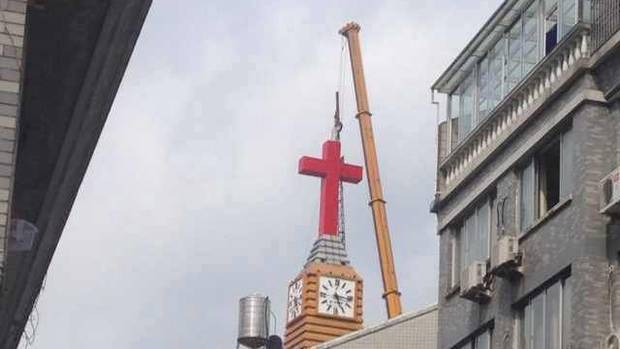
On Monday, public security officials in the city of Wenzhou used a crane and blowtorch to cut loose the red, 10-foot crucifix that had adorned the Longgang Township Gratitude Church, witnesses said. Unlike in previous confrontations between the police and parishioners that have unfolded in recent months, the congregants did not offer resistance.
“We didn’t want to get in a fight with them, but obviously what they did was illegal,” said Qu Linuo, a pastor from a nearby church, who was among the crowd of believers who held an overnight vigil before the police arrived.
On Friday, congregants at the Wenling Church in the city of Taizhou faced off with as many as 4,000 police officers but ultimately failed to prevent the removal of two crosses from atop their building. One congregant said as many as 40 people were detained during the standoff.
Since early spring, the authorities in Zhejiang province have issued demolition notices to more than 100 churches, saying their structures violated zoning regulations. Most of the targeted churches are state-approved, in contrast to so-called underground congregations that are frequently singled out by the authorities.
Officials have been largely taking aim at church steeples and their crosses, but in April, the authorities tore down the Sanjiang Church, a highly visible landmark in Wenzhou, saying the entire structure violated building codes. The church had been previously cited by the local government as a model project.
Church leaders and analysts say the battle in Zhejiang, one of China’s wealthiest provinces, highlights the Chinese leadership’s discomfort with the growing allure of Christianity, whose adherents are said to rival in number the 86 million members of the Communist Party.
The crackdown on Christianity in Zhejiang also coincides with a nationwide campaign that has been directed at legal rights defenders, pro-democracy advocates and liberal online commentators.
Although the government has cited zoning rules in its fight against the churches, a provincial policy paper suggests that there may be other reasons, advising officials to use the zoning language in an effort to avoid international scrutiny.
Local officials could not be reached for comment on Monday.
Elsewhere in Zhejiang, one of China’s oldest Catholic churches, built in the 19th century by French missionaries in the coastal city of Ningbo, was gutted early Monday by a fire that reportedly began at the altar, according to state news media. There incident was likely to heighten the belief among Christians that they are under siege.
At the Wenling Church in Taizhou, congregants said hundreds of Christians sang hymns at daybreak on Friday as the riot police surrounded the church. In a phone interview, congregant Lemon Huang said the show of force was overwhelming and unnecessary. “Some wore police uniforms, with helmets and shields, some were plainclothes police and some wore red armbands – just like the Red Guards during the Cultural Revolution,” Mr. Huang said.
More news on China
Police in China remove church’s cross amid crackdown
Hundreds of police took down a church’s cross in eastern China early Monday amid a crackdown on church buildings in a coastal region where thousands of people are embracing Christianity.
Evangelist Qu Linuo, who belongs to another church, said hundreds of police showed up Monday at the Longgang Huai En Church in the city of Wenzhou and used a crane to remove the cross from its steeple. Qu said he and about 200 others had flocked to the church a few hours earlier to protect the church but peacefully made way for the police.
China forbids civil servants, students from fasting in Ramadan in Muslim region of Xinjiang
Students and civil servants in China’s Muslim northwest, where Beijing is enforcing a security crackdown following deadly unrest, have been ordered to avoid taking part in traditional fasting during the Islamic holy month of Ramadan.
Statements posted in the past several days on websites of schools, government agencies and local party organizations in the Xinjiang region said the ban was aimed at protecting students’ wellbeing and preventing use of schools and government offices to promote religion. Statements on the websites of local party organizations said members of the officially atheist ruling party also should avoid fasting.
“No teacher can participate in religious activities, instil religious thoughts in students or coerce students into religious activities,” said a statement on the website of the No. 3 Grade School in Ruoqiang County in Xinjiang.
Similar bans have been imposed in the past on fasting for Ramadan, which began at sundown Saturday. But this year is unusually sensitive because Xinjiang is under tight security following attacks that the government blames on Muslim extremists with foreign terrorist ties.
Violence has escalated in recent years in Xinjiang. The ruling party blames violent extremists that it says want independence, while members of the region’s Uighur ethnic group complain that discrimination and restrictions on religion, such as a ban on taking children to mosques, are fueling anger at the ethnic Han Chinese majority.
An attack on May 22 in the regional capital of Urumqi by four people who threw bombs in a vegetable market killed 43 people, including the attackers. On June 22, police in Kashgar in the far west said they killed 13 assailants who drove into a police building and set off explosives, injuring three officers. Authorities have blamed two other attacks at train stations in Urumqi and in China’s southwest on Muslim extremists.
The government responded with a crackdown that resulted in more than 380 arrests in one month and public rallies to announce sentences.
The ruling party is wary of religious activities it worries might serve as a rallying point for opposition to one-party rule. Controls on worship are especially sensitive in Xinjiang and in neighbouring Tibet, where religious faith plays a large role in local cultures.
On Tuesday, authorities in some communities in Xinjiang held celebrations of the anniversary of the founding of the Communist Party and served food to test whether Muslim guests were fasting, according to Dilxat Raxit, spokesman in Germany for the rights group World Uyghur Congress.
“This will lead to more conflicts if China uses coercive measures to rule and to challenge Uighur beliefs,” said Dilxat Raxit in an email.
The ruling party says religion and education should be kept separate
“Students shall not participate in religious activities; they shall not study scripts or read poems at script and choir classes; they shall not wear any religious emblems; and no parent or others can force students to have religious beliefs or partake in religious activities,” said the statement on the website of the grade school in Ruoqiang County.
A news portal run by the government of Yili in the northern reaches of Xinjiang said fasting is detrimental to the physical wellbeing of young students, who should eat regularly.
In the city of Bole, retired teachers from the Wutubulage Middle School were called in to stand guard at mosques and prevent students from entering, according to a statement on the municipal party committee website.
Also in Bole, the Bozhou University of Radio and Television said on its website it held a meeting with working and retired minority teachers on the first day of the Ramadan to remind them of the fasting ban.
The forestry bureau in Xinjiang’s Zhaosu county held an event the day before Ramadan at which party cadres signed a pledge they and their relatives would “firmly resist fasting,” according to a statement on the website of the local party committee.
The Moyu Weather Bureau in the Hotan area said on its website that Muslim employees, both active and retired, were required to sign a letter promising not to fast.
The commercial bureau for Turpan, an oasis town in the Taklamakan Desert, said in a statement that civil servants are “strictly forbidden” to fast or perform the Salat prayer ritual in a mosque.
Ebola virus disease (formerly known as Ebola haemorrhagic fever) is a severe, often fatal illness, with a death rate of up to 90%.
The illness affects humans and nonhuman primates (monkeys, gorillas, and chimpanzees).
Ebola first appeared in 1976 in two simultaneous outbreaks, one in a village near the Ebola River in the Democratic Republic of Congo, and the other in a remote area of Sudan.
The origin of the virus is unknown but fruit bats (Pteropodidae) are considered the likely host of the Ebola virus, based on available evidence.
2. How do people become infected with the virus?
Ebola is introduced into the human population through close contact with the blood, secretions, organs or other bodily fluids of infected animals. In Africa, infection has occurred through the handling of infected chimpanzees, gorillas, fruit bats, monkeys, forest antelope and porcupines found ill or dead or in the rain forest. It is important to reduce contact with high-risk animals (i.e. fruit bats, monkeys or apes) including not picking up dead animals found lying in the forest or handling their raw meat.
Fruit Bats
Once a person comes into contact with an animal that has Ebola, it can spread within the community from human to human. Infection occurs from direct contact (through broken skin or mucous membranes) with the blood, or other bodily fluids or secretions (stool, urine, saliva, semen) of infected people. Infection can also occur if broken skin or mucous membranes of a healthy person come into contact with environments that have become contaminated with an Ebola patient’s infectious fluids such as soiled clothing, bed linen, or used needles.
Health workers have frequently been exposed to the virus when caring for Ebola patients. This happens because they are not wearing personal protection equipment, such as gloves, when caring for the patients. Health care providers at all levels of the health system – hospitals, clinics and health posts – should be briefed on the nature of the disease and how it is transmitted, and strictly follow recommended infection control precautions.
Burial ceremonies in which mourners have direct contact with the body of the deceased person can also play a role in the transmission of Ebola. Persons who have died of Ebola must be handled using strong protective clothing and gloves, and be buried immediately.
Burial of Diseased Ebola Patient
People are infectious as long as their blood and secretions contain the virus. For this reason, infected patients receive close monitoring from medical professionals and receive laboratory tests to ensure the virus is no longer circulating in their systems before they return home. When the medical professionals determine it is okay for the patient to return home, they are no longer infectious and cannot infect anyone else in their communities. Men who have recovered from the illness can still spread the virus to their partner through their semen for up to 7 weeks after recovery. For this reason, it is important for men to avoid sexual intercourse for at least 7 weeks after recovery or to wear condoms if having sexual intercourse during 7 weeks after recovery.
3. Who is most at risk?
During an outbreak, those at higher risk of infection are:
health workers;
family members or others in close contact with infected people;
mourners who have direct contact with the bodies of the deceased as part of burial ceremonies; and
hunters in the rain forest who come into contact with dead animals found lying in the forest.
More research is needed to understand if some groups, such as immuno-compromised people or those with other underlying health conditions, are more susceptible than others to contracting the virus.
Exposure to the virus can be controlled through the use of protective measures in clinics and hospitals, at community gatherings, or at home.
4. What are typical signs and symptoms of infection?
Haemorrhagic Rash
Sudden onset of fever.
Intense weakness
Muscle pain
Headache and sore throat are typical signs and symptoms.
This is followed by vomiting, diarrhoea, rash, impaired kidney and liver function, and in some cases, both internal and external bleeding.
Laboratory findings include low white blood cell and platelet counts, and elevated liver enzymes.
The incubation period, or the time interval from infection to onset of symptoms, is from 2 to 21 days. The patients become contagious once they begin to show symptoms. They are not contagious during the incubation period.
Ebola virus disease infections can only be confirmed through laboratory testing.
5. When should someone seek medical care?
If a person has been in an area known to have Ebola virus disease or in contact with a person known or suspected to have Ebola and they begin to have symptoms, they should seek medical care immediately.
Any cases of persons who are suspected to have the disease should be reported to the nearest health unit without delay. Prompt medical care is essential to improving the rate of survival from the disease. It is also important to control spread of the disease and infection control procedures need to be started immediately.
6. What is the treatment?
Severely ill patients require intensive supportive care. They are frequently dehydrated and need intravenous fluids or oral rehydration with solutions that contain electrolytes. There is currently no specific treatment to cure the disease.
Some patients will recover with the appropriate medical care.
To help control further spread of the virus, people that are suspected or confirmed to have the disease should be isolated from other patients and treated by health workers using strict infection control precautions.
7. What can I do? Can Ebola be prevented?
Currently there is no licensed vaccine for Ebola virus disease. Several vaccines are being tested, but none are available for clinical use right now.
Raising awareness of the risk factors and measures people can take to protect themselves are the only ways to reduce illness and deaths.
Ways to prevent infection and transmission
While initial cases of Ebola virus disease are contracted by handling infected animals or carcasses, secondary cases occur by direct contact with the bodily fluids of an ill person, either through unsafe case management or unsafe burial practices. During this outbreak, most of the disease has spread through human-to-human transmission. Several steps can be taken to help in preventing infection and limiting or stopping transmission.
Understand the nature of the disease, how it is transmitted, and how to prevent it from spreading further. (For additional information, please see the previous questions about Ebola virus disease in this FAQ.)
Listen to and follow directives issued by your country’s respective Ministry of Health.
If you suspect someone close to you or in your community of having Ebola virus disease, encourage and support them in seeking appropriate medical treatment in a care facility.
If you choose to care for an ill person in your home, notify public health officials of your intentions so they can train you and provide appropriate gloves and personal protective equipment (PPE), as well as instructions as a reminder on how to properly care for the patient, protect yourself and your family, and properly dispose of the PPE after use.
When visiting patients in the hospital or caring for someone at home, hand washing with soap and water is recommended after touching a patient, being in contact with their bodily fluids, or touching his/her surroundings.
People who have died from Ebola should only be handled using appropriate protective equipment and should be buried immediately.
Additionally, individuals should reduce contact with high-risk infected animals (i.e. fruit bats, monkeys or apes) in the affected rain forest areas. If you suspect an animal is infected, do not handle it. Animal products (blood and meat) should be thoroughly cooked before eating.
8. What about health workers? How do they protect themselves from the high risk of caring for sick patients?
Health workers treating patients with suspected or confirmed illness are at higher risk of infection than other groups. In addition to standard health care precautions,
Health workers should strictly apply recommended infection control measures to avoid exposure to infected blood, fluids, or contaminated environments or objects – such as a patient’s soiled linen or used needles.
They should use personal protection equipment such as individual gowns, gloves, masks and goggles or face shields.
They should not reuse protective equipment or clothing unless they have been properly disinfected.
They should change gloves between caring for each patient suspected of having Ebola.
Invasive procedures that can expose medical doctors, nurses and others to infection should be carried out under strict, safe conditions.
Infected patients should be kept separate from other patients and healthy people, as much as possible.
9. What about rumours that some foods can prevent or treat the infection?
WHO strongly recommends that people seek credible health advice about Ebola virus disease from their public health authority.
While there is no specific drug against Ebola, the best treatment is intensive supportive treatment provided in the hospital by health workers using strict infection control procedures. The infection can be controlled through recommended protective measures.
We use cookies to ensure that we give you the best experience on our website. If you continue to use this site we will assume that you are happy with it.